
Your second BJJ competition needs a smaller plan
Quick answer: Prepare for your second BJJ competition by keeping what worked at the first event and choosing one or two specific problems to address. Confirm the new organizer's rules and logistics separately, even if the tournaments look similar. Use the first experience as information, not as a prediction of the next result.
The first tournament gave you something a checklist could not: an actual morning in the venue, an actual wait for your name, and an actual opponent who did not follow the practice plan.
Now there is a second registration form. It is tempting to respond to the first experience by changing everything, especially if the result hurt. A smaller plan is easier to use. Keep the practical pieces that served you, identify the exchange that needs attention, and leave room for this event to be different.
Separate the match from the day around it
Write two short accounts of the first competition. One describes the logistics: arrival, check-in, clothing, food, waiting, and communication with your coach. The other describes the match itself. Keeping them separate prevents one disappointing result from making the entire day look badly planned.
You might have arrived comfortably, passed the relevant checks, and warmed up sensibly before losing a technical exchange. In that case, the logistical routine may deserve to stay. Equally, you might have won despite a frantic arrival that you would rather not repeat.
Use concrete observations. "I was stressed" is understandable but broad. "I did not know where my mat was until the last call" identifies a practical problem. "My guard failed" is also broad; "I could not establish my first connection after sitting" gives the coach a position to examine.
The aim is a usable account, not a defense of the outcome. You need enough detail to make a change, and no more drama than the facts require.
Keep the parts that already worked
A second competition does not require a new bag, new diet, new opening move, and new personality. If an ordinary routine worked, preserve it unless the next event creates a reason to change it.
That may include laying out the kit the night before, traveling with a particular teammate, or using a simple warm-up approved by your coach. Familiar arrangements can reduce the number of decisions you need to make on the day.
Do not preserve something only because it happened before a win. A result does not establish that every preceding choice was useful. Review the routine on its own terms: was it practical, permitted, and comfortable enough to repeat?
Likewise, do not discard a sensible preparation step because you lost afterward. The goal is to learn from the experience without turning the whole day into a collection of lucky or unlucky objects. Your first medal or first loss cannot tell you which pair of socks deserves a permanent place in the plan.
Choose one technical repair
Bring your coach a specific exchange from the first match. If you have a recording, review it together with permission from everyone whose footage you are sharing. If you do not, reconstruct the position as accurately as you can and acknowledge what you cannot remember.
Our guide to reviewing your BJJ match video offers a way to separate visible actions from assumptions. For the second competition, use the review to choose a manageable training task rather than a complete replacement game.
A repair might concern the first grip, recovering after a failed entry, or recognizing when the opponent has begun a pass. Practice it in a setting that reproduces the relevant problem, with resistance and boundaries selected by the coach.
Avoid collecting five unrelated techniques because each promises to solve the loss. A small correction you have actually tested is easier to remember than a collection of new options competing for attention in the same tense moment.
Check the new event as a new event
Your first tournament taught you one organizer's process on one particular day. The next may use different divisions, weigh-in arrangements, uniform requirements, scoring, or match formats. Confirm the published rules rather than carrying assumptions across.
Read the event information early enough to ask questions before deadlines. If your registration details are wrong, use the organizer's stated correction process. Do not rely on a friendly staff member being able to change everything at the venue.
A short administrative check should cover:
Your entered division and any eligibility conditions.
The relevant rules and permitted techniques for that division.
Weigh-in and uniform procedures.
Schedule updates, check-in instructions, and coach access.
Keep the actual organizer's information with your plan. Advice from a teammate can help you know what to ask, but it should not replace the event's current instructions. A familiar logo or venue does not guarantee that every detail remains unchanged.
Make the first minute simpler
Work with your coach on a small opening intention that fits your game and the rules. This is not a prediction that the opponent will cooperate. It is a way to avoid arriving with six competing plans and no clear first action.
Identify what you want to establish, what response you expect to recognize, and what you will do if the first attempt is unavailable. The fallback can be modest: regain a stable position, restore a connection, or return to a practiced starting task.
Practice that opening against different partners when appropriate. One partner's familiar reaction can make a plan seem more reliable than it is. The purpose of variation is to reveal what you need to notice, not to rehearse a perfect imaginary match.
Keep the plan within your actual preparation. An exciting technique discovered a few days before the event does not have to become the opening strategy. You can save it for later training while giving the second tournament a clearer, more practiced beginning.
Agree on the help you want
Tell your coach or supporting teammate which information is useful to you during a match. Keep it consistent with the event's rules. If you struggled to distinguish several voices at the first tournament, discuss who will provide the main coaching instructions this time.
You may want clear reminders about time, position, or a particular technical task. The coach may have a better judgment about what you can use. Agree on simple language before competing rather than inventing a code while someone is gripping your collar.
Plan the practical support too. Know where to meet afterward, who has your belongings, and how you will check for another match. Those details should not depend on whether the result is good.
Do not make a teammate responsible for controlling your emotions. They can help you find the next useful action, but they cannot promise that the day will feel easy. A clear role gives their support a better chance of being useful without making them manage every part of the experience.
Set a goal that survives the result
Winning can remain a goal. Add another goal you can assess from what you actually do: establishing the first connection, responding to a known position, or following the between-match routine you prepared.
Be specific enough that the goal is observable. "Be confident" is difficult to evaluate and may turn into another reason to criticize yourself. "Use the opening sequence we practiced when the setup is available" gives you and your coach something concrete to discuss.
A process goal does not make the result irrelevant. It gives you another source of information when a single win or loss is too broad to explain what improved. You may lose while addressing the exact problem from the first event. You may win while discovering a new problem that deserves work.
Avoid setting so many goals that they become a second scoreboard. One or two are enough for a useful review. The second competition is another experience to learn from, not a final examination of whether competing was a good idea.
Review before registering again
After the event, compare your preparation with what happened. Did the logistical repair help? Did the technical problem appear? If it did, did you recognize it sooner or make a different decision? These questions keep the review connected to the work you actually did.
If the same issue returns, do not assume the practice was worthless. Check whether the training situation matched the competition exchange closely enough and whether you had enough time to work on it. Your coach can help decide what to adjust.
Also consider whether the overall experience fits your life. Time, cost, enjoyment, and recovery all belong in the decision about another event. You do not owe the calendar an immediate third registration because you have now competed twice.
Let the next choice come from the experience rather than a need to erase a loss or preserve the feeling of a win. Competition can remain part of training without becoming an endless obligation to settle the previous result.
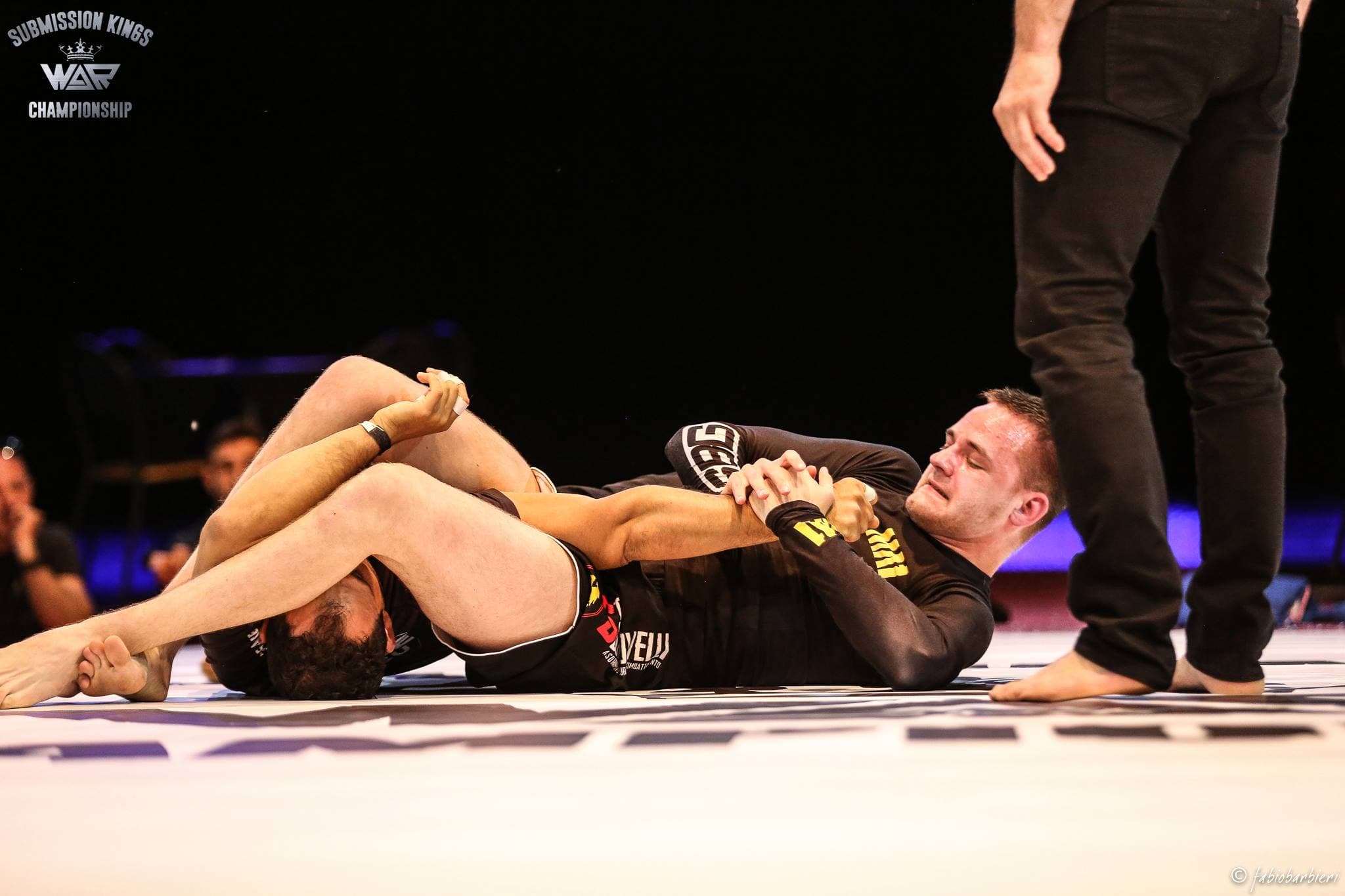
Main photo: Fabio Barbieri / Submission Kings, via BJJ Globetrotters; illustrative competition archive photograph.
The takeaway
Your second BJJ competition gives you a chance to use information the first one made available. Preserve the arrangements that worked, address one clear technical problem, and verify the new event's own requirements.
Keep the plan small enough to remember under pressure. The useful comparison is not whether the second day proves you are better at everything, but whether your preparation helped you make a clearer decision when a familiar problem appeared.
Choose the next event deliberately
Browse upcoming tournaments, then compare each organizer's rules, format, and logistics with the experience you want from your next competition.
FAQ
Should I change my whole game after losing my first tournament? Usually a smaller review is more useful. Ask your coach to identify one or two specific problems and build practice around them before replacing techniques that may still fit your game.
How soon should I enter a second BJJ competition? Choose a timing that fits your preparation, health, budget, and schedule. There is no universal interval required by this article; discuss the decision with your coach and check the event requirements.
Will the second tournament feel less stressful? It may feel more familiar, but the experience can still be stressful. Prepare practical routines and clear coaching communication rather than assuming familiarity guarantees a particular emotional response.
What is a useful goal besides winning? Choose an observable action, such as establishing a practiced connection or recognizing a position that caused trouble before. Keep the goal specific enough to review afterward without adding a long list of tasks.

Tess Hanley
Tess Hanley reads the rulebooks, the entry fees and the fine print. When a federation or a gym changes something, her first question is who ends up paying for it.
Related Posts
Jiu-jitsu in Montreal: build the visit around a real class
Plan BJJ training in Montreal around confirmed classes, language arrangements, winter travel, visitor policies, and equipment that is ready to use.
Competing in gi and no-gi on the same day takes two plans
Prepare for gi and no-gi competition on the same day with separate rule checks, complete outfits, schedule coordination, and a realistic second-bracket plan.

BJJ gi pants that fit standing up can still fail on the mat
Check BJJ gi pants at the waist, rise, knees, and cuffs so a good-looking size label becomes a uniform you can actually move in.
Comments (0)
Loading comments...