
Think the BJJ scoreboard is wrong? Use the right channel.
Quick answer: If you think a BJJ scoreboard is wrong, keep following the referee's instructions and use the organizer's stated process for raising the issue. Separate a display or recording problem from disagreement with a scoring judgment, because the available response may differ.
A number changes on the screen and two corners immediately read it differently. One believes the points went to the wrong athlete. The other believes the referee made the correct call. The competitor in the middle has a less useful view than either corner and still has a match to finish.
The challenge is practical before it is emotional. Somebody needs to identify what happened, who has authority to address it, and whether the event offers a review for that kind of issue. Being certain that something is wrong does not answer any of those questions.
Identify the problem before arguing the result
A scoreboard concern can describe several different things. The display might not match a referee's signal. The correct number might appear on the wrong side. An athlete might believe a position deserved points that were never awarded. Or a spectator might be applying the scoring rules of another organization.
Those situations are not interchangeable. A possible recording error concerns whether the displayed information reflects the official decision. A scoring disagreement concerns the decision itself. Different events may handle those categories differently, and some judgments may not be open to the review a competitor expects.
Start with a precise description. Name the sequence, the approximate time, and the discrepancy you believe occurred. Avoid adding assumptions about intention or competence. A staff member can evaluate a specific claim more easily than a broad accusation that the match was unfair.
Also consider what you could not see. A blocked camera angle, an unseen grip, or an earlier penalty may change the explanation. Confidence is useful when it helps you state the issue clearly. It becomes less useful when it prevents you from hearing information that resolves it.
Know the review policy before you need it
Read the event's rules during preparation, including the section on officiating or appeals. Look for who can raise an issue, where it must be raised, what evidence is required, and which decisions are eligible. A general contact form is not necessarily the procedure for a live tournament dispute.
Grappling Industries' rules illustrate why this matters. Its stated review process distinguishes limited reviewable issues from point-scoring disagreements that will not be used to overturn a result. It directs review requests to the head table rather than a debate with the match referee. Check the version governing your event.
Do not turn another organizer's process into a universal right. The existence of video footage does not automatically create an appeal, and a coach's familiarity with one competition does not establish the rules at the next one.
If the published policy is unclear, ask before your division begins. That leaves time for a calm explanation. Discovering the procedure while frustrated can make an already narrow opportunity harder to use properly.
Give one person the communication job
Several people shouting different accounts rarely improve the information reaching an official. Before competing, agree with your coach who will handle a concern and who will keep watching the match. The athlete should not have to manage a committee while defending a position.
The designated person can note the sequence and approach the appropriate staff member when the rules allow. Other teammates can help by keeping the area clear, preserving a useful recording, or checking the written policy. They do not all need to become spokespeople.
Keep the initial statement short. Describe the possible discrepancy and ask which procedure applies. If staff direct you elsewhere, follow that direction rather than continuing the same argument with someone who cannot resolve it.
This is also a reason to discuss coaching access before the event. A friend filming from the stands may not be allowed into a restricted area, even if they have the clearest footage. Respecting that boundary keeps an attempt to clarify one issue from creating another. The organizer decides who can enter and who can make a formal request.
The athlete still has a match to finish
Unless the referee stops the action, keep competing within the rules. Pausing to point at a screen can surrender a position or leave an athlete reacting late to an attack. The corner's role is to communicate useful information without pulling attention away from the immediate task.
A concise update can tell an athlete the displayed score and remaining time. It should not require them to adjudicate the preceding exchange from memory. If the score is uncertain, the coach should be clear about what is known and avoid inventing a correction that has not occurred.
Train this communication before competition. A practice round can include a coach reporting a score and time while the athletes continue working. The purpose is to make information usable under pressure, not to rehearse an argument with a referee.
At the end of the match, follow the required procedure for remaining on the mat, receiving the result, and leaving the area. Disagreement does not suspend those instructions. A coach can pursue an available process while the athlete behaves professionally and attends to any immediate physical needs.
Preserve evidence without promising what it proves
If filming is permitted, a continuous view can be more useful than a dramatic close-up. The relevant sequence may begin before the moment everyone remembers. A recording that includes the athletes, referee, and visible scoreboard can help distinguish a signal from a display change, though no angle captures everything.
When an issue arises, preserve the original file. Do not replace it with a heavily edited clip that removes the approach, stabilization, or subsequent action. If the organizer asks for a short segment, prepare one while retaining the full recording.
Useful notes are modest and factual:
The competitor names, division, and mat number.
The approximate point in the match when the issue occurred.
The signal or display change you believe was inconsistent.
The official rule or procedure you are asking staff to apply.
The location of any permitted recording that shows the sequence.
Evidence should narrow the question. It cannot guarantee a changed outcome. A video may support your account, reveal an overlooked detail, or remain inconclusive. Approach it as a record to examine, not a weapon that obliges everyone else to agree.
Keep the public account accurate
An immediate social post can travel farther than the eventual explanation. Avoid describing an official as dishonest or claiming an organizer ignored evidence before you understand what the policy allowed and what staff actually reviewed.
If you discuss the incident publicly, distinguish observation from interpretation. Saying that the display appeared inconsistent with a signal is narrower than saying a match was stolen. Include any explanation you received, particularly if it changes the original account.
The opponent also deserves a fair description. They did not necessarily cause a recording error or control the review procedure. A disagreement with officiating should not become an unsupported accusation against another athlete or academy.
Our guide to being a good training partner concerns everyday conduct, but the same respect matters at competitions. You can advocate firmly for an accurate result without treating every other person involved as an adversary. Specific criticism is more credible when it does not require speculation about character.
Review the performance separately from the dispute
A disputed decision can become the only thing an athlete remembers. After the official process is complete, return to the footage with a second question: what can be learned from the match regardless of the scoring issue?
That does not require pretending the result was unimportant. It means separating two tasks. One concerns whether the event applied its rules correctly. The other concerns entries, defensive choices, pacing, and positions the athlete can improve. A useful technical review does not have to settle the administrative disagreement first.
Ask your coach to identify a small number of actionable details. Perhaps a scoring position needed more control, or an escape attempt began later than intended. Those observations can inform training without being used to blame the athlete for an unrelated officiating problem.
Keep records if further organizer feedback is appropriate, then allow the day to end. Replaying the same disputed seconds indefinitely does not expand the available process. The next useful step may be a written question, a training adjustment, or simply preparing more clearly for the next event.
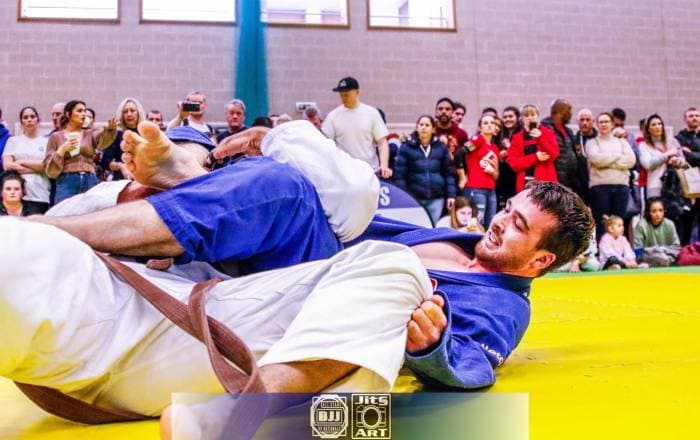
Main photo: BJJ Globetrotters; illustrative archive competition photo, not a disputed match.
The takeaway
A possible scoreboard error needs a specific description and the correct channel. Learn the event's review policy, give one person responsibility for communication, and preserve any permitted evidence without assuming it guarantees a changed result.
Keep competing until instructed otherwise. Afterward, separate the official question from the technical review of your performance. Both deserve attention, and neither becomes clearer when every concern is folded into one argument.
Read the rules before the next event
Explore BJJ tournaments on Let's Roll, then check the organizer's scoring and review procedures while you still have time to ask questions calmly.
FAQ
Can a BJJ match result be changed after a scoring complaint? It depends on the organizer's rules and the type of issue. Some decisions are not eligible for review. Check the event's written procedure instead of assuming every complaint can overturn a result.
Should I stop competing if the scoreboard looks wrong? Continue following the referee's instructions. Unless action is stopped, attention to a display can leave you vulnerable. Let the designated coach use the permitted channel for raising the concern.
Does video automatically qualify me for an appeal? No. Footage may help explain a sequence, but the event decides whether review is available, which issues qualify, and what evidence it will accept.
Who should speak to officials? Use the person authorized by the event's policy, often the athlete or coach. Agree on one spokesperson and avoid several spectators presenting competing accounts at the same time.

Tess Hanley
Tess Hanley reads the rulebooks, the entry fees and the fine print. When a federation or a gym changes something, her first question is who ends up paying for it.
Related Posts
Competing in gi and no-gi on the same day takes two plans
Prepare for gi and no-gi competition on the same day with separate rule checks, complete outfits, schedule coordination, and a realistic second-bracket plan.
Jiu-jitsu in Montreal: build the visit around a real class
Plan BJJ training in Montreal around confirmed classes, language arrangements, winter travel, visitor policies, and equipment that is ready to use.
BJJ gi pants that fit standing up can still fail on the mat
Check BJJ gi pants at the waist, rise, knees, and cuffs so a good-looking size label becomes a uniform you can actually move in.
Comments (0)
Loading comments...