
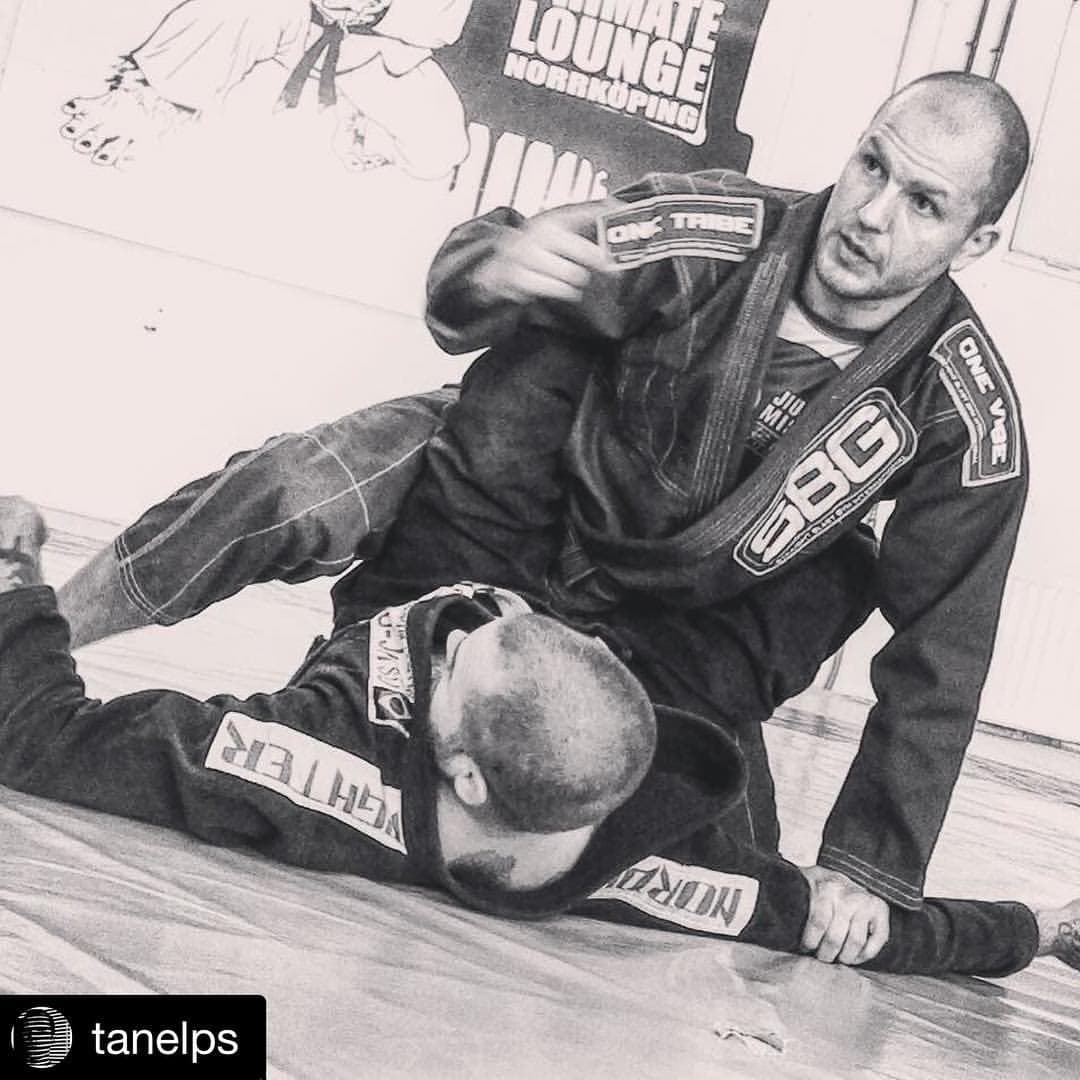
BJJ pressure is more specific than being heavy
Quick answer: Body weight and effective BJJ pressure are related, but they are not interchangeable. Where your weight goes, the direction you apply it, and the movement you prevent all affect the position. Learn the difference through controlled positional work rather than trying to make a partner as uncomfortable as possible.
A scale cannot tell you whether somebody can hold side control. It records mass. The position asks a different question: can the top player keep useful contact while the bottom player tries to move?
Calling a person heavy can describe their size or the experience of being underneath them. Those descriptions sometimes overlap. Treating them as identical leaves both players with very little to work on.
Start by naming the movement you want to prevent
Pressure becomes a more useful subject when it has a positional purpose. In side control, you might be trying to prevent the bottom player from turning toward you and inserting a knee. In another variation, the immediate concern could be an underhook or their attempt to turn away.
Choose one concern with your coach. Then examine whether your current position addresses it. A strong feeling of compression does not, by itself, show that the relevant escape has been closed. Your partner may feel uncomfortable and still have a clear route to move.
For a controlled exercise, ask the bottom player to attempt only the selected movement. The top player tries to maintain the agreed position without chasing a submission. Stop after a short exchange and identify what changed. This is a suggested learning format, not a test of which partner is tougher.
Keep the language observable. Say that the knee entered, the underhook appeared, or the top player lost contact. A report that someone felt heavy is useful feedback, but it is not the whole result. The movement tells you what the pressure accomplished.
Find out what the mat is supporting
In his explanation of making side mount heavier, Stephan Kesting describes redistributing weight from contact with the floor onto the person underneath. He also makes clear that his example is one variation, not the only correct arrangement.
That distinction matters. Removing every post is not a universal upgrade. A hand or knee on the floor may be helping you remain balanced or blocking an escape. Moving it changes more than the amount of weight your partner carries.
Ask a coach to compare two versions of a familiar pin. Keep the partner, starting position, and pace the same. Change one support point, then let the bottom player make the agreed attempt. Notice whether the top player can still respond when the position moves.
Record the tradeoff in plain terms. Perhaps one version feels heavier but is easier to turn. Perhaps another gives up some compression while making the next transition easier. The goal is to understand the arrangement you are using, not to collect a rule that every elbow must always leave the floor.
Direction changes the question for the defender
Force has direction as well as magnitude. BJJ Mental Models' explanation of force vectors applies that idea to framing: the angle of incoming force affects how a defender can meet or redirect it. More effort along an unhelpful line is not necessarily the correction a position needs.
This does not give you a universal angle to copy from an article. Bodies and positions differ, and an adjustment that suits one pin may compromise another. Use the idea to ask a more precise question during instruction: where is this contact meant to direct my partner, and what response am I expecting?
On bottom, describe what you can actually do. Can you turn your shoulders? Can you move your hips? Can you place a frame between the bodies? Those observations are easier for a coach to evaluate than a general claim that the pressure is impossible.
Do the comparison slowly enough to notice a difference. If every attempt becomes a full-speed escape, you may learn who wins that exchange without discovering which adjustment mattered. You can add more resistance after both partners understand the narrow question.
Contact and control are different observations
A concentrated contact can feel sharper than a broad one. BJJ Mental Models discusses that distinction in its leading-edges model, which directs attention to the part of the opponent applying the force. This is a way to analyze contact, not an instruction to search for the most painful spot on a training partner.
For ordinary practice, make the outcome positional. Did the contact stop the turn? Did it cause the defender to change their frame? Did the top player remain balanced? A discomfort rating alone does not answer those questions.
Agree on the intensity before experimenting. Release immediately when your partner asks or taps. There is no need to reproduce a competition-level effort to see whether a small adjustment changes the available movement. If a position is unclear or uncomfortable in an unfamiliar way, stop and ask the coach to check it.
The language you use after the drill sets its direction. Asking what became harder to move encourages useful feedback. Asking how much it hurt encourages the partners to measure something else. Choose the information that will help you understand the position.
The bottom player is part of the experiment
A pin learned only against complete stillness has not yet been examined under a moving partner. Equally, a first explanation can become impossible if the defender immediately uses every escape they know. Cooperation and resistance are different settings, and both can be appropriate.
Start with an agreed response. The defender attempts one familiar escape at a manageable pace. The top player works on the coach's specific adjustment. After a few attempts, broaden the defender's options if the coach thinks the exercise is ready for that change.
Use a short set of questions between attempts:
Which part of the position changed first?
Did the defender create space or make the top player post?
Was the agreed escape still available?
Did either person increase effort enough to obscure the comparison?
These questions do not require a technical vocabulary beyond your experience. Pointing to the place where contact disappeared can be enough. The guide to BJJ constraint games develops this approach to choosing a small, observable training problem.
Do not turn a size difference into a moral argument
A larger person does not need to pretend their weight is absent. A smaller person does not need to prove that technique makes size irrelevant. Both can agree on a useful round without turning their bodies into opposing explanations for every outcome.
For a learning exchange, choose a task both partners can participate in. That might mean reducing the top player's intensity, resetting after a specific escape, or having the coach select a different pairing. These are practical adjustments, not admissions that the training failed.
Avoid diagnosing the quality of somebody's technique from one sensation. A partner who feels heavy may be using good positioning, a substantial size advantage, or both. You need to examine the exchange before deciding what happened.
Likewise, do not judge a pressure adjustment only by whether it works on the smallest person available. Test it across appropriate partners over time, with the coach's guidance. A method that depends on an unrecognized mismatch will be difficult to evaluate honestly, and the smaller partner should not be assigned the job of enduring it for your research.
Measure the next exchange, not the squeeze
Choose one outcome for the next positional round. For example, see whether you can keep the agreed pin while your partner attempts the escape you have just studied. If they succeed, reset and locate the first change rather than immediately adding more force.
Keep notes short enough to use. A useful entry might identify the starting position, the adjustment, and the escape that remained available. A page of impressions about being crushed is less helpful when you try to ask the coach a question a week later.
Repeat the comparison without insisting that the result stay the same. A partner may adapt. You may discover that the adjustment solves one problem and exposes another. That is a reason to refine the position, not evidence that all previous instruction was wrong.
If the technical explanation becomes confusing, ask for a demonstration of the intended response. The article on learning from different coaches is useful here: apparently conflicting advice may belong to different starting conditions. Identify those conditions before trying to combine every detail into one pin.
Main photo: Tanel P.S. / BJJ Globetrotters; illustrative archive training photograph.
The takeaway
Pressure is easier to study when you separate the person's size from the job their position is doing. Identify the escape being restricted, examine the support points and direction of contact, and compare one adjustment at a time. Keep enough control over the exercise that both partners can describe what changed.
Feeling heavier is not the only useful result. A pin that lets you remain balanced, respond to movement, and continue the exchange may serve your training better than a moment of maximum discomfort. Let the positional outcome guide the next question.
Work through the position with a coach
Use the gym directory to find instruction, then ask about classes where positional work and technical questions fit the session.
FAQ
Is BJJ pressure just body weight? No. Body weight contributes, but its distribution, direction, and relationship to the defender's movement also matter. Evaluate the position rather than assuming that either size or technique explains everything.
Should I lift all my weight off the floor in side control? Not automatically. A post may support balance or block an escape. Have a coach show which contact points can change in the particular variation you are learning, and compare the result under controlled resistance.
How can a smaller person practice top pressure? Choose a specific positional goal and an appropriate partner, then work on the contacts and adjustments a coach teaches. Avoid measuring success only by discomfort or expecting a technical detail to erase every size difference.
Should I tap to pressure during practice? You can stop any training exchange when you need to. Your partner should release immediately. Reset, explain the issue, and seek the coach's help rather than treating endurance as a requirement for learning the position.

Nina Okada
Nina Okada explains positions the way a good training partner does: one problem at a time, with the limits of the explanation said out loud. She is careful about the difference between what footage shows and what it only suggests.
Related Posts

Mikey Musumeci gives up the belt to make room for MMA
Musumeci is vacating his UFC BJJ title to focus on MMA training. What he is leaving, what continues, and why the transition matters.
IBJJF membership: finish the paperwork before the deadline
IBJJF membership and tournament entry are separate steps. Plan documents, professor approval, renewals, and junior accounts before registration closes.
Choosing a BJJ seminar worth your time and travel
Choose a BJJ seminar by the subject, teaching format, access, and total cost. Know what to ask the host before buying a ticket.
Comments (0)
Loading comments...