
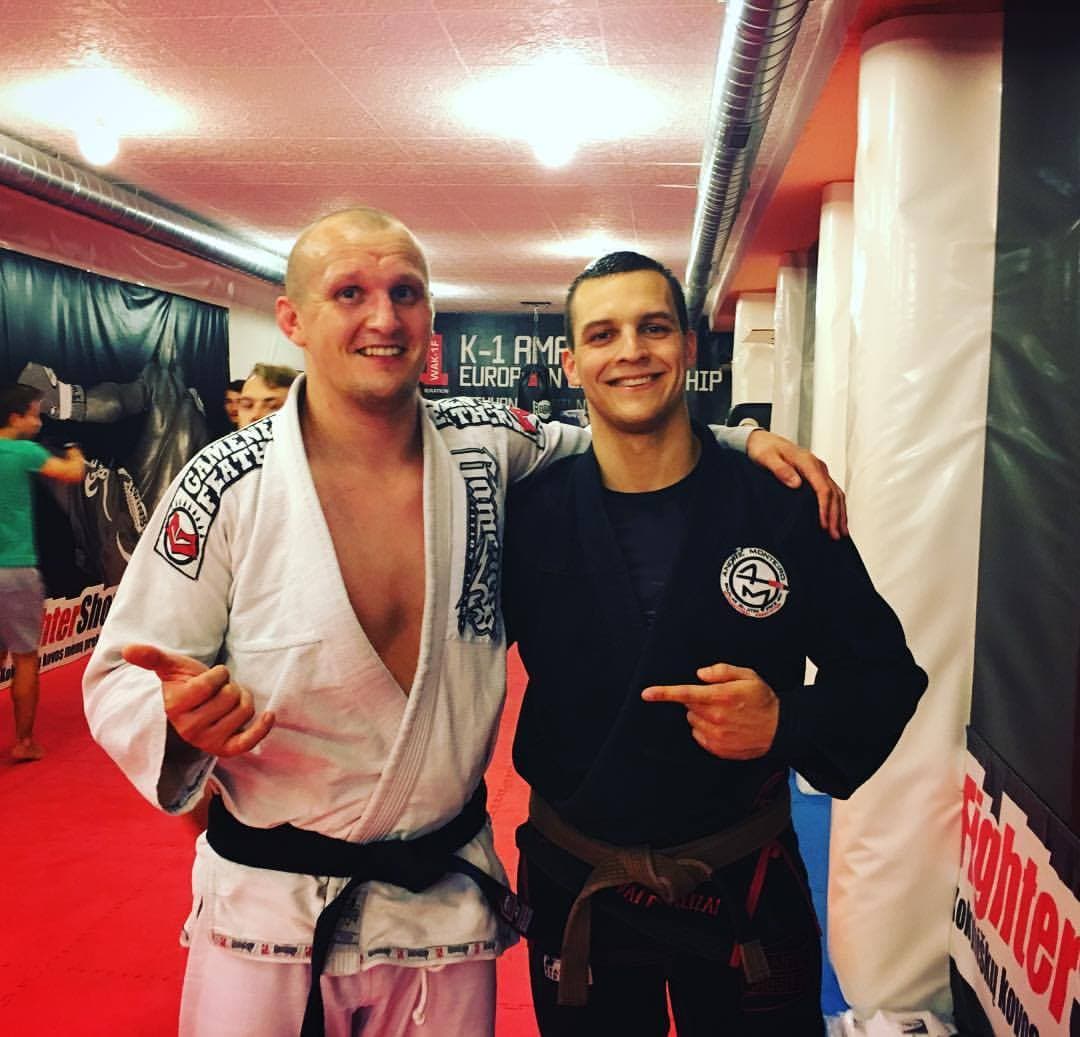
After a BJJ match, there is still a partner in front of you
Quick answer: Let the referee finish the match procedure, acknowledge your opponent in a way that works for both of you, and leave the competition area when directed. If you want to discuss the result, use the event's proper channel after the immediate formalities. Respect does not require a speech, a photograph, or pretending that losing feels good.
The match is over, but your breathing has not received the message. Someone is reaching for your wrist. Your corner is talking. Across from you is the person who has just spent several minutes trying to make your afternoon considerably worse.
Those few seconds deserve a plan. A BJJ post-match handshake is a small part of competition, yet it can become unnecessarily complicated when disappointment, celebration, and uncertainty arrive together. Give yourself a simple sequence to follow before the result has a chance to choose your behavior.
Wait for the official ending
Stop when the referee stops the action. Release whatever you are holding and give your opponent room to get up or receive assistance. The first useful act after a match is often making space, especially if someone is caught underneath you or needs a moment before standing.
Follow the official's directions for the result announcement and exit. Procedures differ between competitions, so do not substitute something you remember from another event for what the person in charge is asking now. If you cannot hear, indicate that and wait for clarification instead of guessing and walking away.
This is also a poor moment to begin a technical explanation. You may be certain that the final exchange mattered. The referee may still be managing the other athlete, the table, or an injury. Finishing the immediate procedure gives any later question a better chance of reaching the right person without becoming a confused conversation across the mat.
Your coach can help by discussing the event's process before your division starts. That conversation belongs beside the practical details in your competition plan, not inside the first burst of frustration afterward.
Keep the acknowledgment small
A brief handshake, offered fist bump, or nod can acknowledge the other athlete without demanding anything elaborate. Follow the event's expectations and be responsive to the person in front of you. An opponent managing an injured hand, for example, may not want it squeezed.
If they offer a different gesture, there is no need to turn the mismatch into a story. Adjust. A failed fist-bump-to-handshake conversion is not evidence of disrespect. Neither is someone needing a breath before speaking. Competition produces enough uncertainty without giving every awkward movement a hostile interpretation.
Useful words can be as short as "Good match" or "Thank you." You do not have to offer a verdict on their entire game. You also do not need to tell them that you would normally win, that you barely trained, or that your preparation went badly. Those explanations may be true, but the person opposite you is not responsible for processing them immediately.
Keep your acknowledgment sincere and proportionate. A quiet exchange can be entirely respectful. There is no requirement to perform friendship for the spectators.
Let disappointment stay yours
Losing can feel miserable without anyone having done something wrong. That distinction is worth keeping. Your opponent does not owe you consolation, and your teammates do not need a public investigation before you have even left the competition area.
Give yourself permission to be quiet. Walk to the place your team agreed to meet, recover your belongings, and take a little time before producing an explanation. The first account of a close match can easily become a defense of your self-image instead of a useful description of what happened.
If you speak to the opponent, avoid attaching a qualification to the acknowledgment. "Good match, but the referee missed everything" puts them in the middle of a complaint they may be unable to answer. You can respect their participation and still raise a legitimate officiating question elsewhere.
Our guide to waiting between BJJ matches considers the practical gap before the next call. The same principle applies here: an ordinary task, such as finding your coach or checking your bracket, can be more useful than immediately trying to settle what the loss means.
Winning also needs restraint
Celebration is not automatically disrespectful. You worked for the result, and relief can be enormous. The useful question is whether your celebration still leaves the other athlete safe, space to move, and a reasonable way to complete the formalities.
Avoid directing your excitement at them as a demand. They do not have to join your photograph, listen to a speech, or reassure you that your celebration was acceptable. If you want a picture together, ask after the official procedure and accept a brief refusal without following up.
Be especially careful with unsolicited instruction. A newly defeated opponent may not welcome a detailed explanation of everything you noticed in their guard. If they ask what you felt in a particular exchange, answer plainly. Otherwise, save the technical breakdown for your own team.
There is a difference between enjoying a result and assigning yourself authority over the person you beat. One match establishes its own outcome under its own conditions. It does not grant a permanent right to lecture the other athlete, online or beside the mat.
Separate a concern from a confrontation
A scoring question, conduct concern, or injury issue may need attention. Politeness does not mean abandoning it. It means identifying the appropriate person and giving them a usable account.
Before the tournament, find out how questions or protests are handled, who may submit them, and whether there are time limits. Do not assume that a process exists simply because another organizer offers one. If the published information is unclear, ask event staff before competing.
When describing the issue, keep these details distinct:
What you directly observed during the match.
What you believe the applicable rule requires.
What decision or clarification you are requesting.
Who has authority to respond under that event's procedure.
Your opponent is usually not the person who can change the result. Arguing with them therefore adds heat without providing a route to resolution. A coach can be particularly useful as a calm second set of eyes, provided their involvement follows the organizer's rules rather than turning into a second argument.
Leave the replay until both people agree
Sometimes two competitors have an excellent conversation after a match. They compare grips, laugh about an awkward scramble, and exchange contact details. That is a good outcome when both want it. It should remain an invitation.
Ask a specific, modest question: "Would you mind telling me what you felt when I tried that sweep?" The answer may be brief. They may have another match, a teammate to coach, or no interest in analyzing the exchange right now. Any of those is sufficient reason to stop.
If a conversation does happen, describe your own experience rather than assigning motives. "I thought your weight had moved forward" invites a useful reply. "You were stalling because you were scared" replaces analysis with an accusation. The second sentence is unlikely to teach you anything about the position.
A later message can work too, but one invitation is enough. Sharing a competitive experience does not create an obligation to become available for ongoing coaching or correspondence.
Be careful with the public version
A match clip shows an exchange. It does not necessarily show the entire conversation before or afterward. When posting, avoid using a cropped gesture or a few silent seconds to claim that someone was arrogant, frightened, or deliberately disrespectful.
Write about your performance, the recorded result, or the technique visible in the footage. If you want to discuss a disputed decision, distinguish the official outcome from your interpretation and check the relevant rule. Leave room for uncertainty where the camera angle does not settle it.
Ask before sharing a private post-match conversation. A friendly comment at the edge of the mat is not automatically a quotation offered for public use. Likewise, another competitor's willingness to pose for a photograph does not mean they endorse your caption or your assessment of the match.
A useful personal standard is to make the caption something you could discuss calmly with that person present. This is an editorial choice, not a guarantee that everyone will agree with you. It keeps your own account anchored to what you can support.
Rehearse the boring part
A short post-match plan is easy to remember under pressure: release, listen, acknowledge, exit, regroup. Rehearse it mentally alongside the starting procedure. You do not need to know whether you will win to know how you want to conduct yourself.
Coaches can help younger or first-time competitors by making the sequence explicit. Explain where to go afterward and who will meet them. Avoid making warmth or immediate cheerfulness a condition of having behaved well. A disappointed athlete can follow instructions and treat an opponent respectfully while still needing space.
For your own review, separate behavior from performance. You may have made a technical mistake and handled the aftermath well. You may also have won while speaking carelessly afterward. Those are different observations and deserve different corrections.
The purpose of a routine is not to suppress every emotion. It is to keep a few important choices available when emotion makes improvisation difficult.
Main photo: BJJ Globetrotters; illustrative archive photograph, not a reported visit or a named subject in this article.
The takeaway
The end of a BJJ match is a short shared task before it becomes your private result. Follow the official procedure, acknowledge the other athlete without demanding a response, and take your questions to the people who can actually address them.
After that, let yourself feel what you feel. A handshake does not require instant perspective. It simply lets two competitors leave the same contest without making the other person responsible for the rest of their day.
Plan the whole competition day
Use the tournament directory to find events, then check each organizer's current procedures for competitors and coaches before registering.
FAQ
Do I have to talk to my opponent after a BJJ match? Follow the event's conduct expectations and official directions. A brief acknowledgment is usually enough for the social part; a longer conversation should be something both athletes want.
What if I think the referee made a mistake? Keep the concern separate from your acknowledgment of the opponent. Ask about the organizer's actual review or protest procedure, including who can raise the issue and any applicable deadline.
Can I celebrate after winning? Enjoying a result is reasonable. Complete the official procedure, give your opponent space, and avoid requiring them to participate in your celebration or photographs.
Should I explain a submission to the person I beat? Answer if they ask and you are comfortable discussing it. Otherwise, offer rather than launch into a lesson, and accept that they may prefer to leave or speak later.

Tess Hanley
Tess Hanley reads the rulebooks, the entry fees and the fine print. When a federation or a gym changes something, her first question is who ends up paying for it.
Related Posts
Competing in gi and no-gi on the same day takes two plans
Prepare for gi and no-gi competition on the same day with separate rule checks, complete outfits, schedule coordination, and a realistic second-bracket plan.
Jiu-jitsu in Montreal: build the visit around a real class
Plan BJJ training in Montreal around confirmed classes, language arrangements, winter travel, visitor policies, and equipment that is ready to use.
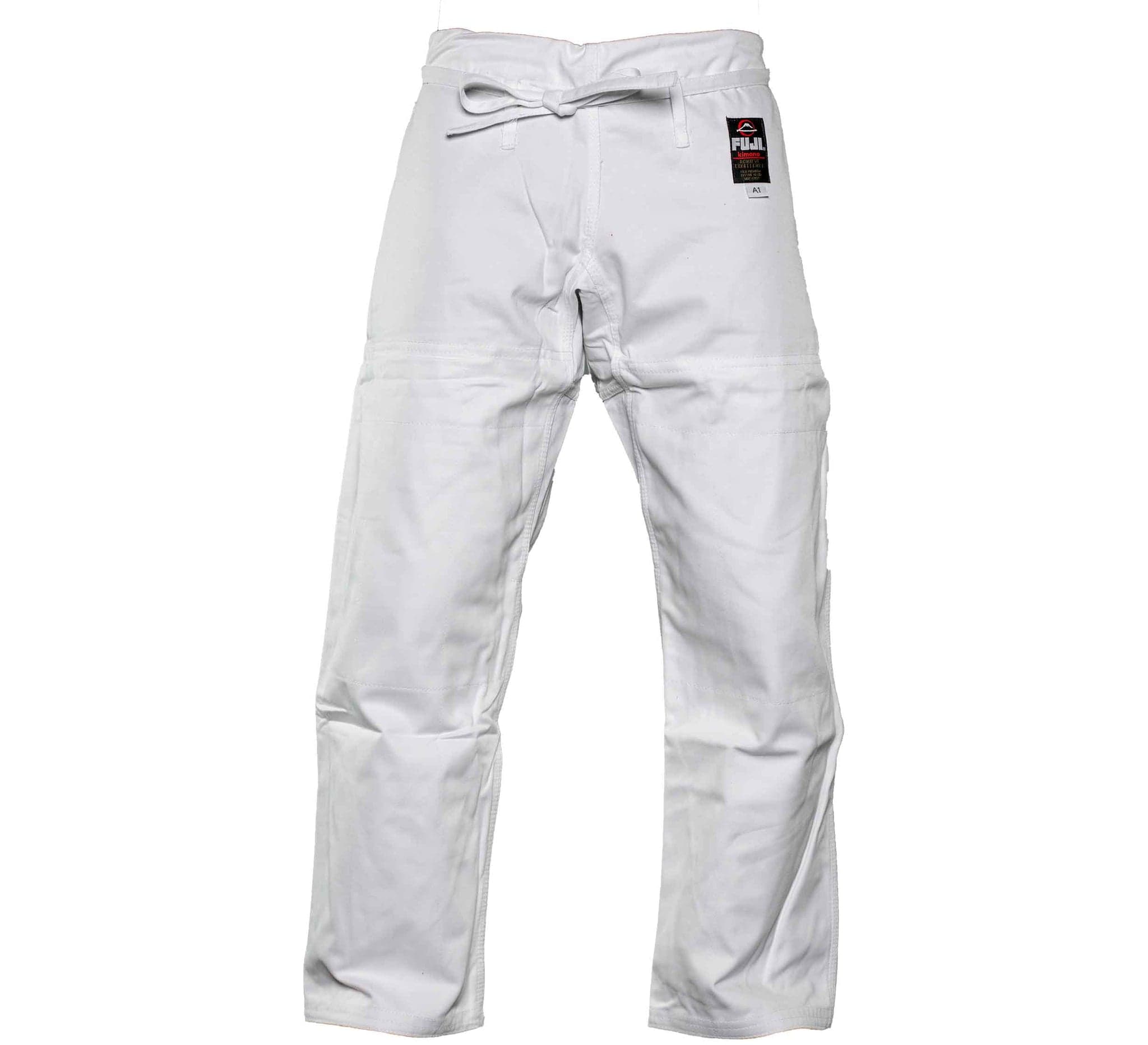
BJJ gi pants that fit standing up can still fail on the mat
Check BJJ gi pants at the waist, rise, knees, and cuffs so a good-looking size label becomes a uniform you can actually move in.
Comments (0)
Loading comments...