
Learning BJJ left-handed when the demonstration goes right
Quick answer: When a BJJ demonstration goes to your less comfortable side, learn the relationship between the limbs before deciding whether to mirror it. Ask the coach which details must stay the same and whether you can practice your preferred side first. Being left-handed does not mean every position should automatically be reversed.
The coach reaches with the right hand. You reach with the left. Your partner turns the other way, and a movement that looked perfectly sensible thirty seconds ago now appears to require an extra elbow.
Left-handed BJJ students can encounter a translation problem before they encounter the technique itself. The solution is not necessarily to force every repetition onto the demonstrated side. Start by understanding what each contact does, then decide which side gives you the clearest first attempt.
Name the job before the hand
"Right hand here" describes the demonstration from one person's orientation. "The hand nearest the hips controls this leg" gives you a relationship you can carry to the other side. Both kinds of instruction have uses, but the second is often easier to preserve when you mirror a movement.
During the demonstration, notice whether the coach is referring to a near or far limb, an inside or outside position, or a connection across the opponent's body. Those relationships may matter more than which hand happens to perform the task. A cross grip remains a cross grip when the entire arrangement is mirrored.
Do not quietly replace a detail you do not understand. Ask what the grip prevents or makes possible. If its job is stopping a turn, you need to know which turn. Merely putting a hand somewhere that looks similar can produce a different position.
A useful question is short: "If I do this on the other side, does this hand still control the far arm?" That lets the coach correct one relationship before you build the rest of the sequence on a mistaken assumption.
Mirror the whole starting position
Changing your attacking hand while leaving your feet, your partner's stance, and the direction of movement untouched is not a complete mirror. It is a new arrangement. Sometimes it works; sometimes it removes the very connection the demonstration depends on.
Set up slowly with your partner. Match the starting distance and the relationship between the bodies, then reverse the arrangement together if the coach has approved it. For a standing entry, this might include changing both athletes' lead legs. For a ground movement, it may mean beginning on the opposite hip with the opponent's corresponding limb available.
This is worth doing before adding speed. If the position feels tangled at the start, faster repetition will not identify which part you reversed incorrectly. Return to the demonstration or ask the instructor to check the setup.
Your partner should know what you are changing. "Can we mirror the starting position for my turn?" is clearer than reaching for a different limb midway through their expected response. Good cooperation begins before either person attempts the move.
Do not let handedness choose everything
The hand you write with is one piece of information about you. It is not a complete map of your grappling preferences. You may prefer passing one direction, escaping the other, and standing with a lead leg that surprises you.
Treat those preferences as observations. Notice which arrangements feel understandable and which need more instruction. Avoid declaring that an entire position is unavailable because it does not fit your idea of being left-handed. BJJ involves both people, and the opponent can determine which side becomes available.
You also do not need to prove that you are equally comfortable everywhere after one class. The immediate goal may be learning the movement accurately on one side. Later, the coach can help you decide which related positions deserve practice on the other.
Keep the distinction between comfort and understanding. A repetition can feel smooth because your partner is cooperating with a familiar habit. A slower attempt on the other side may reveal that you never understood which connection kept the opponent from moving away. That is useful information, not a verdict on your coordination.
Choose one side for the first explanation
If the coach permits it, learn the first clean repetition on the side that makes the instructions easiest to follow. Then work on the other side as a separate task. Alternating immediately can leave a beginner translating every cue before they have a stable reference.
There are situations where following the demonstrated side makes more sense. The instructor may be building toward a particular reaction, arranging a group drill, or using a sequence whose next step depends on everyone starting consistently. Ask rather than assuming that a preference overrides the structure of the lesson.
A small plan can keep the practice clear:
Establish the starting position with the coach's help.
Perform a few slow repetitions on the agreed side.
Name the contact that makes the movement possible.
Mirror the whole setup and check that contact again.
These are suggestions for organizing attention, not a required repetition count. The coach may have a better sequence for the class. The value is separating "I do not understand the move" from "I understand it but am still translating sides."
Give your partner usable directions
Your training partner is learning too. If they have just copied a right-sided demonstration, asking them to reverse every reaction without warning adds a second task to their turn. Make the arrangement explicit and keep their practice time intact.
You might agree that each person will do the demonstrated side first, then spend a short period mirroring it. Or you might reset the whole position between turns so each can begin on a preferred side. Either can work if both people know what is happening and the instructor allows it.
Avoid physically moving your partner into place without explanation. Tell them which limb you need and let them position it. If the setup still seems wrong, pause and ask the coach. Two uncertain students can spend several minutes confidently correcting each other into an entirely different technique.
The same care matters when you are the demonstration partner. Respond to the instructor's actual directions rather than anticipating the side you would personally choose. Your role in that moment is helping the rest of the class see the lesson.
Watch from more than one angle
A mirrored demonstration can be difficult to interpret when the important hand is hidden. Changing where you stand may resolve more confusion than hearing the explanation a second time. Ask for a view of the connection, or move around the demonstration when the instructor permits it.
When reviewing a video, distinguish the athlete's left and right from your own view of the screen. A person facing the camera creates an easy opportunity for mistaken instructions. Use body relationships in your notes rather than recording only screen directions such as "move left."
For example, "keep the elbow inside the partner's knee" is more durable than "put the left arm there." Add the actual side afterward if it helps you reconstruct the specific example. This makes the note useful even when you later practice from a different orientation.
If you record a demonstration, get permission and follow the gym's filming policy. A quick sketch or sentence can often preserve the detail you need without creating another task for the class or another person's image on your phone.
Let the opponent supply the side
A cooperative drill lets you arrange a favorite starting position. A live partner may not. They can lead with another leg, turn away from the connection you wanted, or force you to defend on the less familiar side.
That is a reason to practice recognition, not a reason to abandon your preferred game. In a controlled positional round, ask the coach to help you identify the cue that tells you which version is available. You may need a different entry rather than a forced copy of the same movement.
Keep the task modest. Your partner can vary one feature of the starting position while maintaining an agreed pace. Your job is to identify the available side and establish the first connection. There is no need to add a fast finish while you are still learning to read the setup.
If confusion appears around a submission or a vulnerable joint, stop and reset. Being unsure which direction is safe is not a useful challenge to solve with resistance. Technical clarity comes before completing the repetition.
Measure the translation separately
After class, write down the part that caused trouble. "Left side was bad" is too broad to help next time. "I mirrored my grip but left my outside foot in the original position" gives you something specific to check.
You can also note what became clearer. Perhaps naming the far arm solved the grip confusion, or watching from behind the instructor made the hip movement understandable. Those details become a small personal guide to learning, rather than a growing list of things you believe you cannot do.
Ask for one correction at the next opportunity. An instructor can respond more easily to a concrete setup than to a general request to teach the whole class left-handed. Over time, you may need fewer side-specific instructions because you recognize the relationships that survive the mirror.
The aim is not to erase your preferences. It is to make sure they are choices you can use, rather than translation errors that keep choosing for you.
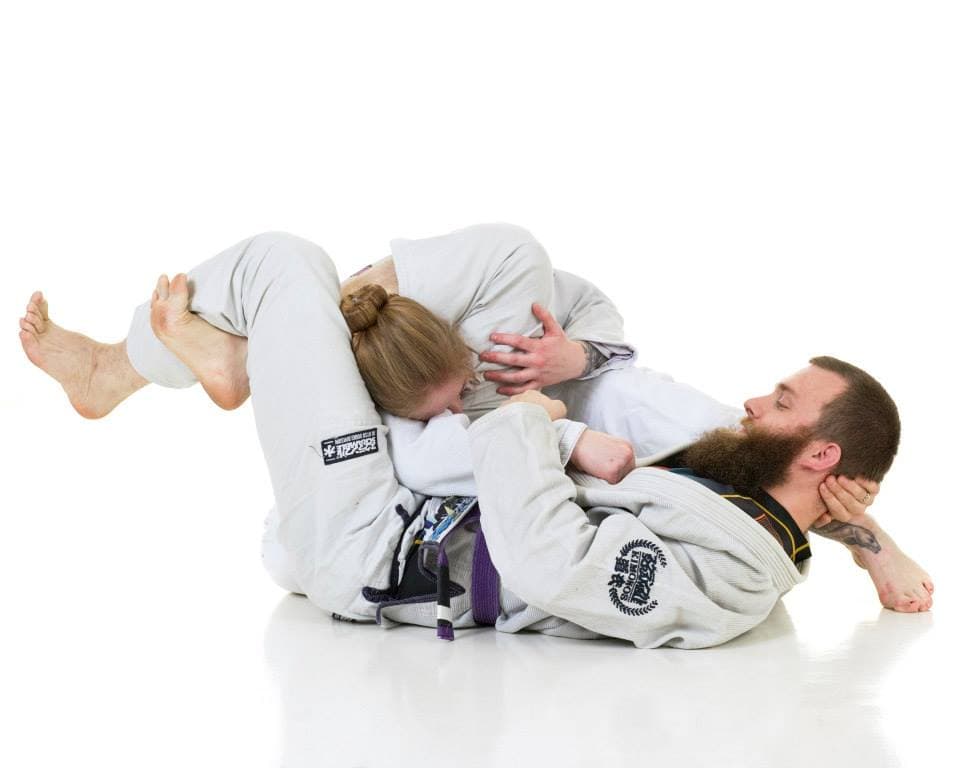
Main photo: BJJ Globetrotters; illustrative archive photograph, not a reported visit or a named subject in this article.
The takeaway
Learning BJJ left-handed begins with understanding what the demonstrated limbs are doing. Mirror the complete position, communicate the change to your partner, and ask the coach which relationships must remain intact.
Build a clear version before demanding an equally polished version on both sides. The useful progress is being able to explain and recognize the position wherever it appears, even while one direction still feels much more familiar.
Find a class where questions fit
Use Let's Roll's gym directory to find training options, then ask how the academy supports beginners during demonstrations and partner drills.
FAQ
Should left-handed BJJ students reverse every technique? No. Some positions depend on the opponent's orientation, and your preferred side may differ between movements. Learn the relationship between the bodies and ask whether mirroring fits the lesson.
Do I need to practice both sides immediately? Follow your coach's plan. Learning a clear version on one side before mirroring can be useful, but a class drill may have reasons for keeping everyone on the demonstrated side initially.
Why does the mirrored version feel completely different? Check that you reversed the whole setup, including feet, hips, grips, and your partner's position. Changing only one hand can create a different arrangement rather than a mirror.
What is a useful question to ask the instructor? Identify the uncertain relationship: which arm is controlled, which leg is outside, or which direction the grip prevents. A specific question is easier to answer than saying that the entire move feels backward.

Owen Bellamy
Owen Bellamy writes for the person training twice a week around a job. Nothing he suggests requires quitting the job.
Related Posts
Jiu-jitsu in Montreal: build the visit around a real class
Plan BJJ training in Montreal around confirmed classes, language arrangements, winter travel, visitor policies, and equipment that is ready to use.
Competing in gi and no-gi on the same day takes two plans
Prepare for gi and no-gi competition on the same day with separate rule checks, complete outfits, schedule coordination, and a realistic second-bracket plan.
BJJ gi pants that fit standing up can still fail on the mat
Check BJJ gi pants at the waist, rise, knees, and cuffs so a good-looking size label becomes a uniform you can actually move in.
Comments (0)
Loading comments...