

Staying in mount means having somewhere for your weight to go
Quick answer: Staying in mount requires you to move your support as the person underneath changes direction. Practice that balance with a cooperative partner before adding submissions, and ask your coach to identify which part of your base disappears when you are reversed.
Getting to mount and staying there are separate skills. You can complete the pass, settle above your partner, and still fall over as soon as they move. The missing piece may be less about applying more effort than about recognizing where that effort is being supported.
Mount is a changing position. A partner underneath can turn, bridge, frame, or begin recovering a knee, and each action changes the problem on top. Learning to notice those changes gives you something more useful to practice than simply trying to feel heavier.
Find out what is holding you up
Stephan Kesting's discussion of weight distribution asks a useful basic question: what supports your body in a pin? Applied to mount, that question invites you to notice the contact you have with the mat and with your partner before deciding what to change.
Start in the version of mount your coach has taught. With a cooperative partner, identify your support points and the direction in which you feel least stable. Do this without trying to squeeze harder or begin a submission. You are examining the position you already have.
Then ask your partner to make a small, agreed movement. Notice whether you follow it comfortably or suddenly need to catch yourself. That first adjustment is informative. It shows where the original arrangement stopped supporting you, before a full escape adds several more changes to the exchange.
This is an observation exercise, not a prescription for putting maximum weight on somebody. Keep the pressure appropriate to the drill, communicate, and stop if either person is uncomfortable. A coach can help distinguish a useful positional adjustment from simply making the practice unpleasant.
Give your hands a job you can change
A hand that is busy attacking cannot always help you balance in the same instant. That does not make attacking wrong. It means an attack changes the support available to you. If you consistently lose mount while reaching for something, examine the reach and the movement underneath it together.
Practice holding the position without submissions first. Let your hands help you respond to small changes while the bottom partner moves within an agreed task. The goal is to understand where support is available, not to win a round by refusing to attempt anything.
When you add an attack later, ask the coach what keeps you stable during that specific action. Avoid assuming that the base used during a quiet starting position remains sufficient after your arms and torso move. A grip can create control, but it can also occupy a hand you were relying on.
Keep fingers and wrists out of awkward positions as you adjust. If you repeatedly catch yourself in a way that feels uncomfortable, stop and have the coach watch the transition. Repeating an unstable movement faster does not answer the question of why you need that desperate catch.
Read the movement before chasing the escape
A bridge, a turn, and an attempt to bring a knee inside do not ask exactly the same question of the person on top. Treating every movement as a command to squeeze down can leave you late to the change that matters. Begin by recognizing what your partner is trying to create.
Have the bottom partner use one agreed escape movement at a manageable pace. You are not trying to memorize every possible answer. You are learning what that attempt feels like at its beginning and how the mount taught by your coach can adjust without becoming rigid.
After a few repetitions, discuss the moment the position changed. Did your partner turn underneath a body that stayed still? Did a support point disappear when you reached? Did you follow movement farther than you intended? These descriptions give a coach more to work with than saying your mount is terrible.
Once you can recognize one action, introduce another. Keep the choices limited enough that both partners know the purpose. A drill with a clear problem can expose an adjustment that disappears in a full round filled with unrelated grips and submission attempts.
Let the position change its shape
Mount is not one frozen arrangement of knees, hips, and hands. Your coach may teach different versions for controlling a turn, advancing an attack, or responding to a frame. Learn the purpose of the version you are using rather than collecting names without understanding the transition between them.
This matters when an instruction seems contradictory. One explanation may ask you to settle lower; another may move you higher. Ask what the bottom partner is doing and what the top player wants to achieve in each example. The starting conditions can explain why both instructions make sense.
Do not move to a new version merely because the position feels busy. Move for a reason you can identify. If you cannot describe what the adjustment is intended to prevent or create, ask the coach to show the same transition slowly with the bottom partner's response included.
The aim is to preserve useful control while changing shape. There will be moments when maintaining the exact starting position is less sensible than following a coached transition. That is different from drifting without noticing that the original pin has already gone.
Build a round with a narrow ending
For an initial balance drill, agree that the top player is working only to maintain mount and the bottom player is using a limited escape task. Leave submissions out. Ask the coach to approve the starting position, intensity, and reset condition so that both partners are practicing the same exercise.
A simple structure can keep the feedback clear:
Begin from the same coached mount position each time.
Allow one agreed escape action at a controlled pace.
Reset when the position is clearly lost or the coach's condition is reached.
Compare what changed before repeating with slightly more resistance.
Swap roles. Feeling the position from underneath can make the top player's timing easier to discuss, but it should not become an excuse to test maximum pressure. Each person needs a useful turn at the actual task. Keep the drill short enough to remain attentive.
When the exercise becomes predictable, increase the choices gradually. The next step might be allowing two escape actions rather than making the same action explosive. More resistance and more complexity are separate variables; changing both at once can hide what you were trying to learn.
Name the first problem, not the final result
A reversal is the end of a sequence. If you review only the final landing, you may miss the moment when your balance first became difficult to recover. Ask your partner or coach to help identify that earlier point, then restart close to it.
Useful notes are concrete. You might record that reaching with one hand coincided with losing support on that side, or that you stayed centered while your partner turned underneath you. These are observations to test, not universal rules about every version of mount.
Avoid explaining every loss through the partner's strength or size. Those differences can matter, but they do not tell you which adjustment was available. Ask what could be improved in the position before deciding that the result contains no technical information.
Our gym directory can help you find instruction if you do not have a regular place to practice. A written explanation can organize a question; it cannot see your support points or correct an uncomfortable movement in real time. That is a good reason to bring this problem to a coach.
Add attacks without abandoning the balance question
Once you can maintain the coached position against the agreed movement, add one familiar attack under supervision. Notice what changes as you begin it. The useful question is whether the transition preserves enough control for the action, rather than whether you can force the finish before being reversed.
Let your partner defend at the agreed pace. If every attempted attack produces the same loss of position, return to the beginning of that attempt. You may need a different setup, a change in timing, or a clearer understanding of what the bottom partner is doing.
Do not measure improvement only by how long you can remain on top of a cooperative person. As the drill develops, look for earlier recognition and fewer hurried corrections. Those observations are more informative than a long hold in a situation that never changes.
In ordinary rounds, keep the same attention without insisting that every mount must last forever. A partner may escape well. The point of the practice is to give you a clearer response and a better question afterward, not to make a positional loss impossible.
Main photo: Pendergrass Academy of Martial Arts; illustrative mount-position photograph.
The takeaway
Mount balance becomes easier to study when you separate support, movement, and attacking. Start with a coached position, notice what holds you up, and introduce one controlled escape action before increasing the number of decisions.
When you lose the position, examine the first change rather than only the final reversal. A specific observation about a hand, a turn, or a missing support point gives the next repetition something concrete to address.
Practice with a clear agreement
Find a suitable session through the open-mat directory, confirm the host's rules, and agree on the drill with your partner and coach before starting.
FAQ
Why do I get reversed as soon as I reach mount? Several things can cause it, including losing a support point or failing to follow a turn. Ask a coach to watch the beginning of the reversal rather than guessing from the result.
Should I squeeze harder to stay in mount? More effort does not necessarily fix the position. First check your base, the partner's movement, and the purpose of the mount variation you are using.
Should beginners practice mount without submissions? A supervised positional drill without submissions can make the balance problem easier to see. Use agreed resistance and a clear reset condition.
How do I know when to add attacks? Ask your coach to progress the drill once you can respond to its movement task with control. Add one familiar attack and examine how it changes your support.

Nina Okada
Nina Okada explains positions the way a good training partner does: one problem at a time, with the limits of the explanation said out loud. She is careful about the difference between what footage shows and what it only suggests.
Related Posts
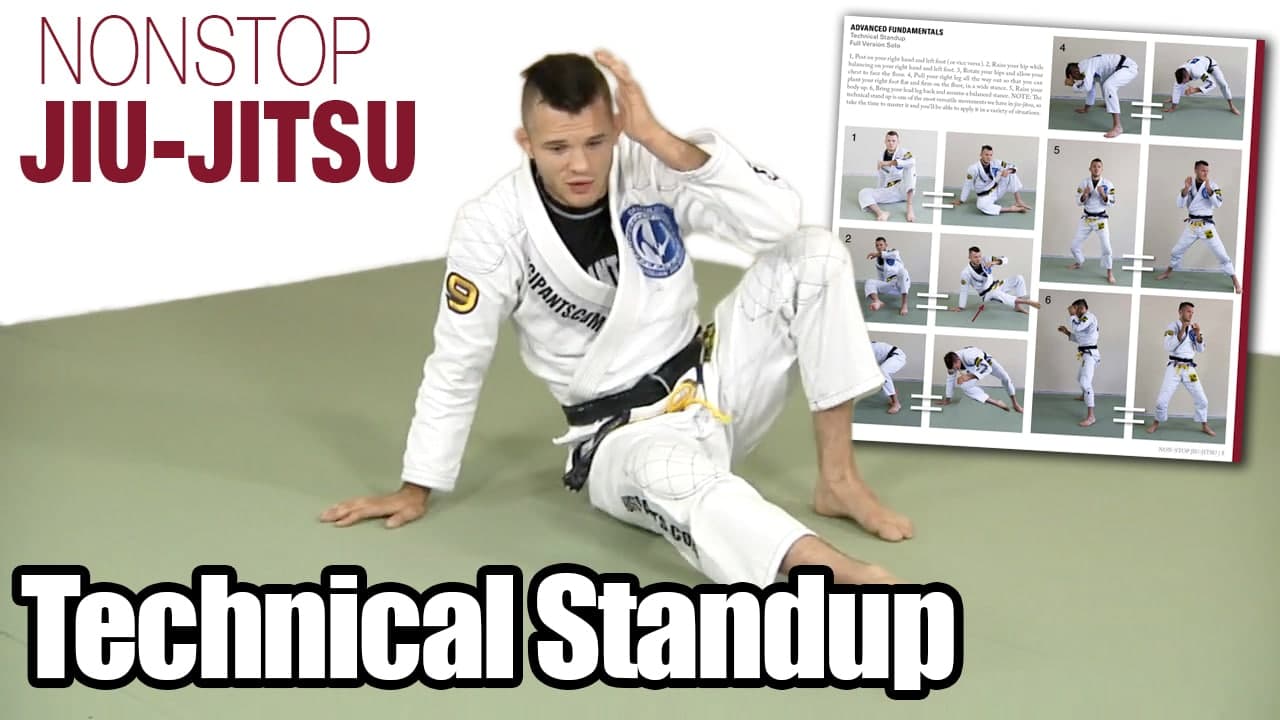
A technical stand-up starts before you lift your hips
The movement is familiar. Using it in a round means recognizing space, keeping a usable base, and knowing when to stay seated.
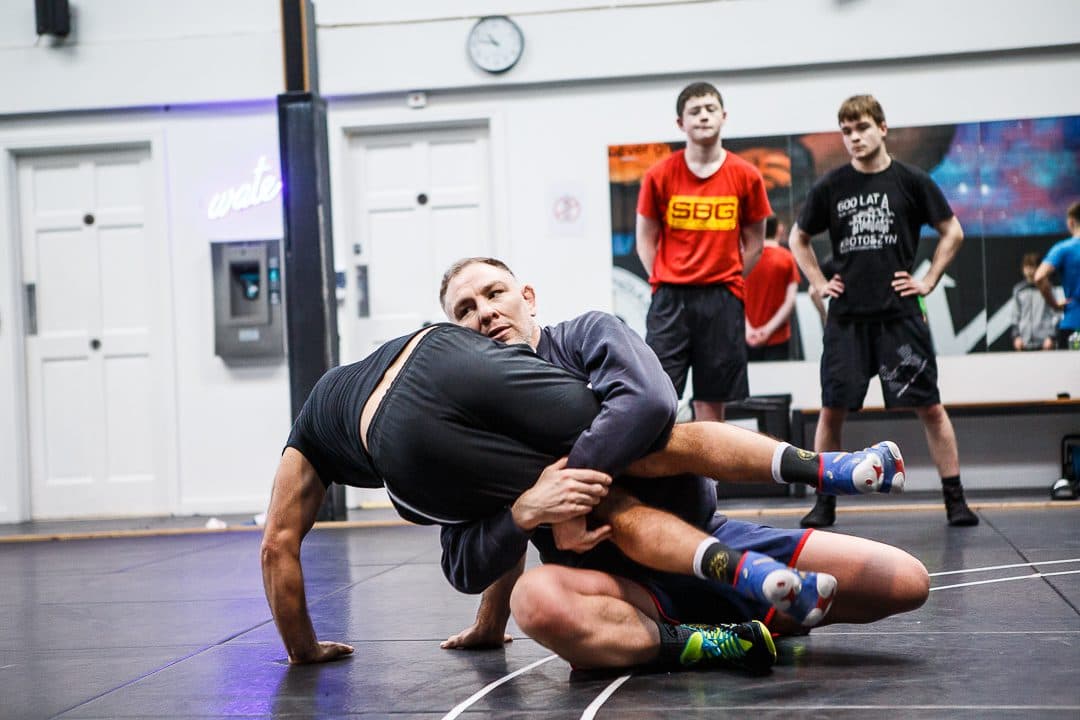
BJJ frames and pushing are different uses of the same arms
Understand what a BJJ frame does, how it differs from pushing, and how to practice the distinction without turning the drill into a strength test.

Standing up from guard is a decision, not a failed sweep
Standing from guard can be a deliberate BJJ choice. Learn to read the connections, space, and next position before trying to get up.
Comments (0)
Loading comments...