

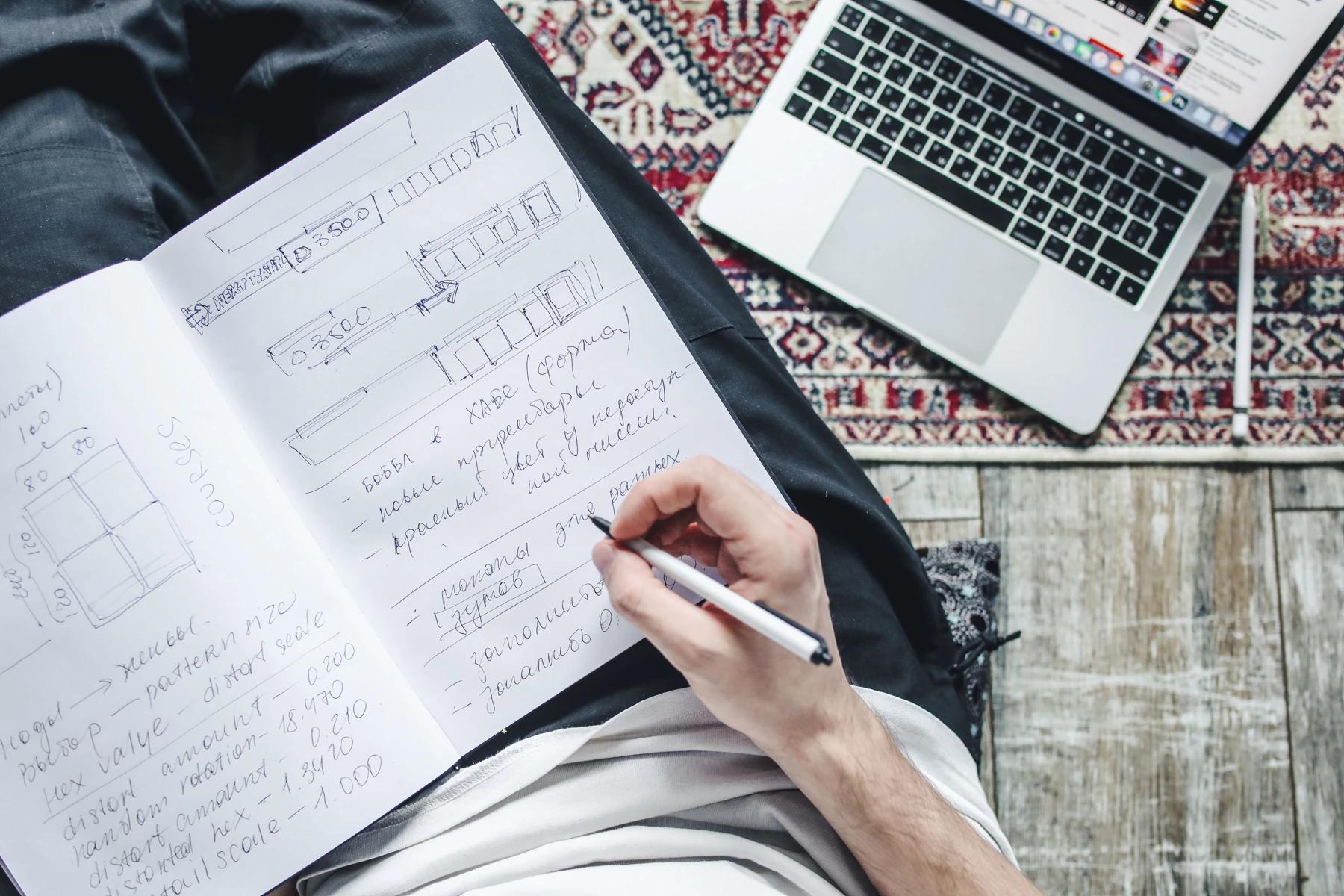
You remember that a knee came back between you. You are less sure about everything that happened just before it. That is a perfectly workable first entry.
A training journal can start there, with a question small enough to show another person. It does not need a transcript of the lesson or a complete account of the evening. The laundry already has a claim on the rest of it.
One observation worth bringing back
Build a useful training note
Write one position, one observation, one coach question and one next step. The builder formats your words; it does not interpret the session. Keep other people’s names and private details out of the note.
The builder does not save or send your text. Use Clear note to erase the current fields. Copying places the note on your device’s clipboard; paste and save it yourself if you want to keep it.
For example: open guard, top partner, during a passing round. Up to 160 characters.
Describe one visible event or one detail you cannot recall. Leave room for uncertainty. Up to 600 characters.
Ask about the point you want to see or understand, using your own words. Up to 400 characters.
A small follow-up: bring the question to class, review a timestamp, or revisit an assigned task. Up to 400 characters.
Three complete worked notes
These original examples are invented. Use them to see the structure, then replace the words with your own observation.
A passing round with one missing detail
Original hypothetical note after a coach-led positional round. It records an observation without deciding why it happened.
- Position and my role
- Open guard; I was the top partner in a passing round.
- What I observed
- The bottom partner brought a knee back between us before I had settled beside their torso. I cannot recall which contact I had released first.
- Question for my coach
- Can we look at the moment before that knee returns? Which starting contact did this lesson ask me to keep?
- Next practice step
- Bring this note to the next class. Once the coach confirms the assignment, revisit that starting exchange with a partner.
A class detail that did not stick
Original hypothetical note about the demonstration. An honest gap gives the question a specific starting point.
- Position and my role
- Bottom side control; reviewing today’s class demonstration.
- What I observed
- I remember the starting position, but I cannot reconstruct the arm arrangement the instructor showed before the movement.
- Question for my coach
- Could you show that starting arm arrangement again, with me in the bottom role?
- Next practice step
- Ask before the next round. Review the arrangement cooperatively, then follow the instructor’s practice task.
A follow-up after the coach answers
Original hypothetical follow-up to the passing note. The invented coaching response belongs only to this example, not to a reported lesson.
- Position and my role
- Open guard; top partner, returning to the same class assignment.
- What I observed
- In this example, the coach asked me to watch the contact before the knee returns. During the assigned round I noticed that moment twice, but could not tell when it changed the exchange.
- Question for my coach
- Can you watch one exchange and tell me whether I am noticing the intended moment?
- Next practice step
- Keep the same observation for the next assigned round. Add one sentence after the coach’s feedback, rather than opening several new topics.
Give the note one job
Before writing, decide what you want to bring back. Perhaps the demonstration had an arm arrangement you cannot recall. Perhaps the same moment appeared during an assigned round. Choose that piece, and give the page a clear subject.
“Passing did not work” leaves the next reader with a whole round to reconstruct. “Top partner in open guard; a knee returned before I settled beside the torso” gives the conversation somewhere to begin. The second sentence still needs context, but it contains an event another person can help you examine.
In its note-taking article, Inverted Gear advises recording the position and important details without trying to transcribe the instructor. Keep your attention on the lesson while it is happening, then make the short entry when there is a suitable break.
Write the position and your role first
Start with the arrangement and which side you occupied. “Bottom side control during the class demonstration” and “top partner during a passing round” are different contexts. Include whether you were watching, cooperating in a drill or working inside an assigned round.
Use the words your instructor uses. If you are unsure of a name, describe what you can recognize and put the naming question in the next line. The position guide can help you find a starting label; it cannot recover a detail you did not see.
Add only the context needed to understand this entry. A notebook of your own may include the date or lesson reference. This builder leaves identifying information out and concentrates on the four-part note. You can add your own filing details after copying it.
Keep the observation separate from your explanation
Write what happened in an order you can defend. “Their knee returned between us before I settled” is an observation. “That happened because I changed my grip too early” adds an explanation. The explanation might be useful, but label it as a question until it has been examined.
Uncertainty belongs in the sentence. “I cannot recall which contact changed first” is clearer than filling the gap with the move you think must have happened. If you have a permitted video, note a timestamp in your own record. If the angle hides the relevant detail, write that too.
Keep a successful exchange just as specific. “I noticed the starting contact before moving” gives you something to discuss. “Everything clicked” is a fine feeling, but it asks tomorrow’s reader to do quite a lot of remembering.
- Position: where the exchange started and your role.
- Observation: one visible event, recalled detail or clearly named gap.
- Question: what you want the instructor to show or check.
- Next step: where you will bring the answer back into practice.
Ask a question somebody can show you
Turn the uncertain point into a small request. “Could you show the starting arm arrangement with me in the bottom role?” is easier to begin answering than “How do I escape side control?” The broader question can wait until the starting point is shared.
The builder will not diagnose the exchange or add technical advice. It keeps your wording under a heading so the next conversation can begin with the person who taught the task. You can use the note as a private-lesson brief too, if that is how you have arranged to get feedback.
Give the coach room to change the question. They may see a missing starting condition or suggest a different observation. Add that answer beneath the original entry rather than silently replacing what you first thought. Keeping both makes the change in your question visible.
End with a next step you can recognize
Choose an action that follows from the question: bring the note to the next class, review the relevant demonstration, or revisit the task the instructor assigns. Keep the step small enough that you can later say whether you did it.
At Gracie Barra West County, Professor Blake’s article on deliberate training describes practice organized around a specific purpose and positional work with goals and resets. For your journal, record the assignment actually used, including where the coach wanted the exchange to restart.
The positional-round explorer shows why that reset detail is worth recording. Ending at the first change and allowing a stated continuation give the partners different tasks. A note that says only “positional sparring” leaves that useful part out.
Avoid adding a whole new curriculum after one frustrating round. Write the immediate next step, take it back to the existing lesson, and make the following entry from what actually happens there.
Review one entry without recopying the whole notebook
Before the next suitable class, read the previous question. Is it still the question you need answered? If so, bring it. If it has been answered, add the answer in your own words and record the next thing you are trying to notice.
Stephan Kesting’s seminar advice describes returning to rough notes and revisiting material with a training partner. That gives a note a route back to practice. Keep the review attached to material you were taught and the arrangements you have permission to use.
A short follow-up can be enough: “Coach confirmed the starting arrangement; I will watch that contact during the next assigned round.” The complete examples below show an initial question and an invented follow-up. They are models for the writing structure, not accounts of a real class.
If the question is still too vague, mark the point you cannot reconstruct. You can ask to see the setup again. There is no need to pretend the entry contains a complete technical explanation.
Keep a record you are willing to reopen
Choose somewhere you already use: paper, a plain note file or your existing journal. The useful part is finding the previous question when you need it. A complicated system is optional.
Keep the record about your learning task. Other people’s names, private conversations and medical details are unnecessary for these four fields. If you want a video or photo, follow the host’s recording policy and obtain the relevant permission rather than treating a journal as permission to record.
The builder keeps text only in the current page. Copying explicitly places it on your device’s clipboard; you choose where to paste and keep it. Use Clear note to erase the current fields. If you prefer paper, the three complete examples remain readable without JavaScript.
Start with one entry after a suitable session. At the next class, use the question. That gives the notebook its second job before you spend time designing its cover.
Common questions
What should I write in a BJJ training journal?
Start with the position and your role, one observation, one question for the coach and one next practice step. Include the assignment when it matters: a demonstration, cooperative drill and positional round are different contexts. The three worked notes show the complete structure.
Do I have to record every technique and every round?
No. This template is designed around one exchange or class detail. Choose something you want to revisit. If you keep a longer record elsewhere, the four-part note can sit inside it without turning every session into a full written report.
What if I do not know the position’s name?
Describe your role and the arrangement you remember, then ask for the name. An uncertain description is useful when the gap is clear. Use the position reference for vocabulary, and leave space for the instructor to correct your label.
Should I write down how often I won or lost?
You can choose your own record, but this builder focuses on observable tasks rather than a partner tally. “The starting contact changed before the knee returned” gives you a question to work with. A round result alone leaves the specific exchange unexplained.
Can I use the template for a seminar or a match video?
Yes. State that context in the first field. For a video, note what the angle actually shows and keep the link and timestamp in your own record. For a seminar, connect the next step to material you were taught and any permission needed for recording or partner practice.
Will the builder explain what I did wrong?
No. It formats the words you enter into four headings. Put your uncertainty in the observation and turn it into a question for the instructor. It does not watch a round, infer a cause or supply a technique prescription.
Is my journal text saved or sent anywhere?
This tool does neither. Your text stays in the current page. Copy runs only when you press the copy button and places the formatted note on your device’s clipboard. Paste it into your own record if you want to keep it, and use Clear note to erase the current fields.
Sources & accuracy notes
Sources checked . The builder formats your own words into an original four-part note. Worked notes are hypothetical. Instruction and follow-up practice belong with the actual coach and session. The tool does not save or send note text; Copy writes only when requested to your device’s clipboard.
- Inverted Gear: 6 Tips for Taking Notes in Jiu-JitsuOriginal March 31, 2016 advice to record useful positions/details without trying to transcribe a lesson. Checked November 1, 2026.
- Gracie Barra West County: deliberate trainingProfessor Blake’s September 21, 2026 article describes purposeful practice and positional goals and resets. The four-part note template is an original editorial design. Checked November 1, 2026.
- Stephan Kesting: getting the most out of a grappling seminarMarch 5, 2012 original advice includes revisiting rough notes and returning to material with a partner; no quantified learning claim is adopted. Checked November 1, 2026.
Found a factual error or a rule that has changed? Send a correction to support@letsroll.co.