
BJJ nails and jewelry: finish the small checks before class
Quick answer: Check fingers, toes, jewelry, watches, and other removable items before joining a BJJ class. Follow your academy's published policy and ask the instructor about anything uncertain. If an item or grooming issue cannot be resolved, arrange suitable participation rather than asking a partner to accept it.
A wedding ring can be small enough to forget and still be present for every grip. So can a rough nail that did not seem worth checking at home. These are ordinary preparation tasks, with consequences that reach the person training with you.
The useful routine is short. Put removable items somewhere deliberate, check what needs attention, and ask before class if there is an unresolved issue. Nobody needs a public inspection ceremony to make that happen.
Use the academy's actual policy
San Marcos Jiu Jitsu's published uniform policy prohibits jewelry, watches, and exposed piercings on the mat and asks students to trim finger and toe nails before training. It provides a clear example of a school stating these expectations before the lesson.
Read the policy at your own academy and ask where it is kept if you cannot find it. A teammate's habit does not establish permission, and what another school allowed on one occasion does not override the host's instructions.
Keep the question practical. If a particular item cannot be removed or you are unsure how the policy applies, tell the instructor before joining the exercise. The answer should come from the person responsible for the class, rather than a hurried agreement with the first partner available.
Competition is a separate setting. Check the current organizer's uniform and equipment rules for the division you entered. Training permission does not establish event eligibility, and an event's inspection procedure should not be invented from somebody else's memory.
Give removable items a destination
Decide where rings, watches, and other items go before you start taking them off. A loose ring balanced on a windowsill creates a second problem while solving the first. Use a secure arrangement that suits your belongings and the academy's storage instructions.
If an item is expensive or difficult to replace, consider leaving it at home when practical. Ask about storage before relying on a locker you have not seen. A place to put a bag is not necessarily a promise about security.
The same routine can help before work or travel. If you remove a watch during a busy change of clothing, put it in the same deliberate place each time. Otherwise the end of class becomes a search through the floor, bag, and changing bench.
Do not leave small objects on the mat edge while training. A boundary that seems out of the way at the start can become part of another pair's movement. Follow the host's storage arrangement rather than creating a private exception beside your starting position.
Check hands before the first grip
Look at your nails before arriving where possible. The aim is to address a practical issue before it becomes somebody else's experience during a drill. You do not need a complicated product routine to notice a rough or unexpectedly long edge.
If something needs attention, use appropriate personal tools away from the mat and clean up afterward. Do not leave clippings or tools in a shared changing area. Treat the task as ordinary grooming, with its own place and time.
Avoid making medical claims about the result. A nail check does not guarantee that training cannot cause a scratch or other injury. It is one part of following the room's preparation standard, alongside suitable equipment and controlled practice.
If you have a nail or skin concern that needs clinical advice, ask a qualified professional. The coach can decide how to organize participation, but a class policy is not a diagnosis. Keep those responsibilities separate instead of turning a pre-class question into treatment advice from teammates.
Remember the feet as well
A hand check is easier to remember because hands are visible during packing. Toes can remain out of sight until shoes come off. Include them in the routine before leaving, especially if your academy expressly addresses both.
The same principle applies to any practical issue discovered after arrival. Tell the instructor, ask what participation is appropriate, and avoid improvising a solution solely to get onto the mat. A partner's willingness to continue does not necessarily settle the host's policy.
Keep off-mat footwear in its proper role. Follow the academy's instructions about moving between the mat, changing area, and other spaces. Do not assume that everyone in the building follows the same footwear arrangement because they share an entrance.
Our article on being a good training partner gives preparation a place alongside technique. The smaller task is often the more useful one. Being ready to join the lesson includes the things you can settle before anybody has to ask you.
Tape is not a universal permission slip
Do not assume that covering an item makes it acceptable. Ask the instructor about the exact issue and follow the academy's answer. A general claim that somebody else always tapes it leaves too much unexplained.
This matters particularly when an item cannot be removed easily. The host may need to recommend another form of participation or ask you to wait. That can be inconvenient without becoming a judgment about the personal significance of the item.
For a new piercing or another question involving healing or health, obtain appropriate professional advice and tell the academy what participation question remains. This article cannot determine when contact training is suitable. A partner should not be asked to make that decision on the spot.
If a solution is approved, make sure you understand its limits. Permission for an observation session or a particular exercise does not automatically cover open sparring. Ask about the actual activity rather than treating one answer as approval for the rest of the timetable.
Use a repeatable packing check
Put the check at a point you already control. It might happen while laying out clothes or packing the clean kit. A routine that depends on remembering it during the last minute before class is easier to miss when the journey changes.
The goal is not to make preparation elaborate. A few deliberate actions can reduce the number of things discovered at the mat edge. Add the check to a note if it helps, without turning the note into another object you need to maintain.
Check finger and toe nails before leaving.
Put removable jewelry and watches in their planned storage.
Review any unfamiliar academy equipment rule.
Ask the instructor about an unresolved issue before joining practice.
For visitors, our drop-in etiquette article adds the booking and clothing questions. Preparing the small items at home leaves the arrival time available for introductions and understanding the class rather than negotiating an avoidable exception.
Address a problem without making a spectacle
If you notice an issue with a partner, stop and speak plainly. A short request to check with the instructor is more useful than continuing while becoming irritated. It also gives the host a chance to apply the policy consistently.
Do not turn a reminder into public humiliation. A beginner may have missed an instruction, and an experienced student can forget something too. The aim is to resolve the problem before the exercise continues, rather than establish who should have known better.
At the same time, you do not have to accept an unresolved issue because the other person is confident. You can decline the round and involve the instructor. A friendly exchange does not remove either partner's ability to stop.
Once the practical problem is settled, let it remain settled. There is no need to make an ordinary ring removal into the student's permanent reputation. The useful culture is one where people can correct preparation quietly and return their attention to the lesson.
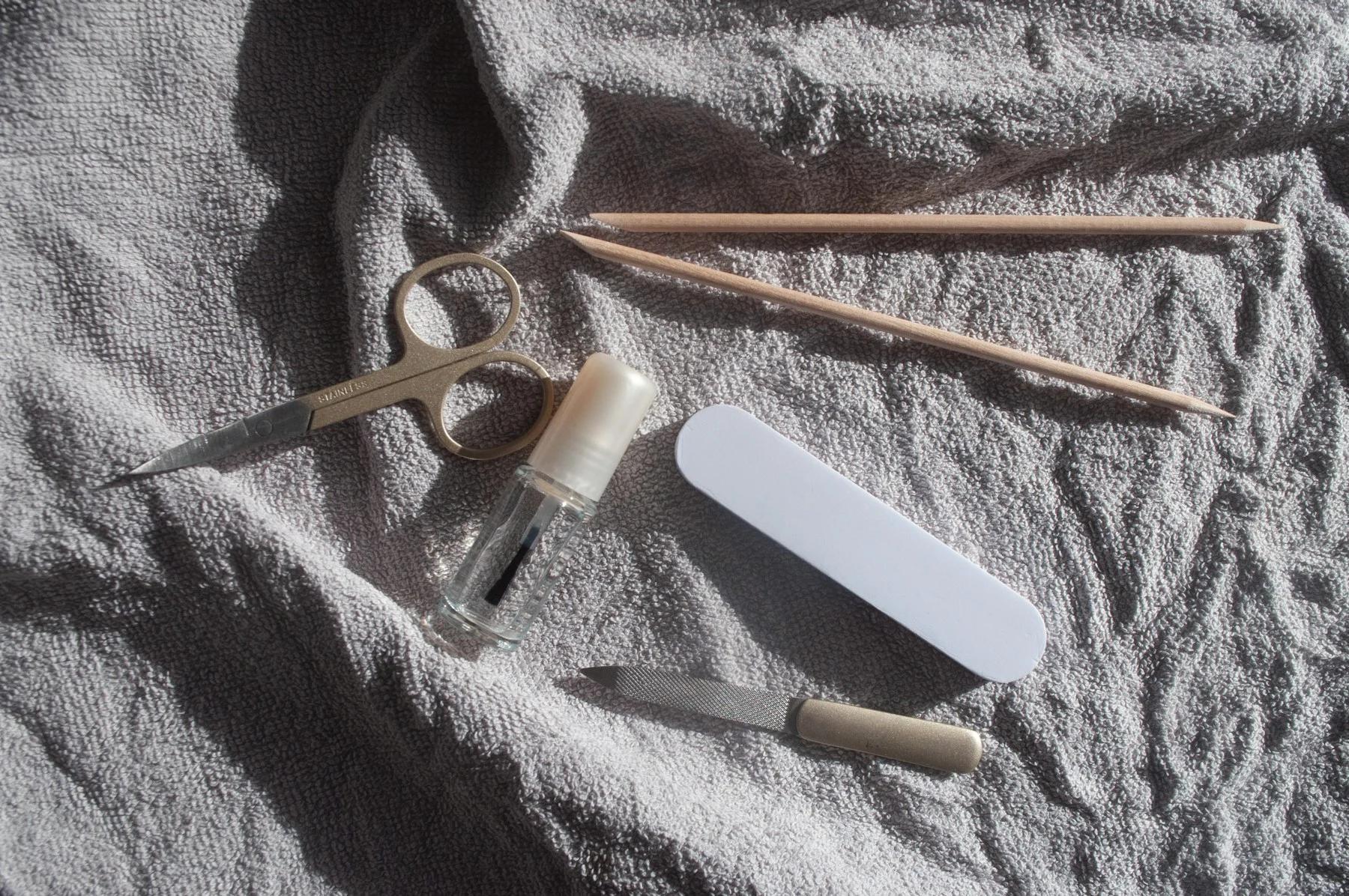
Main photo: Ksenia Pixelesse. Nail-care tools arranged on a towel. Illustrative photograph; does not depict a cited academy, product, or Let’s Roll writer.
The takeaway
Check the small things before they become part of somebody else's round. Nails, removable jewelry, watches, and other items belong in a simple preparation routine governed by the actual academy's policy.
When a question cannot be resolved, ask the instructor about suitable participation and use clinical advice for health questions. Keep the correction ordinary and specific. Good preparation makes the first grip easier without needing to draw attention to itself.
Read the room before joining it
Use the gym directory to find a class, then ask the host about its equipment and preparation policy before your first visit.
FAQ
Can I wear a wedding ring during BJJ? Check the academy's policy and remove it where required. If an item cannot be removed, ask the instructor about suitable participation before joining the exercise.
Does putting tape over jewelry make it acceptable? Do not assume so. Covering an item does not automatically satisfy a gym or organizer's rule. Ask about the exact item and activity instead of relying on another person's routine.
Should I check toenails as well as fingernails? Follow the host's grooming policy. Some schools, including San Marcos Jiu Jitsu, expressly address both. Include the check before leaving rather than discovering it at the mat edge.
What if I have a nail or piercing issue needing health advice? Consult an appropriate qualified professional and ask the academy how to organize participation. A coach or training partner should not be treated as a substitute for clinical advice.

Owen Bellamy
Owen Bellamy writes for the person training twice a week around a job. Nothing he suggests requires quitting the job.
Related Posts

Joining a BJJ beginner program halfway through
Find out whether a BJJ beginner class accepts mid-cycle starts, how to catch a missed topic, and when to ask about progressing.

A BJJ trial week should answer more than whether class was fun
Use your BJJ trial week to test the ordinary timetable, teaching, and membership details before choosing where to train.
A beginner BJJ course or regular classes: choose the actual program
Compare the syllabus, attendance, partner practice, and next stage before choosing an introductory BJJ course or ongoing classes.
Comments (0)
Loading comments...