
What a BJJ highlight reel leaves out
Quick answer: A BJJ highlight reel shows selected moments, so it can't tell you how often a technique worked or what happened during the missing exchanges. Use it to find an athlete or match worth watching, then examine the full sequence before treating it as a training lesson. Enjoy the edit; check the context separately.
A highlight reel can fit an entire competitive season between the opening beat and the bass drop. Failed grips rarely make the cut. Neither does the minute spent trying to persuade a stubborn knee to move.
That's a reasonable way to make a short sports video. The problem begins when a clip made to hold attention gets treated as a complete explanation of how an athlete wins. A spectacular finish is evidence that a finish happened. It doesn't automatically explain the route, the risk, or the repeatability.
You don't need to become suspicious of every exciting clip. You need to know which questions the edit can answer, and which ones require the parts it left out.
The finish has borrowed time from the setup
Suppose a reel begins with an athlete already attached to an opponent's back. The submission may be beautifully clear. What you cannot see is the pass, scramble, or defensive mistake that created the position. Copying the finish won't supply the missing entry.
That omission is particularly easy to miss when the technique is familiar. You recognize the end and assume you understand the exchange. Go back far enough to find the first meaningful connection. If the clip doesn't include it, look for the full match rather than filling the gap with a technique you happen to know.
The setup might involve several unsuccessful attempts. It might also involve an opponent taking a necessary risk because of the score. Both would change the lesson you take from the final movement. The finish remains real; the explanation becomes more specific.
A useful viewing question is simple: what did the opponent still have available immediately before this? If you can't see the answer, you haven't yet found the beginning of the technical story.
A compilation has no visible denominator
Ten successful armbars can look like a technique that works every time. The same compilation could have been assembled from ten attempts or several hundred. Without that denominator, you cannot calculate a success rate, however authoritative the caption sounds.
The problem isn't unique to submissions. A passing montage can omit all the rounds where the athlete never cleared the legs. A takedown reel can remove every defended entry. This is what selection means, and it can occur without anybody making a false statement.
Be careful with your own training comparisons too. Your ordinary Tuesday contains the transitions, pauses, and failures another person's editor discarded. Setting those experiences beside each other doesn't produce a fair measure of ability.
When you want a stronger basis for analysis, choose a complete match or a clearly defined sample. You might review all the guard-passing attempts in one match, including failures. That still won't establish a universal percentage, but at least you can explain what you counted and what you left out. The answer becomes small enough to defend.
Read the score before praising the decision
An athlete's options change with the match situation. A risky attack while trailing late in a match may be a sensible attempt to avoid an otherwise likely loss. The same choice early in a tied contest can carry a different cost.
A short edit may hide the clock or crop out the scoreboard. It may also combine matches under different rules. Don't import points from one event into another simply because the uniforms look similar. The ADCC format, for example, deserves its own context rather than being treated as interchangeable with every gi tournament.
Before deciding a movement was clever or careless, establish what result the athlete needed. If you can't verify the score, say that the situation is unknown. Slow motion can show a grip very clearly while telling you nothing about the decision surrounding it.
This doesn't mean every exchange needs a lecture. It means tactical praise should rest on tactical information. A beautiful movement can be enjoyed as a beautiful movement without turning it into a recommendation for every close match.
The camera can hide the important hand
A close shot of two faces may make an exchange feel intense while concealing the grip that holds the position together. A wide angle can show movement across the mat but lose the smaller detail inside a sleeve. Neither camera position is automatically wrong; each reveals different things.
If the decisive hand is hidden, mark it as hidden. Don't infer a particular grip because the finish resembles one you've seen before. Similar-looking outcomes can come from different connections, especially when a body blocks the camera's view.
Slow motion is useful for checking order. It can also make a rapid, contested adjustment look like a leisurely series of available choices. Watch the exchange at normal speed before judging how much time the athlete had to react.
Watch the feet as well as the submission. A change in base may explain why the upper-body movement became possible. If the frame cuts off everything below the waist, the clip may be a poor teaching reference even though it remains excellent promotional footage. Production quality and analytical usefulness are separate questions.
Separate the athlete's action from the editor's argument
Music, captions, and cuts tell you where to place your attention. That's part of editing. A repeated shot can make one moment feel decisive; a reaction inserted afterward can suggest an emotional connection you cannot verify from the sequence alone.
Keep your description close to what is visible. The athlete changed grips. The opponent turned. The referee stopped the match. Claims about humiliation, fear, or a private rivalry need something more than a dramatic soundtrack.
That restraint is also fair to the person who lost. A defensively sensible action can look foolish when the preceding threat disappears from the edit. Before sharing a clip with a mocking explanation, see whether the fuller exchange changes your reading.
You can admire an athlete without borrowing every claim made on their behalf. A promotional caption may be enthusiastic rather than carefully bounded. Your own account can be narrower: this sequence shows a successful transition, and the full match is worth watching. There is still plenty of room for excitement in an accurate sentence.
Turn one clip into a useful viewing session
Try a short review that ends with a question you can take to class. It doesn't need elaborate software or a folder system that requires its own training session.
Identify the athlete, opponent, event, and match before analyzing the exchange.
Find the full sequence from before the first relevant grip.
Watch once at normal speed, then pause at the point you don't understand.
Write down what is visible and what remains uncertain.
If you want a more structured approach, the guide to reviewing BJJ match video can help organize the session. The aim here is smaller: replace one confident guess with a better question.
Bring that question to your coach rather than attempting an unfamiliar submission at speed. Ask whether the position fits the material you are learning and what prerequisite you are missing. A professional athlete's successful finish doesn't make the route suitable for unsupervised experimentation, or appropriate for every belt and ruleset.
Your own highlights can still be honest
You are allowed to make a reel of your good moments. Nobody requires a celebratory post to include every failed grip in chronological order. The useful boundary is the claim you attach to the selection.
Label a competition sequence with the correct event and opponent when appropriate. Distinguish drilling from live rounds. Don't call a cooperative demonstration a competitive finish, or imply that footage came from a final if it didn't. Those details can be accurate without making the caption heavy.
Ask before posting training partners, follow the gym's filming policy, and respect requests not to appear. The fact that an exchange happened in a shared room doesn't mean everyone agreed to become part of your public account.
If the post is intended to teach, include enough setup to support the explanation. If it is simply a memory of a good day, let it be that. A clip doesn't become more valuable because its caption announces a new theory of jiu-jitsu. Sometimes a good pass, accurately described, is sufficient material for the internet.
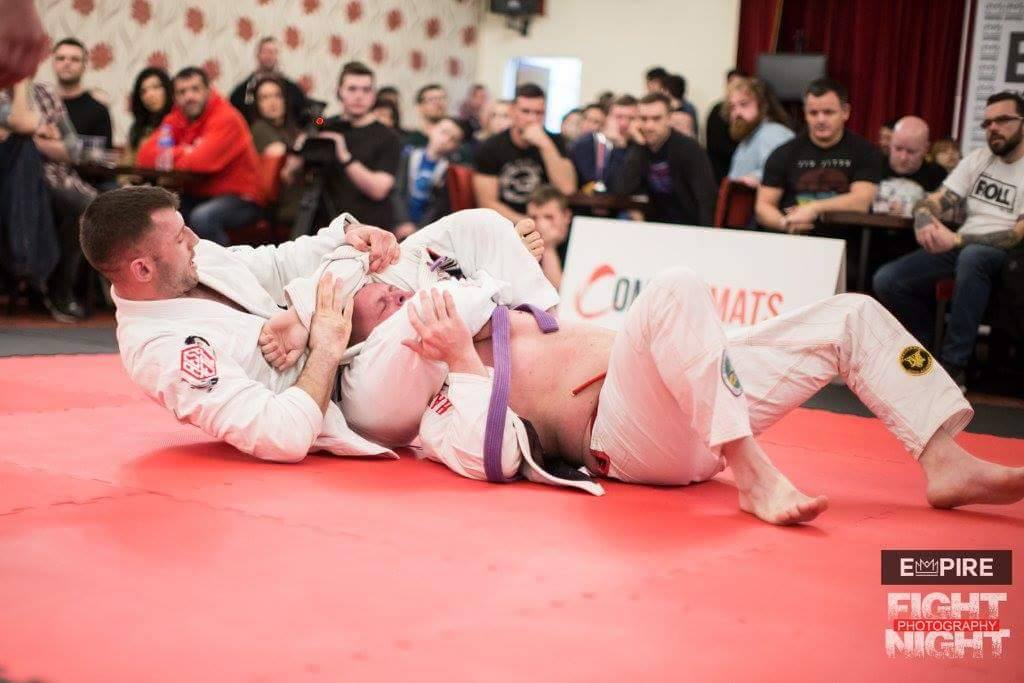
Main photo: Empire Fight Night Photography, via BJJ Globetrotters; archive competition photo.
The takeaway
A highlight reel can introduce an athlete, preserve an achievement, or make you want to watch more grappling. Its limits appear when selected successes become claims about frequency, or when missing context gets replaced by certainty about a person's choices.
Choose one exchange and find the full sequence. Check the score, look for the setup, and name the detail the camera doesn't show. You'll still have the exciting finish. You'll also have a clearer idea of what, if anything, it can teach you.
Take the question to the mat
Find a suitable open mat through Let's Roll, confirm the host's format, and ask a willing partner or coach about the position you want to understand.
FAQ
Can I learn BJJ from highlight reels? They can point you toward positions and athletes to study. For technical learning, find the full setup and qualified instruction. A montage usually doesn't show enough failed attempts or defensive responses to explain the whole problem.
Does a highlight reel prove an athlete has a high submission rate? It proves only what the selected footage shows. A rate requires a defined set of matches or attempts, including the ones that didn't produce a submission, and an accurate count.
Should I always watch clips in slow motion? Start at normal speed to understand the available reaction time. Slow down afterward to inspect a specific movement. If a grip is hidden by the camera angle, reducing playback speed won't reveal it.
Is it misleading to post only my successful rounds? A clearly presented highlights post is a selection by design. Avoid stronger claims the footage cannot support, distinguish practice from competition, and get the appropriate permission before posting training partners.

Kit Langford
Kit Langford covers the louder parts of jiu-jitsu — the marketing claims, the arguments, the gear that promises more than gear can deliver. The jokes are expected to survive a fact-check.
Related Posts
Gustavo Batista’s passing reputation needs the next move
Batista submitted three opponents from the back at the 2023 Brasileiros. His later Worlds final shows why the passing label never tells the whole story.

A BJJ gym social should be easy to join and easy to leave
Plan BJJ gym socials around clear invitations, cost, timing, access, and optional participation. Give teammates a way to meet beyond the next round.
The hidden hand in your BJJ match video is still hidden
Slow motion cannot reveal a grip the camera never saw. Read BJJ match footage through visible evidence, competing explanations, and the limits of the angle.
Comments (0)
Loading comments...