
Watch a BJJ class before joining: what the sidelines reveal
Quick answer: Watching a BJJ class can help you judge how the academy teaches, organizes partners, and communicates with beginners. Arrange the visit first, observe the session you would actually attend, and ask about anything the sidelines cannot answer.
A trial class puts you inside the lesson. An observation visit lets you notice what happens around it. You can watch how a new student finds a partner, how the instructor handles a question, and whether the advertised beginner class is understandable to somebody who has never worn a gi.
Neither visit can reveal everything about a gym. One unusually quiet evening or crowded competition session is a small sample. The useful goal is to replace vague impressions with a few specific questions before choosing where to spend your regular training time.
Ask to watch the class you would join
Contact the academy and explain that you are considering membership and would like to observe. Ask which session is appropriate, where you should sit, and when you should arrive. A children’s program, private lesson, or competition practice may have different visitor arrangements from an ordinary adult class.
Choose a realistic time. If you can only train after work, watching a midday session tells you less about the room you will usually enter. You want to see the class format, attendance, and arrival process that are most likely to become part of your own week.
Give the staff a useful description of your experience. A complete beginner and an experienced visitor may be offered different sessions for good reasons. You do not need to make yourself sound more qualified to earn a place on the sidelines.
Ask about photographs as well. Permission to watch does not automatically include permission to record the students. Keep your phone away unless the academy has explicitly agreed to the specific use. You are gathering information for a membership decision, not making a documentary about people who came to train.
Watch the first few minutes carefully
The start of class tells you how information reaches people. Notice whether the instructor explains the activity, whether late arrivals know where to go, and how students with different experience levels are included. A busy entrance can be perfectly workable when the process is clear.
Look for the practical path a beginner would follow. Do they know where to change, where shoes belong, and who can answer an administrative question? Those details are ordinary, but they matter when you arrive alone and do not yet know the room’s customs.
Do not confuse quietness with poor organization or energy with good teaching. Different coaches have different styles. The more useful question is whether the students appear to understand what they have been asked to do and can get clarification when they do not.
If something is unclear to you, write down a short question for later. You are not expected to recognize every exercise on sight. A movement that looks unusual from the chairs may have a straightforward purpose within the week’s lessons.
Follow one explanation from start to practice
Choose one technique or training task and track how it is introduced. Can you identify the starting position, the immediate goal, and the end of the exercise? You may not understand every grip, but the basic assignment should become clearer as the demonstration proceeds.
Then watch the transition into partner work. Notice whether the instructor checks understanding, whether pairs have room, and how students ask for help. The demonstration and the practice are different parts of teaching. A polished explanation is useful only if the class can do something with it.
Pay attention to corrections without expecting a running commentary on every pair. An instructor may let students work before intervening. What matters is whether obvious confusion can be addressed and whether the correction gives the student a practical next step.
Avoid trying to judge advanced technical accuracy from a single visit if you do not have the experience to assess it. You can still evaluate clarity, organization, and the willingness to explain. Those observations are legitimate and do not require pretending to know which version of a guard pass is best.
Notice how partners are chosen
Partner selection affects the class as much as the technique being taught. Watch whether new people are introduced, whether the instructor helps with pairings, and whether there is a clear response when someone needs to change partners or stop an activity.
A room does not need every student to be the same size or age. It does need a way to account for differences in experience, physical characteristics, and the exercise being practiced. Ask how the coach would introduce someone with your background to partner work.
The useful questions are concrete:
When do beginners start live rolling in this program?
Who helps a new student choose suitable partners?
Can a student decline a round or ask to change the intensity?
What should someone do if they do not understand an exercise?
Listen for a process rather than a promise that every possible problem has already been eliminated. No gym can make contact training risk-free. A clear explanation of supervision and communication is more informative than a sweeping assurance that nothing ever goes wrong.
Separate the class atmosphere from your first reaction
It is natural to feel unsure while watching unfamiliar people grapple. Close contact, unfamiliar noises, and rapid movement can make a normal practice look more intense than you expected. Ask the instructor to explain the format before deciding that your first emotional reaction describes the whole academy.
The opposite can happen, too. A friendly welcome may make you overlook practical questions about schedule, cost, or beginner access. Enjoy the welcome and still collect the information you need. Liking the people is valuable, but it does not tell you whether the membership fits your week.
Look for how the room handles ordinary interruptions. Someone needs help, a pair runs out of space, or a student sits out. The response to those moments can be more useful than the general level of noise or enthusiasm. Keep your observations specific rather than assigning the gym a personality after twenty minutes.
If possible, compare the visit with an actual trial in the same program. Observation shows the structure from outside. Participation shows how the instructions and partner work feel to you. Neither should require signing a long commitment before you understand what you are trying.
Ask about the details the mat cannot show
You cannot watch a cancellation policy or infer the full price from the uniforms people wear. After class, speak with the person who handles membership. The instructor may be teaching another session or may not manage billing, so ask who is best placed to explain the terms.
Confirm which classes a plan includes, whether equipment purchases are required, and how introductory offers become ongoing memberships. Ask for the agreement before committing. A clear administrative conversation supports a good training experience; it does not imply distrust of the coach.
For families, ask whether children and adults have overlapping class times and what supervision is expected outside the lesson. Do not assume that a waiting area is a childcare arrangement. For visitors, distinguish a local trial offer from a paid drop-in policy.
The gym contract questions guide can help organize this part of the decision. Keep the answers beside your observations from the class. A pleasant hour and a suitable membership are related considerations, but they are not the same piece of information.
Give yourself a fair comparison
After the visit, record what you actually saw before general impressions take over. You might note that the coach paired new students, that the class began with positional work, or that you could not attend the advertised beginner session with your current schedule.
Keep questions separate from conclusions. Not seeing a particular feature during one visit does not prove it never happens. If you did not see a beginner ask for help, ask how that normally works. If attendance seemed small, ask whether that session is representative before judging the whole timetable.
When comparing academies, use the same practical criteria. Compare the classes you could attend, the full cost, the teaching process, and how comfortable you felt asking questions. A famous instructor or impressive competition wall may matter to you, but neither removes the need for a workable daily arrangement.
Finally, allow the choice to remain provisional until you have enough experience. A short trial can reveal more than another evening spent studying online reviews. Ask about the available options, choose a reasonable next step, and reassess with information from your own participation rather than trying to predict every future preference.
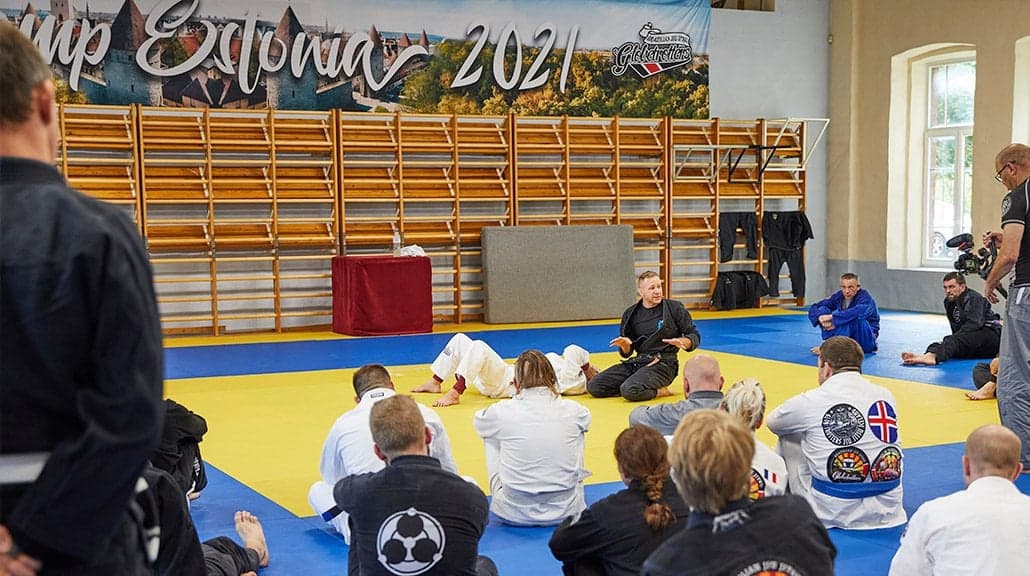
Main photo: BJJ Globetrotters; illustrative archive class photograph.
The takeaway
Watch how the class turns instructions into partner practice and how the academy helps people who are new to the room. Those are useful observations even if you cannot yet recognize the techniques. Ask the staff to explain anything you could not fairly judge from the sidelines.
Then check the schedule and membership details separately. The best observation visit ends with a clearer next step, whether that is a trial class, another conversation, or a decision that a different timetable would suit you better.
Arrange a visit
Find nearby academies in the gym directory, then contact your shortlist to ask about watching an appropriate class before booking a trial.
FAQ
Can I just arrive and watch a BJJ class? Ask the academy first. Visitor arrangements differ, and some sessions may not be open to observers. Confirm the time, where to sit, and whether there is a suitable moment for questions.
What can a complete beginner judge from the sidelines? You can assess whether instructions are understandable, partners are organized, and questions receive useful answers. You do not need to judge advanced technique to notice those parts of teaching.
Should I record the class to review it later? Only with explicit permission for the recording and its intended use. Watching permission does not cover filming. Brief written notes are usually enough for your own decision.
Is watching better than taking a trial class? They provide different information. Observation helps you see the structure; participation helps you assess how the program works for you. Combining them can be useful when the academy offers both.

Owen Bellamy
Owen Bellamy writes for the person training twice a week around a job. Nothing he suggests requires quitting the job.
Related Posts

Mikey Musumeci gives up the belt to make room for MMA
Musumeci is vacating his UFC BJJ title to focus on MMA training. What he is leaving, what continues, and why the transition matters.

IBJJF membership: finish the paperwork before the deadline
IBJJF membership and tournament entry are separate steps. Plan documents, professor approval, renewals, and junior accounts before registration closes.
Choosing a BJJ seminar worth your time and travel
Choose a BJJ seminar by the subject, teaching format, access, and total cost. Know what to ask the host before buying a ticket.
Comments (0)
Loading comments...