
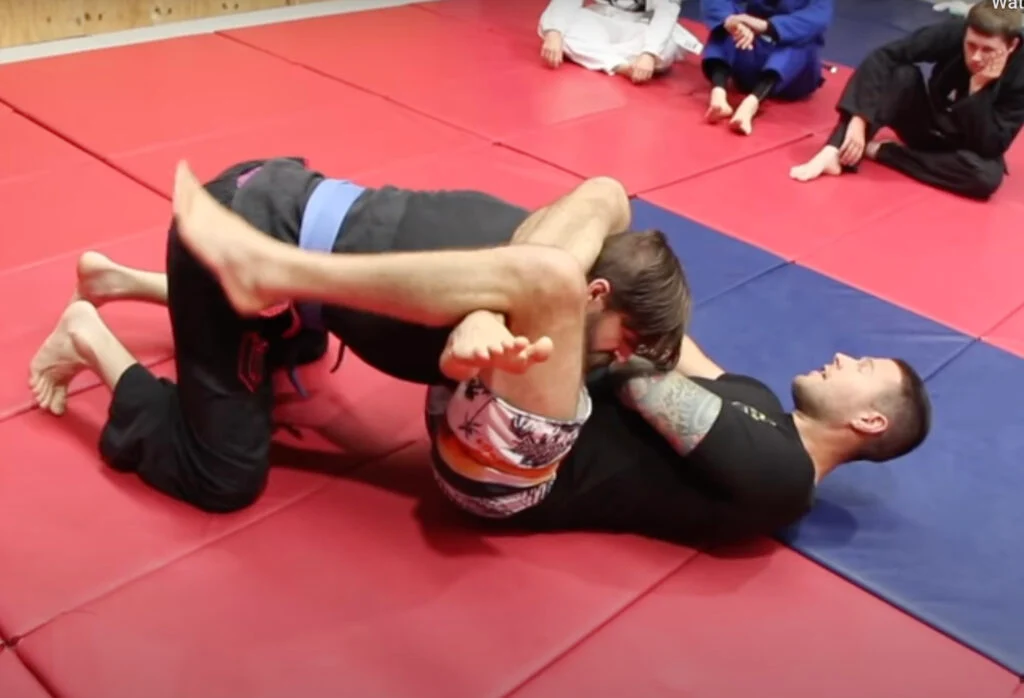
The Triangle Choke: BJJ's Most Iconic Submission
Quick answer: The triangle choke strangles an opponent by trapping their head and one arm inside a figure-four of your legs, using their own shoulder to shut off blood flow to the brain. It came to BJJ from judo, works best from guard, and depends on angle and posture control — not leg strength. Done right, it's one of the highest-percentage submissions available from your back.
Ask someone to picture a jiu-jitsu submission and there's a decent chance they picture a triangle — legs locked around a neck, the person on the bottom somehow winning. It's the signature move of guard players, and it embodies the whole promise of BJJ: the position that looks like losing is the one doing the strangling.
Where the triangle comes from
The triangle didn't start in Brazil. It comes from judo, where it's called sankaku-jime and was being refined in Japanese competition in the early twentieth century. It crossed into Brazilian jiu-jitsu with the rest of the ground curriculum and found its natural home there, because BJJ spends far more time in guard than judo ever did.
From the Helio-era academies onward, it became a staple of the bottom game. Then MMA made it famous — Royce Gracie used it in the early UFC events, and Anderson Silva's last-minute triangle on Chael Sonnen in 2010 is still one of the most replayed finishes in the sport.
In pure grappling, Ryan Hall took it further than anyone, building an entire competitive system around entries into the position and writing what many consider the definitive instructional on it.
How it actually works
The triangle is a blood choke. One side of the opponent's neck is closed off by your leg; the other side is closed off by their own trapped shoulder. Squeeze the two together and blood flow through the carotid arteries drops, which ends the match in seconds.
That's the key mental model: their shoulder is half of your choke. If their trapped arm and shoulder aren't driven into their neck, you can squeeze as hard as you want and they'll just be uncomfortable.
Angle, posture, and why squeezing harder doesn't help
Almost every triangle that fails, fails for one of two structural reasons — and neither is fixed by effort.
First, the angle. A triangle locked while you're square to your opponent puts your leg across the back of their neck at a weak angle. Cutting your body perpendicular — so you're looking at their ear rather than their face — lets the leg bite across the arteries properly.
Second, posture. A triangle only works on someone who's broken down. If they can straighten up, they can stack you, create space, and walk around your legs. Controlling the head or trapped arm the entire time isn't a detail — it's the choke.
When beginners feel a triangle failing, they squeeze harder and burn out their legs in twenty seconds. Experienced grapplers adjust the angle instead. It's a common theme across the fundamental submissions: position fixes what strength can't.
Mistakes every beginner makes
Staying square instead of cutting the angle. This is the number one triangle killer. If your opponent is looking straight at you, the choke is mostly hope.
Letting them regain posture. The moment their head comes up, your finishing percentage collapses. Break them down first, adjust second.
Ignoring the trapped arm. An arm left loose in front of your hip gives them frames and escapes. Pulled across their own neck, it becomes half the strangle.
Locking the wrong configuration. One arm in, one arm out — always. Two arms in or two arms out means you have a leg hug, not a choke.
Squeezing before anything is set. You get one good squeeze before your legs fade. Spend it after the mechanics are right, not before.
When triangles show up in rolls
You'll rarely hit a triangle on someone who's calm and postured. It appears in transitions — an opponent who leaves one arm inside your closed guard while posting with the other, a failed armbar where the legs are already high, a scramble where someone drives their head down carelessly.
That's why coaches teach it early even though beginners finish it rarely. The setups train you to notice arm position and posture, and those habits pay off everywhere.
Gi vs no-gi triangles
The triangle works well in both rulesets, but it changes character. In the gi, collar and sleeve grips let you break posture and control the trapped arm methodically — setups are slower and more deliberate. If you're new to the distinction, gi vs no-gi covers the broader trade-offs.
In no-gi, sweat makes everything slippery, so triangles come more from scrambles, wrestling positions, and arm-drag entries. You'll need to lock it tighter and faster, and control the head with your hands rather than cloth. Plenty of elite no-gi competitors still finish triangles constantly — the position survives the ruleset just fine.
The takeaway
The triangle choke is iconic for a reason: it turns guard from a defensive position into a genuinely dangerous one, and it rewards understanding over athleticism. Learn the mechanics honestly — angle, posture control, the trapped arm — and accept that you'll fumble it for months before it starts working. Nearly everyone does. Then one day someone leaves an arm in your guard, and it's just there.
Learn it from people who drill it live
A triangle from a video and a triangle honed against resisting training partners are different animals. The second kind starts with a good room. Find a BJJ gym near you on Let's Roll →
FAQ
Is the triangle choke a blood choke or an air choke? It's a blood choke — it compresses the carotid arteries rather than the windpipe. Applied correctly it produces a tap in seconds, and released promptly it's one of the safer submissions to train.
How long does it take to get good at triangles? Most people can lock the position within their first weeks, but finishing it reliably against resistance usually takes a year or more. The angle and posture details take real mat time to become automatic.
Can you triangle someone with short legs? Yes, though the margins are tighter. Cutting a sharper angle and controlling the trapped arm matter even more, and plenty of stocky grapplers have excellent triangles. Long legs are a convenience, not a requirement.
Are triangles legal for white belts? Yes — the triangle is legal at every belt level under IBJJF rules and in essentially every grappling ruleset. It's considered a fundamental technique and is usually taught within a beginner's first months.
Related Posts

Mikey Musumeci gives up the belt to make room for MMA
Musumeci is vacating his UFC BJJ title to focus on MMA training. What he is leaving, what continues, and why the transition matters.
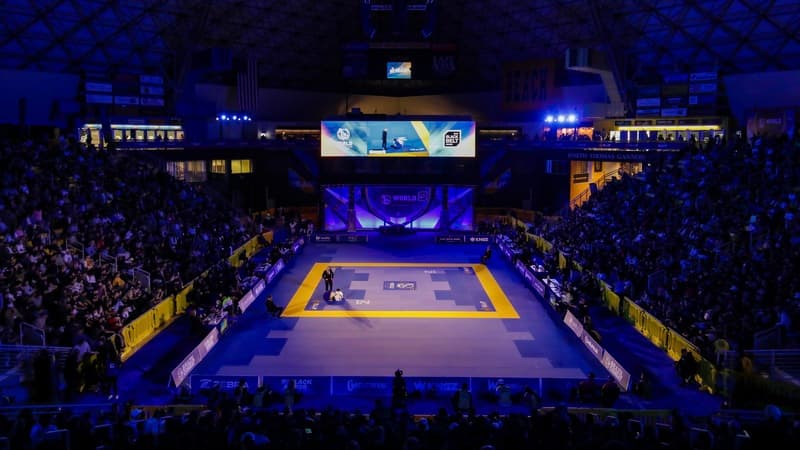
IBJJF membership: finish the paperwork before the deadline
IBJJF membership and tournament entry are separate steps. Plan documents, professor approval, renewals, and junior accounts before registration closes.
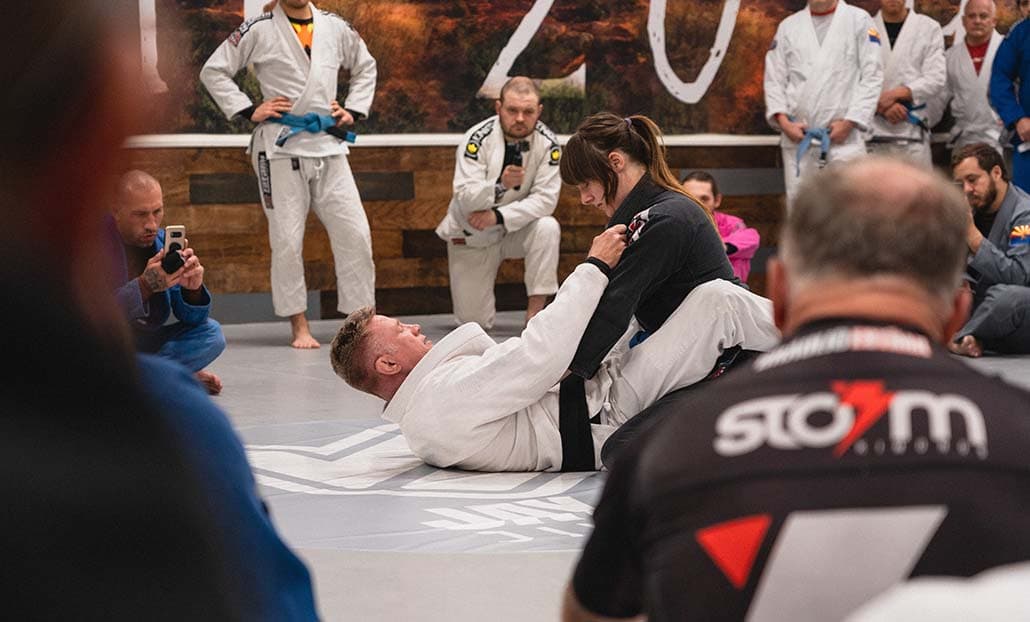
Choosing a BJJ seminar worth your time and travel
Choose a BJJ seminar by the subject, teaching format, access, and total cost. Know what to ask the host before buying a ticket.
Comments (0)
Loading comments...