

Six Blades Jiu-Jitsu: what Xande Ribeiro built beyond competition
Quick answer: Six Blades Jiu-Jitsu is the association founded under Xande Ribeiro in 2020. The six blades represent family, respect, honor, loyalty, attitude, and discipline. The team's identity combines Ribeiro's competitive background with a stated approach to teaching and community, while individual academies determine the classes you can attend.
A competitor's name can fill a seminar. Building a team asks a different question: what remains in the room when that competitor is somewhere else? The instructor leading a normal class, the way a new person is introduced, and the habits of the group have to carry the idea forward.
Six Blades makes that question unusually visible. Its name refers to six values rather than a location or a single technique. Xande Ribeiro's history draws attention to the organization, but the name asks students and teachers to think about how they behave as well as how they grapple.
That is worth examining in practical terms. Values become easier to understand when they describe something a person can do during an ordinary week of training. Otherwise, even a good set of words can remain decoration above the mat.
The association began in 2020
The Six Blades mission page dates the association's founding under Ribeiro to 2020 and identifies Austin as its headquarters. It names the six values represented by the blades: family, respect, honor, loyalty, attitude, and discipline.
This is a useful starting point because it distinguishes the team from the full length of its founder's career. Ribeiro was competing internationally well before the organization began. A recent team name can therefore sit on top of a much longer personal history.
Keep those timelines separate when reading about an academy. A coach's years of practice, the opening date of a particular school, and the formation of an affiliation are different facts. Combining them can make a young organization appear older without actually explaining anything about its instruction.
For a student, the more relevant connection is who teaches whom. Ask the local instructor how the association supports their work and what parts of the teaching approach appear in class. That turns a founding date into a present-day relationship you can understand.
Ribeiro's competitive record predates the badge
ADCC's 2009 championship results list Xande Ribeiro as the under-99kg gold medalist. That documented result is one example of the competitive history he brought to Six Blades, years before the association's formation.
Watching a complete match from that history can be more useful than reading a long stack of superlatives. Pay attention to how the exchange develops. The time between obvious attacks often explains why the decisive movement becomes possible.
For a newer student, choose one question to take from the footage. You might notice how an athlete protects space, changes a connection, or returns to a stable position after an attempt fails. Ask your instructor about that moment rather than trying to adopt an entire competition style in one evening.
A founder's successful career also needs to be understood at the right scale. It explains part of the organization's appeal. It does not tell you who teaches every affiliate's morning class or which lesson a beginner should attend. Those details belong to the individual academy and deserve their own inquiry.
Six values can describe six ordinary responsibilities
The association supplies the words. A prospective student can use them as questions about daily practice. The following are practical ways to think about those values, not claims that every school applies an identical written policy.
Family: make room for a new person to learn the group's routines.
Respect: listen when a partner or instructor sets a limit.
Honor: describe your experience honestly, including what you do not understand.
Loyalty: communicate clearly about commitments and expectations.
Attitude: arrive willing to work on a task that may expose a weakness.
Discipline: repeat useful practice when novelty has worn off.
None requires a speech before class. A student who explains a drill to a confused partner is doing something observable. So is a coach who helps that student slow down rather than pretending the demonstration was understood perfectly the first time.
When trying a school, look for these small behaviors. You do not need to judge an entire culture from a single visit. You can notice whether the published values have a practical expression in the way the room handles its most ordinary moments.
A network moves knowledge between rooms
An affiliation becomes more concrete when it creates opportunities for teachers and students to work together. A Jubera Jiu-Jitsu update describes a July trip to Austin for an ADCC preparation camp involving Victor Hugo and Felipe Costa, alongside news of a Ribeiro seminar.
That is one documented example of activity within the wider team. It shows a relationship expressed through training and teaching rather than only through matching logos. It should not be read as a promise that every affiliate offers the same camps or access to the same athletes.
For a local member, ask which events actually connect to the school. There may be seminars, visiting instructors, or opportunities to train elsewhere. Find out how they are announced and whether they involve separate registration or charges.
Keep the ordinary class at the center of the decision. Special events can add interest to a year of training, but they cannot replace the sessions you attend regularly. A useful network supports the local learning process. You still need that process to fit your level, schedule, and reasons for being there.
The local instructor makes the philosophy teachable
True Grit's Six Blades page is an example of an affiliate explaining the connection in its own setting. It identifies Ribeiro and the six values as part of the school's training philosophy. Reading an affiliate's own explanation can help connect the broader organization to an actual academy.
The next step is to ask how a beginner enters the program. A philosophy becomes easier to evaluate when the school can explain a first lesson, a partner drill, and the path into more demanding practice. You should not need to translate a mission statement into a booking by yourself.
If you are experienced, ask a more specific question. Explain what you train, how long you have been away if relevant, and which session you hope to attend. This lets the instructor place you according to your current needs rather than a guess based on belt color alone.
During a visit, notice how corrections are delivered. A clear adjustment you can try immediately tells you something about the instruction. The founder's reputation brought you to the website; the local teacher's explanation is what will help with the position in front of you.
A training trip needs a named class and a confirmed teacher
If you want to travel specifically to learn from Ribeiro, confirm the instructor and session before arranging the trip. A headquarters address, a historic photograph, or an association name does not establish who will be teaching on your chosen date.
Ask the host directly about the class or seminar you intend to attend. Check the location, registration, appropriate experience level, uniform, and any visitor fee. Save the reply so the plan rests on an actual arrangement rather than an assumption drawn from several old pages.
For an ordinary affiliate visit, the same principle applies at a smaller scale. Mention your home school if it is relevant, but allow the receiving academy to explain its policy. Shared affiliation does not automatically create free access or a reserved place in a session.
The seminar follow-up guide can help after an event. Beforehand, keep the aim narrow enough to use: one subject you want to understand better and a way to revisit the material with your regular instructor once you return home.
Decide what the connection adds to your own training
A team identity can give a student a sense of belonging, a history to investigate, and people to learn from beyond one room. It can also be meaningful in a quieter way: a shared language for the behavior expected during ordinary practice.
You do not have to pursue every part of the association at once. A beginner may simply want a clear class and a welcoming introduction. An experienced student may be interested in seminars or competition preparation. State your actual interest so the academy can explain what is available.
After a trial, write down what you understood, what remained unclear, and whether the schedule works. Those notes are more useful than deciding whether you felt sufficiently inspired by a famous name. A sustainable training arrangement is built from repeatable details.
Give the school a chance to answer the unresolved question. It might concern the beginner pathway, a membership term, or who teaches your available session. A direct conversation is often the point at which an attractive affiliation becomes a realistic choice, because the next step finally has a time and a place.
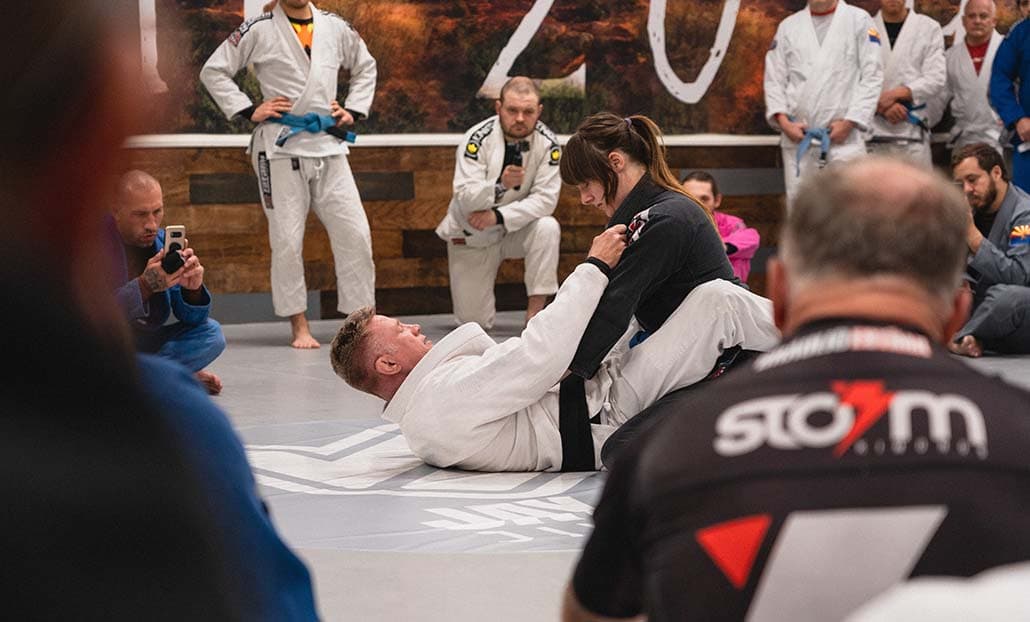
Main photo: Six Blades Association.
The takeaway
Six Blades connects Ribeiro's established competitive history with an association built around six stated values. The interesting part is how those ideas travel: through local teachers, shared training, and the behavior expected from people in an ordinary class.
Use the history to understand the name, then investigate the school you can attend. Confirm the instructor, the appropriate session, and the practical arrangements. The connection becomes useful when it helps you learn something and return to work on it again.
Find a place to begin
Explore the gym directory, then contact the academy directly to confirm its affiliation and the right class for you.
FAQ
What do the six blades represent? The association names family, respect, honor, loyalty, attitude, and discipline. These are its stated values, rather than six techniques or six competition divisions.
Who founded Six Blades Jiu-Jitsu? The association's mission page says it was founded under Xande Ribeiro in 2020. His international competition career began well before the team's formation.
Does Xande Ribeiro teach every Six Blades class? No single founder can be assumed to teach across an international network. Confirm the actual instructor for your session, particularly if you are arranging travel to learn from a specific person.
Can a beginner investigate a Six Blades academy? Yes. Contact the local school and ask about its introductory program, available classes, and clothing requirements. The team's connection to elite competitors does not describe every student's starting point.

Rafael Moura
Rafael Moura profiles competitors as people with lives outside the bracket. Some of those stories are comebacks. Most are not, and he does not force them.
Related Posts

Mikey Musumeci gives up the belt to make room for MMA
Musumeci is vacating his UFC BJJ title to focus on MMA training. What he is leaving, what continues, and why the transition matters.

IBJJF membership: finish the paperwork before the deadline
IBJJF membership and tournament entry are separate steps. Plan documents, professor approval, renewals, and junior accounts before registration closes.
Choosing a BJJ seminar worth your time and travel
Choose a BJJ seminar by the subject, teaching format, access, and total cost. Know what to ask the host before buying a ticket.
Comments (0)
Loading comments...