
Saulo Ribeiro: the competitor behind the teaching system
Quick answer: Saulo Ribeiro is a five-time adult black-belt gi world champion and a two-time ADCC weight-division champion. He also won an IBJJF No-Gi Worlds title and coauthored Jiu-Jitsu University with Kevin Howell. His competition results explain the authority behind his instruction; his published interviews reveal how deliberately he approached teaching people with different goals.
In 1998, Saulo Ribeiro stood above Fábio Gurgel in the heavyweight results at the World Championship. The previous year, he had won at middleweight. A simple label such as heavyweight champion already leaves something out of that career.
The same is true of calling him the man who wrote a famous instructional book. The book matters because an accomplished competitor had to make a second set of choices: what another person should learn first, how to explain the errors, and which parts of an expert's experience could be put on a page.
The weight classes changed around the same name
The IBJJF's 1997 results place Ribeiro first in the adult black-belt middleweight division. The 1998 archive places him first at heavyweight, with Gurgel second. These are separate titles in separate competitive fields, rather than repeated wins inside one fixed division.
His next two championships extended the pattern. Ribeiro won medium-heavyweight in 1999 and super-heavyweight in 2000. Four consecutive editions, four weight classes. He returned to the medium-heavyweight winner's position in 2002.
That sequence is more informative than an adjective about versatility. It shows the actual range of divisions in which he won. It does not tell us why he selected each weight or how those decisions felt. The record is strong enough without inventing those details.
For a reader approaching the older matches, the changing divisions are useful context. Do not watch every opponent as if Ribeiro was solving an identical physical problem throughout his career. Start with the event and the category, then look at the exchanges.
ADCC supplied another kind of test
The gi titles were only part of the competitive record. Ribeiro won ADCC's under-88-kilogram division in 2000 and again in 2003. ADCC Latin America's Hall of Fame account also notes his silver medal in 1999, when Jeff Monson stopped him in the final.
That earlier result makes the following championship more interesting. The story did not begin with an undefeated arrival and end with an inevitable medal. There was a final he did not win, followed by a return that produced a different outcome.
ADCC's official 2003 results list Ribeiro above Ronaldo Souza, with Dean Lister third in the division. They place the achievement among recognizable opponents without needing to turn a results list into imaginary play-by-play.
Gi competition and submission wrestling ask overlapping but different questions. Removing the jacket changes the grips available to both athletes. A career with major wins in each deserves to be studied across each format. Choosing only the uniform that matches your own training would leave out part of Ribeiro's work.
The sixth Worlds title needs its label
The number attached to Ribeiro's world championships can vary because summaries count different events. His five adult black-belt gi Worlds victories should not be mistaken for the entirety of his IBJJF championship record.
The 2008 No-Gi Worlds results record another adult black-belt title at medium-heavyweight. That is why a six-time world champion description can appear alongside a five-title gi record without either number necessarily being an error.
For the reader, the distinction is worth keeping visible. A total is most useful when it identifies what was counted. Different events can represent different preparation and opposition; compressing them into one number removes information instead of making the career easier to understand.
The same habit helps with modern athlete biographies. Ask whether a title total refers to gi, no-gi, adult, masters, or several categories combined. Ribeiro's record offers a straightforward example because the separate championship results can be checked directly. His accomplishments do not need a larger-looking number produced by leaving out the labels.
A book required a different kind of organization
Victory Belt published Jiu-Jitsu University in 2008, with Ribeiro and Kevin Howell credited as its authors. The publisher's listing describes a 368-page instructional work covering more than 200 techniques. Those dimensions make it a substantial project, but the more useful question is how the material is arranged.
In a 2013 interview originally published in Jiu Jitsu Style and later republished by Artemis BJJ, the discussion follows the book's progression from survival through escapes, guard, passing, and submissions. Ribeiro connects the project to problems he encountered during his own development and to the people who helped produce it.
That order makes a practical distinction. Surviving a position, escaping it, and attacking from a favorable situation are different jobs. A student who can name the job has a better question to ask than a student trying to remember a long sequence without knowing what it is supposed to fix.
The book should still be read as instruction to bring into training. Photographs cannot adjust themselves when your partner's position differs from the example. A coach and a cooperative partner supply feedback the page cannot provide.
Teaching changed when the students' needs changed
In the first part of that interview, Ribeiro contrasts teaching in Toledo with his later work in San Diego. He describes moving beyond the assumption that being a champion was enough, toward programs for people whose interests did not all center on competition. He also discusses making instruction available through BJJ Library.
That is a consequential admission from an elite competitor. The knowledge that wins a match does not automatically answer how to run a class for several people who want different things. An instructor must decide what to explain, what to leave for later, and what kind of participation the program actually offers.
For somebody choosing a school, the implication is practical. A famous competitive name gives you a reason to investigate. It does not replace questions about the class you will attend. Ask how newcomers enter the curriculum, how questions are handled, and who provides feedback during practice.
Ribeiro's account belongs to a specific period in his teaching career. It is not a current schedule or a promise about a particular academy today. Its lasting interest is the problem he identifies: expertise still has to be made usable by the person standing in front of the instructor.
Competition and teaching continued to overlap
The turn toward instruction did not require every competitive ambition to disappear. In Graciemag's July 2010 report, Ribeiro competed at the International Masters and Seniors event and discussed placing greater emphasis on students and academy projects. The account presents those commitments alongside his own participation.
That is a more useful picture than a clean division between athlete and teacher. Teaching can occur while a person is still testing their own game. Competing can continue after winning an adult world title is no longer the sole measure of the work.
It also helps explain why a school can benefit from more than its founder's most famous footage. An academy needs repeatable teaching, reliable partners, and opportunities for students to ask questions. The older champion's next competition may interest everybody, but it does not teach Tuesday's class by itself.
The broader Ribeiro family story through Xande's career adds another competitive perspective. The brothers' results should remain individually credited. Shared work in a teaching project does not make their medal records interchangeable.
Study the connection between the result and the lesson
There are several sensible ways into Ribeiro's material, depending on what you want to understand. You do not have to consume an entire career before taking one useful question to class.
Use official results to establish which match and division you are watching.
Watch an available full match before deciding what a short highlight represents.
Choose one instructional problem that resembles something happening in your own training.
Ask your coach how the explanation applies to the position your partner actually gives you.
Keep the competition and instruction in conversation without treating them as identical evidence. A technique demonstration can explain a movement clearly but cannot show every reaction an opponent might choose. A successful match can show a decision under pressure but may not explain the earlier practice that made it possible.
That is where a good training question becomes valuable. Instead of asking whether an entire system is the best one, identify the moment you do not understand. Ask what the grip is preventing, where the weight should go, or which reaction changes the next action. Our guide to drilling BJJ can help turn that question into a manageable practice session.
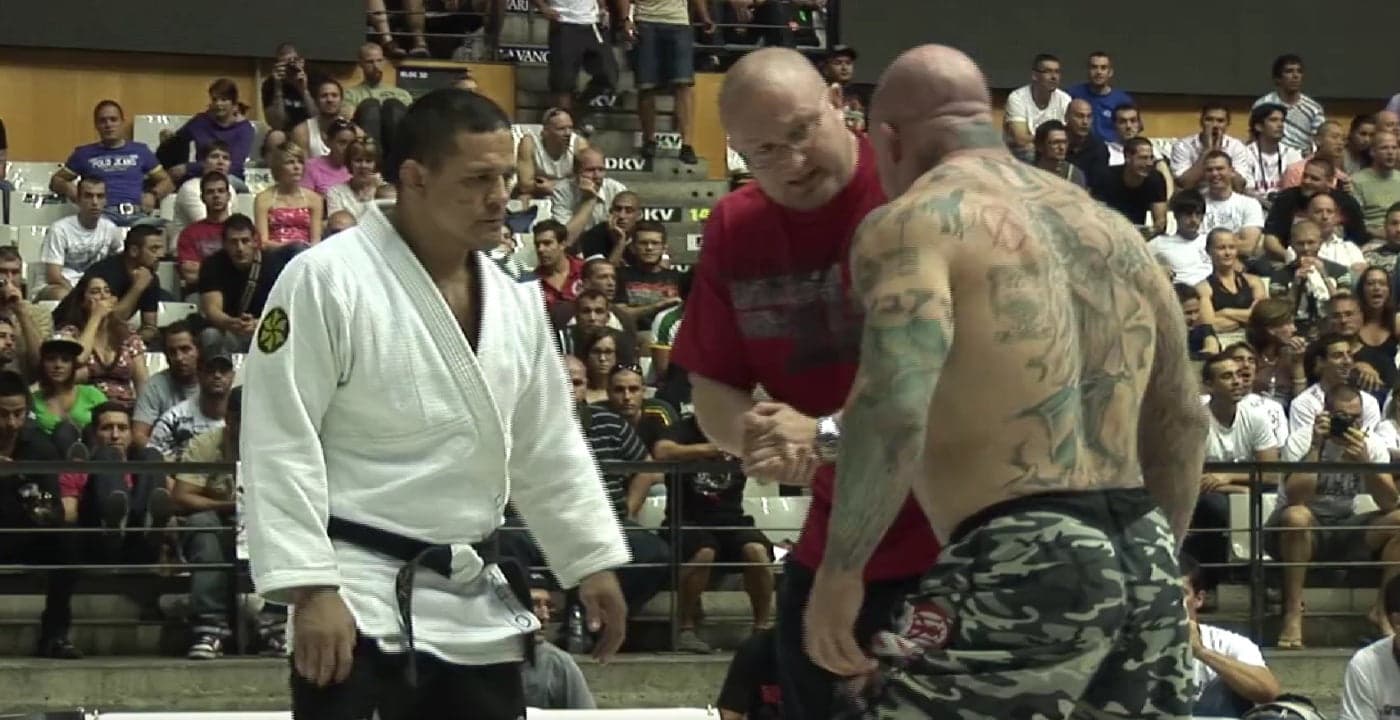
Main photo: ADCC Latin America; archival Saulo Ribeiro photograph.
The takeaway
Ribeiro's record spans major gi and no-gi competition, multiple weight classes, and a teaching project large enough to require its own structure. The championships explain why people pay attention. The instruction gives them something to do with that attention.
The useful way to approach his work is with a specific problem, enough historical context to understand the example, and a partner who can help test it. A respected name can start the study. The details still need to survive the next repetition.
Put the question on the mat
Find a BJJ gym near you and ask how its classes turn technical instruction into supervised practice for your experience level.
FAQ
How many gi Worlds titles did Saulo Ribeiro win at adult black belt? He won five: middleweight in 1997, heavyweight in 1998, medium-heavyweight in 1999 and 2002, and super-heavyweight in 2000.
Did Saulo Ribeiro win ADCC? Yes. He won the under-88-kilogram weight division in 2000 and 2003. Those titles are separate from his IBJJF championship record.
Why is he sometimes described as a six-time world champion? His five adult black-belt gi Worlds titles are joined by an adult black-belt No-Gi Worlds title in 2008. A useful summary specifies which events the total includes.
Who wrote Jiu-Jitsu University? Saulo Ribeiro and Kevin Howell are credited as authors. Victory Belt published it in 2008. It is instructional material to study alongside coached practice, rather than a substitute for feedback on the mat.

Miles Serrano
Miles Serrano writes about competitors and the decisions that shaped their careers. He is more interested in the adjustment someone made in the third minute than in the medal count afterward.
Related Posts
Mikey Musumeci gives up the belt to make room for MMA
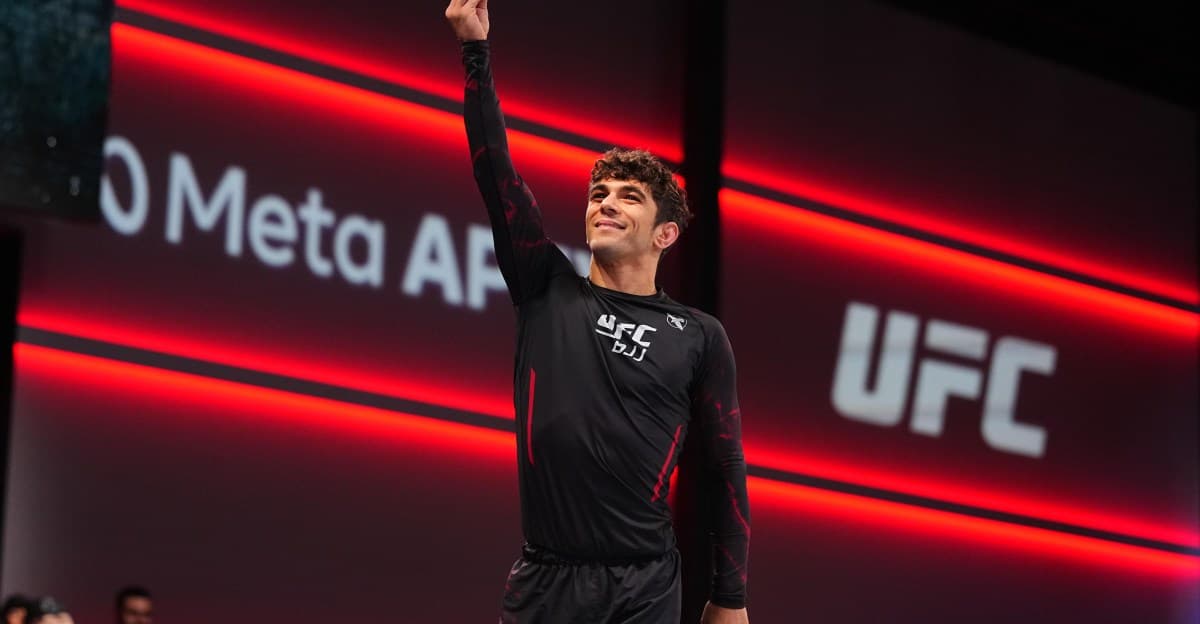
Musumeci is vacating his UFC BJJ title to focus on MMA training. What he is leaving, what continues, and why the transition matters.
IBJJF membership: finish the paperwork before the deadline
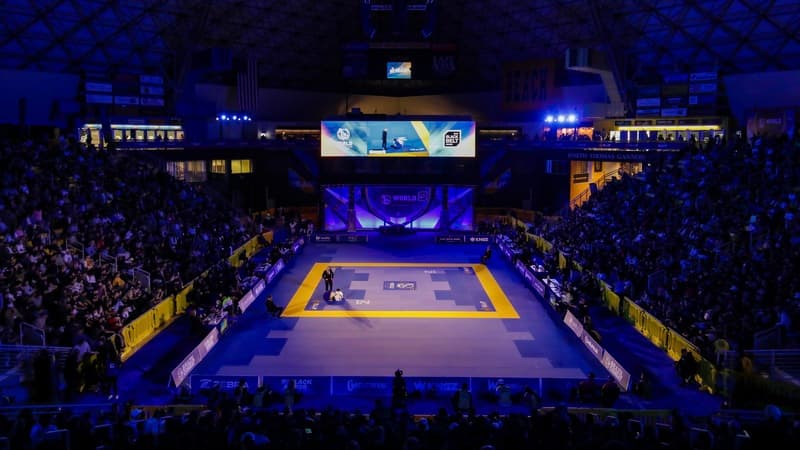
IBJJF membership and tournament entry are separate steps. Plan documents, professor approval, renewals, and junior accounts before registration closes.
Choosing a BJJ seminar worth your time and travel
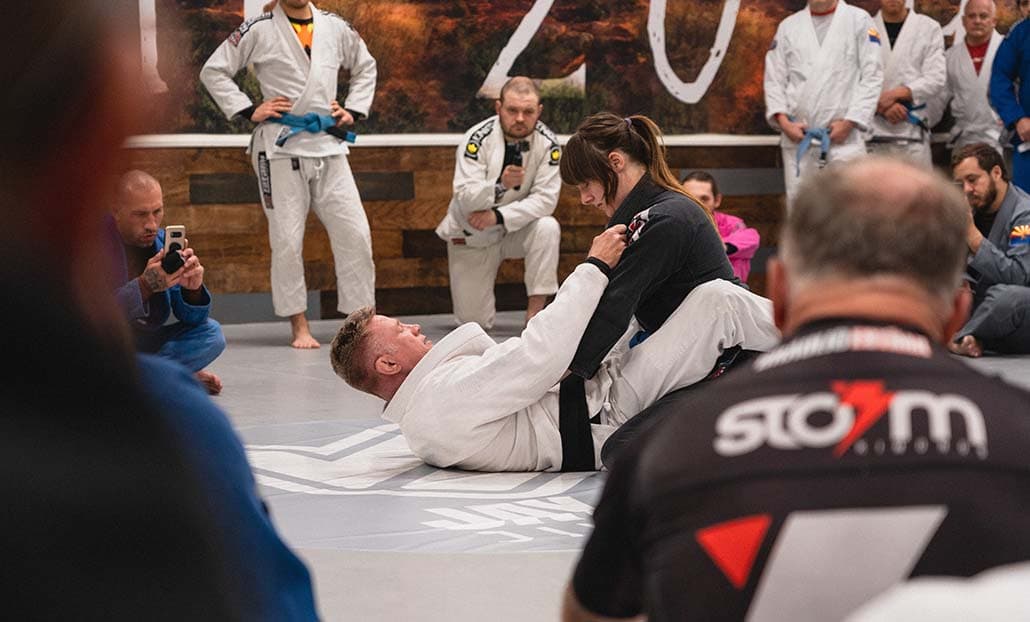
Choose a BJJ seminar by the subject, teaching format, access, and total cost. Know what to ask the host before buying a ticket.
Comments (0)
Loading comments...