
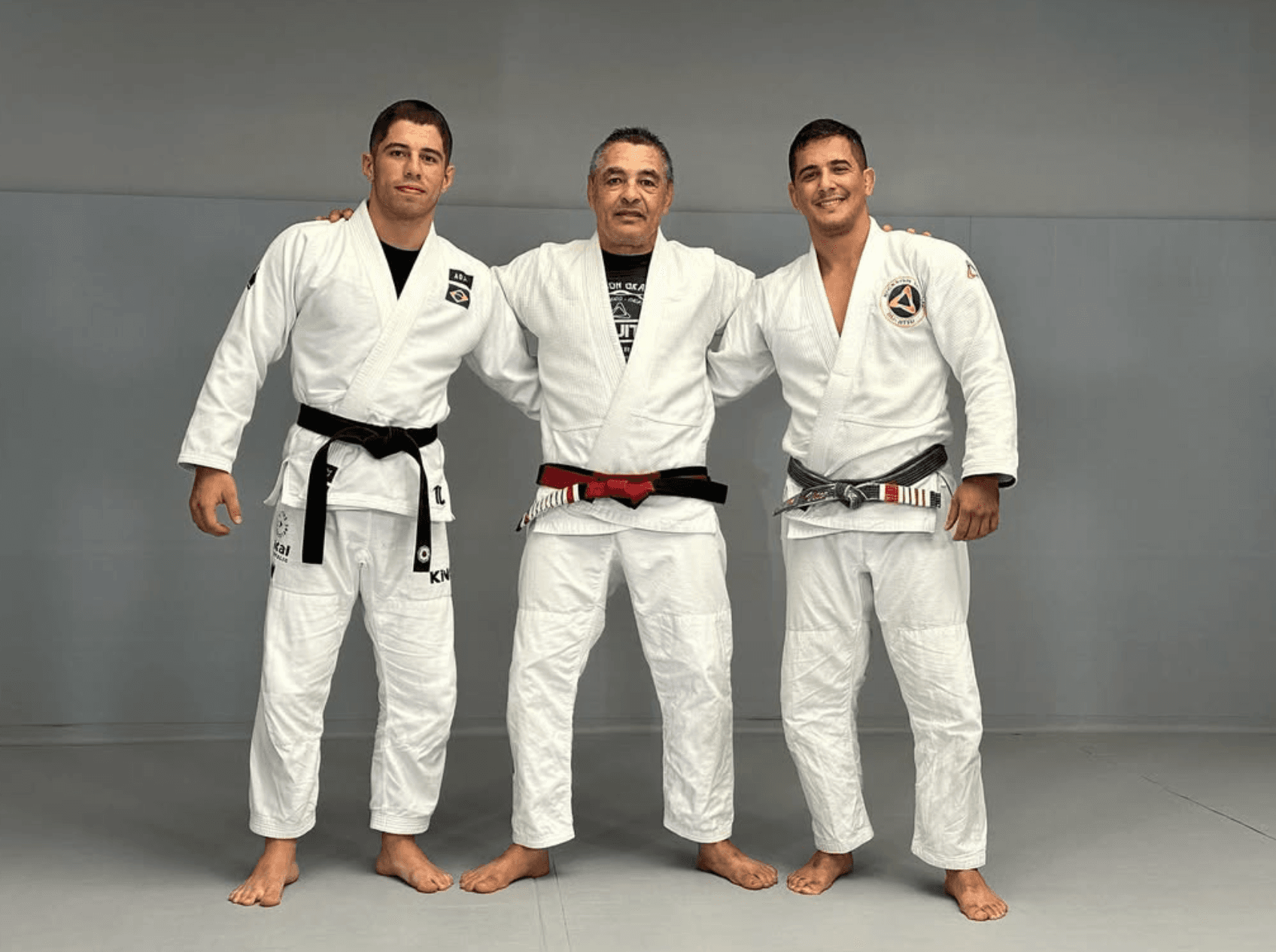
Rickson Gracie: The Family's Standard-Bearer
Quick answer: Rickson Gracie, son of Helio Gracie, is widely regarded within the family and much of the jiu-jitsu world as the best Gracie fighter of his generation. He went undefeated in his documented vale tudo career — including tournament wins in Japan in the mid-1990s — and famously claimed hundreds of wins overall. His bigger legacy is conceptual: "invisible jiu-jitsu," the idea that connection, weight, and base matter more than moves, plus a lifelong obsession with breathing that shaped how fundamentals are taught today.
Every martial art has a figure where the record and the legend blur together. In Brazilian jiu-jitsu, that's Rickson Gracie.
The honest way to write about him is to separate what's documented, what's claimed, and what actually matters — because the part that matters most isn't a win-loss number at all.
The myth and the actual record
Rickson famously claimed hundreds of victories across fights, tournaments, and challenge matches — the "400-0" figure gets repeated constantly. Most of those matches were never filmed, so the number is unverifiable.
What's documented is smaller and still remarkable: he beat the feared vale tudo brawler Zulu in Brazil while barely out of his teens (and again in a rematch), won freestyle vale tudo tournaments in Japan, and never lost a professional fight anyone can point to. Skeptics quibble with the claimed total. Nobody credible disputes the outcome of anything he's known to have fought.
Helio's chosen one
Rickson was born into the family business — son of Helio Gracie, the co-founder of what became Brazilian jiu-jitsu. Among a generation of talented brothers and cousins, Rickson was understood early to be the standard-bearer: the one sent to answer challenges.
Royce got the UFC spotlight in 1993; Rickson's path ran through Japan instead.
The Japan years
In 1994 and 1995, Rickson entered the Vale Tudo Japan tournaments — multiple fights in one night, minimal rules — and won both. In the late 1990s he headlined in Japan again, twice beating pro-wrestling star Nobuhiko Takada in front of enormous crowds, and later beat the respected Masakatsu Funaki in 2000.
Cynics note his Japanese opponents weren't the era's absolute elite, and that's a fair hedge. What's not debatable is what those wins did: they made jiu-jitsu a phenomenon in Japan. He stepped away from fighting for good after 2000, in the period following the death of his son Rockson — a loss he has spoken about openly since.
Choke, and the breathing thing
If you watch one piece of Rickson media, make it Choke, the documentary that follows him through the 1995 Vale Tudo Japan tournament. The fight footage is good. The training footage is the reason people still talk about it.
There's Rickson on a beach doing yoga-derived movement and diaphragmatic breathing exercises, his stomach rolling in waves. He'd studied breathwork seriously — years before "breathwork" was an industry — and treated recovery, calm, and breathing as trainable skills, not afterthoughts. Decades later he wrote a memoir called Breathe. Every coach who now tells a panicking white belt to "slow down and breathe" is repeating him, whether they know it or not.
Invisible jiu-jitsu
Rickson's signature idea is that the most important parts of jiu-jitsu can't be seen on video. Two people can hold the same mount; one is escapable and one feels like a car parked on your chest. The difference is invisible: weight distribution, connection, base, timing of pressure.
In practical terms, his teaching emphasizes:
Feeling over memorizing. A technique isn't the sequence of steps — it's the sensitivity to know when each step is actually available.
Base and connection before speed. If your posture and weight are right, you barely need athleticism; if they're wrong, athleticism just delays the problem.
Comfort under pressure. Surviving bad positions calmly is a skill in itself, which is why his camps drill defense and breathing as much as attacks.
If that sounds like the advice in every good fundamentals class — it is. That's the influence.
What he means for how you're taught
Rickson has long argued that jiu-jitsu was drifting too far toward sport points and away from self-defense and core mechanics, and he founded an organization to push rule sets back in that direction. You don't have to agree with every take to see his fingerprints on the sport.
The emphasis on positional fundamentals, on escapes before submissions, on staying calm in bad spots: that pedagogy runs straight through Rickson and back to Helio. He also holds one of the family's rare red belt ranks.
The takeaway
Strip away the mythology and here's what's left: an undefeated documented fighting career, a starring role in taking jiu-jitsu to Japan, and a set of ideas — invisible details, connection, breath — that quietly became the default way fundamentals are taught worldwide. The 400-0 number is folklore. The influence is not.
The man is a legend partly because of stories you can't verify. He's important because of ideas you can test on the mat tonight.
Was he really the best Gracie?
You'll never get a controlled experiment. Within the family the answer was near-unanimous in his era — Rorion called him the best, and Royce deferred to him. Roger Gracie later built the strongest modern competition claim, but different eras and rule sets make the comparison impossible. The honest answer: best of his generation, and that's enough.
Test the invisible details yourself
Reading about connection and base does nothing — you have to feel it under a good coach's knee. Find a BJJ gym near you on Let's Roll → and start with the fundamentals class.
FAQ
What is Rickson Gracie's actual fight record? His documented professional record is undefeated, built mostly on vale tudo wins in Brazil and Japan through 2000. The famous claim of 400-plus career victories includes unrecorded challenge matches and academy fights, so it can't be verified. Treat the big number as folklore and the documented record as fact.
What does "invisible jiu-jitsu" mean? It's Rickson's term for the details you can't see on video — weight distribution, connection, base, and timing — that make the same technique work for one person and fail for another. His seminars focus on feeling these details rather than collecting new moves.
What is the documentary Choke about? Choke follows Rickson through the 1995 Vale Tudo Japan tournament, mixing fight footage with training scenes, including his famous beach breathing exercises. It's widely considered essential viewing for understanding both the man and 1990s vale tudo.
Is Rickson Gracie still teaching? He no longer competes and has dealt with health issues in recent years, but he remains active through seminars, his federation work, and his writing, including his memoir Breathe. His son Kron went on to compete at a high level in both grappling and MMA.
Related Posts
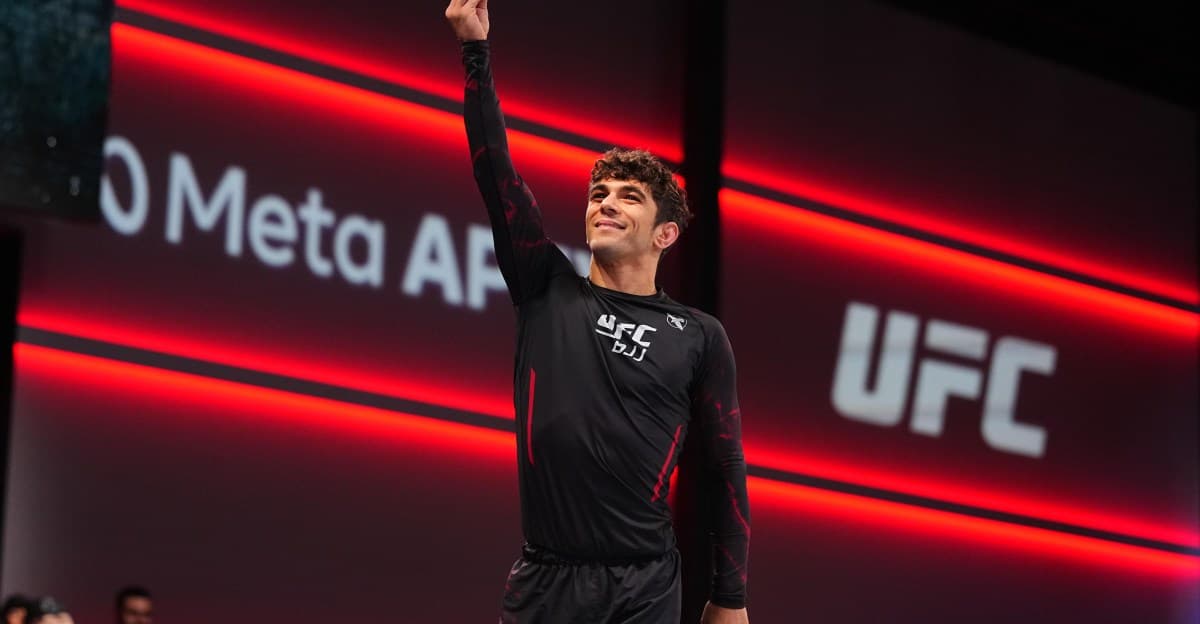
Mikey Musumeci gives up the belt to make room for MMA
Musumeci is vacating his UFC BJJ title to focus on MMA training. What he is leaving, what continues, and why the transition matters.
IBJJF membership: finish the paperwork before the deadline
IBJJF membership and tournament entry are separate steps. Plan documents, professor approval, renewals, and junior accounts before registration closes.
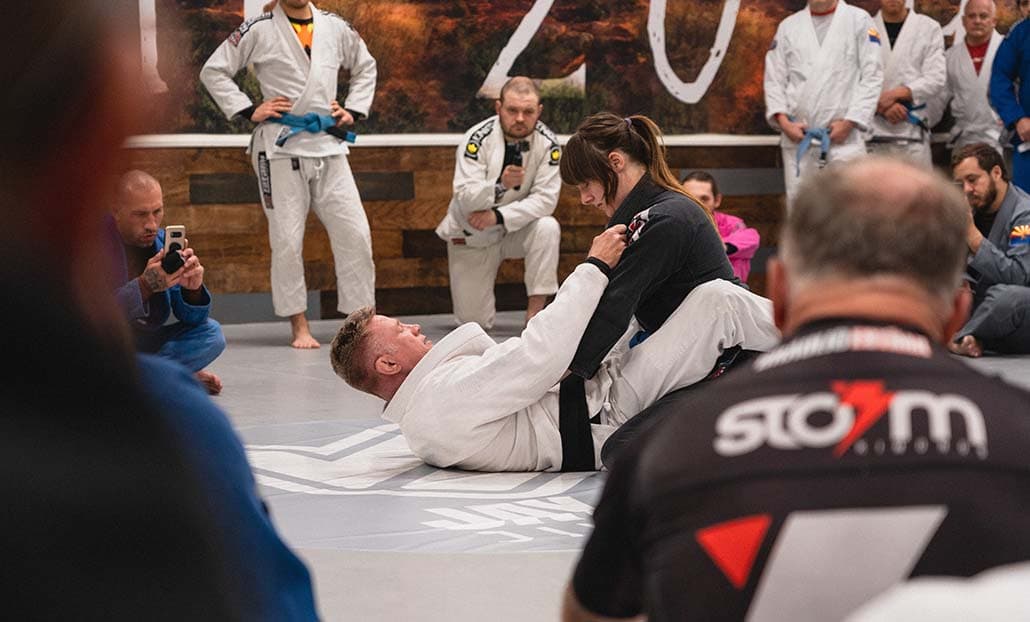
Choosing a BJJ seminar worth your time and travel
Choose a BJJ seminar by the subject, teaching format, access, and total cost. Know what to ask the host before buying a ticket.
Comments (0)
Loading comments...