
The 10 Most Important BJJ Positions Every Grappler Should Know
BJJ is a language, and positions are the vocabulary. Without a solid understanding of the basic positions — where you are, where your opponent is, what's available to each of you — techniques become random movements instead of structured attacks and defenses.
In eighteen years of coaching, I've noticed something consistent: the students who progress fastest are the ones who understand positions deeply, not the ones who collect submissions. A student who knows three sweeps from closed guard and applies them at the right time will outperform someone who memorized thirty techniques but doesn't understand where they work.
Here are the ten positions that structure Brazilian Jiu-Jitsu. Learn them. Understand the hierarchy. Everything else builds on this foundation.
1. Closed Guard (Bottom)
Your opponent is between your legs, and your ankles are locked behind their back. This is the most fundamental guard position and the starting point for most beginners' offensive games.
From closed guard, you control distance and posture. Break their posture down — pull them toward you using your legs and arm control — and the submission and sweep options open up. Armbars, triangles, omoplatas, hip bump sweeps, scissor sweeps — all live here.
Key concept: Control posture first. Everything in closed guard starts with pulling your opponent down and preventing them from sitting up.
Common mistake: Lying flat with a loose guard. If your legs are passive and your hips are glued to the mat, you have guard in name only.
2. Open Guard (Bottom)
Open guard is the umbrella term for any guard where your legs aren't locked around your opponent. This includes spider guard, lasso guard, de la Riva, butterfly guard, and dozens of variations. Open guard is where BJJ gets creative.
The common thread across all open guards: your feet and legs are actively managing distance. Whether you're hooking their arm with your foot in spider guard or controlling their hip angle with a de la Riva hook, open guard is about making your opponent deal with your legs before they can get close enough to pass.
Key concept: Maintain at least two points of contact with your opponent at all times — usually feet on hips, knees, or biceps.
Common mistake: Letting your opponent collapse your legs and flatten you out. If both of your feet are on the floor and your opponent is pressing forward, you've already lost the position.
3. Half Guard (Bottom)
You have one of your opponent's legs trapped between your legs. Half guard was once considered a last resort before getting passed, but modern BJJ has turned it into one of the most offensive bottom positions.
The classic half guard battle: you're fighting for an underhook on the same side as the trapped leg. Get it, and you can sweep, take the back, or reguard. Lose it, and your opponent crossfaces you and works toward passing.
Key concept: Get on your side. Half guard played flat on your back is a losing position. Turn into your opponent and fight for the underhook.
Common mistake: Holding the legs without having an upper body plan. Trapping a leg is only the beginning — you need frames, underhooks, or a specific sweep setup to make half guard work.
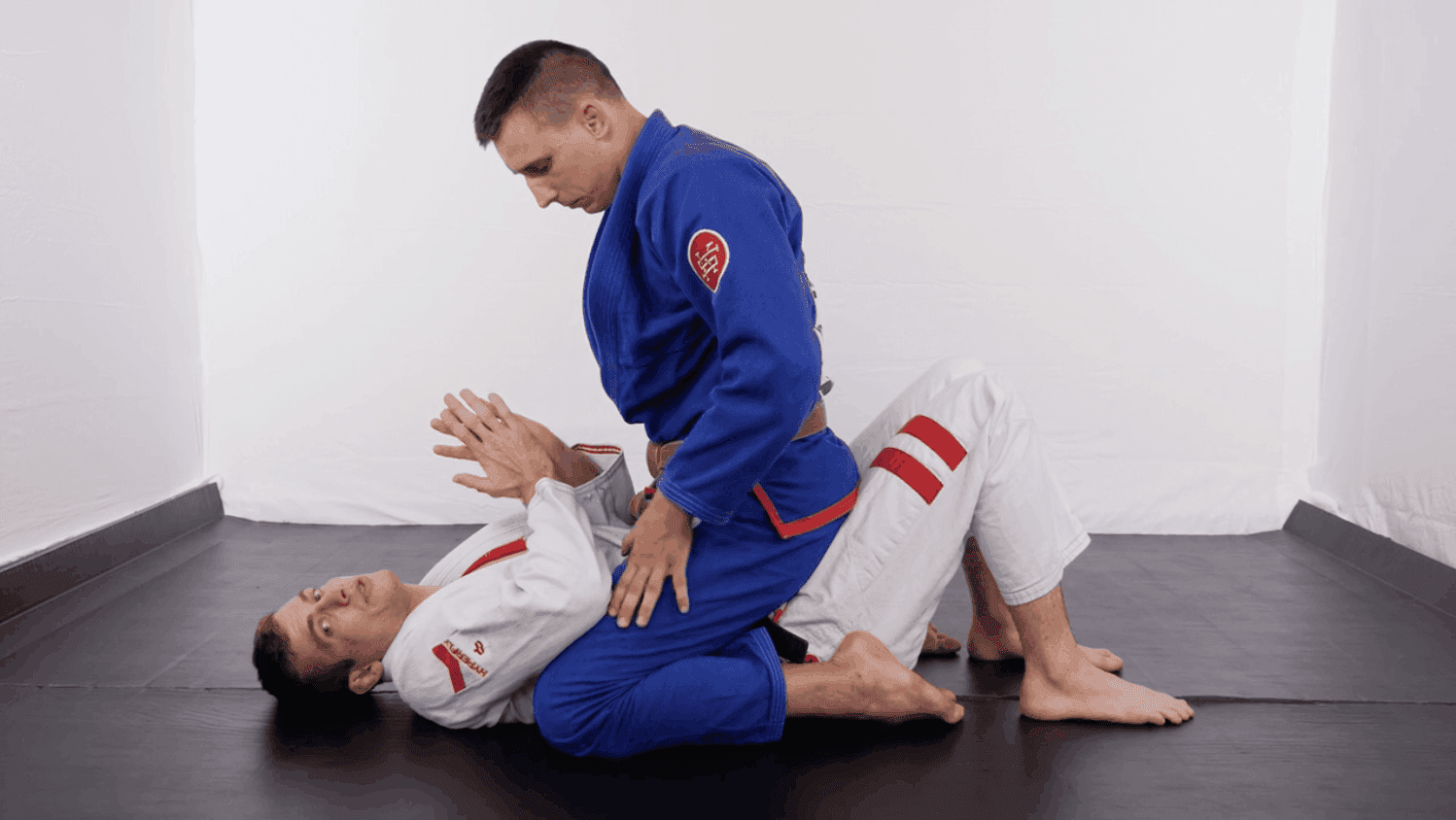
4. Mount (Top)
You're sitting on your opponent's torso, knees on the ground, with dominant position. Mount is one of the two most dominant positions in BJJ (along with back control) because your opponent has limited offensive options while you have gravity, weight, and an arsenal of attacks.
From mount, you can attack with armbars, cross-chokes, Americanas, ezekiel chokes, and transitions to back control or S-mount for more advanced submissions.
Key concept: Stay heavy. Distribute your weight through your hips, keep your base wide, and ride their movement rather than fighting it. Think about pinning their hips, not just sitting on them.
Common mistake: Sitting upright with a narrow base. This makes you easy to bump off. Stay low and heavy until you're ready to posture up for a submission.
5. Mount (Bottom) — Escaping
Being under mount is uncomfortable and, for beginners, borderline panic-inducing. But it's survivable and escapable if you stay calm and methodical.
Two primary escapes: the trap-and-roll (upa) and the knee-elbow escape (shrimp escape). The trap-and-roll is explosive — trap their arm and same-side foot, bridge hard, and roll them over. The knee-elbow escape is technical — frame, shrimp your hips out, insert your knee to recover guard.
Key concept: Protect your neck first. If their hands are near your collar or neck, address the choke threat before attempting an escape.
Common mistake: Pushing straight up with your arms. This exposes your elbows to armbar attacks. Frame against their hips, not their chest.
6. Side Control (Top)
You're past your opponent's legs, chest-to-chest, controlling them from the side. Side control is the workhorse passing destination — most guard passes end here.
Your goals from top side control: maintain pressure, isolate an arm or the neck for a submission, or transition to mount, knee-on-belly, or north-south. The crossface and underhook are your primary control tools.
Key concept: Chest pressure. Your chest on their face or chest is what pins them. Use your hips and toes for balance, not your knees.
Common mistake: Giving space. If you can fit a pillow between you and your opponent in side control, you're not controlling them. Stay tight.
7. Side Control (Bottom) — Escaping
Getting stuck under side control is frustrating but not hopeless. Escaping requires proper framing and the patience to time your movement.
The fundamental escape: create frames (forearm on their neck, hand on their hip), shrimp your hips away to create space, and reguard by inserting your knee. Alternatively, bridge into your opponent and turn to your knees for a turtle or single-leg attempt.
Key concept: Frames first, movement second. Without frames, your shrimps go nowhere because your opponent just follows your hips.
8. Back Control (Top)
You're behind your opponent with hooks (feet) in and a seatbelt grip (one arm over the shoulder, one under the armpit). Back control is the single most dominant position in BJJ because your opponent can't see your attacks or effectively counter them.
From the back, you're primarily attacking chokes — the rear naked choke is the highest-percentage submission in competitive BJJ. You can also transition to armbar and triangle setups if your opponent defends the neck.
Key concept: Maintain your hooks and seatbelt control. If your hooks slip out, you lose the position. If you let go of the seatbelt, they turn to face you. Control first, attack second.
Common mistake: Going for the choke before establishing control. If you jump straight to the neck without hooks and a seatbelt, you'll lose the position.
9. Knee-on-Belly
A transitional but powerful position: your knee is on your opponent's stomach or solar plexus, your other foot is posted on the ground for base, and your weight drives downward through that single point of contact. It's deeply uncomfortable for the person on bottom.
Knee-on-belly is a pressure multiplier. It scores points in competition and forces reactions — your opponent has to address the pressure, which opens submissions and transitions.
Key concept: Drive your knee across their body, not just straight down. Angle it toward their far hip for maximum pressure.
10. Turtle
The turtle position — on your hands and knees with your head tucked — is technically a neutral position. You've lost your guard but haven't given up side control or mount. It's a transitional state that both players fight to control.
From top turtle, you're looking for back takes, front headlocks, and clock chokes. From bottom turtle, you're looking to sit to guard, scramble to a single leg, or granby roll to recover position.
Key concept: Don't stay in turtle passively. It's a waypoint, not a destination. Have a plan to either recover guard or attack from there.
The Positional Hierarchy
BJJ positions exist in a hierarchy from most dominant to least dominant:
Back control (with hooks)
Mount
Knee-on-belly
Side control / North-south
Half guard (top)
Closed guard / Open guard (top — neutral)
Open guard (bottom — neutral)
Half guard (bottom)
Turtle (bottom)
Under side control / Under mount (worst positions)
Understanding this hierarchy is essential for making smart decisions during rolls. Every movement should advance your position higher in the hierarchy or prevent your opponent from doing the same.
How to Study Positions Effectively
Learning positions isn't just about knowing their names and basic attributes. It's about understanding the transitions between them — how you get from closed guard to mount, how side control leads to back control, how a failed sweep leaves you in half guard.
Start by picking one position per month to study deeply. Watch competition footage focusing exclusively on that position. Drill entries, maintenance, attacks, and escapes. During sparring, set goals around that position — spend an entire round trying to establish or maintain it.
Keep a position journal. After each session, note which positions you spent the most time in, which transitions worked, and which ones you lost. Over time, this data reveals patterns in your game that are invisible during rolling. You'll discover that you consistently lose side control to a specific escape, or that your mount is only effective against certain body types.
The students who develop the fastest are the ones who approach positional study with this kind of intentionality. Random rolling builds conditioning and instinct. Focused positional work builds technique.
Track how your positional game evolves across different gyms with your BJJ training passport. If you want to work specific positions at new academies, use our open mat finder to connect with training partners who can challenge you in specific areas.
Ready to explore gyms where you can sharpen your positional game? Browse our complete gym directory.
Transitional Positions and Scrambles
The positions listed above represent the major static positions in BJJ. But real rolling is rarely static — you spend significant time in transitions between positions. Scrambles — those chaotic moments where neither player has established a clear position — are where many matches are won or lost.
Developing scramble awareness requires understanding how positions connect. When you lose mount, you typically pass through half guard or side control. When you escape side control, you might recover guard or enter a scramble for a takedown. Mapping these transitions in your mind — understanding which positions lead to which — is what separates intermediate grapplers from beginners.
The best way to develop transitional awareness is through positional sparring with a focus on the transitions themselves, not just the endpoints. Ask your training partners to start rounds from transitional moments — halfway through a guard pass, mid-sweep, during a scramble. These chaotic starting points build the instincts that make you dangerous in live rolling.
Frequently Asked Questions
Which position should beginners focus on first?
Start with closed guard and escaping mount. These two positions cover your most common beginner scenarios: being on bottom with some control (closed guard) and being stuck under a dominant position (mount). Once you're comfortable surviving and escaping, start learning side control and top positions.
How long does it take to feel comfortable in all ten positions?
With consistent training — three to four sessions per week — most students develop basic comfort in all major positions within 6 to 12 months. True competence, where you're dangerous from any position, usually develops at purple belt and beyond.
Is half guard really as useful as closed guard?
Modern half guard is extremely versatile. While closed guard remains the most fundamental guard for beginners, half guard offers excellent sweep options, back take entries, and leg lock setups. Many elite competitors build their entire game around half guard.

Marcus Delgado
black Belt
Black belt with 18 years on the mats. Head instructor and lifelong student of the gentle art.
Related Posts
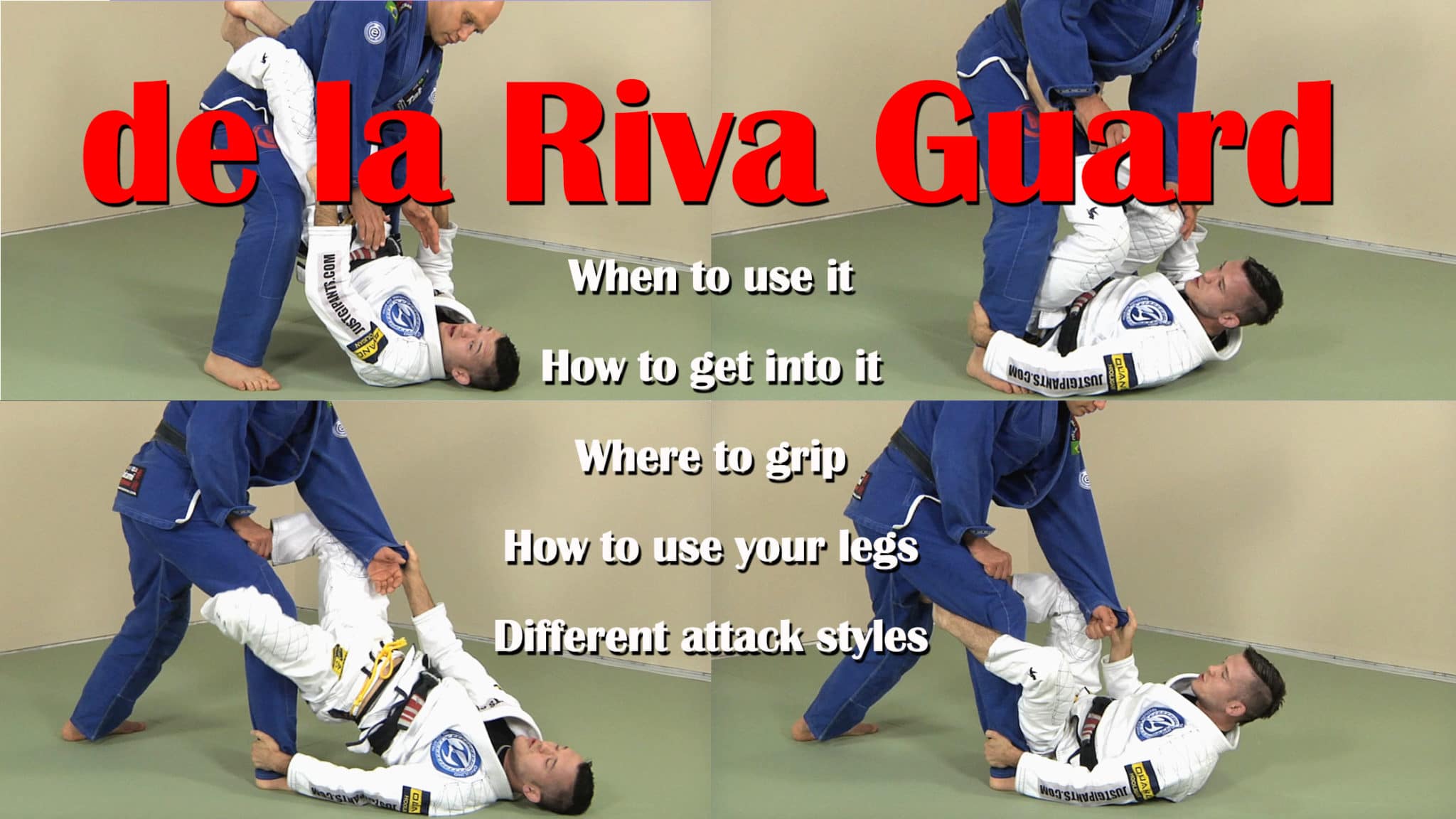
De la Riva guard: make the standing passer take a step
Your de la Riva hook is in, but the passer is comfortable. Study ankle control, the free leg, and the balance reaction that makes an attack possible.
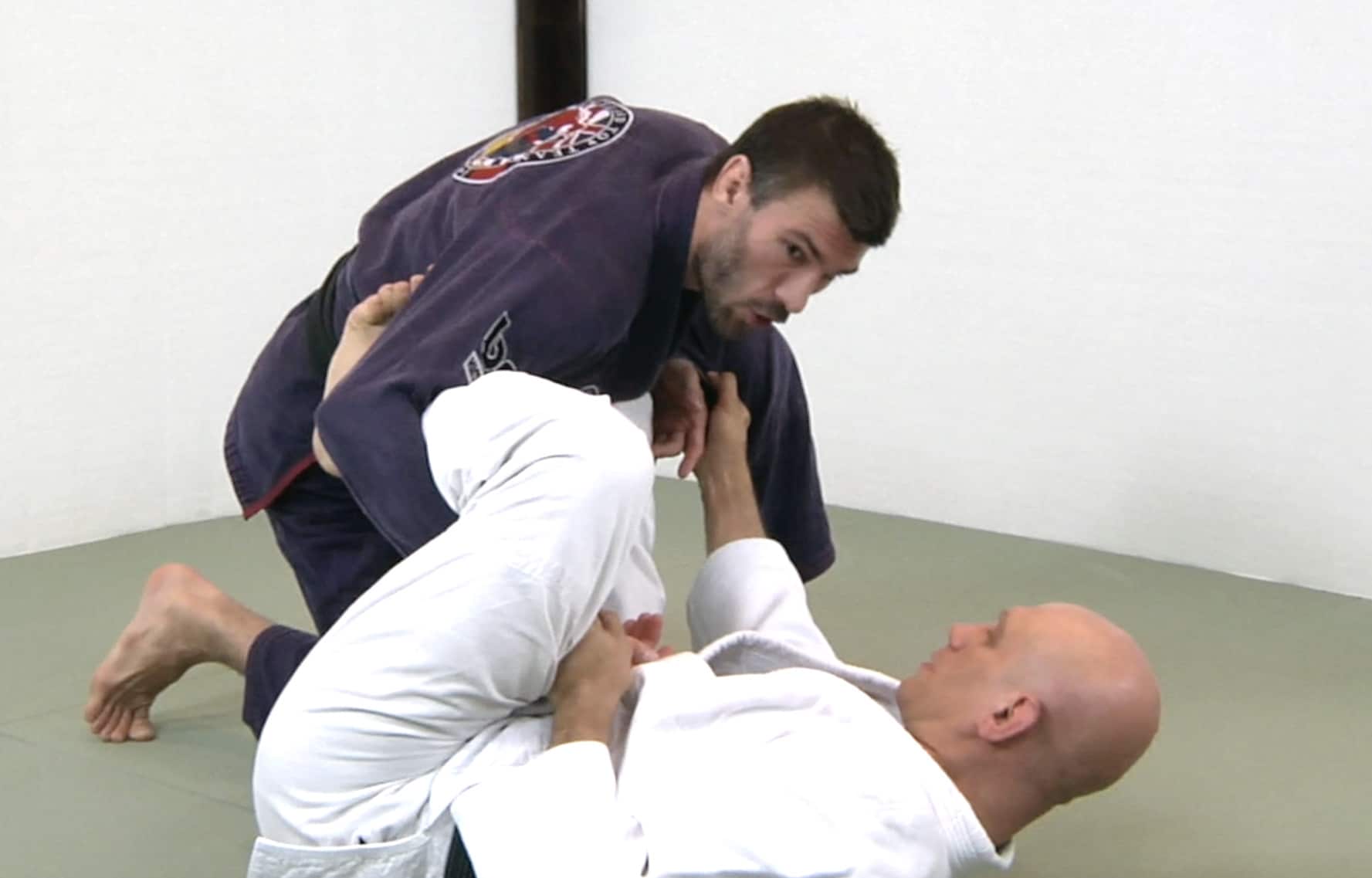
Lasso guard: know when to keep the sleeve and when to leave
A lasso hook can buy time or trap you in a grip battle. Give the free leg a purpose, keep useful sleeve control, and recognize when to change guards.
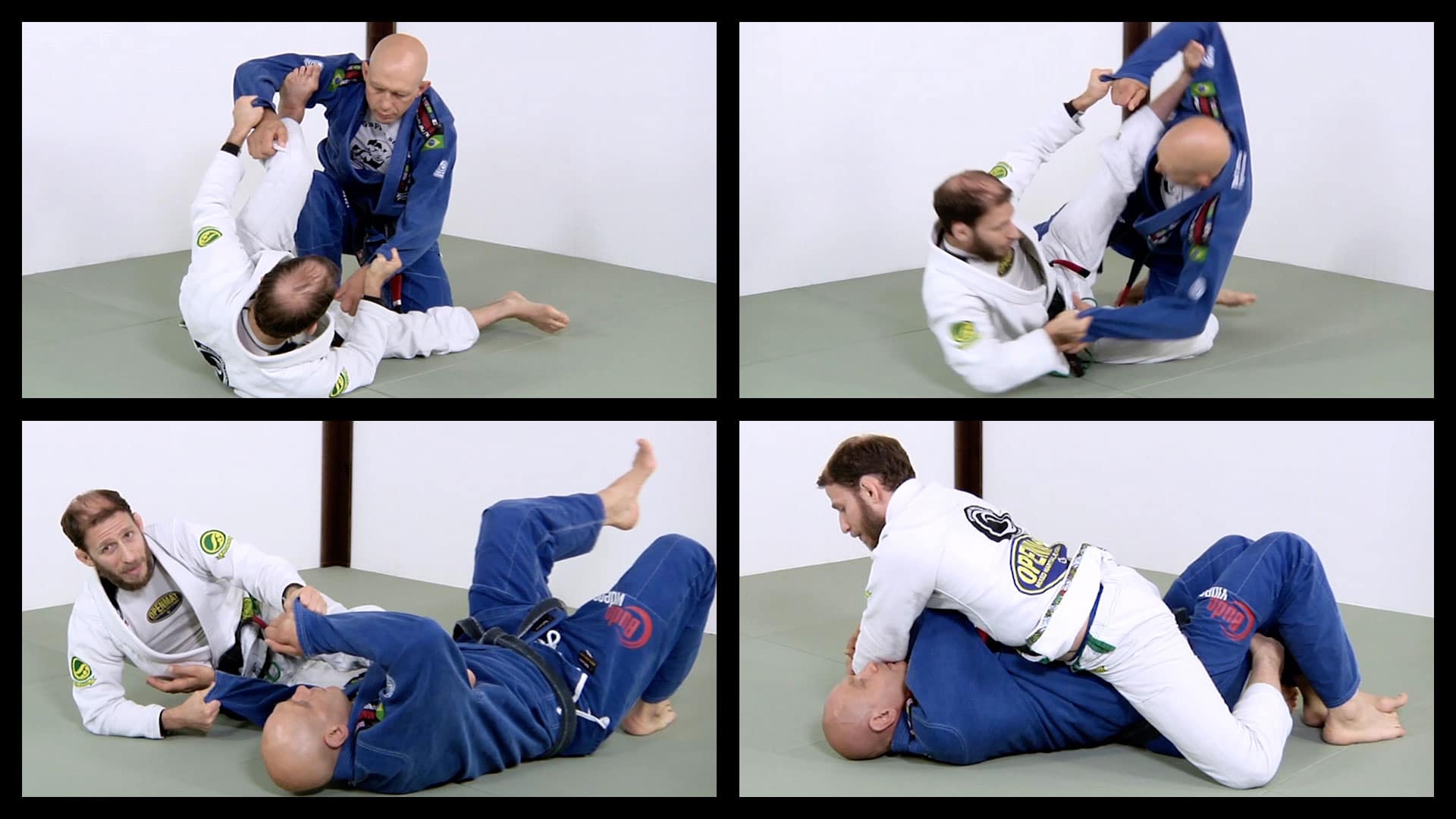
Spider guard: give each foot a job
Make spider guard easier to read. Learn how sleeve tension, different foot positions, and the passer's posture shape your next sweep or transition.
Comments (0)
Loading comments...