
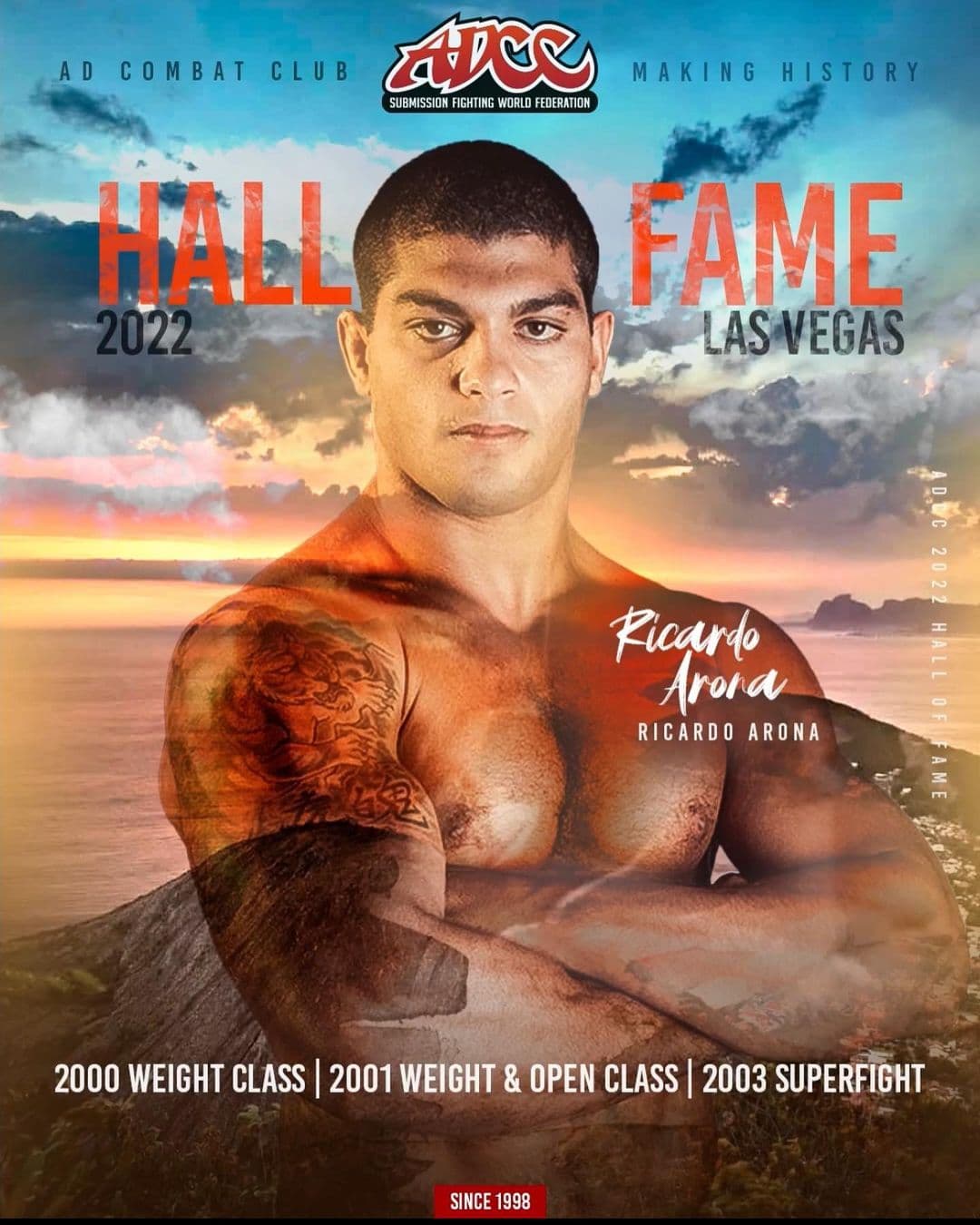
Ricardo Arona: the ADCC double that still deserves a replay
Quick answer: Ricardo Arona won ADCC’s under-99kg division in 2000, added both divisional and absolute gold in 2001, and beat Mark Kerr in the 2003 superfight. Those are different achievements, and separating them makes his record more impressive, not less. Start with the original results before letting a highlight compilation tell the whole story.
Two first-place entries carry the same name in the 2001 ADCC results. One sits above Ricardo Almeida in the under-99kg division. The other sits above Jean Jacques Machado in the absolute. Both belong to Ricardo Arona.
That double gives a modern viewer a useful starting point. Before comparing eras, arguing about the best grappler ever, or counting championships from a promotional graphic, look at what he actually won. Arona’s ADCC history rewards a little more attention than the familiar line about an undefeated run.
The first gold came before the double
ADCC’s official 2000 results list Arona first at under 99kg, followed by Jeff Monson, Tito Ortiz, and Matt Hughes. That is the podium and fourth-place order, not a list of four opponents he necessarily beat. The distinction matters whenever an old result page becomes a modern biography.
A standings page compresses a tournament into a few names. It cannot tell you every grip exchange, who controlled which minute, or whether a particular match was close. It does establish that Arona had already won his division before the result most people reach for when explaining his grappling career.
The same page lists Mark Kerr as the winner of both the over-99kg and absolute divisions. Keep that name in view. Kerr appears again later in Arona’s record, but in a different kind of contest. Following the event year by year gives that later meeting a context that a single championship total loses.
In 2001, his name appeared above two different fields
The 2001 ADCC results put Arona first at under 99kg, with Almeida second and Alexandre Ferreira third. In the absolute, Arona finished first ahead of Machado, with Vitor Belfort third and Almeida fourth.
The absolute is a separate competition without the same weight-class boundary. Winning it is not a second label attached to a divisional medal. Our guide to the BJJ absolute division explains why that distinction changes the task facing an athlete.
For Arona, the record therefore contains a repeat divisional title and a separate open-weight title at the same event. Those two facts do more work than a vague description of dominance. They identify the competitions, the year, and the people who shared the final standings.
They also leave room for what the results do not establish. A double title alone does not explain his preparation, his private expectations, or the physical condition in which he entered each match. There is no reason to invent those details to make the achievement readable.
The Kerr meeting belonged to another category
Arona’s next entry in this short chronology is the 2003 ADCC superfight, where the official results name him the winner against Mark Kerr. This was a featured match, rather than a divisional bracket through which Arona advanced that weekend.
That is why championship totals can sound inconsistent across summaries. Two weight-class titles, an absolute title, and a superfight victory are four major wins, but they are not four editions of the same bracket. A careful description can celebrate all of them while keeping the categories visible.
The earlier Kerr result supplies useful historical context: the opponent in that superfight had topped two categories in 2000. It would still be careless to treat a meeting in 2003 as proof of what would have happened between them at an earlier event. Different dates mean different contests.
Sports history gets thinner when everything becomes a hypothetical prime-versus-prime argument. Here, the actual sequence is strong enough. Arona won a division, returned for a double, and later won the superfight.
Recognition came long after those results
ADCC’s own Hall of Fame video about Arona, published in 2024, identifies his induction year as 2022. That is useful confirmation that the organization continued to recognize his place in its history well after the matches themselves.
A Hall of Fame selection is an institution’s judgment. It is not a substitute for the underlying record, and it does not settle every comparison between athletes. Used alongside the event results, however, it answers a different question: whether the achievement remained part of the organization’s remembered history.
For someone who entered jiu-jitsu through recent events, that distinction is helpful. Familiarity is partly a matter of when you started watching. A name can be less visible in your feed without having a smaller place in the sport.
There is no need to scold newer fans for that gap. A short, accurate route into an older career is more useful than a demand that everyone already know it. Three event pages are a reasonable beginning.
Watch the whole exchange before naming the lesson
A productive way to approach older grappling footage is to choose a small question before pressing play. Watch who establishes the first meaningful connection, how an athlete prevents the opponent from improving position, or what changes after a restart. These are viewing prompts, not claims about an unseen match.
A highlight may show an explosive entry while cutting the preceding minute. Without that minute, it is difficult to tell whether the entry was available immediately or became possible after several failed attempts, a change in grip, or an opponent’s movement.
Try one replay with the finish ignored. Follow the approach to it instead:
Note the starting position and any visible score or clock.
Watch what the opponent does before the successful action.
Separate a clearly visible event from an interpretation of why it happened.
Rewatch the transition at normal speed after using a slower replay.
This keeps film study honest. It also makes older footage useful even when its picture quality, commentary, or available camera angles fall short of a modern broadcast.
A result is evidence, not a complete technical biography
It is tempting to work backward from a winning record and assign a universal explanation. He won, so every choice must have been optimal. He beat a particular opponent, so his method must work against everyone with that opponent’s background. Neither conclusion follows from the result alone.
For a student, the better question is narrower: what problem can be seen in this exchange, and what did the athlete do about it? A coach can then help determine whether that solution belongs in the student’s training. Physical size, rules, experience, and the starting position all affect that discussion.
Even a clearly understood sequence does not have to become this week’s new game plan. Sometimes the useful observation is that the athlete stayed patient while maintaining a position you would normally abandon. Sometimes it is the way an opponent recovered after an initial loss of balance.
The purpose of watching Arona need not be to become a smaller copy of Arona. It can be to develop a more accurate eye for grappling and a more informed understanding of the record behind his name.
Compare achievements before comparing eras
Cross-era discussion becomes easier when the comparison has a defined subject. Are you comparing weight-class championships, absolute success, superfights, or the length of an athlete’s competitive career? Those questions produce different lists and require different evidence.
The ADCC format guide is a useful companion if the categories are unfamiliar. Read an older result in the context of its event rather than assuming every detail of the present format applied unchanged.
Arona’s record in this article is deliberately bounded: the under-99kg title in 2000, the under-99kg and absolute titles in 2001, and the 2003 superfight win. It does not require a claim that another generation was weaker, that present athletes have forgotten something, or that a hypothetical match would end a particular way.
That leaves plenty to discuss. A repeated divisional win asks one question about an athlete’s competitive range; an absolute title asks another. Put both on the page, and readers can appreciate the achievement without being recruited into an argument the evidence cannot settle.
Main photo: ADCC; Ricardo Arona Hall of Fame portrait.
The takeaway
Ricardo Arona’s ADCC record becomes clearer when its parts stay separate. The 2000 division win, 2001 double, and 2003 superfight tell a more precise story than a championship number detached from its categories.
Start with those results, then use full footage to investigate the technical questions that interest you. The record supplies the outcome. Patient viewing supplies a chance to understand the exchanges that a short summary cannot contain.
Find a place to study the position
Use Let’s Roll’s gym directory to find a training room where you can bring a specific question from your match study to a coach.
FAQ
What did Ricardo Arona win at ADCC in 2001? The official results list him first in both the under-99kg division and the absolute. Those are separate competitions, so the double should be described with both categories named.
Did Arona win ADCC before 2001? Yes. ADCC lists him as the under-99kg champion in 2000. That result precedes his repeat divisional title and absolute gold the following year.
Who did Arona beat in the 2003 superfight? The official ADCC results identify Mark Kerr as his opponent and Arona as the winner. A superfight is a different achievement from winning a multi-match divisional bracket.
Is an old match useful for a beginner to watch? It can be, especially with a specific viewing question and help from a coach. Start by identifying positions and transitions rather than copying a fast sequence whose setup you do not yet understand.

Miles Serrano
Miles Serrano writes about competitors and the decisions that shaped their careers. He is more interested in the adjustment someone made in the third minute than in the medal count afterward.
Related Posts
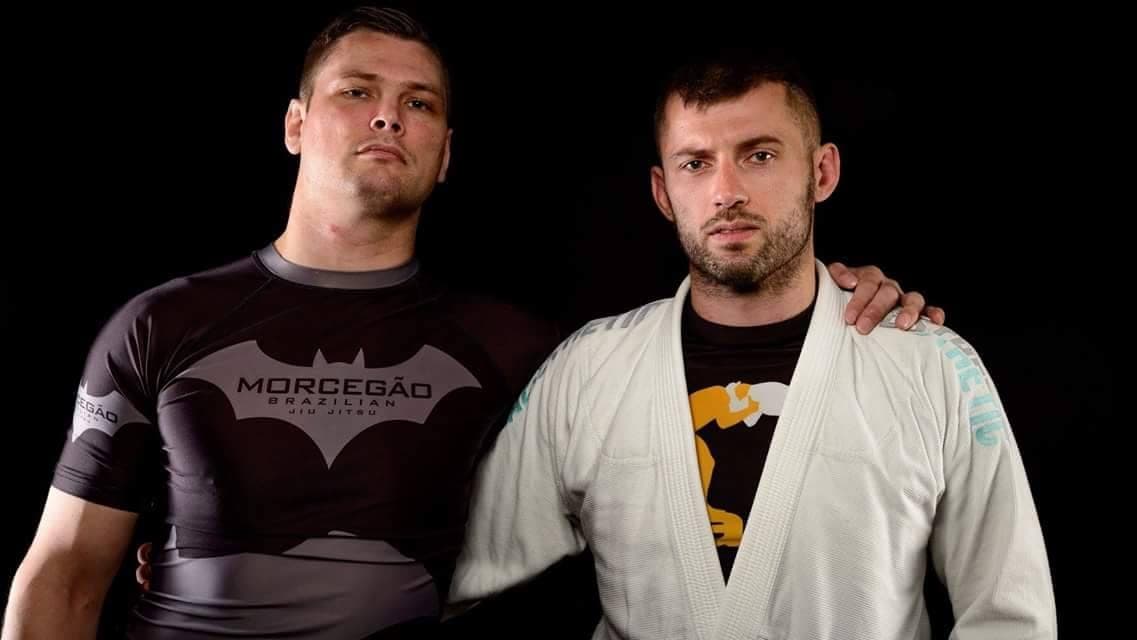
Competing in gi and no-gi on the same day takes two plans
Prepare for gi and no-gi competition on the same day with separate rule checks, complete outfits, schedule coordination, and a realistic second-bracket plan.
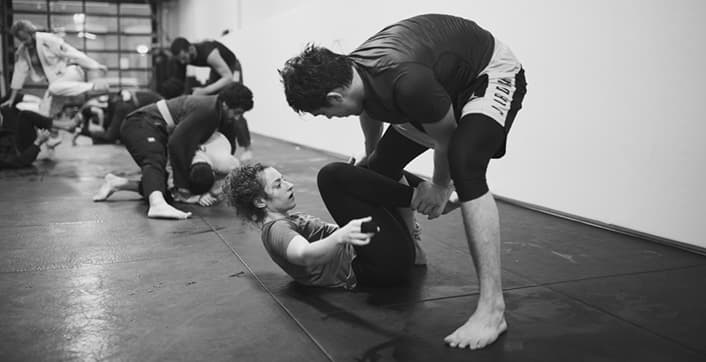
Jiu-jitsu in Montreal: build the visit around a real class
Plan BJJ training in Montreal around confirmed classes, language arrangements, winter travel, visitor policies, and equipment that is ready to use.

BJJ gi pants that fit standing up can still fail on the mat
Check BJJ gi pants at the waist, rise, knees, and cuffs so a good-looking size label becomes a uniform you can actually move in.
Comments (0)
Loading comments...