
Online jiu-jitsu training: choose the format you need
Quick answer: Choose online jiu-jitsu training by the kind of help you need: a structured sequence, a searchable reference, a recorded class, or individual feedback. Check the actual access terms and practice requirements before paying. Video can support coached training, but watching a demonstration does not tell you whether you are performing it correctly.
A library can contain thousands of lessons and still leave you unsure what to open on Tuesday. More material solves a shortage of material. It does not automatically solve the problem you are having in class.
The useful first decision is the format. Someone learning basic positions needs a different starting point from a coach looking for a reference or a competitor asking for feedback on a specific match. Searching for the best online BJJ program without naming that need makes the comparison harder than it has to be.
Decide what you expect the screen to provide
Write one sentence describing the help you want. Be specific enough that you could tell whether a lesson delivered it. Learning the vocabulary used in class is a different task from receiving an explanation of why your guard pass failed against a resisting partner.
For a reference question, a searchable library may be convenient. For a sequence of related lessons, a curriculum can reduce the number of decisions you make. If you need someone to observe you and respond, look for a service that explicitly includes that interaction rather than assuming it comes with video access.
Do not confuse clear presentation with personal assessment. A demonstration can be exceptionally well explained while remaining unaware of what you are doing. Your misunderstanding may occur at a point the instructor did not need to emphasize for the person used in the video.
This is why the online choice should connect to the training available around it. Identify where your questions can be checked, whether through your regular coach or an explicitly offered feedback service.
Compare a curriculum with a reference library
A curriculum offers an order. A reference library offers access to subjects. Some platforms provide both, but it is worth understanding which part you will use before comparing the size of their catalogs.
AOJ+ describes a curriculum alongside technique instruction organized by position, with gi and no-gi material. That is an example of different ways into the same platform, not a reason every learner needs the same subscription.
If you want a curriculum, preview its starting assumptions. Can you identify the positions and movements the teacher expects you to know? Does the sequence fit what your coach is currently teaching, or will you need help connecting two different approaches?
If you want a reference, test how easily you can find the relevant problem. A catalog may contain an excellent explanation that is difficult to locate under the term you know. Use available previews to judge the teaching and organization, not only the production quality of the promotional trailer.
Recorded classes offer a different kind of lesson
A recorded class can include the pacing and questions of a group session. It may spend more time setting up an idea than a short edited demonstration. That can be useful if you need context, and less convenient if you are trying to check one detail quickly.
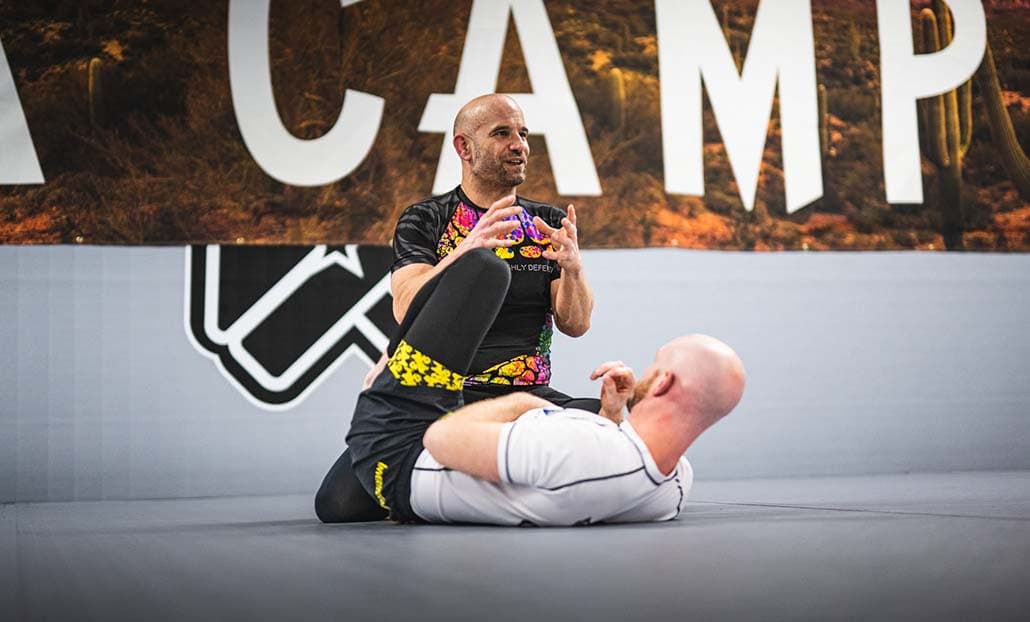
BJJ Globetrotters in Action is a free library of classes from its camps. It gives you an option to explore recorded teaching without first purchasing a subscription. The availability of free material also makes it easier to test whether this format suits how you study.
Treat a class recording as a class recording. The instructor may be addressing the people in that room, with shared background you do not have. If a point is unclear, note it rather than pretending the surrounding explanation must have settled it.
A useful preview question is whether you can follow the setup and explain the intended task afterward. If the answer is no, choose more introductory material or ask your coach where the gap lies. Replaying advanced material indefinitely is not the only available response.
Feedback needs an explicit agreement
If a program advertises coaching or review, find out what that means in practice. A discussion forum, a group question session, and a response to your own training footage are different services. None should be assumed from the word community on a sales page.
Before paying for feedback, ask what you submit, who responds, how long a response usually takes, and whether follow-up questions are included. Confirm the limits of the service. A reviewer may be able to discuss a recorded decision without assessing every aspect of your training.
Get permission from the people in any footage before recording or sharing it, and follow the academy’s recording policy. Keep the submission relevant to the question. A short, properly contextualized clip may be easier to assess than an unexplained folder of complete rounds.
Your in-person coach remains a useful point of reference. Explain what you are studying and ask how it fits your current training, rather than presenting an online lesson as an argument you expect them to referee.
Check access on the device you will actually use
Read the current plan details before purchasing. Confirm whether you are buying recurring access, a specific course, or another arrangement. Check what remains available if you stop paying, and do not assume a feature applies to every product a provider sells.
AOJ+’s FAQ, for example, distinguishes ordinary streaming from offline playback through its mobile app. That is a practical reason to inspect the access method if you expect to study without a reliable connection. Other platforms may use different terms or systems.
Make a short pre-purchase check:
Can the lesson play clearly on your intended device?
Are captions or other features you need actually available?
Does the plan include the specific course you want?
Is the payment recurring, and where is it managed?
What are the provider’s current cancellation and access terms?
Save the answers and set your own review date. This is especially useful for a subscription you intend to use during a limited training block. A recurring charge should reflect an ongoing choice, not a forgotten browser tab.
Match the purchase to available practice
Before choosing a partner-based course, identify when and where you can work on it. If you have no suitable partner time, a large collection of partner drills may not solve your present constraint. Choose material you can meaningfully study now, then arrange the practice it requires.
Talk to your coach about appropriate opportunities. Some questions can be explored within the regular class structure; others may need an agreed period outside it. Do not arrive at someone else’s scheduled class expecting the room to become your private study session.
If you are looking for more training access, start with local academies. An online purchase and an in-person class solve different parts of the learning process. Consider the complete week before committing the same limited time to several competing plans.
Once you have selected a resource, our guide to learning from BJJ instructionals covers the study process in more detail. Choosing access is the decision here; using that access requires its own routine.
Review usefulness before collecting another platform
Set a modest review point after you have had time to use the material. Ask whether you found the lessons you needed, understood the starting assumptions, and had a way to check your questions. Those are more informative measures than how many videos you marked complete.
Keep a short note of unresolved points. If the same confusion remains after repeated viewing, more access to the same format may not be the answer. You may need a simpler explanation, a demonstration from another angle, or someone to watch what you are doing.
Do not judge an entire resource from one unsuccessful attempt against resistance. Equally, do not keep paying only because a famous athlete teaches there. The question is whether the format and material are serving the purpose you identified.
A smaller collection that fits your practice can be easier to use than several overlapping subscriptions. You can return to another subject later. There is no need to buy permanent access to every possible version of the practitioner you might become.
Main photo: BJJ Globetrotters.
The takeaway
Online jiu-jitsu training works best as a deliberate choice of format. Decide whether you need sequence, reference, recorded teaching, or individual feedback, then verify that the service actually provides it under terms you understand.
Connect the material to real practice and a way to resolve questions. The useful purchase is the one that fits your available training and helps you make sense of it, whether that starts with a paid curriculum or a free recorded class.
Find time to work with a partner
Check Let’s Roll open mats for suitable opportunities, and ask the host whether the session permits the kind of cooperative practice you have in mind.
FAQ
Can I learn jiu-jitsu entirely online? Videos can explain ideas and demonstrate movements, but they cannot by themselves observe your execution or provide a resisting partner. Arrange appropriate coached training and treat online material according to what it can actually provide.
Should a beginner buy a subscription or an individual course? First identify the subject, level, and practice access you need. Preview the teaching, then compare the actual terms. Neither purchase format is automatically a better choice for every beginner.
Are free BJJ videos worth using? A free lesson can be useful when its instruction, level, and subject fit your needs. The price alone does not tell you whether you can understand and apply the material with suitable guidance.
How do I know whether an online program includes coaching? Look for a specific description of feedback, submissions, response times, and follow-up access. Ask the provider when the offer is unclear rather than assuming video membership includes personal assessment.

Nina Okada
Nina Okada explains positions the way a good training partner does: one problem at a time, with the limits of the explanation said out loud. She is careful about the difference between what footage shows and what it only suggests.
Related Posts

Mikey Musumeci gives up the belt to make room for MMA
Musumeci is vacating his UFC BJJ title to focus on MMA training. What he is leaving, what continues, and why the transition matters.

IBJJF membership: finish the paperwork before the deadline
IBJJF membership and tournament entry are separate steps. Plan documents, professor approval, renewals, and junior accounts before registration closes.
Choosing a BJJ seminar worth your time and travel
Choose a BJJ seminar by the subject, teaching format, access, and total cost. Know what to ask the host before buying a ticket.
Comments (0)
Loading comments...