
The older brown belt does not need to win the warm-up
Quick answer: An older brown belt can choose demanding training without accepting every partner, pace, or competition goal. Set the purpose of the session, communicate limits before the round, and keep technical questions alive. Rank does not create an obligation to prove yourself whenever somebody asks.
A brown belt is not a signed agreement to have unlimited energy. It does not clear tomorrow's calendar or make every invitation to roll a sensible one.
For an experienced recreational grappler, the awkward part may be deciding which expectations are real. A coach might want a particular technical improvement. A younger teammate might simply want a round. The elaborate requirement to represent everyone over forty could exist entirely in the brown belt's own interpretation. Start by separating what was actually asked from the burden added afterward.
Choose a purpose smaller than defending your reputation
A useful session can have a modest aim. Work on arriving in half guard with a usable frame. Try to finish a pass without abandoning control. Ask the coach to watch the first exchange from standing. These tasks produce something to examine, even when the round does not go your way.
Defending your status is much harder to finish. There is always another partner, another round, or another younger person whose success can be interpreted as evidence against you. Nobody can tell you when you have completed the assignment because the assignment has no boundaries.
Choose the technical aim before training starts. It can change if the class addresses something more useful, but you should be able to explain what you were working on afterward. That gives the session a shape beyond the number of taps on either side.
None of this requires pretending you do not enjoy a competitive round. Enjoy it. Just let that be a choice rather than a compulsory public demonstration that the belt still belongs on your waist.
Age is information, not a complete training plan
Two people with the same birth year can arrive with very different experience, preferences, and practical constraints. Do not build your plan from a social-media description of what older grapplers supposedly do. Begin with your own circumstances and the instruction available in your room.
Tell your coach about restrictions that affect training. If a health issue needs assessment, speak with a qualified clinician rather than asking a teammate to turn a warm-up into a diagnosis. A coach can help organize practice within understood limits; guessing at an unresolved problem is a different job.
Be equally specific about ordinary preferences. Perhaps you want more positional work, less time standing in crowded sessions, or a round that begins from a position you are studying. Those are understandable requests without a speech about decline.
Avoid appointing yourself the spokesperson for your age group. You are allowed to like fast passing, takedowns, or a competition project. You are also allowed to dislike them. The plan should reflect the actual student rather than a costume labeled veteran grappler.
Agree on the round before it becomes an argument
Partner selection is part of organizing practice. If a particular pairing repeatedly produces a pace you did not agree to, address that before starting again. A short, concrete request is easier to follow than an instruction to take it easy, which can mean quite different things to two people.
You might propose starting in a fixed position, resetting after a pass, or spending the first part of the round on a movement you both want to study. Make the boundaries clear enough that either person can notice when the exercise has changed.
Consider these questions before accepting a round:
What are we trying to practice, and where will we begin?
Are there restrictions either partner needs to know about?
What will make us stop or reset?
Is this a suitable pairing for the session we are both having?
You do not need a committee meeting between rounds. Usually the useful information takes a few seconds. Those seconds can prevent a much longer conversation after somebody discovers that technical round and tournament rehearsal were not the same request.
Keep one part of your game open for renovation
Experience can become a comfortable place to hide. A familiar guard and a reliable escape give you somewhere to go when the round turns difficult. There is nothing wrong with having them. The question is whether every session must end up there.
Choose one small area where being uncertain is acceptable. You might investigate a different grip before entering your usual guard, or a finish after a sweep that you normally treat as the end of the exchange. Keep the scope narrow enough that your coach can help you identify the next decision.
Expect the practice version to look less polished than the established game. That is a reason to choose appropriate rounds, not evidence that the experiment has failed. Starting from a favorable position can make the new question easier to isolate before testing it more freely.
The teammate familiarity problem matters here. A move that works because everyone knows your preferred response may need another test with a different partner. Ask for that test deliberately; do not turn every unfamiliar visitor into an examination of your entire career.
Helping the room does not mean working every round
A brown belt may be asked for an explanation, a demonstration, or help welcoming somebody new. It is reasonable to contribute. It is also reasonable to have time in which you are a student concentrating on your own practice.
If instruction starts consuming the session, speak with the coach about how to divide the work. A brief answer between rounds is different from spending the full class running another person's lesson. Neither arrangement should depend on everyone guessing what you are willing to do.
When you do help, keep the explanation connected to what happened. Point out the grip, frame, or direction that changed the exchange. Avoid presenting every personal preference as a rule the beginner must adopt. Your reliable answer to a position may be one answer among several.
A useful senior teammate also knows when to refer the question back to the instructor. Experience does not require an immediate opinion on every ruleset, injury, or technical dispute. Sometimes the most helpful contribution is identifying the person who can answer accurately.
Competition should be an actual decision
If you want to compete, say so clearly and make a plan with your coach. Choose an event, check its divisions and rules, and work out what preparation is practical. That is a more useful project than vaguely promising to get back out there whenever the subject arises.
If you do not want to compete, that answer can be just as clear. Recreational training does not need to imitate a competition camp to count. You can pursue difficult technical work and enjoy demanding rounds without attaching them to a registration receipt.
Do not use younger competitors as the sole measure of whether your plan is succeeding. They may be preparing for something different. A round with them can provide useful information, but it cannot decide whether your own goals are worthwhile.
For a specific event, use the organizer's current information rather than assuming a masters category, match length, or permitted technique from another tournament. Find competitions as a starting point, then confirm the details before building training around them.
Leave a session without holding a hearing about it
After class, write down one useful observation if keeping notes helps you. Perhaps the frame disappeared when you reached for a grip. Perhaps the new passing entry worked until the partner changed direction. That is enough material for the next practice.
You do not need to attach a verdict about your age, rank, or future. One evening contains particular partners and particular exchanges. It is a small amount of evidence for a very large conclusion about whether you are still good at jiu-jitsu.
Likewise, a strong night need not become a promise to train that way every time. You can enjoy the rounds without committing your next month to matching them. The sensible plan is the one you can choose again under your actual circumstances.
If frustration keeps returning, make it a coaching conversation with examples. Bring the position that repeatedly causes trouble, the schedule that no longer works, or the mismatch in session expectations. Those are things somebody can help you address. An accusation that you should be younger is not.
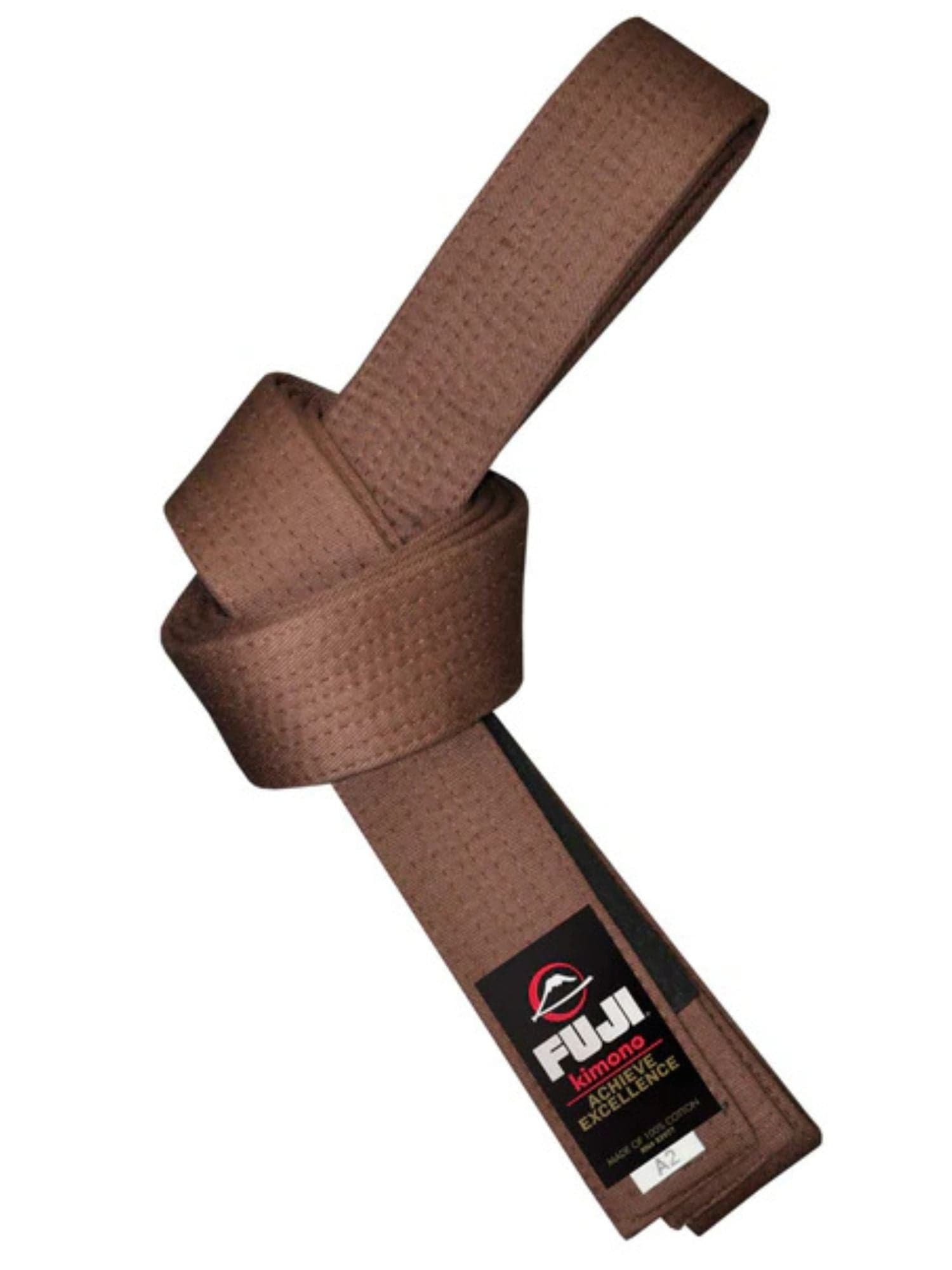
Main photo: FUJI Sports; product photograph.
The takeaway
Experienced grapplers do not owe the room a performance every evening. Choose the work, agree on the round, and keep a technical question that is worth returning to. Ambition can fit inside those boundaries.
The brown belt still gets to be a student. That includes asking for help, trying an awkward new answer, and leaving with something unfinished without treating it as a personal emergency.
Find another place to practice
Browse open mats on Let’s Roll, then contact the host about the format, visitor requirements, and suitability for the session you want.
FAQ
Should older brown belts only train with older partners? Partner suitability depends on the individuals and the agreed practice. Consider communication, control, and the purpose of the round rather than choosing solely by age.
Is it acceptable to decline a roll? Yes. A clear, polite refusal is enough. If a recurring pairing or expectation is causing difficulty, discuss it with the coach instead of repeatedly accepting a round you do not want.
Do brown belts need to help teach every class? Clarify the academy's expectations with the instructor. Helping teammates can be valuable, but the arrangement should leave room for your own training unless you have agreed to a teaching role.
Can an older recreational grappler still set ambitious goals? Yes. Choose goals that fit your circumstances and work with your coach on the training they require. A specific technical or competition project is more useful than a general demand to prove you still belong.

Owen Bellamy
Owen Bellamy writes for the person training twice a week around a job. Nothing he suggests requires quitting the job.
Related Posts
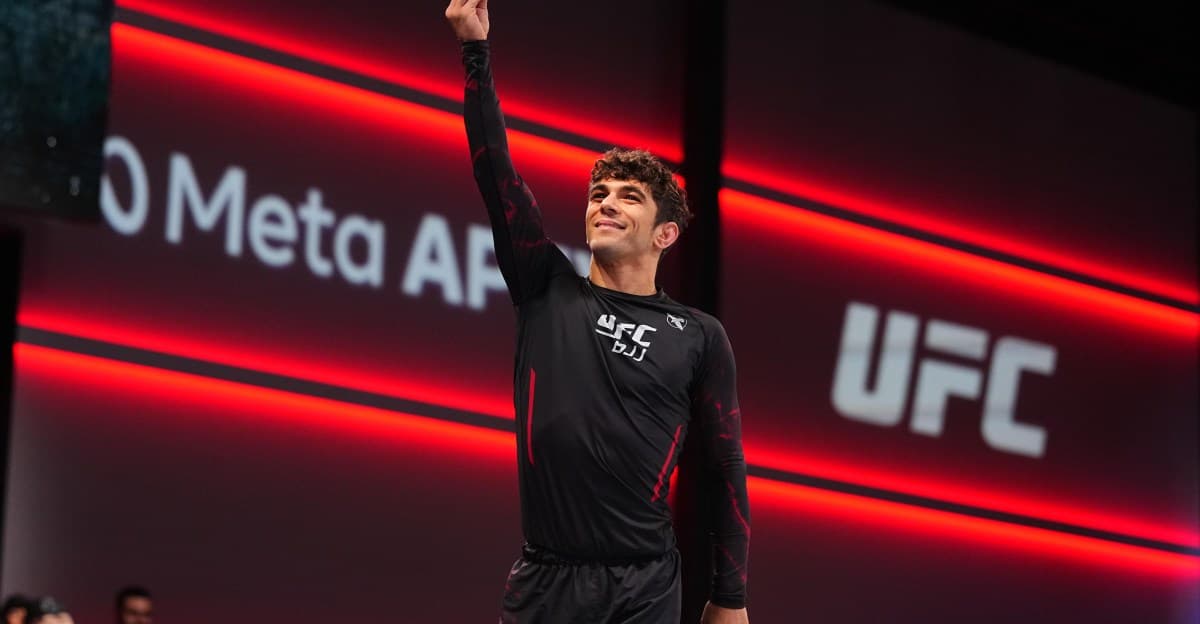
Mikey Musumeci gives up the belt to make room for MMA
Musumeci is vacating his UFC BJJ title to focus on MMA training. What he is leaving, what continues, and why the transition matters.
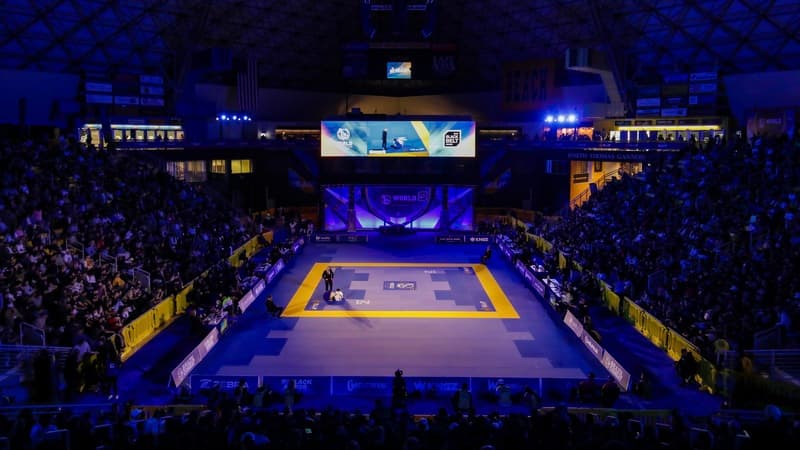
IBJJF membership: finish the paperwork before the deadline
IBJJF membership and tournament entry are separate steps. Plan documents, professor approval, renewals, and junior accounts before registration closes.
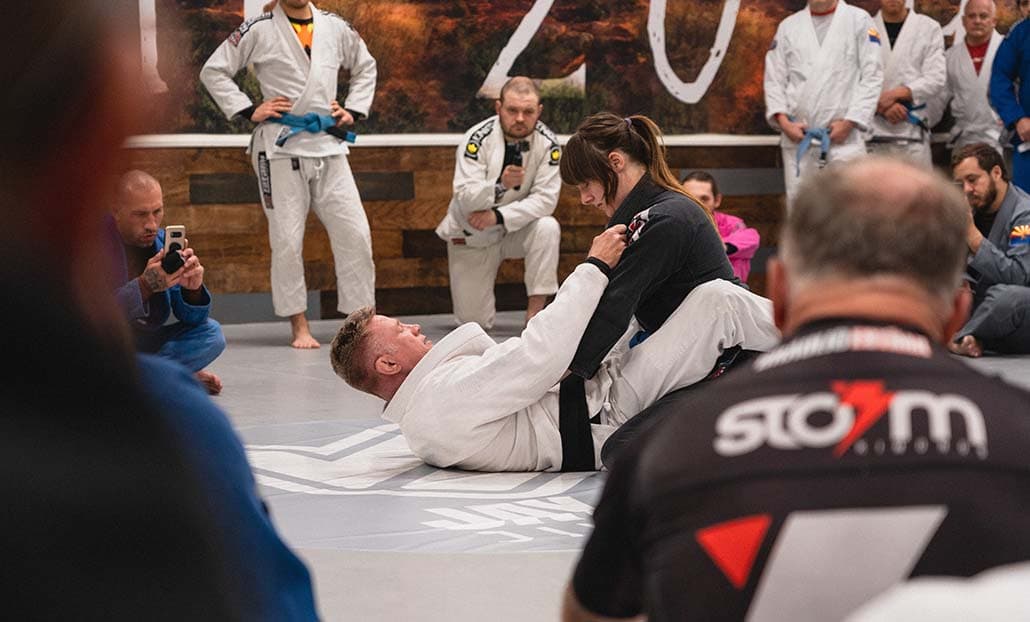
Choosing a BJJ seminar worth your time and travel
Choose a BJJ seminar by the subject, teaching format, access, and total cost. Know what to ask the host before buying a ticket.
Comments (0)
Loading comments...