

IBJJF Pan No-Gi 2026 men’s results: Jaworski wins twice
Quick answer: Pawel Jaworski won medium heavyweight and open class at the 2026 IBJJF Pan No-Gi Championship, with seven wins and five submissions across both brackets. Elijah Dorsey won middleweight, while Natã Tenca and Alexandre Manara won the two heaviest weight divisions. This guide covers all ten men’s adult black belt podiums.
The result sheet contains more than one kind of win. Jaworski’s open final was a referee decision, Tenca’s final entry was a reported closeout, and Manara’s route included a no-show between submission victories. Those distinctions are part of the event, not details to be smoothed out.
The official breakdown makes it possible to describe the championship with some precision. Here the podium places stay attached to the result page, while methods and scores come from the separate report. That keeps a title count from becoming an invented finishing record.
The two lightest categories
The official Pan No-Gi results provide the podiums. The IBJJF results breakdown supplies the round-by-round methods and scores summarized here. These are adult black belt no-gi results from the October event.
Rooster. Lucas de Souza Castro of Gracie Barra took gold. The silver medal went to Christopher Duyquan Tran of Team Lloyd Irvin. The bronze medalists were Eric Michael Naples (RMNU Team) and Mohammed Mustafa Sadiq (Telari).
IBJJF’s breakdown records a quarterfinal injury result, a rear-naked choke in the semifinal, and a 2–1 advantage final. The injury entry should not be converted into a named submission. The final’s advantage score is also separate from points, rather than a three-point total split between the athletes.
Light Feather. Vinicius Gomes Inacio of Alliance took gold. The silver medal went to Edwin Ocasio of Unity Jiu-jitsu. The bronze medalists were Carlos Alberto Oliveira da Silva (GF Team) and Daniël de Groot (The House FC).
Vinicius Inacio’s route included a heel hook, an armbar, a 2–1 advantage semifinal, and a 6–4 points final. That combination gives the run a specific shape: early finishes, then two different kinds of scored result. It should not be shortened into an all-submission championship.
Featherweight and lightweight
Feather. Emilio Alejandro Hernandez Rodriguez of Zenith BJJ took gold. The silver medal went to Steven Alexander Gomez of AOJ. The bronze medalists were Amit Meir Burshtein (Nxtgen Jiu-Jitsu) and Luan Gomes da Silva (A-Force Brazilian Jiu-Jitsu).
Emilio Hernandez’s reported route went from a quarterfinal toehold to a 2–1 advantage semifinal and a heel-hook final. The finish belongs to the final at this event, while the earlier advantage win remains a different result. A title run can contain both without either being an exception that needs explaining away.
Light. Pierre-Olivier Leclerc of Tri-Star Montreal took gold. The silver medal went to Guilherme Rodrigues Fernandes of AOJ. The bronze medalists were Danilo Soares Moreira (Six Blades Jiu-Jitsu) and João Matheus de Melo Assonitis (Double Five).
Pierre-Olivier Leclerc won early rounds by 4–0 and 4–2 on advantages, followed with a guillotine semifinal, and won the final 2–0 on advantages. Those numbers are advantage fields, not points scores. A replay review should keep the scoreboard columns separate before judging the competitive margin.
Dorsey and Jaworski in the middle
Middle. Elijah Amir Dorsey of Team Lloyd Irvin took gold. The silver medal went to Tarik Hopstock of Frontline Academy. The bronze medalists were Kieran Robert Kichuk (Cicero Costha Internacional) and Maximilian John Anthony Hanson (Pedigo Submission Fighting).
Elijah Dorsey’s five-win route included a shoulder-lock finish, a 5–0 advantage win, a 2–0 points quarterfinal, a 21–0 points semifinal, and an armbar final. The standout report counts two submissions. A large semifinal score and a final submission describe different stages of the same championship run.
Medium Heavy. Pawel Kacper Jaworski of Academia Gorila took gold. The silver medal went to David Salem Garmo of Detroit Jiu-Jitsu Syndicate. The bronze medalists were Alehander da Silva Mariano (Atos Jiu-Jitsu) and Natan Chueng Freitas (Unity Jiu-jitsu).
Pawel Jaworski’s weight route included a 1–0 advantage quarterfinal, a heel-hook semifinal, and a triangle final. His open-class title was another bracket. The two golds should be recorded separately before their combined wins and submissions are calculated.
Heavyweight and super heavyweight
Heavy. Wallisson Oliveira Souza of Campeão United Jiu-Jitsu took gold. The silver medal went to Austin Caine Oranday of Alliance. The bronze medalists were Bradley W. Schneider (Pedigo Submission Fighting) and Joab de Oliveira Camara (Triunfo Brazilian Jiu Jitsu).
Wallisson Oliveira’s reported weight route ended with a 3–0 advantage semifinal and an 8–0 points final. He also took open-class silver. That later placement does not change his heavyweight title, just as the weight gold does not make him the open champion.
Super Heavy. Natã Tenca Lima of Atos Jiu-Jitsu took gold. The silver medal went to Andre Luiz Leite Galvão of Atos Jiu-Jitsu. The bronze medalists were Marcelo Enrique Gonzalez Montoro (Fabricio JJ International) and Sergio J Vilas (Team Lloyd Irvin).
Natã Tenca’s early results included a toehold and the finish IBJJF labels a Mussolini Lock. The report identifies the conclusion with Andre Galvão as a team closeout. The podium establishes first and second, while the report supplies the closeout description; it should not be guessed from shared academy names alone.
Ultra heavyweight and open class
Ultra Heavy. Alexandre Papa Manara of Lotus Club took gold. The silver medal went to Sean Douglas Goolsby of Esporte Dez / Instituto Calasans Camargo. The bronze medalists were Deyvson Fernando Araujo de Souza (Gracie Barra) and Gabriel Aguiar Costa (Vuk / 617 Brazilian Jiu-jitsu).
Alexandre “Lele” Manara’s record includes a qualifying heel hook, a quarterfinal no-show, a semifinal kneebar, and a heel-hook final. The no-show was not a contested submission win. The accurate finishing count is three submissions in three contested matches, with the advancement entry kept separate.
Open Class. Pawel Kacper Jaworski of Academia Gorila took gold. The silver medal went to Wallisson Oliveira Souza of Campeão United Jiu-Jitsu. The bronze medalists were Jett Brody Thompson (Watkins Wrecking Crew) and Luuk Aaron van Nieuwamerongen (NS Brotherhood International).
Jaworski’s open route included a kneebar, a heel hook, the finish the report labels a Z lock, and a referee-decision final. The open gold therefore was not an all-submission run. Combined with his weight bracket, the official standout account credits seven wins and five submissions.
The double gold is seven wins, not seven submissions
The official standout report credits Jaworski with seven wins and five submissions across medium heavyweight and open class. It also identifies Dorsey’s five-win middleweight title and Manara’s three contested submission wins. These are different records and should retain their actual denominators.
Jaworski: two golds, seven wins, five submissions.
Dorsey: middleweight gold, five wins, two submissions.
Manara: ultra-heavyweight gold, three submissions in three contested matches.
A no-show, closeout, injury result, points win, advantage win, and referee decision are not interchangeable methods. Counting each as a submission would produce an impressive-looking number that the event did not record.
Use this event as a specific no-gi reference
Pan No-Gi is a separate championship from the gi Pans. Its weight chart, clothing, and eligible techniques need their own labels. A familiar athlete or category name is not enough to identify the right event in a replay search.
The World Championship guide explains the broader major-event structure. For this event, retain Pan No-Gi, 2026, adult black belt, category, and round in the note. Add the method only when the match report or footage supplies it.
The October standout report also discusses an upcoming European No-Gi opportunity. That future competition had not yet supplied a result on this article’s date. A possible season milestone should remain a possibility, rather than being counted as a completed title before the event happens.
The heel-hook permission needs its full category
The IBJJF rules chart permits heel hooks and knee reaping in adult brown-and-black-belt no-gi. That specified group includes the adult black-belt matches covered here. It does not make the same attacks legal in gi, juvenile, or masters divisions.
This is why a technique name needs the event category beside it. A heel-hook win in the Pan No-Gi adult black-belt record is not evidence that every IBJJF competitor can use heel hooks. Age, belt, and clothing remain separate conditions.
For a practice review, agree on those conditions before the round and ask a coach for a controlled progression. A replay can show a successful competitive action without establishing the correct intensity or permitted finish for a different training partner.
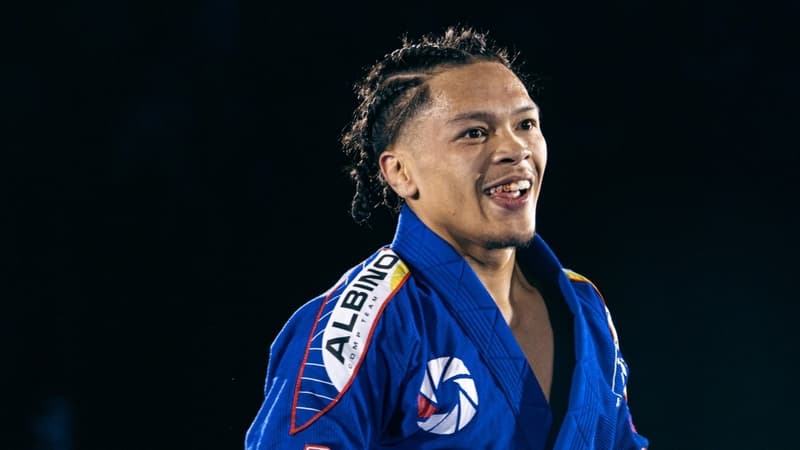
Main photo: Elijah Dorsey at the 2026 Pan No-Gi Championship — IBJJF; photographer not identified on source page.
The takeaway
Jaworski’s double gold leads the men’s Pan No-Gi results, but the full event includes nine weight champions and several very different routes. Dorsey’s scored rounds, Tenca’s closeout, and Manara’s no-show entry all need their correct descriptions.
Use the official podium and the detailed report together. They establish a useful no-gi season reference without turning every advancement into a submission or treating an upcoming event as already won.
Find a competition
Browse the tournament directory, then check the organizer’s official page for the current schedule, categories, and registration conditions.
FAQ
Who won men’s open at Pan No-Gi 2026? Pawel Jaworski won open class as well as medium heavyweight. IBJJF credits seven wins and five submissions across the two brackets.
Did Manara submit four opponents? No. His route included a quarterfinal no-show. The reported contested record was three submissions in three matches.
Was the super-heavyweight final contested? The official report identifies Natã Tenca and Andre Galvão’s conclusion as a closeout. The podium lists Tenca first and Galvão second.
Are advantages the same as points? No. They are separate scoring fields. A 2–1 advantage result should not be rewritten as a 2–1 points result.

Miles Serrano
Miles Serrano writes about competitors and the decisions that shaped their careers. He is more interested in the adjustment someone made in the third minute than in the medal count afterward.
Related Posts
A Close IBJJF Match: Read the Score Before Choosing the Move
Understand close IBJJF matches through points, advantages, penalties, and the clock. Practice decisions using the actual rules and a coach's guidance.

UFC BJJ 6 results: Fowler’s defense and Moura’s first title
UFC BJJ 6 results: Fowler retains, Moura becomes bantamweight champion, Cruz–Rodriguez ends in a draw, and Maquine finishes.
BJJ world championships: which Worlds are you watching?
Gi Worlds, No-Gi Worlds, World Master, and ADCC describe different competitions. Here is how to read the event, division, and result correctly.
Comments (0)
Loading comments...