
How to run an open mat people come back to
Quick answer: Pick a time, keep it forever, and put a black or brown belt on the mat every week who is responsible for it. Get a signed waiver from every visitor before they step on. Free-for-locals is the strongest choice if you can absorb it, since open mat is your best recruiting tool and your worst revenue line. Run a timer with fixed rounds, make somebody responsible for pairing up newcomers, and publish the time somewhere a stranger can find it without DMing you.
Most gyms think their open mat is failing because of the time slot. It usually isn't. It's failing because it moved twice in the last four months, nobody is clearly in charge of it, and the only people who reliably show up are the six competitors who would train in a parking lot.
If you need the basics of what an open mat is and how to behave at one, we've got what is an open mat and the full open mat guide. This is the other side of the desk: how to run one.
Consistency beats the perfect time
The single strongest predictor of a healthy open mat is that it hasn't moved.
Sunday 10am is the national default and there's a reason for that. But Saturday at 1pm, Friday at 7pm, or Wednesday at noon all work if they never change. What kills attendance is a schedule that shifts around tournaments, holidays, and whoever has the keys. People build a weekend around a fixed thing, not around something they have to check Instagram for.
Two years of a mediocre slot beats six months of the ideal one. If you're moving it, move it once, announce it four weeks out, then leave it alone. And cancel as rarely as you can survive: every cancellation teaches ten people to stop assuming it's on, and you get them back one at a time.
Somebody has to own it
An open mat with no one in charge is a hangout with an injury waiting to happen.
Assign a specific upper belt each week whose job it is to be there, open up, greet people, watch the room, and make the call when something needs stopping. Not "the competition team will be there anyway." A named person, on a rotation, who knows they're accountable.
This matters for the obvious safety reason and the boring insurance one. If your general liability policy contemplates supervised instruction, a room full of unsupervised people rolling at speed isn't obviously covered, and you don't want to find out after the fact. Ask your broker what your policy says about open mat, unsupervised access, and non-member participants. Fifteen minutes, worth spending before somebody's shoulder pops.
The mat leader fixes the softer failures too. Someone has to notice the visitor who's been against the wall for two rounds, and it won't be the guy in the middle of a leg lock war.
Waivers, before anybody steps on the mat
Every person who touches your mat signs something. Members already did. Visitors haven't.
Make it frictionless or it won't happen: a QR code on the wall or the front desk that opens a digital waiver on their phone, filled out while they're changing. Emergency contact, injury disclosure, agreement to the house rules. Keep it stored somewhere you can retrieve it two years later, because that's when you'd need it.
One caveat that matters more than most owners realize: waivers don't work the same everywhere. Enforceability of pre-injury releases varies by state, and a few states, with Louisiana, Montana, and Virginia the ones usually named, are reported to be hostile to them or to refuse them outright. That doesn't make a waiver pointless. It sets expectations and documents disclosure of injuries and skin conditions. But your real protection is insurance and supervision, not paperwork, and a local attorney beats a downloaded template.
While they are at the desk, thirty seconds on the other thing: eyes on the skin. No visible lesions, no shoes on the mat, nails short. Anyone who won't answer questions about a covered patch on their arm doesn't roll today.
Should you charge for it?
The case for charging is straightforward. You're paying rent, someone is giving up their Sunday, and drop-in fees in most US markets land around $20 to $30. It also stops the "I'll just come to open mat" crowd from using free rounds as a membership substitute.
The case for free is stronger, and it's arithmetic. Six visitors at $20 is $120. One of those six joining at $150 a month is $1,800 a year. Open mat is the lowest-pressure sales environment in this business: a stranger rolls with your people, sees your room, and finds out how they get treated, with no one pitching them. A fee at the door adds friction exactly where you want none.
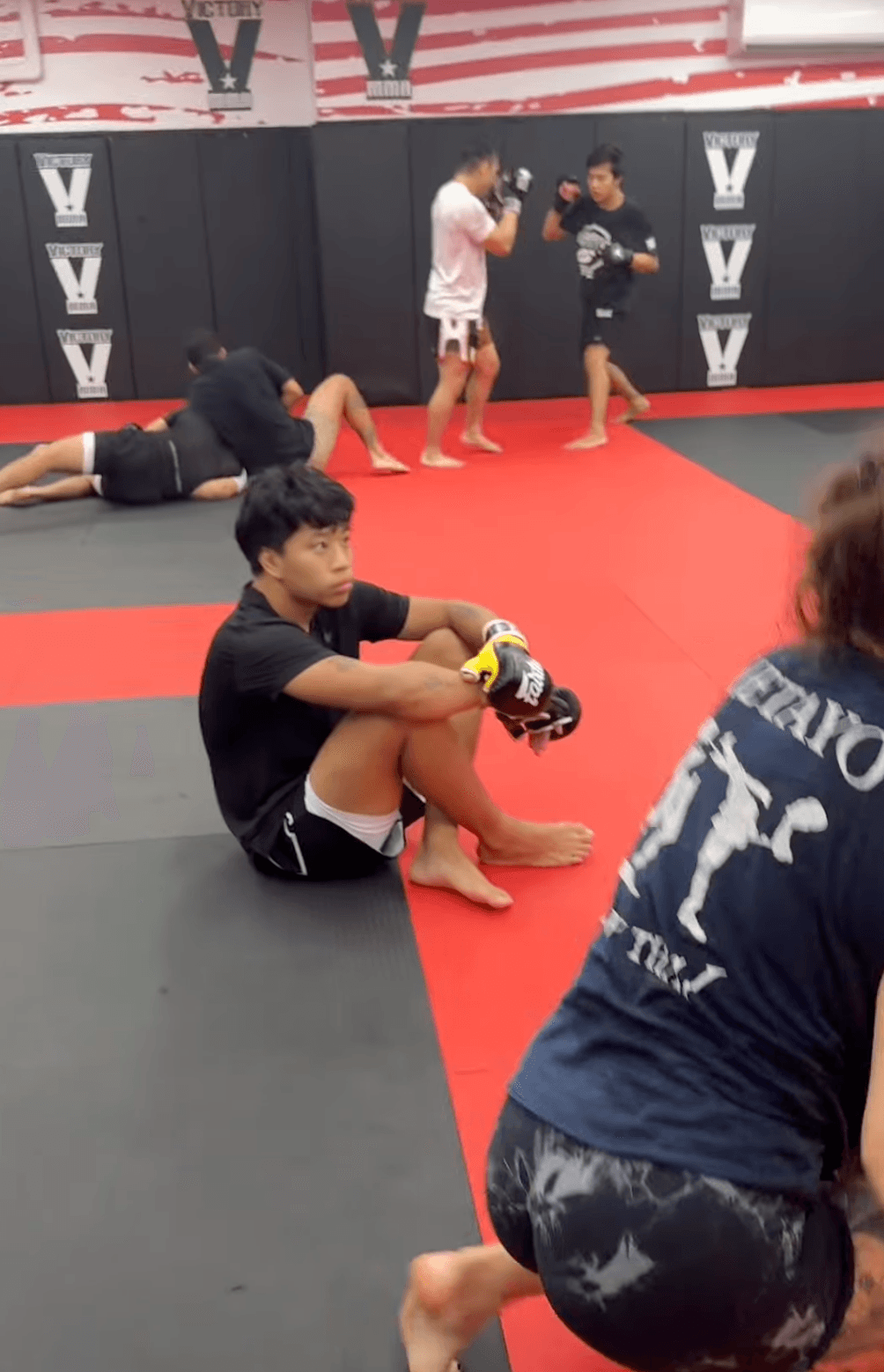
The pattern that works for a lot of gyms is free for locals and visiting members of affiliated schools, a modest drop-in for out-of-town visitors who are treating the gym as a travel stop, and free for anyone whose coach called ahead. Victory MMA in San Diego runs one of the biggest no-gi open mats in the county and lists it as free for locals, and it functions as a countywide gathering. Whatever you decide, decide it once and publish it. The thing that makes visitors uncomfortable isn't a fee. It's not knowing whether there's a fee.
Timer on, rounds fixed
Total freeform sounds friendly and works badly. Without a timer, rounds run as long as the stronger person wants, pairs stay welded together for forty minutes, and anybody without a friend in the room stands on the edge waiting for eye contact.
Put six-minute rounds and a minute of rest on the wall clock and start everyone together. It costs nothing and solves the social problem, because every round break is a reshuffle where the newest person can get a partner without asking anyone for a favor.
Keep the rest light. A common shape: first twenty minutes open for drilling and specific work, rounds from the top of the hour, then open mat again for whoever still has gas. Announce the format out loud at the start, every week, even when it's the same people. It takes eleven seconds and it tells the visitor at the edge of the mat what's about to happen.
Don't let it become the comp team's private room
This is how most open mats quietly die. The competitors take it over, the intensity ratchets up, a new blue belt gets folded in half twice, and within a month it's eight people who all beat each other up and wonder where everyone went.
The fix is not to tell the comp team to go easy. It's to give somebody the pairing job. The mat leader's actual work during rounds is to look for the person sitting out, walk over, and hand them a partner. That's it. That single habit is the difference between an open mat that grows and one that shrinks.
Two more things help. Ask upper belts to spend their first and last rounds with someone below them, which most black belts do happily when it's framed as a job rather than charity. And greet every unfamiliar face in the first two minutes: name, gym, belt, how long they're in town. A white belt who sat alone for forty minutes won't be back and won't tell you why. Send visitors our drop-in etiquette guide if they're new to it, but the burden is on the host.
Mixed levels and the rules you say out loud
Open mat is the one session with no warm-up, no technique, and the widest experience spread of the week. A fresh white belt and a competition black belt are on the same mat with no coach assigning partners.
So say the rules out loud, every week, in about twenty seconds:
Heel hooks and neck cranks only if both people agree beforehand. Default is off.
Takedowns only if both agree, and only in the space you designate for it. Most open mat takedown injuries happen because somebody didn't know it was coming.
The higher belt owns the intensity of the round. If it gets hot with a newer person, that's on the upper belt, not the white belt who was trying hard.
Tap early, and let go immediately. Nobody's ranking is on the line at 10:40 on a Sunday.
No coaching from the sideline unless someone asks.
Written on a whiteboard, they're wallpaper. Said out loud by whoever is running the mat, they're culture.
Getting people through the door
Attendance problems are almost always discovery problems.
Your own members should know the time without thinking: printed schedule, website schedule page, sign by the door. Not solely an Instagram story that vanished on Tuesday. If a member has to search their DMs to confirm the time, you've lost the marginal attendee.
The bigger opportunity is everyone who isn't yours. Travelers, people between gyms, people whose academy is closed Sunday, people who just moved to town. They're searching for exactly what you have and will find you only if the time and address sit somewhere public and structured. Google Business Profile. Website text a search engine can read. The open mat directories people use. And answer the DM asking whether visitors are welcome, because that question is somebody deciding on a Saturday night.
The takeaway
Running a good open mat isn't complicated, it's just unglamorous. Same time every week, a named person who owns it, a waiver on file for anyone who isn't a member, a timer on the wall, and someone whose actual job is to make sure the newest person on the mat gets rounds.
The gyms with a healthy open mat treat it as a front door rather than leftover mat time. It's where visiting grapplers form an opinion about your academy, where someone considering a trial sees how your members treat strangers, and where your own hobbyists get the unstructured rolling that keeps them training at year three.
The gyms with a dead open mat usually have the same three problems: it moved, no one owns it, and you can't find out when it is without knowing someone. All three are fixable this week.
Put your open mat where people are looking
Grapplers search for open mats constantly, especially when they're traveling or between gyms. If yours isn't listed, they're finding somebody else's. Add and find open mats on Let's Roll →
FAQ
What time should a BJJ open mat be? Sunday morning is the most common slot in the US, but the specific time matters far less than never changing it. A consistent Friday evening or Saturday afternoon open mat will out-perform a Sunday one that moves every few months, because attendance is built on habit rather than convenience.
Should gyms charge a drop-in fee for open mat? Many do, typically in the $20 to $30 range in US markets, and that's defensible. But open mat is also the cheapest recruiting channel a gym has, and one visitor converting to membership outweighs a year of door fees. Free for locals with a published policy for out-of-town visitors is a common middle ground. The important part is that the policy is stated publicly rather than decided at the door.
Does an open mat need a coach present? It needs someone responsible present, which usually means a designated upper belt. Beyond safety and injury management, an unsupervised room raises questions about what your liability insurance covers. Ask your insurance broker directly how your policy treats open mat and non-member participants.
Do visitors need to sign a waiver at open mat? Yes, before they step on the mat, and a phone-based digital waiver makes it painless. Be aware that enforceability of liability waivers varies by state, and a few states are reported not to enforce pre-injury releases at all, so treat the waiver as one layer alongside insurance and supervision rather than complete protection. A local attorney can tell you where you stand.
Related Posts

Mikey Musumeci gives up the belt to make room for MMA
Musumeci is vacating his UFC BJJ title to focus on MMA training. What he is leaving, what continues, and why the transition matters.

IBJJF membership: finish the paperwork before the deadline
IBJJF membership and tournament entry are separate steps. Plan documents, professor approval, renewals, and junior accounts before registration closes.
Choosing a BJJ seminar worth your time and travel
Choose a BJJ seminar by the subject, teaching format, access, and total cost. Know what to ask the host before buying a ticket.
Comments (0)
Loading comments...