
What Is an Open Mat? (And How to Find One Near You)
Quick answer: An open mat is scheduled, unstructured training time — no class, no coach walking you through technique. You roll, drill, and ask questions freely. It's ideal once you have a class or two under your belt, and it's the classic way to train when traveling — just confirm the gym's drop-in policy first, since some are free, some charge a small fee, and some are members-only.
If a regular BJJ class is a structured lesson, an open mat is open studio time. There's no curriculum, no coach walking you through a technique — just mat space and training partners, free to roll, drill whatever you want, and ask questions. For a lot of practitioners, open mat is the best part of the week. It's also one of the most welcoming doors into the wider jiu-jitsu community, especially if you're traveling or gym-curious.
Here's how open mats actually work, who they're for, the etiquette, and how to find one near you this weekend.
The simple definition
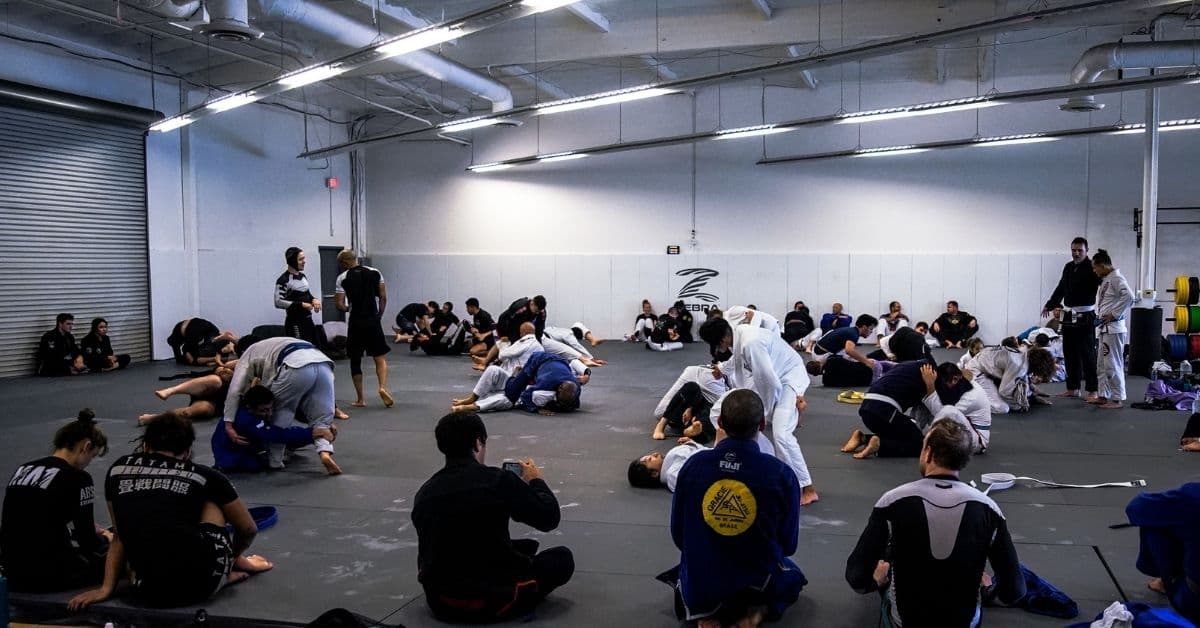
An open mat is a scheduled block of unstructured training time at a BJJ gym. Instead of a class, you get the room and the people. During an open mat you can:
Roll (spar) with whoever's available, at whatever pace you both agree on.
Drill a specific technique you've been struggling with, as many reps as you want.
Ask higher belts questions — open mat is when people are most relaxed and generous with help.
Just train freely without the structure of a formal class.
Most gyms run at least one open mat a week — often a weekend morning. Some are gi, some no-gi, some "anything goes."
Who open mat is for
Open mat suits almost everyone, but it's especially valuable for a few groups:
Visitors and travelers. Open mats are the classic place to drop in at a gym you don't belong to. Many academies welcome respectful visitors at open mat even if their regular classes are members-only.
People who want more reps. If class moves faster than you'd like, open mat is unlimited drilling time.
Anyone building community. It's where you meet people from other gyms, schools, and lineages.
A note for true beginners: open mat is less ideal for your very first exposure to jiu-jitsu, because there's no instruction. Take a structured beginners' class or two first, then start using open mat to drill and roll once you know how to move safely.
Is open mat free? Can I drop in?
It depends on the gym, and it's the most important thing to check before you show up:
For members, open mat is usually included in your membership.
For visitors/drop-ins, policies vary widely — some gyms welcome visitors free, some charge a small drop-in fee (commonly $15–$30), and some restrict open mat to members. Always confirm the gym's drop-in policy before you go. A quick message or a directory listing that states the policy saves an awkward moment at the door.
Find open mats near you on Let's Roll → — see which gyms host open mats, when, gi or no-gi, and their drop-in policy, so you know exactly where you're welcome before you pack your gear.
Open mat etiquette (especially as a visitor)
Open mat runs on good manners. If you're visiting a gym that isn't yours, be a great guest:
Message ahead or check the posted policy. Showing up unannounced at a members-only mat is poor form.
Introduce yourself to the highest belt or whoever's running the room. Mention your home gym and rank.
Match your partner's energy. Ask "flow or hard?" before rolling. As a guest, err toward control — you're not there to prove anything.
Respect the house rules on leg locks, heel hooks, and intensity. Different gyms allow different things; when in doubt, ask.
Clean gi, short nails, slides off the mat — the universal hygiene code applies everywhere.
Say thanks to whoever hosted. A good guest gets invited back.
What to bring
Your gi (if it's a gi open mat) and a rashguard + shorts (for no-gi).
A spare rashguard if you sweat heavily.
Slides/flip-flops, water, and a towel.
Drop-in fee in cash, just in case.
A specific thing to work on — open mat is most useful when you arrive with a plan ("today I'm drilling my guard retention") instead of just winging it.
Why open mats matter to the sport
Open mats are the connective tissue of jiu-jitsu. They're how a traveler trains in a new city, how rival gyms stay friendly, and how the culture of "everyone's welcome on the mat" actually happens in practice. If you only ever attend your own scheduled classes, you're missing one of the best parts of the art — the part where you meet the whole community.
The takeaway
An open mat is free-form training time: roll, drill, ask questions, no curriculum. It's perfect once you've got a class or two under your belt, and it's the friendliest way to train when you're traveling — as long as you check the gym's drop-in policy and show up as a respectful guest.
Find an open mat this weekend
Search open mats near you on Let's Roll → — filter by day, gi or no-gi, and drop-in policy, whether you're at home or on the road. Just need a home gym first? Find a BJJ gym near you →.
FAQ
What is an open mat in BJJ? A scheduled block of unstructured training time with no formal class — you roll, drill, and ask questions freely using the gym's mat space and whoever's there to train.
Can I go to an open mat as a beginner? You can, but it's better after a structured class or two so you know how to move and tap safely. Once you have the basics, open mat is excellent for extra drilling and rolling.
Is open mat free? For members it's usually included. For visitors it varies — some gyms welcome you free, others charge a small drop-in fee, and some limit open mat to members. Always check the gym's drop-in policy first.
Can I drop in at another gym's open mat while traveling? Often yes — open mats are the traditional place to visit other academies. Message ahead, confirm the drop-in policy, introduce yourself, and roll with control as a guest.
What's the difference between a class and an open mat? A class has a coach and a structured curriculum (warm-up, technique, drilling, rolling). An open mat has no instruction — it's free training time you direct yourself.
Related Posts

Mikey Musumeci gives up the belt to make room for MMA
Musumeci is vacating his UFC BJJ title to focus on MMA training. What he is leaving, what continues, and why the transition matters.
IBJJF membership: finish the paperwork before the deadline
IBJJF membership and tournament entry are separate steps. Plan documents, professor approval, renewals, and junior accounts before registration closes.
Choosing a BJJ seminar worth your time and travel
Choose a BJJ seminar by the subject, teaching format, access, and total cost. Know what to ask the host before buying a ticket.
Comments (0)
Loading comments...