
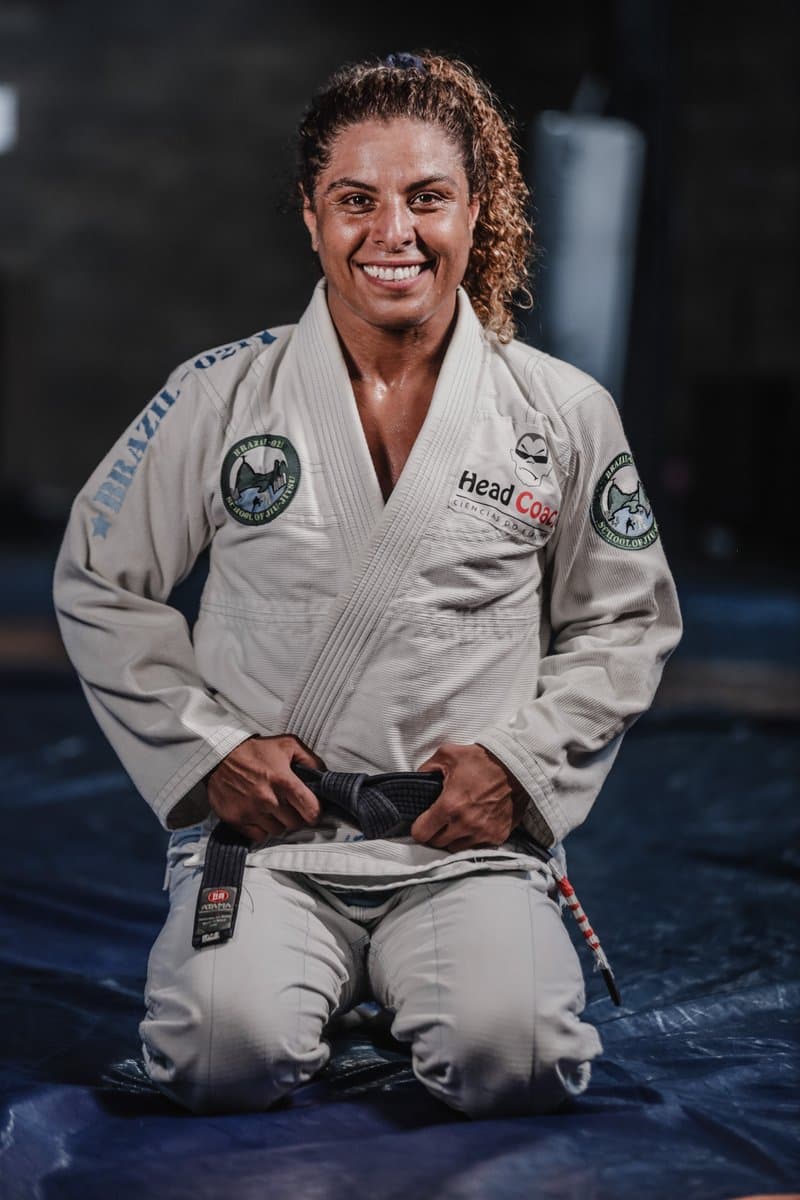
Hannette Staack: three ADCC titles and a life in teaching
Quick answer: Hannette Staack won her ADCC weight division and the absolute in 2007, then another weight title in 2009. She also co-founded Brazil-021 with Andre Terencio. Her older interviews show that coaching was part of her competitive life, rather than a role she discovered only after winning.
Two gold medals in one ADCC are enough to occupy a biography. Hannette Staack's 2007 result supplies the kind of opening that makes the rest of a career seem destined to become supporting material.
Then you read her talking about teaching. The picture changes. Classes, students, and the work of running an association keep interrupting the tidy story of a champion concerned only with the next championship. That interruption is the interesting part. Staack was describing the practical demands of an academy while she still had reasons to think about winning herself.
Read the two gold medals separately
The official 2007 ADCC results list Staack first in the women's under-67kg category, ahead of silver medalist Kelly Paul. They also place her first in the women's absolute, with Rosangela Conceicao second. Those are separate achievements within the same event, not two descriptions of one victory.
A weight category gives a title its particular field. An absolute adds a different comparison by removing that category boundary. Combining them into a single medal count is convenient, but it makes the second challenge disappear. Staack finished at the top of both lists.
For a reader meeting her name for the first time, this is a better starting point than a general claim that she was dominant. It identifies what she won and the format in which she won it. The distinction also matters when comparing careers across different versions of an event.
A championship record becomes more interesting when its entries remain specific. Two golds are impressive as a number. A weight title followed by an open-weight title explains why that number deserves attention.
The absolute had an ending worth remembering
In his contemporary report for ADCC, Kid Peligro recorded Staack's absolute final victory over Conceicao by flying armbar. The report uses Hannette Quadros in its account; the official results identify the champion as Hannette Staack.
That finish gives the result a visual identity without requiring an invented account of her thoughts. There is no need to describe what she supposedly felt before launching the attack or to put an unsourced speech in the locker room. The recorded action is substantial enough.
A spectacular finish can also become a very narrow window onto an athlete. Viewers remember the final seconds and may never ask how the competitor arrived there, what else she won, or what occupied her working week. A highlight is an invitation to investigate, not a replacement for the record.
If that armbar is the only Staack sequence you know, keep the result beside it: this was the closing act of an absolute title, alongside a weight-division gold. The clip belongs to a larger tournament performance.
The third title came in a different field
The 2009 ADCC results put Staack first in the women's over-60kg division. Penny Thomas took silver, Cristiane Cyborg bronze, and Conceicao fourth. The women's weight categories on that results page differ from the 2007 arrangement, so the titles should not be described as three consecutive wins in one unchanged bracket.
The compact record is straightforward:
2007: women's under-67kg gold.
2007: women's absolute gold.
2009: women's over-60kg gold.
This is why dates and divisions deserve space even in a short athlete profile. A total is useful for recognizing achievement; the individual entries explain its shape. Staack's three titles include both a double-gold event and a return to the top at the following edition.
Readers can use the same care when exploring another champion's results. Check whether a count combines weight and absolute titles, and whether the category changed. Accurate distinctions make a career easier to appreciate, not less impressive.
Teaching was already inside the competition schedule
In a BJJ Heroes interview published in 2011, Staack described reducing her coaching workload before a competition while continuing to teach at least once a day. She said teaching helped refine her own jiu-jitsu. That was her account of how the two activities fitted together, not a claim that every athlete should follow the same schedule.
The distinction matters. Teaching is often placed in the final chapter of an athlete's story, after the serious competitive work is assumed to be finished. Staack's description puts it inside that work. She was adjusting the balance between responsibilities, rather than choosing a completely separate identity.
For an ordinary student, the useful question is what an instructor can explain. A famous result may bring someone through the door, but the lesson still has to make sense at the student's level. A champion's personal solution becomes instruction only when another person can understand what to do with it.
That is the part of a sporting career a medal photograph cannot show. It requires attention to the people who are still learning the first steps.
Access to a mat was part of her account
The same BJJ Heroes interview contains a practical detail about Staack's beginning: she said she could not afford the monthly fee and that her coach supported her training. She also discussed a Brazil-021 project in Borel, describing help with mats and plans for further support. These were her statements at the time, not a current report on that project's operations.
The detail changes how the familiar phrase opportunity to train should be read. Opportunity can mean a place in a class, equipment, or a financial obstacle somebody helps remove. It is not always a dramatic discovery of talent by an audience that already knows the ending.
There is a temptation to turn such stories into a rule that effort settles every difficulty. That would be a poor use of this one. A student's circumstances cannot be inferred from whether they remain on the mat, and a champion's account does not tell us what resources every other person had.
What can be retained is the concrete action: somebody helped make training possible. An academy's effect on a student can begin well before a competition result exists.
Building an association changed the work she described
In her 2015 interview with BJJ Legends, Staack discussed the demands of Brazil-021 and bringing its schools to consistent standards. She also spoke about students' competition results and wanting to devote more attention to their development. The conversation documented a shift in emphasis without erasing her interest in competing.
An association introduces a different problem from preparing one athlete. A class has to work for people who arrive with different experience. Instructors need shared expectations. The name on the wall should correspond to something students can recognize in how they are taught.
Those are practical editorial observations about the job, not claims that Let’s Roll observed a particular Brazil-021 class. Staack's interview is valuable because she placed that less visible work in her own account of the career.
The co-founder role is also documented by Brazil-021's profile, which names Staack alongside Andre Terencio. A reader following her history should keep both the sporting results and the institution in view. One does not explain the other completely.
Study a champion beyond the finish compilation
A useful way to approach Staack is to separate three kinds of material. Results tell you what happened at an event. Match footage lets you inspect exchanges. Interviews tell you what the athlete chose to say about the work. None should be asked to prove something it cannot establish.
A gold medal does not document every coaching method. A statement about training is not a controlled comparison of practice schedules. A short clip cannot show the full match. Keeping those limits clear leaves more room for actual curiosity and less room for a ready-made legend.
That approach is useful with Braulio Estima's double-gold story, too. The headline result is a strong opening. The interesting reading comes from checking the divisions, the circumstances, and the work that continued around the event.
For Staack, the teaching accounts are especially worth reading alongside the results. They make room for a champion who had classes to run, students to consider, and an association to help build. The career becomes fuller without needing a fictional scene to bring it to life.
Main photo: Hannette Staack official website.
The takeaway
Staack's ADCC record is specific: two titles in 2007 and another in 2009. The flying armbar is a memorable entry point, but the complete result is more substantial than a single finish.
Her interviews add the part a podium cannot hold. Teaching remained present during competition preparation, and the work of developing students became a subject in its own right. Read those accounts alongside the medals, and the instructor is already there in the champion's story.
Find a room to learn in
Use Let’s Roll's gym directory to explore academies, then ask the school about its current classes and instructors before visiting.
FAQ
How many ADCC titles did Hannette Staack win? Three: the women's under-67kg and absolute titles in 2007, followed by the women's over-60kg title in 2009. The divisions should be identified when comparing her results.
Who did Hannette Staack beat in the 2007 absolute final? Rosangela Conceicao. ADCC's contemporary report records the winning technique as a flying armbar, and the official results list Staack first and Conceicao second.
What is Staack's connection to Brazil-021? She co-founded Brazil-021 with Andre Terencio. Her published interviews discuss teaching, students, and the work of developing the association alongside her competitive career.
Did she begin coaching only after she stopped competing? No. In her 2011 BJJ Heroes interview, she described continuing to teach during competition preparation while reducing the amount of coaching on her schedule.

Rafael Moura
Rafael Moura profiles competitors as people with lives outside the bracket. Some of those stories are comebacks. Most are not, and he does not force them.
Related Posts
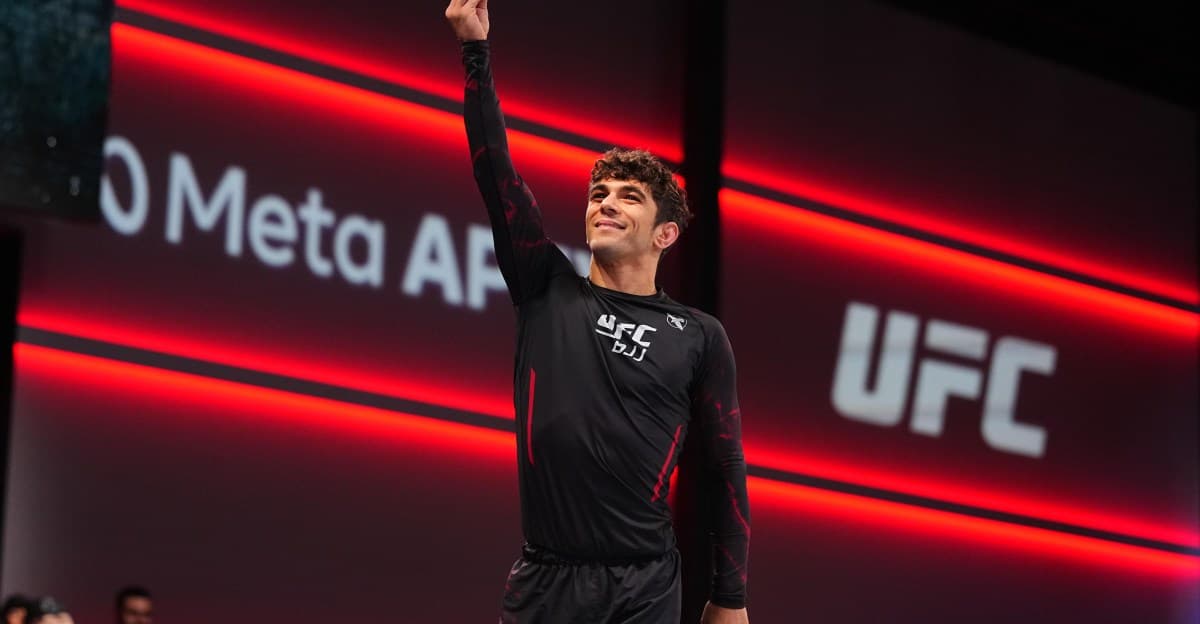
Mikey Musumeci gives up the belt to make room for MMA
Musumeci is vacating his UFC BJJ title to focus on MMA training. What he is leaving, what continues, and why the transition matters.
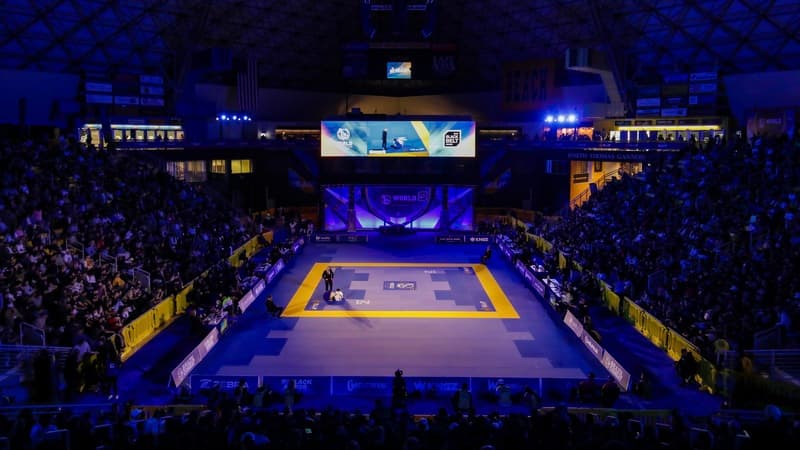
IBJJF membership: finish the paperwork before the deadline
IBJJF membership and tournament entry are separate steps. Plan documents, professor approval, renewals, and junior accounts before registration closes.
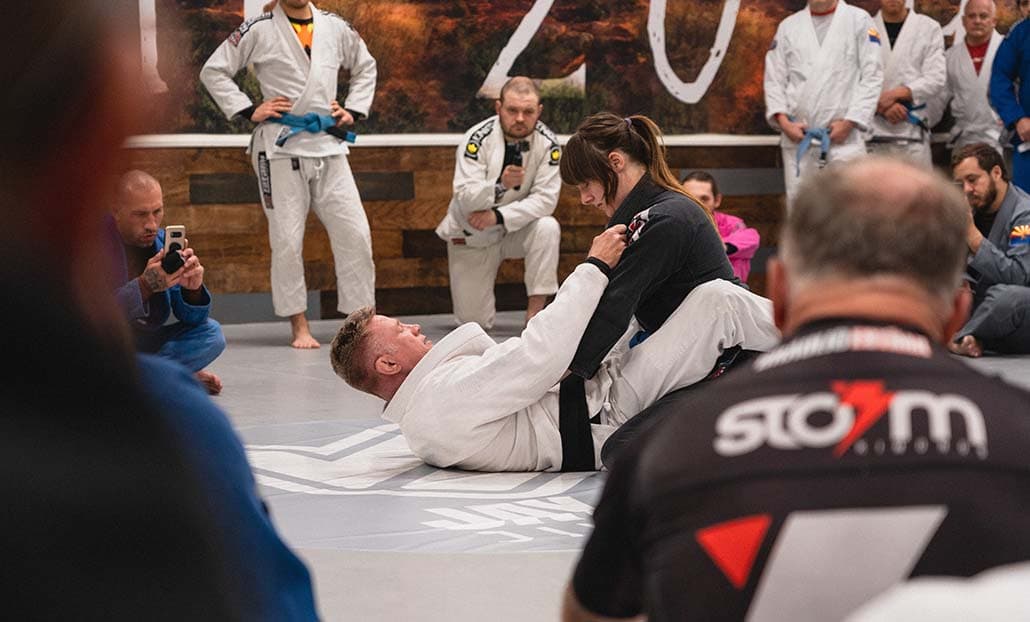
Choosing a BJJ seminar worth your time and travel
Choose a BJJ seminar by the subject, teaching format, access, and total cost. Know what to ask the host before buying a ticket.
Comments (0)
Loading comments...