
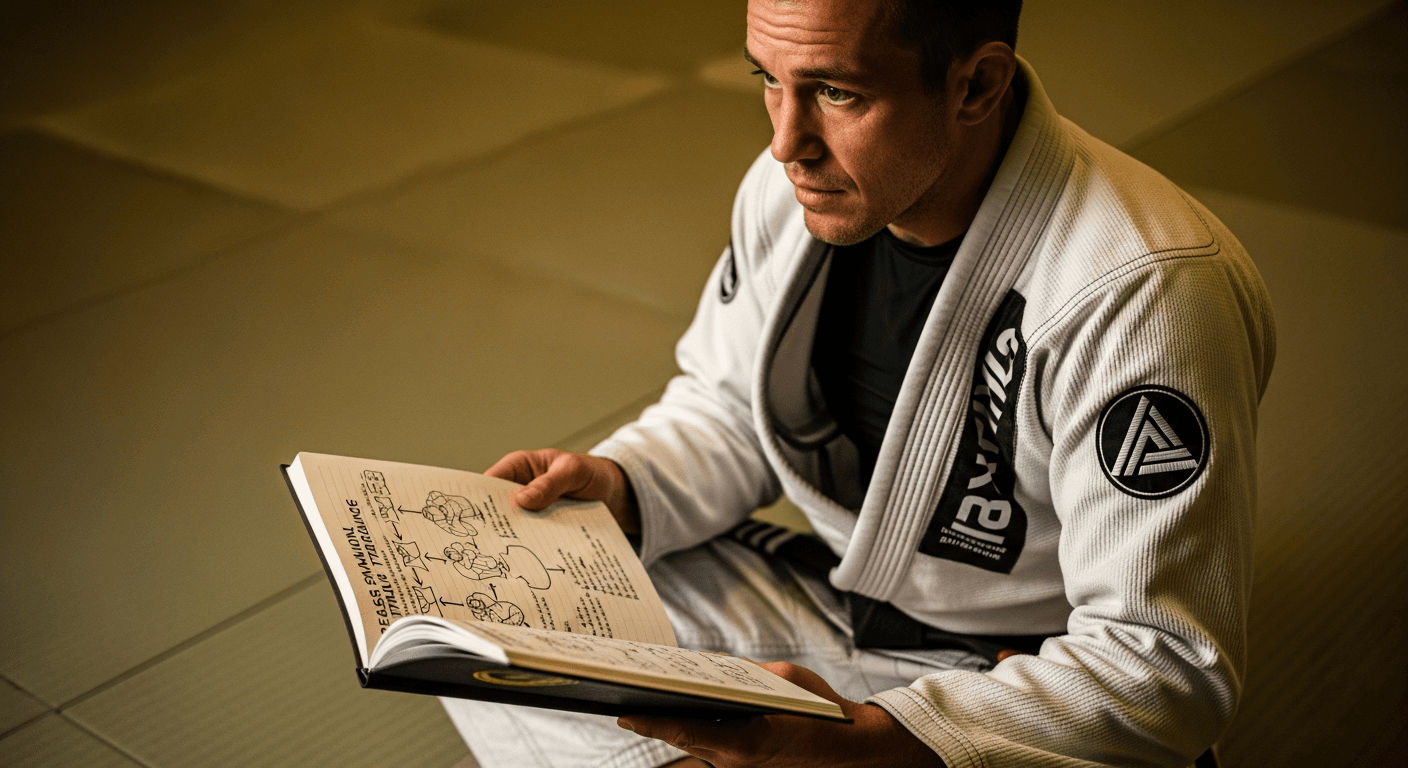
How to Build Your Own BJJ Game (Without Drowning in Instructionals)
A "BJJ game" is the answer to a simple question: when you're tired, what do you do?
White belts don't have a game — they have a list of techniques they've seen. Blue belts start to develop one. Purple belts have a game. By brown belt, the game is refined enough that you'd recognize a practitioner's "style" without seeing their face.
The path from "list of techniques" to "actual game" is the most-asked question in jiu-jitsu. Here's a framework that works.
Why most beginners stay stuck
The default approach to learning BJJ is breadth-first: you take classes, learn whatever's taught that day, and accumulate a folder of techniques in your head. By blue belt, you have maybe 200 techniques rattling around in there.
The problem: you can't pull off any of them under pressure.
The reason is simple. To make a technique work against resisting humans, you need maybe 1,000 reps of it. You have 200 techniques and 1,000 total training reps in your first year. Math.
The fix: depth-first specialization. Pick a small number of positions and techniques, drill them deeply, and let the breadth fill in slowly over the years.
The four-position core
A workable game starts with one each of:
A guard you like (closed guard, half guard, de la Riva, butterfly — pick one)
A passing system (knee cut, leg drag, torreando, pressure pass — pick one)
A top-pin attack (mount, side control, or back, pick one)
A submission tree from each of the above
That's it. Three positions and three submission paths. Four years of training depth in those four areas will make you better than someone with eight years of dabbling across twenty positions.
Picking the right ones for you
The best position to specialize in is the one you naturally end up in. Not the one your favorite YouTube athlete uses. Not the one your coach is best at. The one you find yourself in most often when you're not thinking about it.
Some practical questions to find yours:
What guard do you usually pull when you're tired? That's a clue.
From which position do you most often hit submissions in live rolls? That's another clue.
What style of passer gives you the most trouble? That tells you something about your guard.
What style of guard player gives you the most trouble? That tells you something about your passing.
The answers point at your natural game. Build from there.
How body type plays in
It matters, but less than people think.
Tall, lanky practitioners gravitate toward leg-based guards (de la Riva, lasso, spider) and triangle attacks. Short, dense practitioners gravitate toward butterfly guard, half guard, and pressure-passing systems. There are exceptions — Marcelo Garcia is short and plays open guard like a tall person; Lachlan Giles is short and built a famous leg-lock system that doesn't care about size.
The general rule: your body will push you toward certain positions. Don't fight that — but don't think it's destiny either.
How to drill so it actually sticks
Most BJJ drilling is wasted because it's done at the wrong rep count or the wrong resistance level. A clean framework:
Phase 1: Cold drilling. No resistance. You and a partner walk through the technique slowly, focus on every detail. 20–30 reps each side. This is what most class drilling sessions look like. Necessary but not sufficient.
Phase 2: Positional sparring. You start in the position, your partner resists, you try to execute. 5-minute rounds, swap, repeat. This is where the technique calibrates against a moving human. Most gyms underdo this phase.
Phase 3: Open rolling. Now you try to hunt for the position in live sparring. You won't always get there. That's fine — every roll where you fail to land in your position is a roll where you're learning the entry pathways.
Phase 4: Refinement. After a few months of all three phases, you bring questions back to your coach. "When my partner stuffs my underhook, what do I do?" Now you're chasing specific failure modes. This is where the depth comes from.
Most practitioners skip phase 2 entirely and oscillate between phase 1 and phase 3. That's why everyone has the same problem: drilling that doesn't transfer to rolling.
The instructional trap
BJJ instructional videos are better than they've ever been. They're also a trap if you let them be.
A blue belt who watches 30 hours of Gordon Ryan instructionals will become marginally worse at jiu-jitsu — because they're consuming a competition-level game without the foundation that makes it work. The techniques won't land. The frustration drives them to watch more videos. Loop.
Three rules for instructional consumption:
Match the instructional to your level. Foundational instructionals (John Danaher's "Go-Further-Faster" series, the Renato Migliaccio fundamentals, etc.) for white-blue belts. Advanced match-specific game studies (Bernardo Faria's specific guard breakdowns, Gordon Ryan's leg-lock studies) for purple-up.
Pick one a quarter and finish it. Not "I'll watch some of this and some of that." Buy one full instructional, watch it twice, drill from it every class for three months, then move on.
Drill > re-watch. When you forget a detail from the instructional, drill it again — don't re-watch. The friction of rebuilding it from memory is the learning.
How to use open mat
Open mat is the laboratory for game-building. Show up with intent.
If you're working a half-guard system, ask three different partners to start in half guard with you on bottom for one round each. Some will let you work; others will smash-pass — both data points. Over weeks of doing this, you'll have a small library of "how this partner reacts to my half guard" patterns. That's the start of a game.
Two underrated game-building habits
Keep a training journal. Not a daily diary — a position log. "Today I tried [X] from de la Riva, my partner countered with [Y], I haven't figured out what to do about [Y] yet." Re-read it monthly. The pattern of unsolved problems is your study list.
Roll with people who are smaller than you sometimes. Strength masks technique. When you can't muscle through, you find out which of your moves actually rely on leverage versus brute force. Half a practice a week with a lighter, technical partner will expose more game gaps than a year of equal-size rolling.
When the game starts to show
You'll know your game is forming when:
You can describe it in 2-3 sentences without thinking too hard.
Other students at your gym start saying things like "be careful of your half guard."
You can teach a basic version of your game to a fundamentals class.
You meet your game from a new angle (different guard player, different gym) and you have a plan instead of panic.
That usually happens somewhere in purple belt. The seeds get planted at blue belt. The decisions you're making at white belt about what to specialize in are decisions you'll feel five years later.
What to do this week
Pick one position you'd like to specialize in. Just one. Use the questions in the "Picking the right ones for you" section above.
For the next month, in every class, try to take the position. Every roll, try to take the position. Every open mat, drill the position with at least two different partners.
You'll be worse at everything else for a month. That's fine. Specialization always feels like regression in the short term. The compound interest starts in month four.
If you're still building your training base — finding the right number of weekly classes, picking a gym — read the how to choose your first BJJ gym guide first. The game-building work starts to matter around month nine.

Marcus Delgado
black Belt
Black belt with 18 years on the mats. Head instructor and lifelong student of the gentle art.
Related Posts
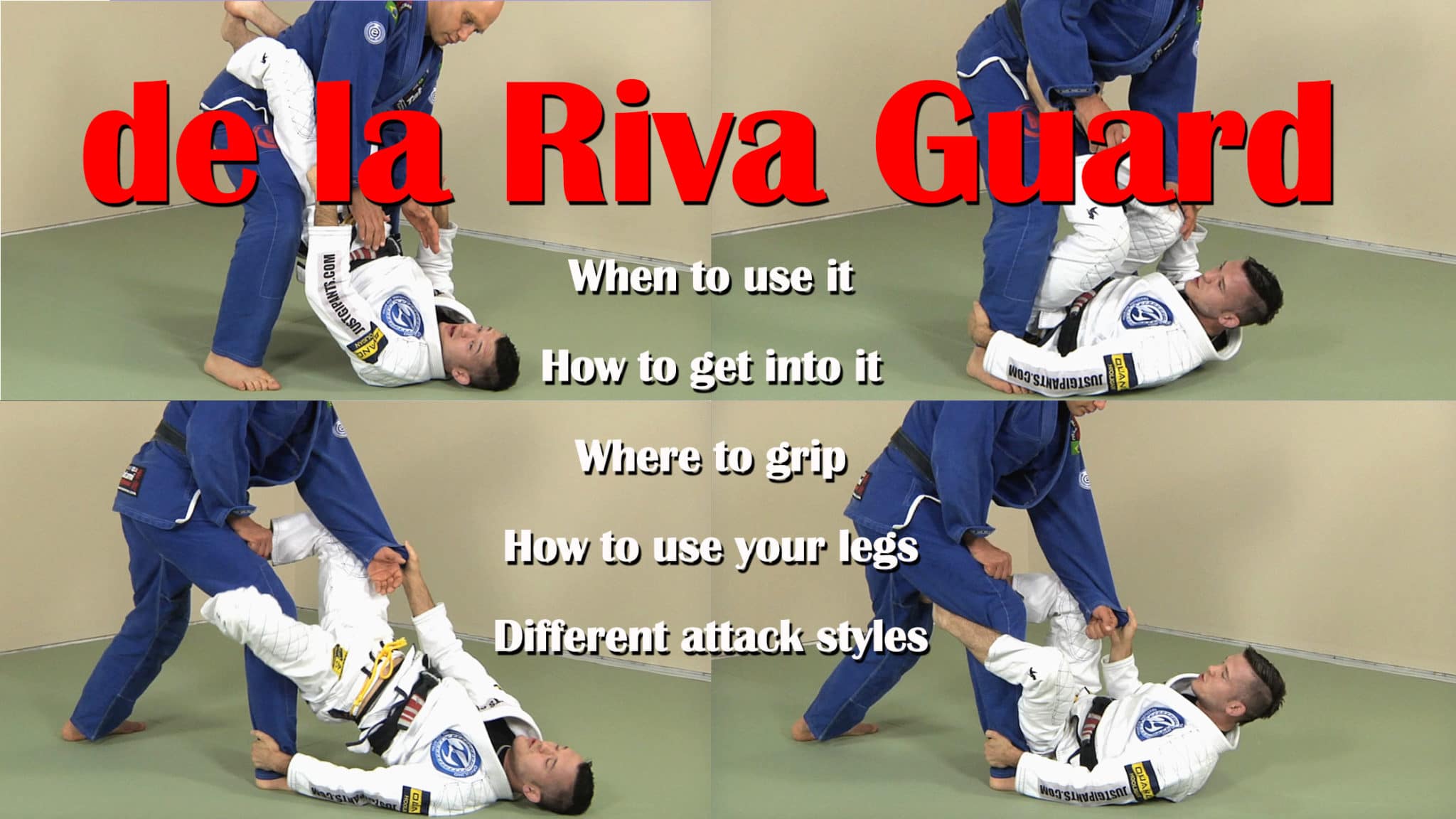
De la Riva guard: make the standing passer take a step
Your de la Riva hook is in, but the passer is comfortable. Study ankle control, the free leg, and the balance reaction that makes an attack possible.
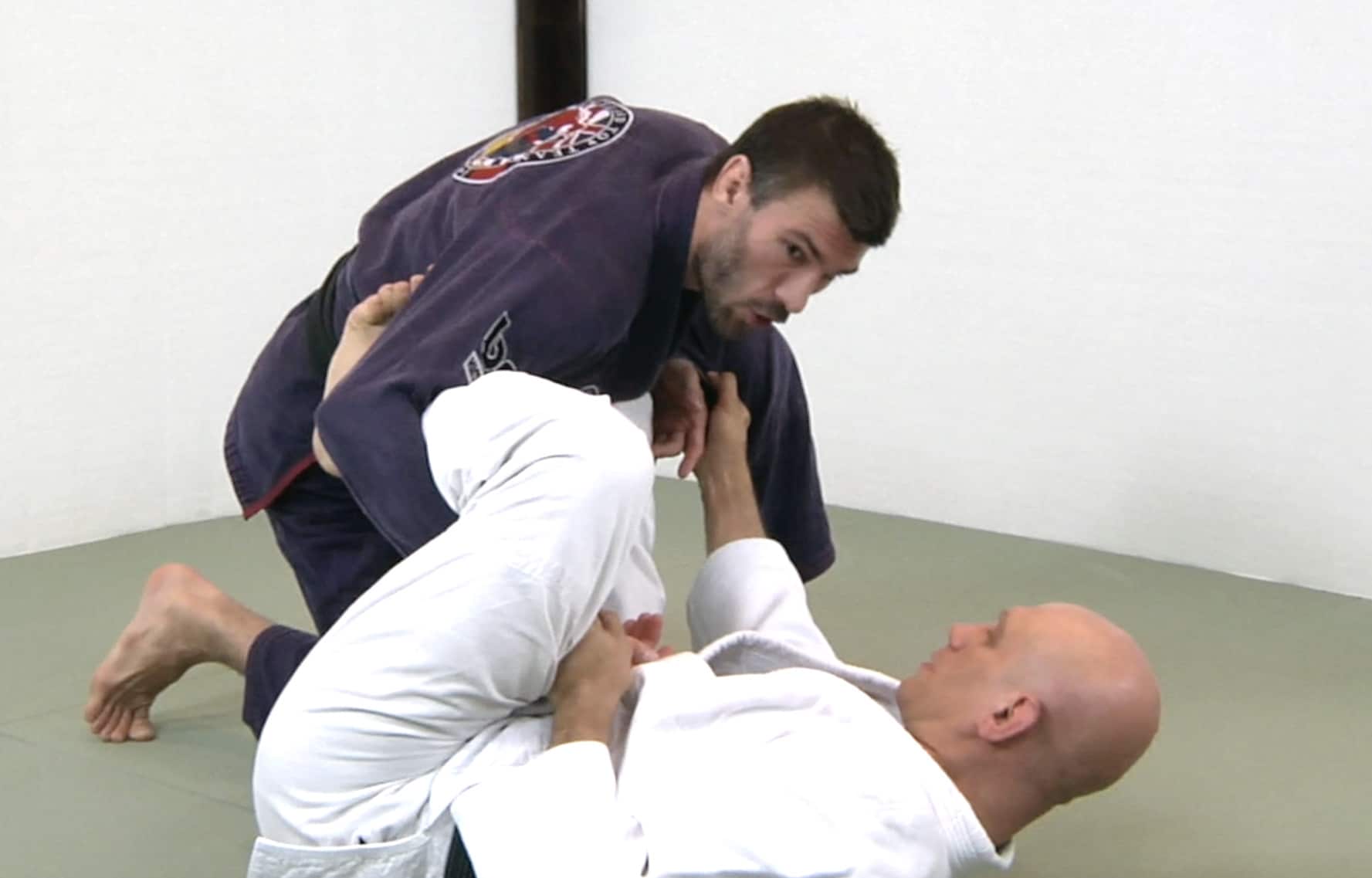
Lasso guard: know when to keep the sleeve and when to leave
A lasso hook can buy time or trap you in a grip battle. Give the free leg a purpose, keep useful sleeve control, and recognize when to change guards.
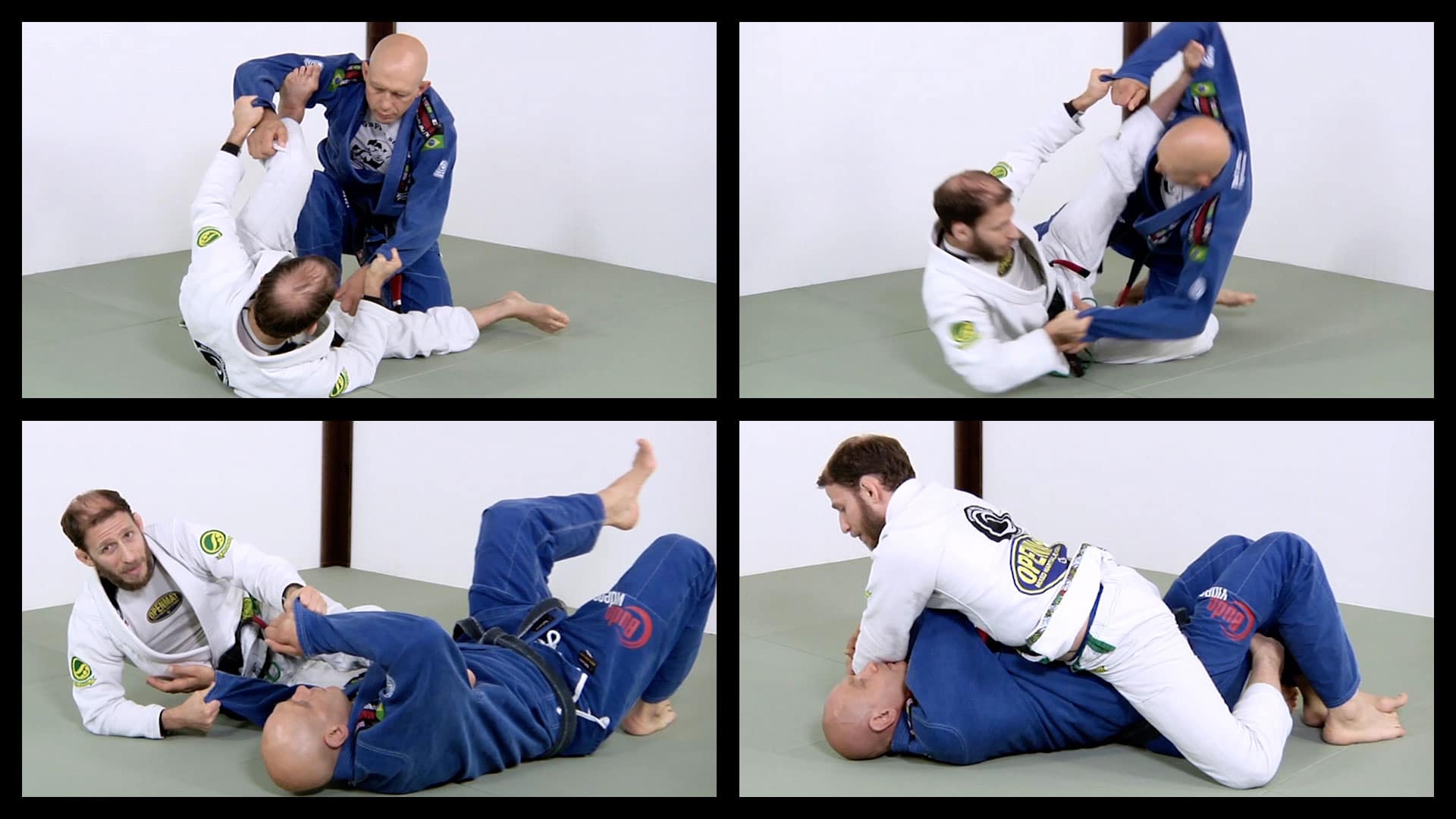
Spider guard: give each foot a job
Make spider guard easier to read. Learn how sleeve tension, different foot positions, and the passer's posture shape your next sweep or transition.
Comments (0)
Loading comments...