
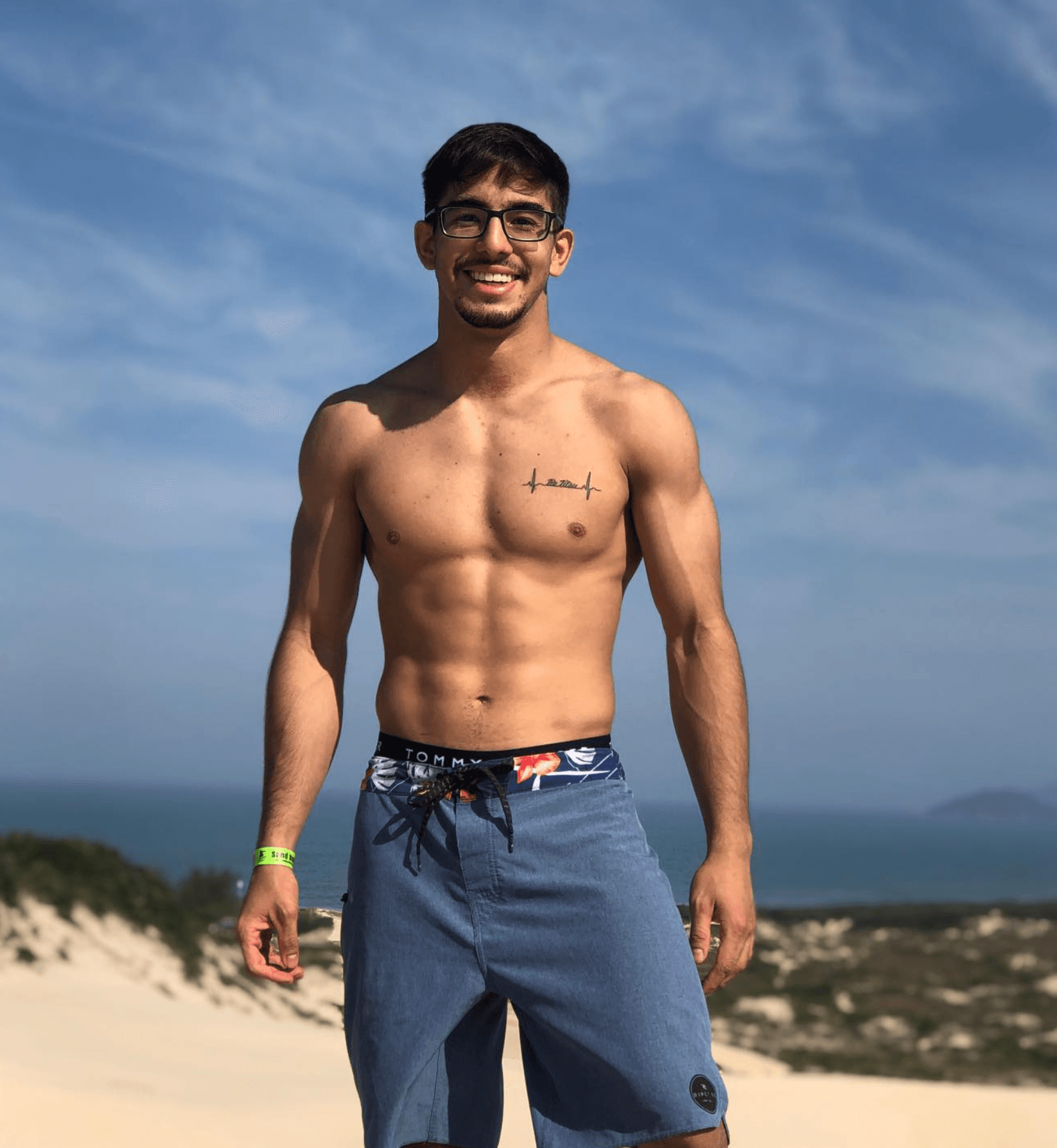
Diego 'Pato' Oliveira and the record he broke on the way out
Quick answer: Diego "Pato" Oliveira is a Brazilian black belt from Parintins, in the Amazon, who became the winningest light-featherweight in World Championship history at the 2026 IBJJF Worlds. His fifth title in the 64kg division moved him past Robson Moura and past his own coach Guilherme Mendes, who had four each. Minutes after the final he laid his black belt on the mat, which Jits Magazine and others reported as his retirement from gi competition. He is 27.
He won the final 9-0. Not a scramble, not an advantage, not a referee decision. Nine points to nothing in the final, in the last gi match of a career that started with a teenager buying a one-way flight out of Manaus.
Before that: two lapel chokes on the first day, and a calf slicer in the semifinal, a submission most black belts will never hit once in competition. Then he untied his belt and put it on the mat, and the Pyramid worked out what was happening a couple of seconds later than he did.
The record is the headline. The more useful thing about Pato is the game he built to get it, because the 64kg division is where the best technique in jiu-jitsu lives and hardly anyone outside the sport watches it.
The record, precisely
Five World Championship golds at light-featherweight: 2021, 2023, 2024, 2025 and 2026. The mark he passed belonged jointly to Robson Moura, one of the defining small men of the early 2000s, and to Guilherme Mendes, who coaches him at Art of Jiu-Jitsu. Both had four.
There is a symmetry in passing your own professor's record while wearing his team's patch, and the IBJJF's recap pointed it out directly.
His 2026 season also included the European Championship and the Pan. No Grand Slam, though: Rerisson Gabriel beat him in the Brasileiro final, 6-6 on advantages, about as close as a jiu-jitsu match gets to a coin flip.
Parintins, Manaus, and a flight with no return leg
Pato was born on October 2, 1998, in Parintins, a town on the Amazon River in the state of Amazonas. He moved to Manaus at ten with his father.
He started training at 13, in 2012, because a cousin who was getting into MMA told him to learn the ground first. His first coach, Arley Silva, ran a social project near his neighborhood and took him to green belt before the project ran out of money and closed. Pato moved to Nabil Abdel Aziz's academy in Manaus and kept competing. By 14 and 15 he was entering absolute divisions at local pro tournaments for prize money and handing some of it to his father for rent.
Then the part of the story that decides everything. At 15, with a new blue belt, he flew to Rio de Janeiro for the IBJJF Rio Open without booking a flight home. He found Cicero Costha at the event, told him he wanted out of Manaus, and Costha invited him to São Paulo to live and train in the PSLPB fighter house, the colored-belt program that has produced a long line of small Brazilian world champions. He moved with his Nabil JJ teammate Hygor Brito.
Costha promoted him to black belt in June 2019.
The lineage people get wrong
Pato is usually written up as an AOJ athlete, and he is one now. He was not built there.
He is a black belt under Cicero Costha, out of a São Paulo program famous for turning teenagers with nothing into international champions. He joined Dream Art in January 2022, then moved to Art of Jiu-Jitsu in the United States a couple of years after that. What AOJ gave him was a room full of the exact people he needed: Mayssa Bastos, Tainan Dalpra, Cole Abate, a team whose entire identity is technical precision at the lighter weights.
The distinction matters because "AOJ product" implies a kid raised in Costa Mesa on a scholarship. Pato arrived as a finished champion and got better anyway.
What his jiu-jitsu is made of
BJJ Heroes lists him with 171 wins and 23 losses. Only 42% of the wins are submissions, which is low for someone with this reputation, and 40% are on points. He is not a finisher who happens to win decisions; he is a positional player who finishes when the position offers it.
His listed specialties are lapel guard, footlocks, and pressure passing, which is an unusual combination to hold at once. The submission log backs it up:
16 chokes from the back
7 straight ankle locks
6 rear naked chokes
5 armbars
4 triangles and 4 inside heel hooks
3 lateral kneebars, 2 outside heel hooks, plus one calf slicer
The lower-body attacks are the tell. Very few gi light-featherweights carry a real leg-lock game in both rulesets, because the gi rewards the back take and the points system doesn't pay for leg entanglements. Pato kept the legs anyway, which means an opponent who commits to a standard gi guard-retention pattern against him is exposed at both ends.
Why the small divisions have the best technique
This gets argued constantly and I think the answer is mostly yes, with a caveat.
At 64kg no one is carried by strength. Two light-featherweights in a grip exchange are close enough in physical output that the difference comes down to timing, angle and the specific placement of four fingers on a sleeve. Positions that a middleweight can muscle through, a 141-pound athlete has to solve. Watch a rooster or light-feather final and the decisions per minute run higher than anything in the upper weights.
The caveat: speed hides errors. A featherweight can escape a bad position by moving before the mistake costs anything, which is not available at 100kg. Heavyweight jiu-jitsu punishes structural mistakes more brutally, so there's a real argument that the heavier divisions teach cleaner mechanics. Both things are true.
If you want to see who is producing this talent at the team level, the team power rankings tell you where the light divisions are being built right now, and the answer has been the same handful of academies for years.
How a smaller athlete builds a game that works
Pato's career is a reasonable template, and none of it requires being a professional.
Pick a bottom game that's a threat, not a shelter. His lapel guard isn't a stalling position. It attaches to the opponent and forces them to solve something. If your guard's only job is not getting passed, you are losing slowly.
Own a submission your division doesn't respect. Footlocks in gi light-featherweight were unfashionable. That's exactly why they worked.
Learn to pass with pressure even if you're small. Pressure isn't weight, it's structure and angle. Pato passes people his own size by taking space they can't get back, not by leaning on them.
Accept that most matches are won on points. Sixty-nine of his wins came on the scoreboard. A game that only works when you get the finish is how people plateau at purple belt.
The broader version of this thinking is worth reading in full if you're trying to figure out what your own game should be: we wrote about building a BJJ game that fits your body rather than your favorite highlight.
The losses that shaped him
Twenty-three losses is a lot for someone this decorated, and they're the interesting part of the record.
In 2020 he was footlocked in the semifinal of the European Open by Mikey Musumeci, the other great small-man technician of this era, in a match BJJ Heroes logs as a botinha. Musumeci went on to become the sport's most visible leg-lock specialist. It's tempting to draw a line from that loss to the lower-body attacks that show up all over Pato's later record, though that's my read and not something he has said.
Then Diogo Reis, who is the actual rivalry of his career. Reis beat him in an ADCC Brazilian trials final in 2022, took the 2023 Pan title from him 0-0 on advantages, and submitted him with a katagatame in the 66kg final at ADCC in 2024, leaving Pato with silver at the biggest no-gi event in the sport. Pato beat him in the 2025 Worlds final by referee decision.
He also lost to Kade Ruotolo by darce in 2021 and dropped early decisions to Isaac Doederlein and Fabricio Andrey. His record is not clean. He just kept coming back to the same brackets.
Laying the belt down at 27
The gesture is unambiguous in jiu-jitsu. Reports treated it as retirement from gi competition, and BJJ Heroes said the same while adding, reasonably, that they hope he reconsiders.
He is 27, which is young for a light-featherweight, and "retiring from the gi" is narrower than it sounds. He holds two No-Gi Worlds titles and an ADCC silver, and ADCC's next World Championship is scheduled for September. Laying a gi belt down closes none of that.
The takeaway
Diego Pato leaves gi competition with five world titles in the hardest technical division in the sport, which is one more than the man who coached him and one more than the small-man standard of the previous generation. He got there from Parintins by way of a social project that closed, a fighter house in São Paulo, and a flight he couldn't afford to return from.
The record will get broken eventually. What holds up longer is the shape of it: a 141-pound athlete with a real threat off the bottom, a passing system that didn't depend on being bigger, and a leg-lock arsenal in a ruleset that doesn't reward one. That combination is why he kept winning finals against people who knew exactly what he wanted.
Nine to nothing, then the belt on the mat. That is a good last sentence for anybody.
The light divisions are the best place to learn
If you're on the smaller side, the answer isn't to lift more. It's to find a room with good technical coaching and a few partners your size. Find a BJJ gym near you and watch a class before you sign anything.
FAQ
How many world titles does Diego Pato have? Five IBJJF gi world titles at light-featherweight, won in 2021, 2023, 2024, 2025 and 2026, plus a silver in 2022. The fifth made him the winningest light-featherweight in the event's history, passing Robson Moura and Guilherme Mendes at four each.
Who is Diego Pato's coach? He is a black belt under Cicero Costha, who promoted him in June 2019 after he came up through the PSLPB program in São Paulo. He later competed for Dream Art and then joined Art of Jiu-Jitsu in California, where Guilherme Mendes coaches him.
Did Diego Pato retire? He laid his black belt on the mat after winning the 2026 Worlds final, which Jits Magazine and other outlets reported as a retirement from gi competition. He is 27 and holds two No-Gi Worlds titles and an ADCC silver, so a no-gi return is possible.
Why is he called Pato? "Pato" is Portuguese for duck. BJJ Heroes reports that training partners gave him the name as a young athlete because his feet were unusually large for his body.
Related Posts
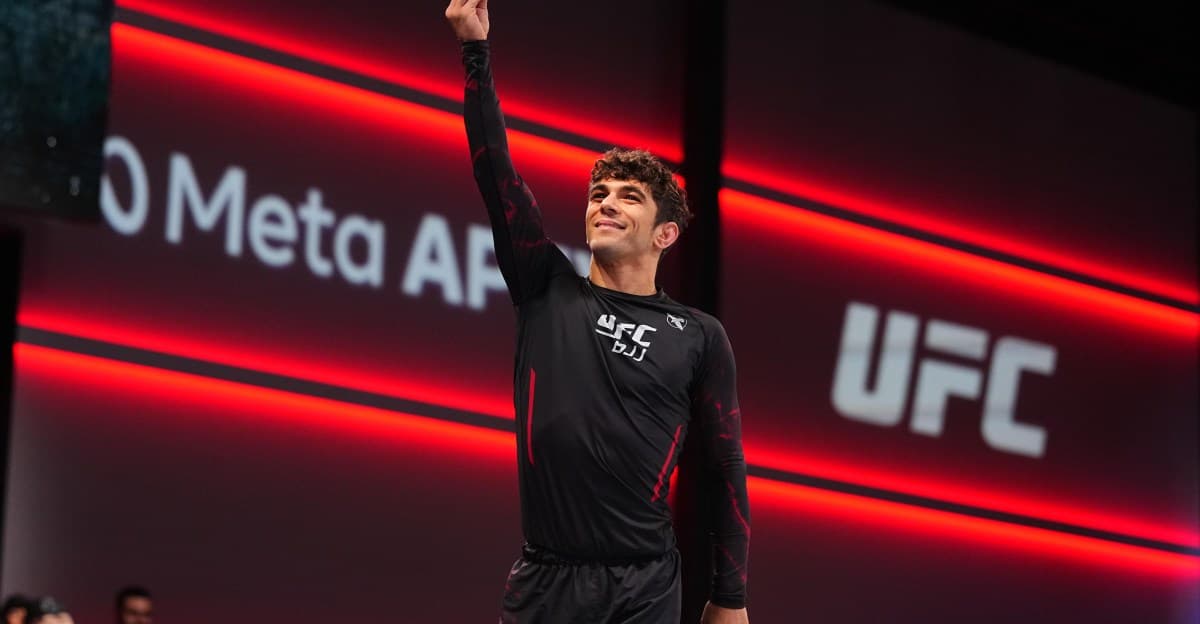
Mikey Musumeci gives up the belt to make room for MMA
Musumeci is vacating his UFC BJJ title to focus on MMA training. What he is leaving, what continues, and why the transition matters.
IBJJF membership: finish the paperwork before the deadline
IBJJF membership and tournament entry are separate steps. Plan documents, professor approval, renewals, and junior accounts before registration closes.
Choosing a BJJ seminar worth your time and travel
Choose a BJJ seminar by the subject, teaching format, access, and total cost. Know what to ask the host before buying a ticket.
Comments (0)
Loading comments...