
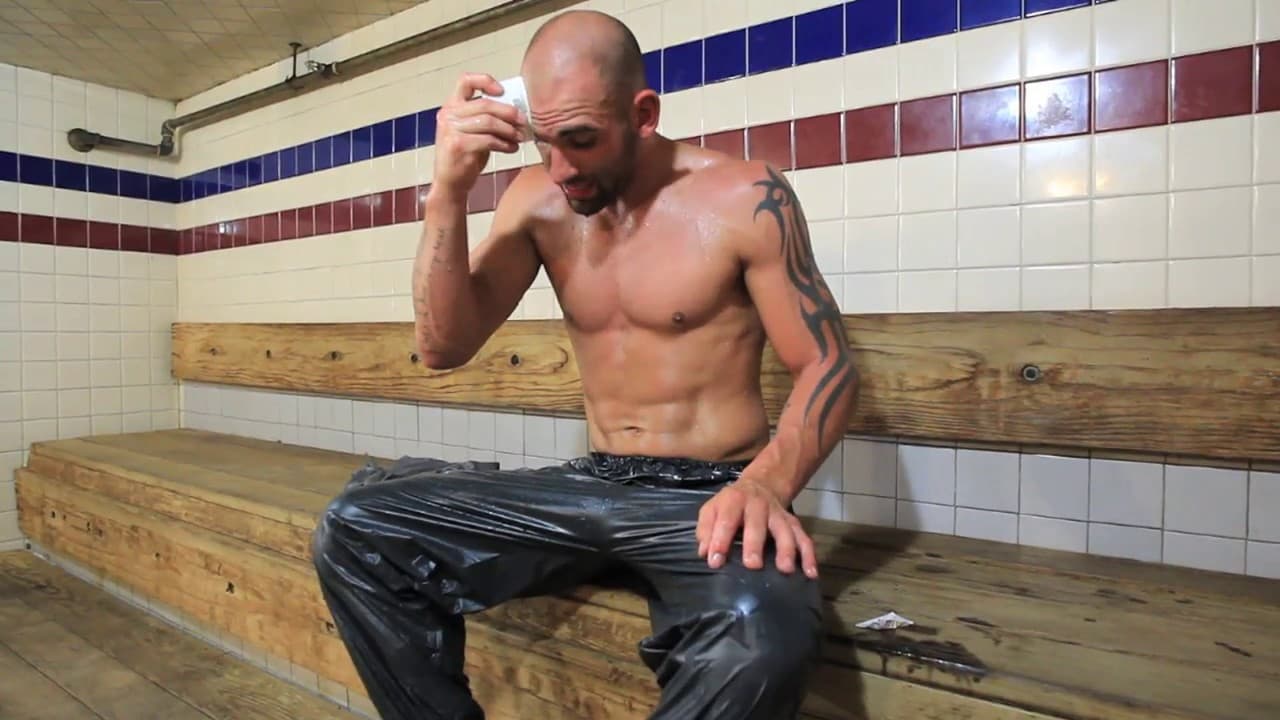
Cutting weight for a BJJ tournament (and why you probably shouldn't)
Quick answer: IBJJF weighs you in wearing your gi, immediately before your first fight, with one attempt and disqualification if you miss. There is no rehydration window, which makes a hard cut worse in jiu-jitsu than in wrestling or MMA, where you get hours or a full day to recover. For most competitors the right answer is to compete at the weight you already walk around at. If you do cut, keep it small, keep it water and food volume rather than starvation, and get a professional involved before you get creative.
A wrestler weighs in the night before and eats and drinks for twelve hours. An MMA fighter weighs in a day out and enters the cage ten pounds heavier. A jiu-jitsu competitor at an IBJJF event steps off the scale and walks to the mat.
That's the whole article. Everything else follows from it.
The rule that changes all the math
The IBJJF's weigh-in policy is short and doesn't hedge. Before your first fight you check your weight in your gi. There is one opportunity. Miss it and you're immediately disqualified, with no division change and no refund. Event pages repeat it: weigh-in occurs immediately before the first fight, one attempt only.
Read what that removes. No second try after a bathroom trip. No dropping to the next class up. No sauna at 6 a.m. followed by four hours of rice and electrolyte drink. Whatever state you're in on that scale is the state you fight in ten minutes later, against someone who has been sitting in the bullpen eating a banana. Being alone in your division doesn't rescue you either: IBJJF's default for a single-competitor bracket is that you still make weight and pass the uniform check to get the medal.
The gi is on the scale, and it's heavier than you think
IBJJF's gi weight chart says it in the header: athlete with gi on. Adult and masters male middleweight tops out at 181.6 lbs in the gi. The no-gi middleweight limit is 79.5 kg, about 175.3 lbs. That gap of roughly six pounds is the federation's built-in allowance for the uniform, and it is not generous. A heavy double-weave and a thick belt can eat most of it.
So weigh yourself at home in the exact gi and belt you'll compete in, not in shorts with three pounds of imagined margin, and don't compete in a brand-new double-weave you've never put on a scale. People miss weight by ounces over a kimono choice. It's a stupid way to end a day you trained eight weeks for.
Other organizations are kinder, and that should change where you enter
Not every promotion runs the IBJJF's knife-edge, and if you're near a weight limit the org you pick matters more than any water protocol.
NAGA weighs you without the gi, gives a one-pound allowance, and lets you weigh in the night before. Miss your class and you are not disqualified. You get moved to whatever class you weighed.
Grappling Industries also weighs without the gi, any time up to 60 minutes before your division starts. But there is no allowance at all, and missing weight means disqualification with no refund.
ADCC Opens weigh you ahead of your division rather than mat-side, with the exact cutoff published per event.
If your natural weight sits two pounds over an IBJJF line, entering a NAGA event instead of cutting is not soft. It's arithmetic, and we compared what each organization gives you separately. Our first competition checklist covers what else to sort out before you register.
Should you cut at all? Three questions
Most people asking about weight cutting shouldn't be. The test is short.
Is the gap under about two percent of your body weight? For a 180-pound person that's under four pounds, achievable by managing food volume and salt for a week without touching a sauna. Above that you're trading performance for a bracket placement.
Does size decide matches in your division? At white and blue belt the technique gaps are enormous and eight pounds rarely matters. In a stacked brown or black belt bracket it can. Be honest about which you are.
Would you rather be sharp or lighter? You win by holding grips, thinking in scrambles, and having a fourth match in you at 4 p.m. All three are the first things dehydration takes.
What the research says, and why it doesn't transfer cleanly
There's a decent evidence base here and it gets misquoted constantly. A 2022 systematic review with meta-analysis found that rapid weight loss of up to five percent of body mass in less than seven days did not affect physical performance in Olympic combat athletes competing in weight classes, at least on strength and power measures.
That finding gets waved around as proof that cutting is fine. Look at the population. Olympic combat sports weigh athletes in ahead of competition, and the protocols in this literature generally give them a recovery window before anyone measures anything. What's being described is mostly recovered athletes, not depleted ones, and the measures that do fall tend to be the ones taken soonest after the cut.
Jiu-jitsu under IBJJF rules is the depleted condition, permanently. You are the athlete at hour zero. Whatever the literature says about five percent, none of it was measured on someone who stepped off the scale and onto a mat.
There's also the part that's harder to measure. Grip endurance degrades early when you're down on fluid and glycogen, and grip is most of gi jiu-jitsu. Decision-making slows too, which shows up as taking a bad grip or missing the moment to finish a sweep. You won't feel that as weakness. You'll feel it as your opponent being annoyingly good.
What a sane two-week approach looks like
If you're genuinely a couple of pounds out, this is the boring version that works, and it's boring on purpose.
Start two weeks out. Weigh yourself at the same time each morning in the same clothes and write it down. Most people's weight swings two or three pounds day to day and they've never noticed.
In week one, change food volume rather than calories in a dramatic way. Less bread and rice, more protein and vegetables, and keep training normally. Keep sodium consistent rather than yo-yoing it. Sleep is the most underrated lever here, because short sleep pushes appetite and recovery in the wrong direction at the same time.
In the last few days, keep drinking water. The instinct to stop is backwards for a same-day weigh-in, because you can't correct it later. Skip the sauna suits, the diuretics, and anything you read on a forum with the word "protocol" in it. Needing more than the boring version is a signal to change divisions, not to escalate.
Go to your event with a plan for the hour after the scale: fluid with some sodium, something you've eaten before, nothing new. Our guide to conditioning and cardio for BJJ covers what you should have been building for the eight weeks before that.
If you want a real plan, talk to a registered dietitian who works with combat athletes. That's not a disclaimer. It's the cheapest performance upgrade a hobbyist can buy.
The masters reality
Masters divisions start at 30 in IBJJF and run through Master 7 at 61 and over, and the calculus changes as you move up that ladder.
Recovery from dehydration slows with age, and blood pressure medication, kidney function and heart conditions all interact badly with acute fluid loss. Plenty of masters competitors are managing at least one of those. A cut a 24-year-old shrugs off can leave a 48-year-old flat for three days.
The competitive argument is weaker up here too. Masters brackets are frequently small, and moving up a class usually just means a slightly bigger opponent in a division where pacing decides matches anyway. If you're over 40 and thinking about dropping a class, run it past your doctor first.
When cutting weight stops being a sport problem
Weight-class sports can be a magnet for people already inclined to control food, and jiu-jitsu is no exception. This part deserves plain language rather than a footnote.
Relative Energy Deficiency in Sport, or RED-S, describes what happens when an athlete takes in less energy than training and daily life require, for long enough that health starts to go. The International Olympic Committee first published a consensus statement on it in 2014 and has updated it since, and a core point of the current framing is that any athlete can develop it regardless of gender, sport, or level. Bone density, hormones, immune function, mood, and performance all suffer. It is not a female-only or elite-only problem.
The warning signs aren't subtle once you look. Weight talk that continues between competitions. Fear of eating normally after an event. Training through exhaustion because rest feels like cheating. Hiding food from training partners.
If any of that is familiar, please talk to a doctor or a therapist who works with athletes. In the U.S., the National Eating Disorders Association is a reasonable starting point. Coaches: if a student is cutting for every local tournament, that's a conversation worth having, and you're better placed to start it than anyone.
The takeaway
The best weight-cutting advice for jiu-jitsu is the least satisfying: register for the class you already are. The IBJJF weigh-in gives you nothing back, so every pound you strip is a pound of performance you carry onto the mat with no chance to recover it. The competitors who do well at masters and hobbyist level are almost always the ones who showed up fed.
A couple of pounds over? Manage food volume and salt for a week or two and stop there. Eight pounds over? Enter the next class up, or enter an organization that weighs you the night before. And if the number on the scale has started living in your head between events, deal with that first. It'll cost you more matches than a weight class ever will.
Pick the event before you pick the weight class
Weigh-in rules vary more between organizations than the rulesets do, and that difference should shape your entry. Find upcoming tournaments on Let's Roll → and read the weigh-in policy before you register.
FAQ
Do you weigh in with your gi on at IBJJF tournaments? Yes. IBJJF weighs athletes wearing the full gi, immediately before their first match, with one attempt only. The published weight limits already account for the uniform, which is why the gi middleweight limit sits about six pounds above the no-gi one. There is no second attempt and no refund if you miss.
How much weight can I safely cut for a BJJ tournament? For a same-day weigh-in with no rehydration window, roughly two percent of body weight through food volume and salt management is the sensible ceiling for most hobbyists. Research on rapid weight loss up to five percent comes from sports that weigh in a day early, so it doesn't transfer to IBJJF conditions. Ask a dietitian before you go beyond the boring version.
Does cutting weight affect grip strength in jiu-jitsu? Dehydration and low glycogen hit grip endurance early, and grip is most of gi jiu-jitsu. The effect shows up less as raw weakness than as forearms that die in round three and hands that stop closing when you need one more grip. Because IBJJF gives you no recovery time, whatever you lose is what you fight with.
What happens if I miss weight at a BJJ tournament? It depends entirely on the organization. IBJJF disqualifies you immediately with no refund and no division change. Grappling Industries also disqualifies with no refund. NAGA does not disqualify you: it moves you to whatever weight class you weighed, with a one-pound allowance on top. Check the policy before you register, not after.
Related Posts
Mikey Musumeci gives up the belt to make room for MMA
Musumeci is vacating his UFC BJJ title to focus on MMA training. What he is leaving, what continues, and why the transition matters.
IBJJF membership: finish the paperwork before the deadline
IBJJF membership and tournament entry are separate steps. Plan documents, professor approval, renewals, and junior accounts before registration closes.
Choosing a BJJ seminar worth your time and travel
Choose a BJJ seminar by the subject, teaching format, access, and total cost. Know what to ask the host before buying a ticket.
Comments (0)
Loading comments...