
The same BJJ move can have three names and one problem
Quick answer: Different BJJ names may describe the same broad position, but similar names can also hide meaningful differences in grips or body placement. Ask to see the starting position and the intended result before deciding that two lessons agree or conflict. Learn the academy's vocabulary while keeping enough detail in your notes to recognize what the name refers to.
Side control, side mount, and cross side can send a beginner looking for three different positions. The search may return three videos of someone in roughly the same place.
That is a small example of a larger classroom problem: words arrive before the student has a reliable picture to attach them to. The instructor says a familiar name, half the room moves, and the beginner starts wondering whether they missed an entire branch of jiu-jitsu during the water break.
You do not need to solve the sport's vocabulary before you can train. You need a way to connect the words used in this lesson to the position and task being demonstrated. The dictionary can wait until you know which page you need.
A familiar position can answer to several names
Stephan Kesting explicitly uses side control, sidemount, and cross side as alternative labels in his Grapplearts lesson on armbar attacks. The useful point here is the naming, not a recommendation to learn several submissions from a paragraph.
If one teacher says side mount and another says side control, the wording alone does not establish a technical disagreement. Ask what the position looks like and where each person's body is. You may discover that both are referring to the same broad arrangement.
Broad matters. A positional label does not necessarily specify every grip, knee placement, or direction of pressure. Two demonstrations can belong to the same named family and still address different details. Recognizing the shared category is the beginning of the comparison, not the end.
This is why a vocabulary list helps only so far. It can tell you that several terms are used for a position. It cannot replace looking at the actual setup your coach wants you to use.
When in doubt, ask the instructor to show the start again. That is more efficient than confidently beginning in a related position and spending the rest of the drill discovering that you brought the wrong problem.
Separate a position from an action
Sometimes the confusion is less about synonyms than about what a word is naming. A coach might refer to a place you occupy, a grip you hold, a movement you make, or a whole sequence that ends somewhere else. If you treat all four as interchangeable labels for a move, your notes can become difficult to use.
Write down what kind of thing the term describes in that lesson. You do not need an elaborate classification system. A short phrase such as starting position, grip, or escape can be enough to remind you what you were supposed to do.
Then add the immediate purpose. Were you trying to make space, recover a position, or keep the partner from turning? That purpose helps you recognize why the same word may appear in different lessons without making the lessons identical.
Avoid assuming that a familiar submission name tells you the entire route to it. A lesson about reaching a grip can have a different focus from a lesson about finishing after the grip is established. Ask where the demonstration begins and ends.
The distinction becomes especially useful when reviewing a video. A title may name the final action while most of the instruction concerns the setup. Skipping directly to the ending can leave you with the label and none of the explanation.
The same movement family contains variations
Kesting's guide to shrimping presents multiple versions of the movement, including variations performed from different supports and orientations. That is a concrete reason to avoid treating the word shrimp as a complete set of instructions.
In class, watch which version is being demonstrated. If the coach asks for a particular drill, reproduce that drill before replacing it with the one you remember from another room. You can ask how the two relate when there is an appropriate pause.
The useful comparison concerns the details: where the body begins, what supports it, and what space the movement is intended to create. The name gives you a family resemblance. The demonstration identifies the member of the family currently visiting.
This is not a request to memorize every variation immediately. Start with the one in the lesson and attach the coach's explanation to it. Add another variation when you have actually been shown the difference.
A beginner's notes can remain modest. Recording that one version begins seated and another begins on the side is more useful than listing five impressive names with no way to distinguish them. Accuracy beats vocabulary volume, especially when you reopen the notebook a week later.
Use a short description when the name disappears
Forgetting a label does not mean forgetting everything about the lesson. You may remember the starting position, which arm was controlled, or what the partner tried to do. Those details give the instructor something to work with.
Try describing the part you can recall:
Where you and your partner started.
Which grip or contact you remember.
What you were trying to change.
Where the explanation stopped making sense.
That is a suggested question format, not an examination. You do not need to supply all four details before asking for help. Even one accurate observation can narrow the conversation.
Avoid inventing a name because you feel you should have one. A confident but incorrect label may send the explanation in the wrong direction. Saying that you cannot remember the term is perfectly workable.
The reverse also happens: you remember a name but none of the position. In that case, ask to see it again rather than trying to reconstruct it from the sound of the word. Jiu-jitsu terminology is not always a reliable instruction manual disguised as a noun.
A patient clarification at the beginning can save several minutes of two partners politely practicing different things.
Keep notes that help you find the lesson again
A useful note connects the local name to a recognizable detail. Include the date or class topic, the starting position, and one point the coach emphasized. If the instructor used a second name, record it beside the first instead of creating two apparently unrelated entries.
For online material, save the actual link and relevant timestamp when available. A note that says excellent guard video is an optimistic request to your future memory. A source and a specific question are easier to retrieve.
Do not record a partner or class without the appropriate permission. Written notes can do a great deal without turning everyone nearby into reference footage. If filming is allowed, make sure the recording captures the part you need rather than assuming a wide shot will explain a small grip detail later.
Review the note soon enough to discover any uncertainty while you can still ask about it. If two terms appear to conflict, mark the question rather than silently rewriting one explanation to match the other.
The guide to learning from different coaches is useful here. Before deciding who is right, establish whether the teachers are answering the same question under the same conditions.
Do not turn the label into a test of membership
Correcting terminology can help when the wording is causing a real misunderstanding. It can also become an unnecessary interruption when everyone already understands the position. Choose the correction for its usefulness, not for the pleasure of demonstrating that you know another term.
A visitor may use the vocabulary of their home academy. A beginner may use a plain description. Ask what they mean before deciding they are wrong. The conversation should end with both people understanding the task more clearly, not with one person less willing to ask.
Coaches can make the local vocabulary easier to learn by connecting a term to a demonstration and repeating the connection when needed. Teammates can support that process without pretending to replace the instructor's explanation.
If you are the person who knows several names, offer them briefly when they help someone find a resource. There is no requirement to deliver the entire history of the position during a ninety-second drilling interval.
Leave room for language differences, too. The word familiar to one person may be new to another even when both recognize the movement. A shared demonstration can resolve what a longer argument about spelling or pronunciation would only prolong.
Check the details before calling two techniques identical
Once you recognize overlapping vocabulary, the opposite mistake becomes possible: assuming every similar-looking demonstration is the same. Slow down enough to compare the details that matter to the lesson.
Look at the starting relationship between the bodies and the grips already present. Notice what response the instructor expects from the partner. Ask whether the example concerns gi or no-gi and whether the movement is being shown as a drill or an application in a larger exchange.
Do not infer competition legality from a name either. If you intend to use something in an event, ask your coach about the actual movement and check the event's current rules for your division. A familiar label is not an eligibility decision.
When arranging repeated positional practice, show the start rather than agreeing on the name alone. You and your partner may both say half guard while imagining different grips and objectives. A brief demonstration makes the agreement more precise.
The vocabulary becomes useful when it reduces the amount you need to explain. Until that shared understanding exists, a few extra words about the actual position are time well spent.
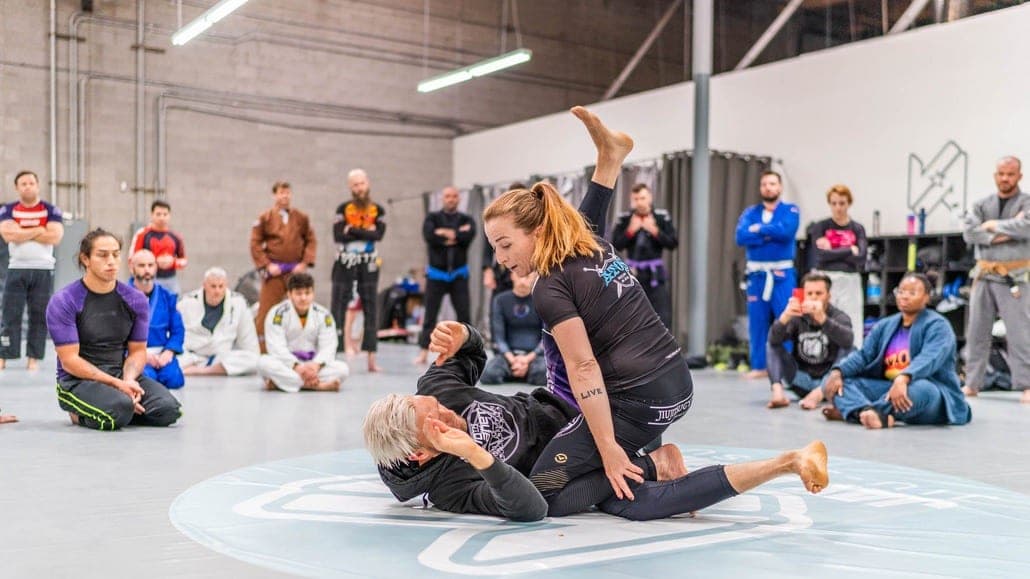
Main photo: BJJ Globetrotters; illustrative archive photograph.
The takeaway
Learn names as handles for things you can recognize, not as a separate collection of facts to display. When terminology differs, compare the starting position, relevant grips, and intended result before deciding whether the lessons describe the same action.
You can ask a good question without remembering the official-sounding word. Show what you mean, describe what you noticed, and let the instructor connect the label to the lesson. The aim is a clearer next attempt, not victory in the academy's spelling competition.
Learn the vocabulary in a real class
Find an academy through the gym directory and ask about a session suited to your experience.
FAQ
Are side control and side mount different positions? They are used as alternative names for the same broad positional family in the cited Grapplearts material. Check the demonstrated grips and body placement, because the name alone does not specify every variation.
What should I do if I forget a technique's name? Describe or show the starting position and the part you remember. Your instructor can help identify the lesson without requiring the label first.
Should I correct a visiting partner's terminology? Clarify it if the wording creates confusion. If you both understand the task, another accepted label does not need to interrupt the round.
Does knowing the name mean I understand the technique? No. The name helps identify the subject, but understanding requires the setup, purpose, and relevant details. Ask to see the movement when the label is all you remember.

Kit Langford
Kit Langford covers the louder parts of jiu-jitsu — the marketing claims, the arguments, the gear that promises more than gear can deliver. The jokes are expected to survive a fact-check.
Related Posts

Mikey Musumeci gives up the belt to make room for MMA
Musumeci is vacating his UFC BJJ title to focus on MMA training. What he is leaving, what continues, and why the transition matters.
IBJJF membership: finish the paperwork before the deadline
IBJJF membership and tournament entry are separate steps. Plan documents, professor approval, renewals, and junior accounts before registration closes.
Choosing a BJJ seminar worth your time and travel
Choose a BJJ seminar by the subject, teaching format, access, and total cost. Know what to ask the host before buying a ticket.
Comments (0)
Loading comments...