
Your BJJ opponent withdrew. Check the options before moving.
Quick answer: If your BJJ opponent withdraws, confirm your bracket with the organizer before changing your plans. Available options depend on the event's rules, remaining entries, and the stage of registration. A division move, credit, refund, or solo result should never be assumed from another tournament's policy.
One name disappearing from a bracket can change the purpose of an entire weekend. You may still have other opponents. You may now be alone. Either way, the next useful step is to establish what the organizer can actually offer.
There are two decisions here: what the tournament permits and what you are willing to accept. Keep them separate. An available match is not automatically the right match, and declining an unsuitable alternative does not require criticizing the athlete who withdrew. The policy examples below were checked on October 9, 2026.
Confirm that the bracket has really changed
A message from a teammate is a reason to check, not a complete account of the event's status. Open the organizer's official registration list or bracket. Confirm your age, belt, weight, and gi or no-gi division before concluding that your opponent is gone.
Registration lists and final brackets can be different stages of the same event. A name moving between divisions may look like a withdrawal when it is actually a correction. Ask staff if the display is unclear, particularly if you are about to change travel or accept another division.
Save the relevant page or confirmation and note when you checked it. You are building a small record of the situation, not a case against anybody. That record helps when a staff member needs to find your registration among many similar questions.
Avoid contacting the opponent to demand an explanation. Their reason may be private, and they do not control the organizer's options. The practical question is what happens to your entry now. Send that question to the people who can change it.
Identify which deadline you are actually facing
The competition date is not the only date that matters. Registration, athlete corrections, coach corrections, and final checks may have separate cutoffs. A change possible early in the process may no longer be available when brackets are finalized.
The IBJJF championship help desk distinguishes its Athlete Correction Deadline, Professor Correction Period, and Registration Checkday. It tells single-bracket athletes seeking a move or withdrawal to contact it from their registered email by 5 p.m., event local time, on Checkday. Use the particular event page to find that date.
That example is a reason to read carefully, not a rule to apply to every organizer. Another event may use a dashboard, a different deadline, or a credit system. Follow the channel named in your event's instructions so the request reaches the right place.
If the deadline has passed, describe the timing accurately. Explain that the change appeared after the cutoff and ask what remains possible. Do not describe an exception as an entitlement or assume that sending a message has completed a division change.
Ask for the available options in one clear message
Staff can answer more efficiently when the first message contains the details needed to identify you. Include the event, registered name, division, and registration reference if available. State what changed and the outcome you would prefer.
A useful message could say that you now appear alone in your division and would like to know whether an appropriate move or withdrawal option is available. That is a hypothetical wording suggestion, not an official form. Use any required form or process the organizer provides.
Ask for the specific information you need:
Which alternative divisions, if any, are available?
What eligibility requirements apply to a move?
Is any refund or credit offered, and on what terms?
What happens if you stay in the original division?
When and how will the final decision be confirmed?
Send a complete request once, then follow up through the stated channel if necessary. Multiple partial messages across social accounts and email can make the history harder to follow. Keep the eventual answer somewhere you can access at the venue.
Evaluate the alternative with your coach
A proposed division is a new competitive decision. Look at its weight range, age category, experience requirements, and permitted techniques. Do not reduce the comparison to whether somebody else is roughly your size or has competed for a similar number of years.
Bring the actual alternative to your coach. Saying that staff can find you a match is too vague to evaluate. Give the division name and the relevant rules, then discuss whether the match suits your preparation and experience.
For a hypothetical example, an athlete who prepared for a specific beginner ruleset should not accept an unfamiliar advanced bracket solely because the trip is already paid for. The money already spent explains the disappointment. It does not change the demands of the proposed match.
If you accept a move, confirm the registration itself has changed. Check the revised division, schedule, and requirements. An informal conversation is useful, but you still need the event's records to reflect what was agreed before you arrive expecting a different opponent.
Give youth changes their own decision
A child's alternative bracket deserves a fresh discussion with the parent or guardian and coach. Do not let the desire to avoid an empty day turn into pressure to accept a matchup nobody has properly considered.
Grappling Industries' published rules provide one concrete example: its youth bracket mergers are optional, and a parent or coach can decline and receive credit. That is the organizer's policy; another tournament's terms may differ. Read the current event information rather than borrowing this answer elsewhere.
Ask how the proposed change affects the child's experience, including the applicable techniques and the other division's eligibility criteria. Explain the available choice in language the child can understand. Their willingness to participate matters alongside the adults' assessment.
Keep disappointment away from blame. The other child did not create the entire situation, and the staff member answering questions may be working within limited options. A calm refusal can be a complete decision. You do not need to manufacture a rivalry to justify staying with it.
Separate a refund from a credit
A refund and an event credit are different outcomes. If the organizer offers either, ask what is covered and how it is issued. Do not assume that an entry adjustment also pays for travel, accommodation, or another division you entered separately.
For credit, establish the expiration date, eligible events, and whether you need a code or an account adjustment. Ask whether the credit is restricted to the same athlete. These are questions to resolve before relying on it for a future registration, not claims that every organizer imposes those conditions.
For a refund, keep the written confirmation and any stated processing timeframe. If you later need to follow up, the original registration reference and correspondence will be more useful than a screenshot of an unrelated athlete's experience at another event.
The first-competition checklist helps organize the wider preparation around your entry. Revisit those numbers after the organizer answers. The useful comparison is between the options still available, including the option of not making an additional purchase to salvage the weekend.
Decide what staying would mean to you
If the event allows you to remain in a solo division, ask what attendance and weigh-in requirements apply and what result is recorded. Do not assume that being alone removes every obligation associated with the entry.
A medal without a contested match and a medal earned through matches are different experiences. You can describe either accurately without diminishing the athlete or inventing competition that did not happen. For someone seeking match footage and experience, the distinction is particularly relevant.
There may be other reasons to attend: supporting teammates or watching divisions you wanted to study. Those can be worthwhile uses of the day if you choose them freely. They do not have to be presented as a replacement for the competitive experience you originally paid to pursue.
If you decide not to attend, notify the organizer through its process. If you stay, update your coach and anyone sharing travel with you. Resolve the administrative decision first, then make the rest of the day fit the actual situation.
Leave with a record you can use next time
After the event, keep a short note of what happened: the division size when you registered, when it changed, which options were offered, and what you chose. This is practical planning information, not a rating of the person who withdrew.
For your next event, read the small-division policy before paying. Check the registration list as the relevant deadlines approach. You cannot control whether another athlete remains available, but you can avoid learning the entire procedure after the easiest options have closed.
Also consider how much your travel depends on a single match. A local event and an expensive flight create different financial exposure, even when the entry fee is similar. Build that uncertainty into your choice without treating any published list as a promise that every athlete will appear.
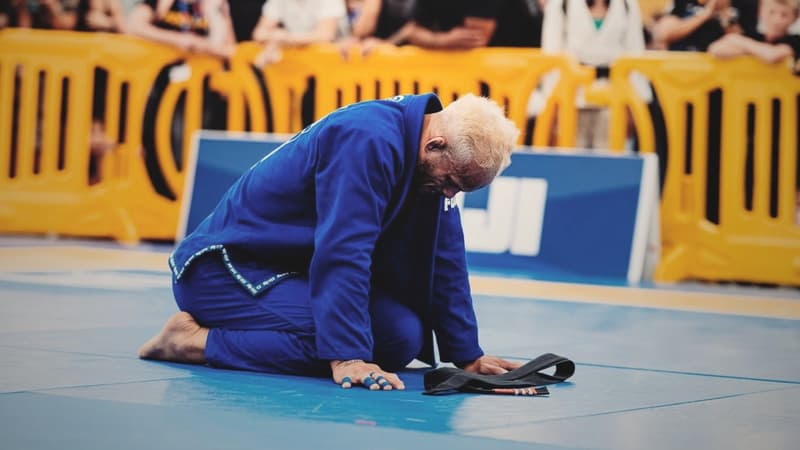
Main photo: IBJJF; archive competition photograph used as an illustration, not an opponent withdrawal.
The takeaway
Confirm the changed bracket, identify the applicable deadline, and ask the organizer for the options attached to your entry. Keep the reply and verify any accepted change in the official registration. A clear paper trail is more useful than assumptions gathered from other events.
Then decide whether the available match or alternative suits you. You can value competition, respect the people running it, and still decline an option that does not fit your preparation. The goal is a sound decision with the information available now.
Read the small-division policy early
Compare upcoming BJJ tournaments, then check each organizer's correction and withdrawal terms before registering.
FAQ
Do I automatically get a refund if my opponent withdraws? Do not assume so. Ask the organizer what its policy provides for your entry and whether your request falls within the relevant deadline.
Should I move up a division to get a match? Review the exact alternative and rules with your coach first. Availability alone does not establish that the division is appropriate for your preparation.
Can a youth athlete decline a proposed merger? Check the organizer's policy and discuss the alternative with the parent or guardian and coach. Do not treat an offered merger as an obligation without reading the terms.
Should I contact the athlete who withdrew? Direct administrative questions to the organizer. The other athlete's circumstances may be private, and they cannot confirm your replacement division, credit, or refund.

Tess Hanley
Tess Hanley reads the rulebooks, the entry fees and the fine print. When a federation or a gym changes something, her first question is who ends up paying for it.
Related Posts

Mikey Musumeci gives up the belt to make room for MMA
Musumeci is vacating his UFC BJJ title to focus on MMA training. What he is leaving, what continues, and why the transition matters.

IBJJF membership: finish the paperwork before the deadline
IBJJF membership and tournament entry are separate steps. Plan documents, professor approval, renewals, and junior accounts before registration closes.

Choosing a BJJ seminar worth your time and travel
Choose a BJJ seminar by the subject, teaching format, access, and total cost. Know what to ask the host before buying a ticket.
Comments (0)
Loading comments...