
A lunchtime BJJ class needs more than an hour
Quick answer: Lunchtime BJJ works when the entire outing fits your workday, including travel, changing, and getting ready afterward. Confirm the actual class format and agree on any early departure with the coach. Test one workable session before building a weekly plan around it.
The noon class on the timetable is only the middle of the appointment. There is also the trip there, the search for clean underwear, and the meeting where somebody expects you to have a functioning camera and a shirt without sweat on it.
That does not make midday training impractical. It makes it a scheduling problem with more moving parts than the calendar label suggests. Solve those parts once, and a lunch class can become an ordinary part of the week rather than a small emergency you keep calling dedication.
Count from your desk back to your desk
Start with the time you must be ready for work again. Work backward through changing, travel, and the session you intend to attend. Include the awkward minutes: walking from the parking space, putting equipment away, and waiting for an available shower. A route that technically fits with every light green deserves a second look.
Here is a hypothetical example. A sixty-minute class, ten minutes traveling in each direction, ten minutes getting changed beforehand, and twenty minutes afterward uses an hour and fifty minutes. That is not a claim about the average academy. It is an illustration of why a one-hour calendar opening can be too small for a one-hour class.
Use your own numbers from an actual visit. If the total does not fit, look for a different session or make an honest arrangement at work. Do not quietly borrow time from colleagues and hope they remain charmed by your new hobby. The schedule has to function for people who do not train too.
Ask what happens during that class
A lunch slot might be a structured lesson, a drilling session, or open training. Those are different uses of a limited window. Find out when instruction begins, whether sparring follows it, and whether attendance requires a booking. The timetable tells you when to arrive; the format tells you what you can actually do there.
The Marcelo Garcia Dallas schedule is one example of why checking the academy's own timetable is better than relying on a saved search result. Use a school's current information, then confirm the particular session you want. This is especially useful around holidays or instructor travel.
If you can only attend part of a class, describe the actual constraint to the coach before you start. Leaving during the last rounds may be manageable; disappearing halfway through paired instruction creates a different problem. Let the person organizing the room tell you what fits.
A class that asks for your full attendance is not being unreasonable. It may simply be the wrong class for that day's available time.
Treat the exit time as part of the plan
Your departure should not depend on whether the next round looks tempting. Decide when you need to leave while you are still wearing normal clothes and capable of remembering the afternoon exists. Tell the instructor once, politely, and follow whatever procedure the academy uses.
You can also mention the cutoff when pairing up. If you have time for one complete round, take one complete round. Avoid beginning a longer drill sequence that you already know you cannot finish unless the coach has arranged a suitable alternative. Partners should not discover your calendar conflict halfway through their turn.
When the planned departure arrives, go. There will usually be another interesting round, and it will usually look more important than folding a gi into a bag. That is a predictable feature of enjoying training, not a reason to revise the entire afternoon every Tuesday.
A repeatable exit is part of building a BJJ week that survives ordinary life. It helps make the next lunch session possible.
Check the changing arrangements before committing
Do not assume an academy has showers because the building looks large or because a social post showed a nice reception area. Ask directly about changing facilities, shower access, towels, and where belongings can be stored. If several classes share the space, ask whether the facilities are likely to be busy when your session ends.
The academy may have a perfectly good setup for evening members that does not suit your particular work requirement. That is useful information. If your job requires you to be customer-facing immediately afterward, your arrangements need to support that reality rather than an imaginary afternoon of working alone.
Make a small packing list for this session:
Clean training clothes and the work clothes you need afterward.
A towel and personal wash items if the venue supports showering.
A separate bag for used equipment, plus whatever you need for the return trip.
Keep valuables out of public changing areas when secure storage is unavailable. Ask the gym where members normally leave bags, and keep walkways clear. A neatly prepared lunch visit should not expand into a portable wardrobe across the entrance.
Leave a place for lunch itself
A lunch class can consume the interval where eating normally happens. That does not mean food becomes optional; it means the workday needs a different arrangement. Decide when you can eat before booking a session that occupies the whole break.
There is no universal meal schedule in this article. Training tolerance, work demands, and individual needs vary. Start with food you already know agrees with you, and avoid making the first midday class a simultaneous experiment with a large unfamiliar meal. For medical or dietary concerns, get advice appropriate to your circumstances.
The practical question is simple: what will be available when you return? A meal already packed or an agreed break later can be easier to manage than finishing class hungry and discovering the afternoon is booked solid. Bring water and allow ordinary opportunities to drink it.
If you want to think more carefully about timing, our guide to eating around early and late BJJ classes gives the wider planning context. The lunch session still needs its own realistic place in the day.
Give used gear somewhere to go
The bag should not remain packed exactly as it left the gym until tomorrow's class. If you return to an office, work out how you will separate used gear from your clean belongings and when you can get it home for washing. Follow the garments' care instructions rather than improvising a wash routine from whatever is available at work.
A spare set can help when the laundry schedule becomes tight, but buying more equipment should follow a demonstrated need. Try the class first. You may discover that one lunch session a week fits beautifully and three create more drying problems than your apartment can solve.
Think about transport too. If you cycle or walk, the bag's weight and weather protection matter. If you drive, do not treat the car as permanent equipment storage. Have a deliberate point in the evening when the bag gets opened and the clothes move to the laundry.
This is ordinary maintenance. It does not need a special productivity system, just a place in a routine that already exists.
Test a normal workday, not your quietest one
A successful trial on a completely empty Friday tells you something, but perhaps not enough about a usual Wednesday. Try the proposed arrangement on a representative day, with the same commute and return obligations you expect most weeks.
Afterward, record only the useful facts. Did you arrive without rushing? Was there enough changing time? Did the session fit your experience? Were you ready when work resumed? Those answers tell you more about sustainability than how many rounds you managed.
If the plan nearly worked, identify the actual friction. A different class time might fix it. So might having a bag packed the night before. If the problem is a rigid one-hour break and a two-hour outing, however, better packing will not repair the arithmetic.
Give yourself permission to choose another day or another gym. A lunchtime membership is an agreement with a real schedule. You do not owe the first timetable you liked a lifelong commitment.
Keep an alternative for the week that changes
Workdays move. A meeting gets extended, a client arrives, or somebody needs coverage. Decide in advance what you will do when the lunch slot disappears. The answer can be an evening class, a weekend session, or simply returning next week.
Avoid making every missed lunch session a debt that must be repaid immediately. If the substitute class causes a separate conflict at home, you have only transferred the problem. Look at the whole week rather than defending one square on a calendar.
It helps to distinguish a single disrupted day from a persistent mismatch. One missed class does not invalidate the arrangement. Repeatedly leaving work in a panic probably means something needs to change. You can enjoy the gym and still need a different timetable.
The aim is to make training easy enough to repeat. Some weeks that means a short, well-planned visit. Other weeks it means leaving the packed bag at home and using the next session properly.
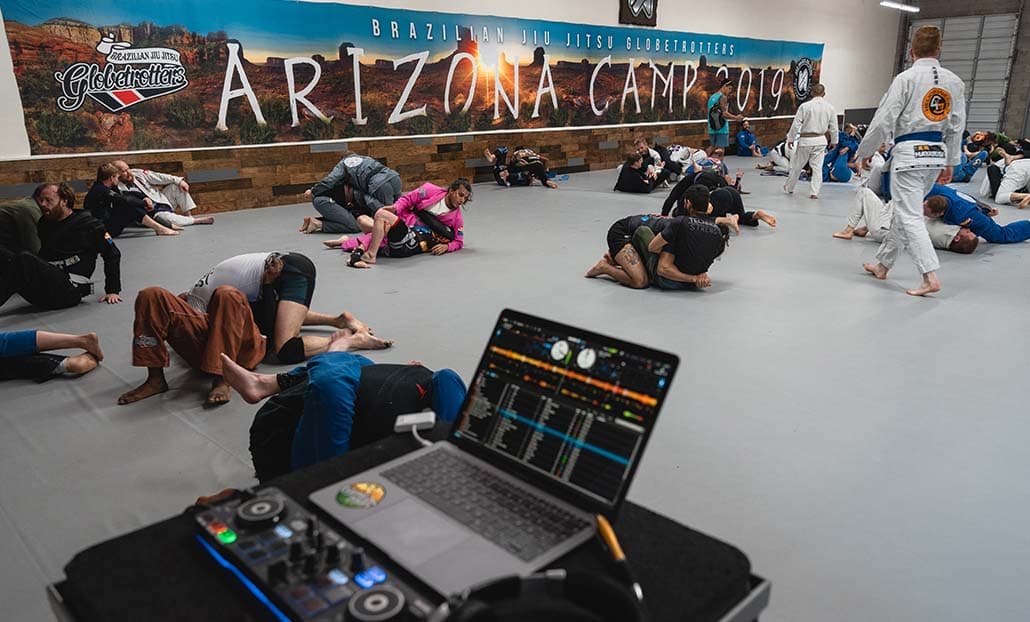
Main photo: BJJ Globetrotters; archive training-camp photograph.
The takeaway
A lunchtime BJJ class becomes practical when the travel, changing, food, and return to work are included from the start. Confirm the format, agree on any shortened attendance, and test the whole outing on an ordinary day. Let the observed timing decide whether it belongs in your week.
The reward is not a heroic use of every spare minute. It is a class you can attend without creating a second round of problems afterward. Once that arrangement works, keep it simple enough to do again.
Find a class that fits the gap
Use the Let’s Roll gym directory to build a nearby shortlist, then confirm each academy's midday schedule and facilities directly.
FAQ
Can I train BJJ during a one-hour lunch break? Possibly, if the travel and session format leave enough time to return ready for work. A full sixty-minute class usually requires additional time around it. Measure the whole outing before committing.
Is it rude to leave a BJJ class early? Ask the coach beforehand and follow the academy's expectations. A planned departure may be workable, but the class structure and your partner's practice matter too. Avoid simply walking out without explanation.
Do I need a second gi for lunchtime training? Not automatically. Check your actual washing and drying routine first. A spare becomes useful when your schedule requires it, rather than because training at noon creates a special equipment category.
Should lunchtime training replace my evening classes? It can replace or supplement them if the session meets your needs and fits your commitments. Try the arrangement before changing a membership or promising yourself a much larger weekly schedule.

Owen Bellamy
Owen Bellamy writes for the person training twice a week around a job. Nothing he suggests requires quitting the job.
Related Posts

Mikey Musumeci gives up the belt to make room for MMA
Musumeci is vacating his UFC BJJ title to focus on MMA training. What he is leaving, what continues, and why the transition matters.
IBJJF membership: finish the paperwork before the deadline
IBJJF membership and tournament entry are separate steps. Plan documents, professor approval, renewals, and junior accounts before registration closes.
Choosing a BJJ seminar worth your time and travel
Choose a BJJ seminar by the subject, teaching format, access, and total cost. Know what to ask the host before buying a ticket.
Comments (0)
Loading comments...