
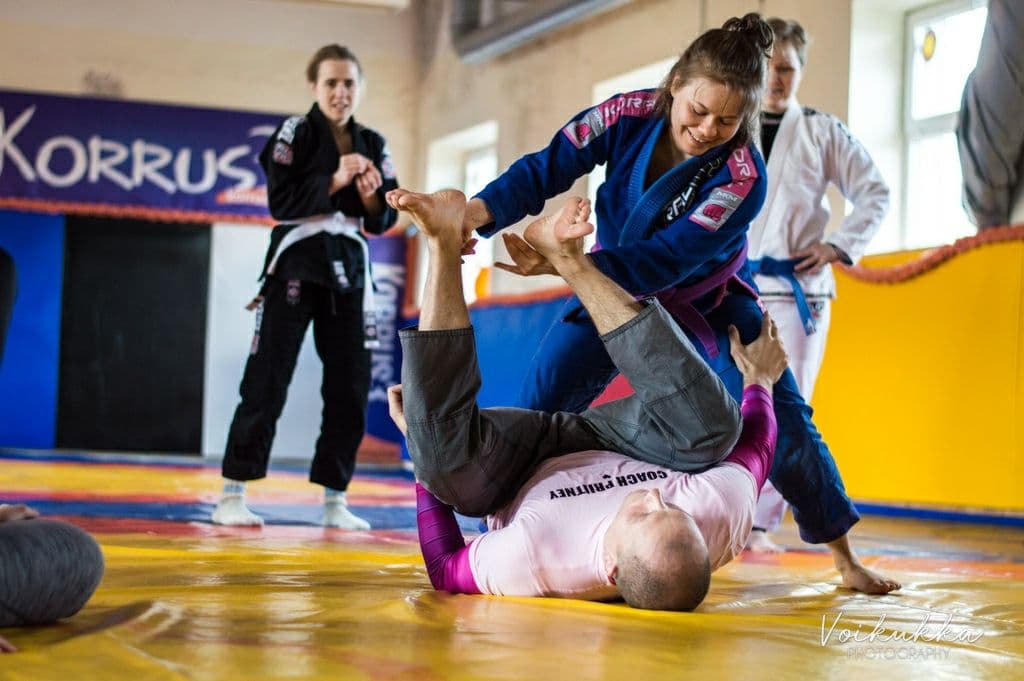
BJJ leg pummeling: recover a useful position for your feet
Quick answer: Leg pummeling in BJJ uses controlled leg movement to clear an obstruction or regain a useful foot, shin, or knee position. In guard work, the movement should restore a connection that affects the passer; circling the feet without changing that relationship is activity without a clear result.
The legs can move quickly while the guard remains in trouble. A foot circles over an arm, returns to roughly the same place, and circles again. Meanwhile the passer keeps the same grip and continues toward the hips. The movement looks familiar, but the problem has not changed.
Leg pummeling becomes easier to understand when each repetition has a destination. Identify the obstruction, decide which contact you want back, and notice whether the hips and upper-body controls allow the route. This is a way to organize practice with an instructor, not a requirement to force a standard leg motion from every position.
Name the connection you are trying to recover
The desired endpoint might be a foot on an appropriate contact point, a shin between the bodies, or a hook that helps manage the opponent's position. Those are different outcomes. Begin by asking which one serves the guard you are actually using.
A solo leg circle cannot answer that question because no opponent is present. It can help you become familiar with a movement, but partner practice adds the relationship that gives the movement its purpose. The leg has to clear something or arrive somewhere useful.
The Grapplearts guard-retention curriculum includes leg-pummeling drills among its movement work. Treat that as one part of a broader defensive subject, alongside positioning, frames, and responses to particular passes. The movement is a tool rather than an entire guard.
Ask your coach to choose an example that fits your level. Define the starting position and the desired contact clearly enough that both partners can recognize when the repetition has succeeded. Without that agreement, one person may be practicing a recovery while the other assumes they are practicing a different guard entirely.
Find what is stopping the leg from moving
An arm, a grip, body pressure, or the angle of the hips can obstruct the intended path. The first task is to identify which of those is present. Repeating the same circle harder may not change the obstacle.
In a slow setup, have the partner establish the relevant control without escalating pressure. Ask the instructor what needs to change before the leg can travel. You may need space, a different hip angle, or an upper-body action that addresses the grip. The correct preliminary step depends on the position.
Avoid treating the leg as separate from the rest of the body. If the torso is fixed and the hips cannot turn, the available route may be very different from the one you practiced alone. A movement that felt easy during warm-ups may not be available under those conditions.
Pause rather than forcing a trapped foot or knee. A useful drill makes the obstruction understandable; it does not reward pushing through discomfort. Clear communication lets the partner reduce pressure or reset while the coach identifies a more appropriate response.
Give the hands a supporting role
Leg movement often needs time or space created elsewhere. Appropriate frames and grips can help manage the passer while the lower body repositions. Which contact is useful depends on the guard, the passing approach, and whether the round is gi or no-gi.
Ask what the hands should be doing during the specific repetition. A common learning problem is concentrating on the foot so completely that an upper-body frame disappears. The leg completes its route, but the passer closes the space before the new contact can matter.
Practice the combined task slowly enough to notice that sequence. Establish the agreed support, move the leg through the available route, and check the endpoint. Then let the partner give a modest, known response so you can see whether the new contact remains useful.
This is not an instruction to push continuously with straight arms. Nor should a partner hold a rigid position that makes every repetition effortless. The goal is an appropriate relationship between upper- and lower-body actions, selected and corrected by the instructor rather than inferred from a general description.
Use the smallest movement that solves this problem
A large leg circle may be suitable in one situation and unnecessary in another. Judge the size of the movement by the obstruction and destination, not by how dramatic the repetition looks. Extra movement can create time in which the passer changes the problem.
A controlled partner drill lets you compare routes. Begin with the coach's chosen movement, then ask whether the knee or hip position is making it harder than necessary. Small adjustments can be easier to recognize when the partner's task remains consistent.
Do not interpret smaller as always better. Sometimes the available route requires a wider movement, and sometimes a different defensive action is needed altogether. The useful standard is whether the movement is appropriate, controlled, and connected to the next position.
The same caution applies to speed. Increase pace only when both partners understand the task and have enough space. Feet near another person's head or face require particular care. A repetition is not improved by surprising a partner with a faster arc than they agreed to receive.
Make the endpoint visible to both partners
A drill needs a clear finish. If the goal is to restore a particular shin or foot connection, pause briefly when it is established and ask whether it actually changes the passer's options. Merely placing a foot somewhere does not prove it is supporting the guard.
Useful review questions include:
Which obstruction did the leg clear during the repetition?
Did the hips move enough to make the route available?
What upper-body contact gave time for the movement?
Did the final connection help manage distance or position?
Let the partner describe what changed from their side. They may feel that the new frame blocks progress, or they may still have the same easy route around it. That feedback can help the instructor identify whether the issue is placement, timing, or the choice of endpoint.
Our guide to being a good training partner applies directly. Useful cooperation means following the agreed task and providing honest feedback, not supplying automatic success or escalating resistance until the learning objective disappears.
Add resistance one decision at a time
Once the basic movement is clear, allow the passer a limited way to interfere. They might maintain a particular grip or move along one agreed route. The bottom athlete now has to recognize the obstruction and recover the intended contact while the situation changes.
Keep the reset condition clear. Stop when the connection is restored, the passer reaches a defined checkpoint, or either partner needs to pause. This prevents a short movement exercise from becoming a long scramble whose result says little about the original question.
Change one variable before changing several. A different passing angle can be enough new information for the next set. If grip, direction, pace, and starting posture all change together, a beginner may struggle to identify why the previous response is no longer available.
No single drill represents all of guard retention. The purpose is to make one decision easier to recognize. Later, the coach can connect it to other responses in a broader round. Progress is the ability to choose an appropriate action under more realistic conditions, not simply the ability to perform a faster solo circle.
Know when to choose another response
Sometimes the space needed for a leg pummel is gone. Continuing to insist on the movement can delay a more appropriate recovery or escape. Ask your instructor to identify the point at which the task changes.
That recognition is part of the skill. You are learning both when the route is available and when it is not. A failed attempt can still produce useful information if you can name the control that prevented it and the alternative the coach recommends.
Do not turn the exercise into a reason to remain in a dangerous or uncomfortable position. If a limb is trapped, pressure is unclear, or the partner's movement exceeds the agreed task, stop and reset. Technical learning does not require proving that every repetition can be completed regardless of the circumstances.
After the session, keep one practical note. Describe the starting position, the recovered connection, and the condition that made the movement work. That is enough to revisit the problem next time. A leg pummel becomes useful when it belongs to a recognizable situation and leaves you in a better position to make the next decision.
Main photo: BJJ Globetrotters; illustrative archive guard-passing photograph.
The takeaway
Give leg pummeling a specific destination. Identify what blocks the leg, use the appropriate support from the rest of the body, and check whether the recovered contact changes the passer's options. The motion matters because of the relationship it creates.
Practice with clear endpoints and gradually increasing resistance. Just as importantly, learn when the route is no longer available and another defensive task is needed. That keeps the movement connected to actual guard work rather than to a pattern performed for its own sake.
Work on one guard problem at a time
Find BJJ academies on Let's Roll and ask an instructor to choose a controlled leg-pummeling exercise that fits your guard, experience, and training partners.
FAQ
What is leg pummeling in BJJ? It is controlled leg movement used to clear an obstruction or regain a useful foot, shin, or knee position. In guard practice, the endpoint should help manage the opponent's approach or position.
Are solo leg circles enough to improve guard retention? They can familiarize you with a movement, but partner work is needed to understand the obstruction, timing, and useful endpoint. Use solo practice as one part of a coached learning process.
Should I move faster when my leg gets stuck? First identify what is blocking the route. A grip, hip angle, or pressure may require another action. Do not force a trapped joint or use speed to bypass an unclear position.
How do I know a pummel worked? The recovered connection should serve the intended task, such as managing distance or blocking progress. Ask the partner and coach whether the endpoint changed the exchange, rather than counting the leg circle itself as success.

Nina Okada
Nina Okada explains positions the way a good training partner does: one problem at a time, with the limits of the explanation said out loud. She is careful about the difference between what footage shows and what it only suggests.
Related Posts
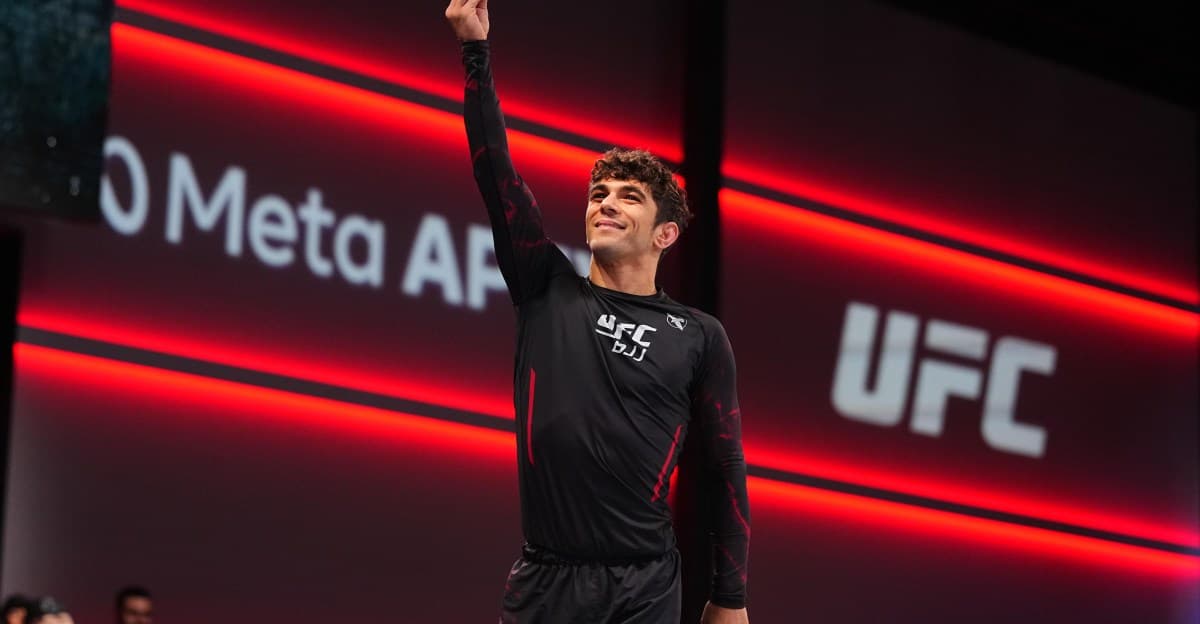
Mikey Musumeci gives up the belt to make room for MMA
Musumeci is vacating his UFC BJJ title to focus on MMA training. What he is leaving, what continues, and why the transition matters.
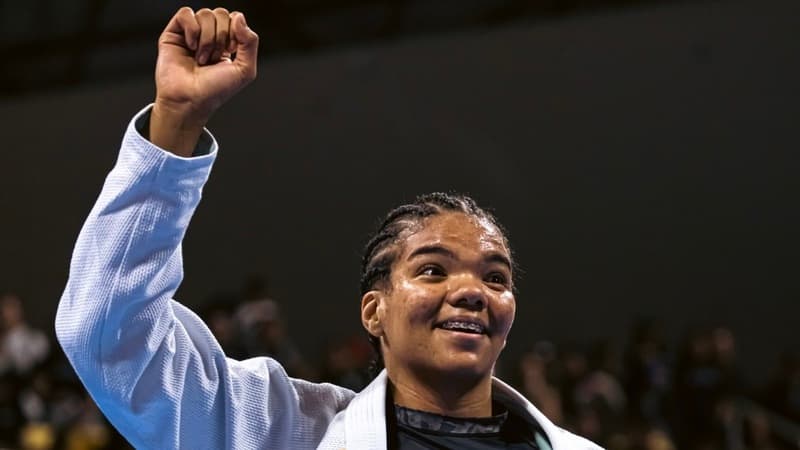
IBJJF membership: finish the paperwork before the deadline
IBJJF membership and tournament entry are separate steps. Plan documents, professor approval, renewals, and junior accounts before registration closes.
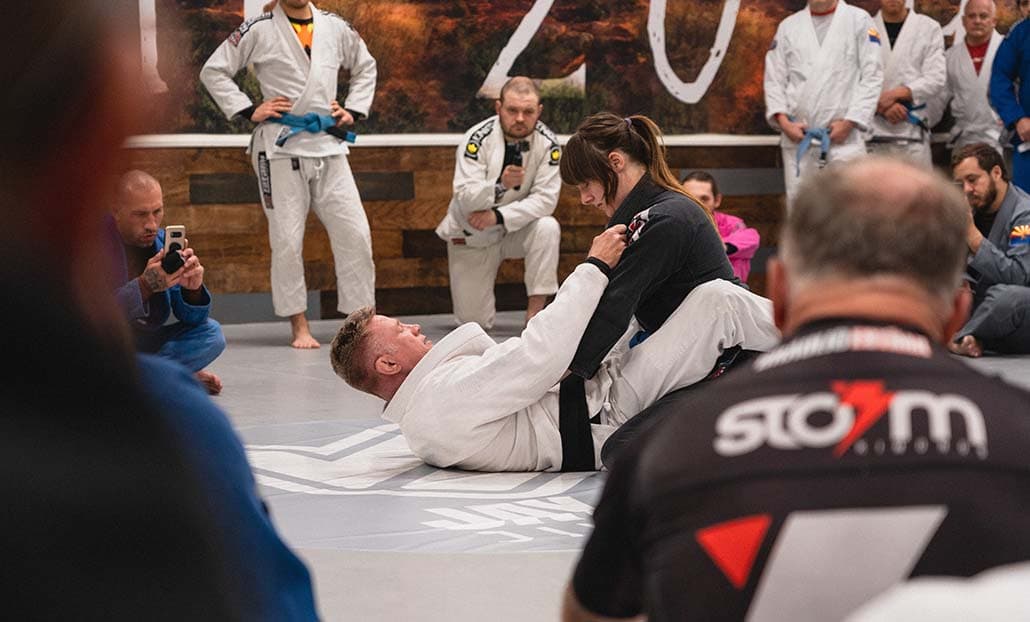
Choosing a BJJ seminar worth your time and travel
Choose a BJJ seminar by the subject, teaching format, access, and total cost. Know what to ask the host before buying a ticket.
Comments (0)
Loading comments...