

A BJJ gym has milestones that do not come with a belt
Quick answer: A BJJ academy can recognize meaningful progress without inventing extra ranks or turning every good deed into an award. Notice specific contributions, ask how people want to be acknowledged, and include the work that makes ordinary classes possible. A quiet thank-you may suit the moment better than a public ceremony.
A new belt is easy to photograph. A student helping another person find the changing room is less likely to become the picture on the gym's wall.
That difference in visibility can shape what a room remembers. Competition results and promotions deserve attention, but they do not contain the whole history of an academy. Some of that history is made by people whose contribution is making the next ordinary class easier for somebody else to attend.
The examples here are suggestions, not accounts of events at a particular gym. The aim is to notice useful work without creating a second ranking system for kindness, attendance, or popularity.
Recognize the event that actually happened
Specific acknowledgment is easier to understand than general praise. Thank someone for organizing the equipment shelf, helping explain a visiting student's arrival arrangements, or handling the registration list for a gym event. Name the contribution without expanding it into a claim about the person's entire character.
That restraint gives the acknowledgment weight. The person knows what was noticed, and other members understand why it mattered. A broad declaration that somebody embodies everything the academy stands for can place more expectation on them than the original gesture deserves.
Keep the size of the response proportionate. A private thank-you after class may be enough. A larger undertaking, such as coordinating a community event, may warrant a more visible acknowledgment if the person wants it. Neither situation automatically requires merchandise or a certificate.
There is also room to recognize a change in the academy itself. A clearer beginner arrival process or a class that now starts reliably can be a milestone worth noting. The achievement belongs to the people who did the work, not only the person who announces it.
The simplest test is whether the acknowledgment tells the truth about something concrete. If it needs a dramatic backstory to become interesting, leave the backstory out.
Ask before making somebody the announcement
Recognition can feel different from being made visible. Before posting a student's photograph or describing a personal achievement publicly, ask whether they want that attention. Explain where the material would appear and what you intend to say.
Do not treat attendance at a gym event as a request to become its promotional story. A member may enjoy celebrating with the room while preferring not to appear on the academy's social accounts. A short conversation can establish that boundary without turning it into an awkward public refusal.
The same care applies to personal circumstances. Someone returning after a long absence does not owe the class an explanation of why they were away. Welcome them without supplying a narrative they have not chosen to share.
If you are unsure, acknowledge the practical contribution privately first. Ask whether a public thank-you would be welcome rather than assuming a larger audience makes it better. Respect a small answer as readily as an enthusiastic one.
Our article about quiet students in BJJ approaches the same issue from another direction: belonging should not depend on being comfortable as the center of the room. Recognition can include people without asking them to perform gratitude in front of everyone.
Count the work outside the round
An academy's visible activity is training, but training depends on other work. Someone answers new inquiries, keeps track of equipment, prepares an event, or explains where a visitor should go. When those tasks are handled well, they can become easy to overlook precisely because they no longer cause confusion.
Look beyond the people who speak most often at the end of class. Ask who contributed to the particular project. If several people shared it, credit them accurately rather than attaching the entire result to the most recognizable name.
Recognition should not disguise an unresolved workload. Thanking a person repeatedly for staying late is not the same as deciding whether that arrangement is fair or sustainable. A gym owner still needs to address staffing and responsibilities directly.
Nor should volunteering become an informal condition of belonging. A member who cannot help at an event may have obligations the academy knows nothing about. Their membership should not acquire an invisible second price measured in unpaid hours.
The useful milestone is a task completed or a system improved. Celebrate that result and the people who agreed to make it happen. Then leave room for them to say no to the next request without seeming to revoke their contribution to the last one.
Let beginners have moments that are not predictions
A beginner can accomplish something worth noticing without being announced as a future champion. Perhaps they asked a clear question, learned where a drill begins, or became comfortable telling a partner they needed to stop. A coach can acknowledge the specific moment without making a forecast about the student's career.
Keep technical judgments with the instructor. A teammate can offer encouragement, but should not invent an unofficial promotion ladder for how a beginner is supposed to develop. The person is already learning enough new expectations.
Avoid turning one successful session into a new standard they must meet every night. If somebody had a good round, it was a good round. The next class may feel confusing again. Recognition does not need to become a contract requiring visible improvement on every visit.
For a private acknowledgment, ordinary language is sufficient. Mention what was clearer or what they handled differently. There is no need to announce that they finally became a real member of the room.
The beginning of training contains enough uncertainty without making acceptance conditional on a breakthrough. A student can be welcome before they have anything impressive to report, and a small achievement can remain small without becoming unimportant.
Choose occasions that do not reward only availability
An attendance streak is easy to count, but not everybody has the same control over their evenings. If an academy chooses to recognize attendance, it should avoid presenting that measure as a complete account of dedication or membership.
There are other things a room can choose to remember:
Completing a shared project that made the space easier to use.
Hosting an event whose participants understood the arrangements.
Thanking the people who helped a class or program get started.
Marking an academy anniversary with the members who want to participate.
These are examples, not a checklist every gym needs to adopt. The appropriate occasion depends on the room and the people involved. A small academy may prefer a few words after class; another may already have an event where acknowledgment fits naturally.
Make participation optional and practical. A celebration at a time somebody cannot attend should not become evidence that they are less connected to the academy. If there is an associated expense, communicate it clearly and avoid assuming everyone can take part.
The point is to broaden what is visible, not to replace one narrow measure with another. A person who appears rarely in photographs can still have an ordinary, valued place in the gym.
Preserve memories without writing myths
A gym anniversary can be an opportunity to collect accurate memories: when a class began, who helped prepare the room, or how an event came together. Ask the people involved and distinguish what is documented from what someone remembers approximately.
There is no need to improve the story by inventing a dramatic opening night or claiming that everyone doubted the academy. Ordinary beginnings can be interesting. A borrowed room, a small class, or a timetable that gradually became workable does not require a villain to make it worth recording.
If you collect photographs, identify the date and occasion as accurately as possible. Ask before naming people in the caption. An archive becomes more useful when future members can understand what the picture actually shows.
Leave room for different memories. Two people may remember the same early class for different reasons. A short, attributed recollection can preserve that difference without asking one person to speak for everybody who attended.
Avoid using a retrospective to rewrite who did the work. If a former member contributed, acknowledge the contribution honestly where appropriate and with consent. The history of a room can include people who are no longer present without turning their departure into the subject of the celebration.
Keep the next class ordinary enough to join
A celebration should not make a newcomer feel they arrived after membership in the community had already closed. Explain the occasion briefly, introduce people when appropriate, and keep the practical arrangements clear. Someone attending for the first time should still know where to put their bag.
This is an easy detail to miss when the room is occupied with its own memories. Inside jokes and long lists of names may mean a great deal to established members while leaving a visitor uncertain about what happens next. A short welcome can give them a place in the evening without requiring instant familiarity.
After the occasion, return to the ordinary work of running class. The people thanked yesterday still need clear responsibilities today. The beginner praised last week still needs patient instruction. A photograph does not complete either task.
If a milestone suggests a practical improvement, follow it through. A successful event may reveal a better registration process or a useful way to welcome guests. Keep the part that helped instead of trying to reproduce the same emotional moment every month.
The academy's life is mostly made of recurring sessions. Recognition has done something worthwhile if those sessions remain easier to join and better understood by the people who attend them.
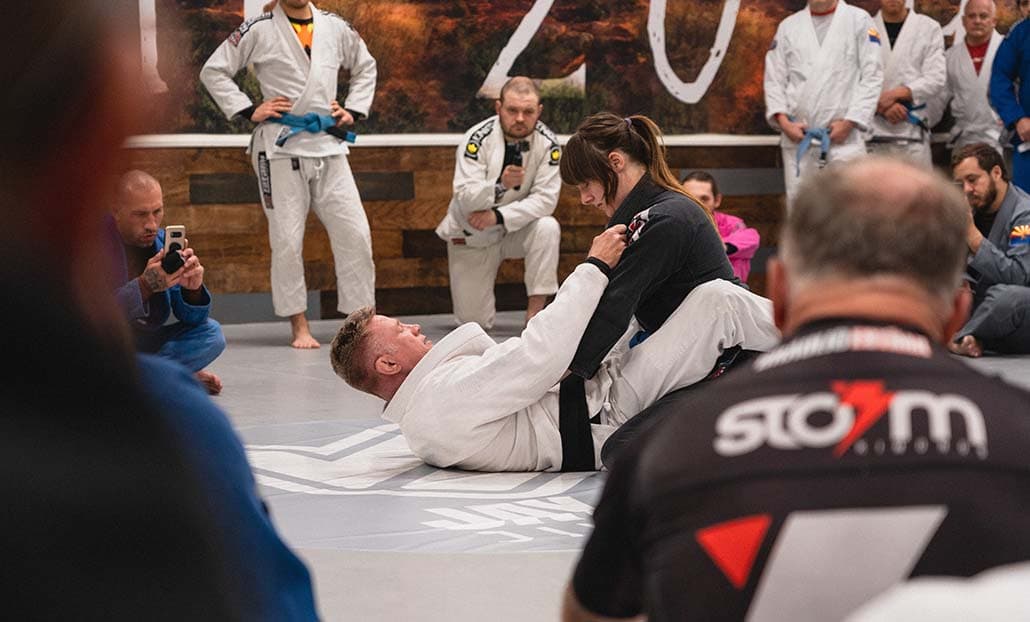
Main photo: BJJ Globetrotters; illustrative archive photograph.
The takeaway
Belt promotions and competition results are part of a gym's history, but so is the work that makes the room function. Notice specific contributions, credit the people involved, and ask before turning a personal moment into a public story.
Keep acknowledgment separate from rank, popularity, and obligation. A useful thank-you does not need to create a new contest. It can simply tell someone that the work they agreed to do was seen and appreciated.
Find a room whose ordinary classes fit your life
Use the gym directory to contact an academy and ask about a suitable first session.
FAQ
What can a BJJ gym celebrate besides promotions? A completed community project, an academy anniversary, or the people who helped an event run well can all be appropriate occasions. Choose something specific to the room.
Does every contribution need a public announcement? No. Ask what the person is comfortable with. A private acknowledgment may be more welcome than a photograph or speech.
Should attendance determine who gets recognized? Attendance can be acknowledged, but it should not be treated as a complete measure of commitment or belonging. Members have different circumstances and control over their schedules.
How can a gym avoid turning recognition into another ranking? Keep it tied to concrete contributions, avoid comparing members' worth, and do not make volunteering or public participation an expectation attached to membership.

Rafael Moura
Rafael Moura profiles competitors as people with lives outside the bracket. Some of those stories are comebacks. Most are not, and he does not force them.
Related Posts

Mikey Musumeci gives up the belt to make room for MMA
Musumeci is vacating his UFC BJJ title to focus on MMA training. What he is leaving, what continues, and why the transition matters.

IBJJF membership: finish the paperwork before the deadline
IBJJF membership and tournament entry are separate steps. Plan documents, professor approval, renewals, and junior accounts before registration closes.
Choosing a BJJ seminar worth your time and travel
Choose a BJJ seminar by the subject, teaching format, access, and total cost. Know what to ask the host before buying a ticket.
Comments (0)
Loading comments...