

A BJJ gym book club gives teammates a different conversation
Quick answer: A BJJ gym book club works best as an optional, low-cost conversation that happens outside training time. Choose something people can realistically access and finish, agree on a few questions, and make it comfortable to attend without having read every page. The point is to give teammates another way to talk, not another test to pass.
A training partner can spend months knowing exactly how you defend an underhook without knowing what you like to read. That is not a failure of the friendship. Most classes leave room for a few minutes of conversation around a very specific activity.
A small reading group creates a different opening. It can give people something to discuss besides the latest match or the part of their game that stopped working on Tuesday. Keep the arrangement light enough that it remains an invitation.
Start with a conversation people want to have
Before choosing a book, ask a few interested teammates what kind of reading they would enjoy discussing. A sports memoir, a reported article, and a technical manual create different conversations. The first meeting does not have to settle a permanent identity for the group.
Choose a question that gives the reading a purpose. You might want to discuss how an athlete describes preparation, how a reporter reconstructs a match, or what a story leaves out about the people around a champion. Those questions invite different perspectives without requiring specialist literary vocabulary.
Do not assume everyone wants more jiu-jitsu content after class. A book unrelated to grappling may be precisely what makes the group appealing. The academy can supply the shared connection while the reading supplies a new subject.
If the idea attracts only a few people, begin with a few people. A reading group does not need the whole membership to become worthwhile, and a small turnout is not evidence that the rest of the gym dislikes books.
Make the first selection easy to access
Check availability before announcing the choice. A book that only one person owns, an expensive imported edition, or a paywalled article that several members cannot access can create an unnecessary barrier before the conversation begins.
Ask about library copies, legitimate digital editions, audio editions, or another authorized way to read the material. Do not circulate an unauthorized scan simply because it would be convenient for the group. If access is difficult, choose a different selection.
Keep the reading load modest for the first meeting. A short article or a small agreed section of a book can tell you whether the arrangement works before everyone commits to several hundred pages. The shorter choice should still contain something worth discussing.
Be clear about the edition or section when that affects page numbers. A participant using an audiobook should be able to identify the assigned material without being told to find a printed page that does not exist in their version.
Put the meeting outside the class people paid to attend
Ask the academy before using its space or communication channels. A coach may welcome the idea while still needing the mat room for the next session. Do not assume an empty-looking area is available for a long conversation.
Choose a time and place that make the group optional in practice. If the only way to leave class is to walk through a circle of people waiting for your opinion, the invitation may feel less optional than intended.
A nearby public venue can work if it suits the group and the venue permits it. Avoid a plan that requires everyone to buy a meal or expensive drinks. State any expected cost in advance so people can decide without an awkward conversation at the table.
Keep the meeting bounded. Agree on a reasonable end time and respect it. Someone should be able to join a discussion without giving up the rest of their evening because the most enthusiastic reader has another chapter to explain.
Prepare questions that allow more than one good answer
A discussion question should open the material rather than test whether people remember it. Asking which scene changed their view of a subject usually gives more room than asking for a date or a name that can be looked up.
Use a short list rather than a worksheet. For a reported sports story, the group might consider:
Which detail made the subject feel specific rather than generic?
What did the writer establish through evidence, and what remained uncertain?
Whose perspective would add something to the account?
Did the ending change how you understood the beginning?
These are prompts, not an exam. People can disagree about the effect of a passage while still being accurate about what it says. If a factual dispute matters, check the text or original source rather than settling it by volume.
For people interested in other storytelling formats, the BJJ documentary guide can provide a separate discussion route. Keep the reading group’s first meeting focused instead of trying to cover every medium at once.
Let unfinished reading stay ordinary
Someone may arrive having read half the selection or listened to most of an audiobook. Decide in advance that this is acceptable if it suits the group. A missed chapter should not become a public explanation of how busy a person has been.
People who have finished can help by giving enough context for a question without retelling the entire work. Check whether spoilers matter to the group before discussing a major reveal or the ending. Make that preference clear in the invitation when possible.
Avoid turning completion into a hierarchy of who deserves to speak. A person may have a useful observation about the opening even if they have not reached the final chapter. Equally, someone who has not read anything can choose to listen without being made to improvise an opinion.
The group can still have a meaningful reading expectation. The distinction is between agreeing on material and using that agreement to embarrass someone. If preparation repeatedly becomes unrealistic, reduce the assignment or change the meeting frequency.
Keep belt rank out of the seating order
A black belt may be the least experienced reader of the genre you chose. A new white belt may have a sharp observation about how the author handled a source. The conversation should give both room without importing the technical hierarchy of class.
That does not require pretending everyone has the same background. It asks the group to respond to the contribution itself. A claim about a passage can be discussed on its merits rather than accepted because the speaker teaches the evening class.
If the coach attends, agree that the meeting is a discussion rather than an extension of instruction. Students should be able to disagree about a book without worrying that they are challenging the person responsible for their training.
The same courtesy applies to quieter members. Invite a contribution without requiring everyone to speak in turn. Someone who prefers to listen can still belong in the group, just as a quiet student can belong in the academy.
Give the organizer a role small enough to sustain
The person who suggests the group should not automatically inherit permanent responsibility for reminders, venue bookings, selections, and every opening question. Start with a small division of tasks that people actually agree to handle.
Rotate selections if the group wants variety, but explain how the next choice will be made. A clear, simple method prevents the decision from being reopened in every chat message. It also gives people time to find the material.
Keep reminders useful. One message with the selection, date, place, and access information is better than a running commentary on who has started reading. The gym group-chat guide is relevant here: a communication channel should make participation easier without creating a new stream of obligations.
If enthusiasm fades, pause without treating the group as a failed community project. An occasional good discussion may suit the academy better than a monthly meeting nobody has time to prepare for. Frequency is a practical choice, not a measure of seriousness.
Leave the reading with a little room to follow people home
A good meeting does not need a final lesson everyone agrees on. It can end with a question somebody wants to revisit, a different interpretation of a scene, or an author another member would like to read.
Avoid forcing every selection into a moral about training harder or becoming a better grappler. A story can be interesting for its reporting, its language, or a life unlike your own. The connection to BJJ does not need to be manufactured at the end.
If people want to share notes afterward, keep them brief and respect any personal comments made in the discussion. A member’s anecdote is not automatically material for the academy’s social account. Ask before quoting or identifying someone publicly.
Then choose whether there will be another meeting and what needs to happen before it. The group has done enough if teammates spent an enjoyable hour paying attention to something together. It does not need a logo, merchandise, or an annual target to count.
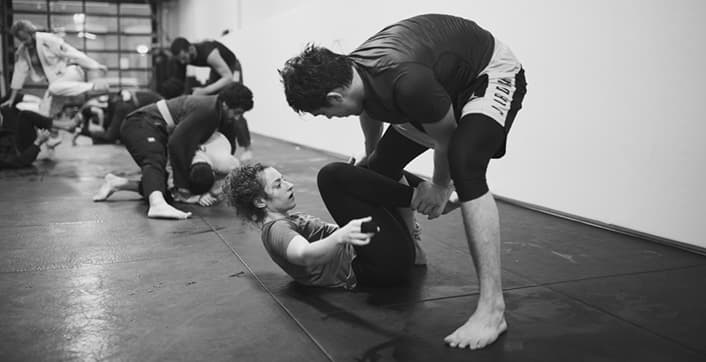
Main photo: Christian Graugart / BJJ Eastern Europe; book jacket image used as an illustration of BJJ reading material.
The takeaway
Make a gym reading group easy to join: accessible material, a manageable assignment, a clear meeting time, and questions that leave room for different views. Keep it separate from class attendance, rank, and any expectation that every member should participate.
Start small and adjust after the first conversation. A reading group can remain an occasional pleasure between teammates rather than another program someone must keep running indefinitely.
Find the community around the classes
Browse BJJ gyms on Let’s Roll and pay attention to the ordinary conversations around training. Shared interests can grow from a room without needing to become part of its formal curriculum.
FAQ
Does a BJJ book club have to read martial-arts books? No. The gym can provide the shared connection while the group chooses any suitable subject its members want to discuss.
What should the first reading assignment be? Choose something accessible and manageable, such as a short article or an agreed section of a book. Confirm legitimate access before announcing the selection.
Can someone attend without finishing the reading? The group can agree to welcome that. Make the expectation clear, provide context when needed, and avoid turning incomplete reading into a public explanation of someone’s schedule.
Should the coach lead every discussion? Only if that is what the group wants. Rotating responsibility can keep the work manageable and give students room to contribute outside the normal teaching relationship.

Rafael Moura
Rafael Moura profiles competitors as people with lives outside the bracket. Some of those stories are comebacks. Most are not, and he does not force them.
Related Posts

Competing in gi and no-gi on the same day takes two plans
Prepare for gi and no-gi competition on the same day with separate rule checks, complete outfits, schedule coordination, and a realistic second-bracket plan.
Jiu-jitsu in Montreal: build the visit around a real class
Plan BJJ training in Montreal around confirmed classes, language arrangements, winter travel, visitor policies, and equipment that is ready to use.

BJJ gi pants that fit standing up can still fail on the mat
Check BJJ gi pants at the waist, rise, knees, and cuffs so a good-looking size label becomes a uniform you can actually move in.
Comments (0)
Loading comments...