
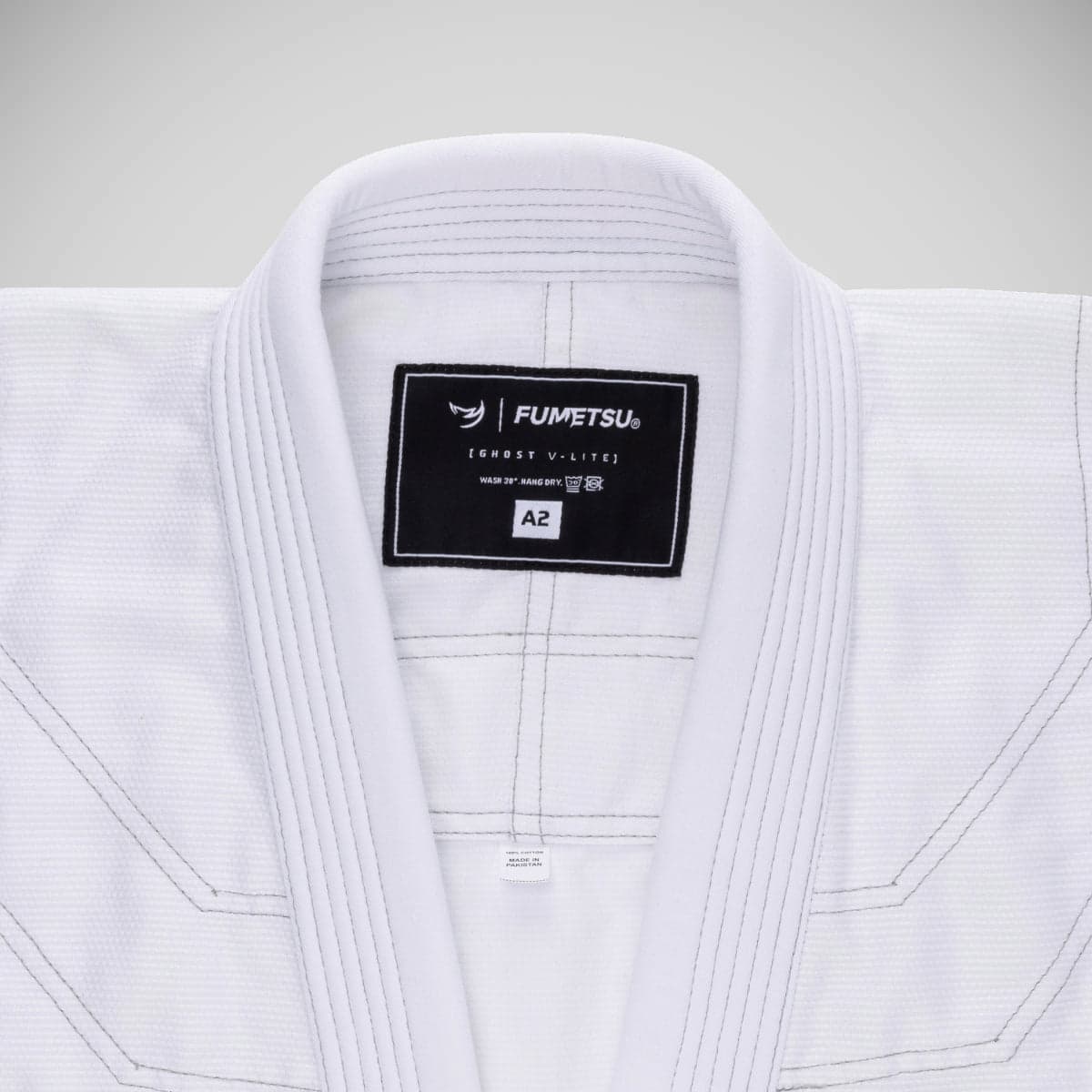
BJJ gi collars: the detail a product photo cannot settle
Quick answer: A gi collar should feel comfortable, remain in good condition, and meet the rules of any event you plan to enter. Product photos can show stitching and shape, but they cannot tell you how the collar will feel during training. Treat stiffness as one equipment detail rather than a shortcut to better grip defense.
A close-up of a gi collar can make a product page look reassuringly technical. There are rows of stitching, a tidy label, and fabric arranged with a precision that will not survive the first grip-fighting round.
Those details are worth inspecting. They are not a complete buying decision. The useful question is how the collar fits into a jacket you can move in, care for, and wear without turning every session into a negotiation with the back of your neck.
Separate the collar from the rest of the specification
A jacket’s fabric weight or weave description does not answer every question about its collar. Read the actual product details rather than assuming that a heavier jacket necessarily has the collar you want.
For example, the Fumetsu Ghost V-Lite product page specifies a 275gsm pearlweave jacket and supplies close-up photographs. Those are useful pieces of information about that product. They do not establish how its collar will feel to every wearer or how it compares with a gi the reader already owns.
If the construction matters to your purchase and the listing does not explain it, ask the manufacturer. A direct question about the collar’s materials or dimensions is better than trying to infer them from a photograph.
Keep the response attached to the exact model. Brands sell different gis, and an answer about one version may not apply to another. The label on the jacket matters more than a general reputation for stiff or soft collars.
Comfort belongs in the first fitting
When trying on a gi, pay attention to the back of the neck and the way the lapels sit across the upper body. Turn your head, lift your arms, and move through a few easy positions without pulling aggressively on the garment.
Do not ignore an uncomfortable edge because the sleeves are the right length. Equally, do not assume that every unfamiliar feeling means the gi is unsuitable. Ask the maker what to expect and check the return conditions before washing or training in it.
A fitting should follow the seller’s terms. There is a difference between trying on clean clothing and using it for a hard session before deciding to send it back. If you cannot evaluate a particular detail within those terms, ask for more information before buying.
The broader guide to choosing a BJJ gi covers fit across the jacket and pants. The collar is part of that assessment, not a reason to overlook a poor fit elsewhere.
Do not shop for an impossible grip
A collar is part of the equipment both athletes use in gi training. Buying one with the hope that nobody will be able to grip it confuses an equipment preference with a technical solution.
For IBJJF competition, the uniform requirements address fabric thickness and hardness, permit certain collar filling materials subject to the rules, and specify collar measurements for inspection. The existence of those requirements should discourage treating extreme rigidity as an automatic advantage.
Check the rules that apply to your event before purchasing competition gear. A marketing phrase about approval does not remove the need for the actual garment to pass inspection. Size, condition, and any changes to the item still matter.
For training, work on the grips themselves with your coach. Our grip-fighting guide is a starting point for the technical questions. The gi should be suitable equipment for that practice, rather than the entire plan for avoiding a collar grip.
Look closely at wear where the fabric folds
Inspect the collar while the gi is clean and dry. Look along the edges, the stitching, and the areas that repeatedly fold or receive grips. A label and a neat outer surface can conceal damage that is easier to see when you examine the full length.
If a seam is coming apart or an inner material becomes exposed, ask the manufacturer or a competent repair service whether the garment can be repaired appropriately. Do not assume a quick cover-up leaves it suitable for training or competition.
A few useful checks are straightforward:
Are the edges intact rather than frayed or opening?
Is the stitching holding without a loose section catching?
Does the collar lie in its normal shape?
Is there any damage that needs assessment before use?
The purpose is to notice a developing problem before a partner’s grip makes it obvious. You do not need a formal inspection station at home. A short look while folding the gi is enough to identify something that deserves attention.
Follow care instructions before trying to change the feel
If a collar feels different after washing, review the garment’s instructions and what actually happened in the wash. Avoid immediately experimenting with extra heat, harsh products, or improvised treatments to make it softer or stiffer.
A gi is a constructed garment, not just a sheet of cotton. Different parts can have different materials and stitching. The manufacturer is better placed to answer a question about an intended care process than a comment about another person’s unrelated gi.
Follow the label for cleaning and drying, and give the whole jacket time to dry appropriately before storing it. Do not judge readiness only by a thin section of the sleeve while ignoring thicker parts of the garment.
If a persistent problem remains despite following the instructions, contact the maker with the model and a clear description. That is more useful than buying several products in the hope that one will reverse an unknown change.
Compare a borrowed example without borrowing a conclusion
If a teammate owns the model you are considering, ask whether you can inspect the clean gi and hear about their experience. They may be able to point out a detail that the listing does not make clear.
Keep the limits of that comparison in view. Their gi may be a different size or production version, and it may have been washed many times. Their preference can help you ask better questions without becoming a guarantee about a new item.
Ask practical questions: how does the collar feel during an ordinary class, has its shape changed, and have they had any problems following the care instructions? Avoid turning one person’s experience into a claim about how long every gi from the brand will last.
If you borrow gear for training, follow the academy’s and owner’s arrangements. Inspection and borrowing are separate requests. A teammate agreeing to show you a collar is not automatically offering the whole uniform for a week of testing.
Keep competition preparation separate from experimentation
Use familiar, suitable equipment for an event when possible. A brand-new collar may feel different enough to distract you even when the gi otherwise fits. Competition morning is an inconvenient time to discover that you dislike how the jacket sits.
Check the applicable uniform rules and inspect the garment ahead of time. If you are unsure about a detail, ask the organizer or your coach early enough to have another option. Do not assume a last-minute change can solve every inspection issue.
Avoid unauthorized alterations intended to change stiffness or dimensions. If a repair is necessary, confirm whether the repaired garment is permitted by the event. A training solution and a competition-compliant solution may not be the same.
The aim is to remove avoidable equipment uncertainty before the match. You already have an opponent to think about. The collar should not become a second project in the warm-up area.
Choose the jacket you will willingly wear
A technically detailed product comparison can still miss the ordinary question: will you reach for this gi on a normal training day? Comfort, fit, care requirements, and the kind of sessions you attend belong in that decision.
There is no need to replace a serviceable jacket because a new product emphasizes a different collar. If the current gi remains appropriate, comfortable, and in good condition, continuing to use it is a reasonable choice.
When replacement is necessary, compare the whole garment. A preferred collar on a jacket with unsuitable sleeves or restricted movement is not a successful purchase. The detail should support the fit rather than dominate it.
A good equipment decision often ends quietly. The jacket is ready when you need it, it meets the relevant requirements, and you can spend class working on jiu-jitsu. That is more useful than winning a specification argument about a uniform you avoid wearing.
Main photo: Fumetsu; Ghost V-Lite gi product detail photograph.
The takeaway
Inspect the collar, but buy the whole gi. Check how the jacket fits, ask about construction when the listing is unclear, and follow the care instructions instead of experimenting to create a particular feel.
For competition, verify the applicable requirements and use gear you have already assessed. Collar preference is legitimate; expecting a collar to solve grip fighting is a different proposition and a poor reason to overlook comfort or condition.
Check the equipment expectations before visiting
Use Let’s Roll’s gym directory to find a class, then ask the academy about any uniform requirements before packing an unfamiliar gi.
FAQ
Is a stiffer BJJ gi collar always better? No. Consider comfort, fit, condition, and the rules of your event. Stiffness alone does not establish quality or replace technical grip defense.
Can I tell collar comfort from a product photo? A photograph can show shape, stitching, and visible details, but it cannot reproduce how the garment feels on you. Ask the manufacturer and check fitting and return terms.
Are foam-filled collars allowed in IBJJF competition? The published uniform guidance permits EVA or similar collar material subject to size and rigidity requirements. Check the current rules and the actual garment before an event.
Should I alter a collar to make it harder to grip? Do not assume an alteration is safe, suitable, or competition legal. Ask the manufacturer and organizer about equipment questions, and work on grip defense with your coach.

Kit Langford
Kit Langford covers the louder parts of jiu-jitsu — the marketing claims, the arguments, the gear that promises more than gear can deliver. The jokes are expected to survive a fact-check.
Related Posts
Competing in gi and no-gi on the same day takes two plans
Prepare for gi and no-gi competition on the same day with separate rule checks, complete outfits, schedule coordination, and a realistic second-bracket plan.
Jiu-jitsu in Montreal: build the visit around a real class
Plan BJJ training in Montreal around confirmed classes, language arrangements, winter travel, visitor policies, and equipment that is ready to use.
BJJ gi pants that fit standing up can still fail on the mat
Check BJJ gi pants at the waist, rise, knees, and cuffs so a good-looking size label becomes a uniform you can actually move in.
Comments (0)
Loading comments...