
When your favorite training partner stops coming
Quick answer: If a favorite training partner stops coming, check in as a friend without making a return to BJJ the price of the conversation. Ask once, respect what they choose to share, and keep the relationship open outside the academy. Your own training may need new partners, but their absence does not require a public explanation.
An empty place in the room can change the whole evening. The person who usually nods you over for the first round is not there, and the class suddenly requires a little more effort before it even begins.
At first, it may seem like a scheduling problem. After a few weeks, you start to miss more than the rounds. You miss how easy training felt with someone who already knew your pace, your habits, and which conversation could wait until afterward.
Send a message that is not an attendance notice
A check-in can be simple. Say that you have been thinking of them and ask how they are. You do not need to lead with the number of classes they have missed. They probably know they have not been attending.
Leave space for an answer that has nothing to do with BJJ. The person may want to talk about work, family, or something ordinary that happened that morning. If every conversation is redirected toward when they will return, the friendship starts to sound like a retention campaign.
Do not send a message on somebody else's behalf unless that has been agreed. A coach asking you to check on a teammate is different from a private conversation between friends. Be clear about which one you are having, and do not promise confidentiality you are not prepared to keep.
If they do not reply, avoid escalating the pressure simply to resolve your uncertainty. You can leave a warm invitation to reconnect. A friendship can remain available without requiring the other person to produce an explanation on your timetable.
Let their reason belong to them
There may be a clear reason for the absence, several overlapping reasons, or no explanation they want to give. You do not need to turn a partial answer into an investigation. Listen to what they choose to share.
Avoid ranking the reason against your own commitment to training. A change in priorities does not need to meet an academy's imagined threshold for legitimacy. Someone can stop enjoying an activity, need the time elsewhere, or decide that this part of their life has run its course.
If they describe a problem you can help with, ask what kind of help they want. Offering a ride is different from insisting that transport cannot be the real issue. Suggesting another class is different from arguing until they agree to attend it.
Keep practical help separate from persuasion. A person should be able to accept a conversation without accidentally entering a negotiation about their return. The useful question is what they need from you as a friend, not what arrangement would most quickly restore your preferred training routine.
Do not fill the gap with a gym rumor
When a familiar student disappears, other people may ask about them. You can say that you have not trained together recently without supplying a theory. Silence does not need a story attached to it.
If the friend has told you something privately, ask before sharing it. Even a sympathetic explanation can become uncomfortable when repeated around a room. The person may return one evening and discover that everybody has been briefed on a situation they never intended to discuss publicly.
The same care applies when somebody changes academies. You may know they are training elsewhere without knowing why, or you may know a reason they do not want circulated. Neither situation requires choosing sides in a dispute that may not exist.
For coaches and regulars, a simple welcome can be more useful than commentary. If the student returns, let them participate without an opening ceremony about their absence. The room can be glad to see them without making them explain where they have been to every new partner.
Notice what the partnership gave your training
Missing a friend and losing a useful training arrangement can happen at the same time. Separate those experiences enough to respond to both. You may need to keep in touch socially and also find someone else to work on a particular position.
Identify what made the partnership useful. Perhaps you trusted their pace, could ask questions easily, or shared a class time. Those are qualities you can look for in other partners without pretending the people are interchangeable.
Start with a small invitation to another regular. Ask for a drill, a round, or help revisiting the day's technique. There is no need to announce that you are searching for a replacement. A new training relationship can develop through ordinary repetition.
If finding partners is difficult, ask the coach for help. The article about quiet students in BJJ discusses ways to make those invitations less awkward. You do not have to become the most sociable person in the room to build another reliable connection.
Make an invitation that can be declined
There is nothing wrong with inviting the friend to train again. The invitation works better when it is specific and does not carry a verdict about their absence. Mention a session you plan to attend and leave the choice with them.
A few distinctions help:
Offer a date without demanding a commitment to a whole new routine.
Ask before arranging a surprise welcome or group announcement.
Accept a refusal without making the next conversation about it.
Keep invitations outside BJJ available too.
Do not use a special visitor or a promotion day as a trap. An event can be appealing without obliging somebody to rejoin the sport. If they attend once, let that be one attendance until they say otherwise.
This protects the possibility of a return from becoming burdened by everyone else's expectations. A person who wants to try a class again should not have to decide the future of their training before putting on a gi. The first evening can remain a first evening.
A friendship can survive a different calendar
Training made the relationship convenient. You were in the same place, doing the same thing, several times a week. When that disappears, keeping in touch may take a little more deliberate effort.
Suggest something ordinary and manageable. A coffee, a walk, or a short call can be easier to arrange than a large reunion. The activity does not need to prove that the friendship is important. It only needs to give you time together that is no longer supplied by the class schedule.
Let the conversation develop beyond training updates. You can still talk about BJJ if both people enjoy it, but the friend should not have to remain an informed spectator to keep their place in your life. Ask about what occupies them now.
Some friendships will become less frequent. That can be disappointing without meaning the earlier connection was false. A shared activity created real time together, and the conditions have changed. You can appreciate what the relationship was while finding out, gradually, what it can be outside the room.
Keep your own attendance out of their hands
It is understandable to feel less eager to train when the familiar partner is gone. That feeling is yours to address, not a debt they must repay by returning. Avoid making them responsible for whether you continue.
Try adjusting the part of the routine that has become difficult. Attend a class where you know another student, ask the coach for a focused task, or arrange a short technical session with a willing partner. Change one thing before deciding the whole academy no longer works for you.
If your own interest has changed, examine that honestly. You may also need a different schedule or a break. The friend's departure can prompt the question without supplying the answer. Your decisions do not have to match for the relationship to remain intact.
When you do find a new rhythm, there is no need to report it as evidence that the absent friend has been replaced. Tell them about your life as you would normally. The training partnership mattered, and your ability to keep training does not reduce what it meant.
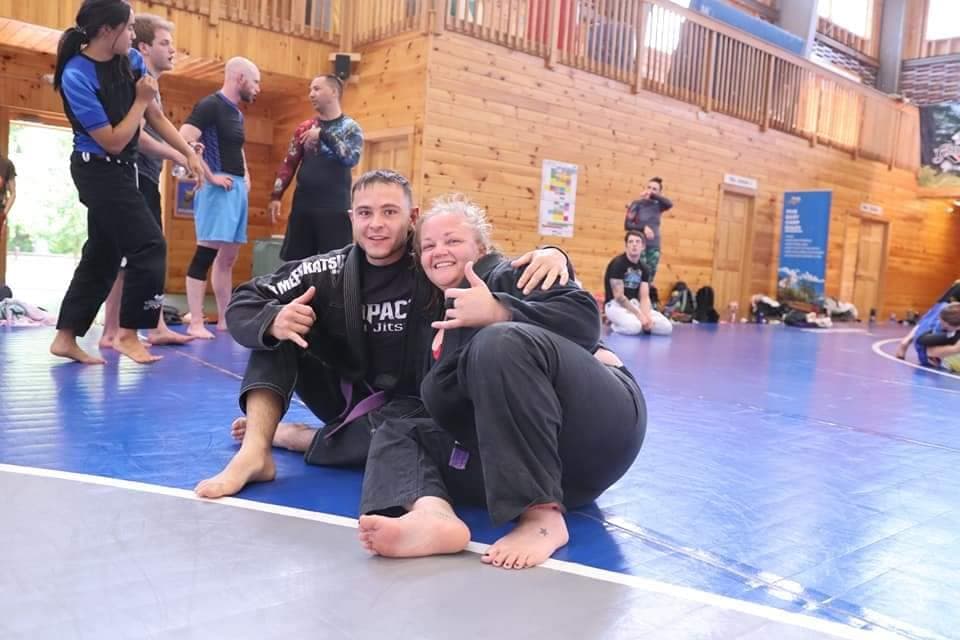
Main photo: BJJ Globetrotters; illustrative archive photograph.
The takeaway
Check in with the person before trying to repair the attendance pattern. Let them choose what to explain, keep private information private, and offer invitations that can be declined. A return to the mats should not become the condition for staying in touch.
At the same time, give your own training another route forward. Find new partners, ask for help when needed, and allow the old friendship to take a different shape. You can miss the rounds without making somebody responsible for bringing them back.
Find another shared training opportunity
Browse open mats when you want a change of session, and confirm the host's arrangements before inviting a friend or attending together.
FAQ
Should I ask why my BJJ friend stopped training? You can ask with care, but they do not owe a detailed explanation. Start by checking how they are and let them decide how much to share. Avoid making every conversation a question about attendance.
How often should I invite them back? There is no required schedule. Offer a clear, low-pressure invitation when it makes sense, pay attention to their response, and stop pushing if they indicate they do not want more training invitations.
What should I tell teammates who ask about them? Share only what the person has agreed can be shared. If you do not know, say so. You can acknowledge their absence without inventing a reason or repeating private details around the academy.
What if I do not enjoy training as much without them? Identify what the partnership supplied and look for practical ways to rebuild that part of your routine. Ask the coach for help finding partners if needed. Keep your decision about training separate from pressure on the friend to return.

Rafael Moura
Rafael Moura profiles competitors as people with lives outside the bracket. Some of those stories are comebacks. Most are not, and he does not force them.
Related Posts

Mikey Musumeci gives up the belt to make room for MMA
Musumeci is vacating his UFC BJJ title to focus on MMA training. What he is leaving, what continues, and why the transition matters.
IBJJF membership: finish the paperwork before the deadline
IBJJF membership and tournament entry are separate steps. Plan documents, professor approval, renewals, and junior accounts before registration closes.
Choosing a BJJ seminar worth your time and travel
Choose a BJJ seminar by the subject, teaching format, access, and total cost. Know what to ask the host before buying a ticket.
Comments (0)
Loading comments...