

Evening BJJ and bedtime: make room for both
Quick answer: Start planning an evening BJJ session from the time you need to wake up the next morning. Include the commute and ordinary after-class chores, then decide which parts can happen earlier. A repeatable bedtime routine and sensible caffeine choices may help, but ongoing sleep problems deserve a conversation with a healthcare professional rather than another recovery product.
Suppose class finishes at 9 p.m. You spend twenty minutes discussing the last round, drive home, discover there is nothing ready to eat, and begin a load of gis. Then a short technique video becomes an hour of watching guard passes. The class was over a long time ago. The evening is still organized around it.
That is the problem this article addresses. Our broader recovery guide covers the hours between sessions. Here, the assignment is narrower: give a late class a realistic place in a working week, without pretending the day ends when the round timer stops.
Count the whole evening, starting with tomorrow morning
Write down when you actually need to get up. If the alarm is fixed by work, school drop-off or a commute, it is the least flexible part of the plan. Work backward from there rather than treating bedtime as whatever remains after everything else.
The CDC's sleep guidance recommends at least seven hours for adults aged 18–60. That is a general recommendation, not a claim that seven hours in bed guarantees seven hours asleep or that every person needs exactly the same amount.
Now add the time between the last round and getting into bed. Include changing, travel and eating. If you normally spend half an hour talking at the gym, put that in too. A schedule that leaves out your favorite part of the evening will not describe the evening you actually have.
The arithmetic may reveal that the class fits but the optional hour afterward does not. It may reveal that the class time itself is difficult. Either result is more useful than repeatedly discovering the same problem at midnight.
Prepare the return home before leaving for class
The easiest late-night chore is often the one you already handled. Before you pack your gi, decide what you will eat afterward and where the used training clothes will go. This does not require an elaborate meal-preparation hobby or a second kitchen.
Set up a few practical things:
Have a straightforward meal or snack available, according to your normal eating needs.
Leave clean clothes and a towel where you can find them after showering.
Put tomorrow's work items somewhere ready to take, instead of assembling them after class.
Decide when you can wash and dry the training gear without staying awake to supervise every step.
If you share the house, make the plan with the people who live there. An arrangement that wakes a sleeping child or leaves somebody else doing all the cleanup has not solved the evening.
The goal is fewer decisions when you get back. Your favorite training night should not automatically become the night you search the refrigerator while answering three unrelated messages.
Give the last round a real ending
There is a difference between the scheduled end of class and the moment you leave the building. Both matter. If you have twenty minutes available for talking afterward, enjoy those twenty minutes. If you do not, decide before class how you will handle the invitation to stay.
Tell your regular partners that you need to leave at a particular time. You do not owe an elaborate excuse. A clear departure plan is easier to follow than trying to invent one while somebody offers another round from a position you want to practice.
For a class that regularly runs beyond its listed finish, ask the coach how to leave without disrupting the session. The answer might be simple. You may be able to attend the instruction and finish after an agreed number of rounds.
That is a scheduling conversation, not a request for special competitive status. It also respects the coach's time: you are explaining a real constraint rather than quietly becoming frustrated with a timetable you never discussed.
Look at the afternoon drink before blaming the night class
The CDC advises avoiding caffeine in the afternoon or evening. For a grappler, that means the coffee on the way to class or a caffeinated pre-workout deserves attention. Check what you are actually drinking rather than assuming a product sold for exercise fits your intended bedtime.
This is not a precise caffeine cutoff for every person. It is a reason to review an obvious part of your routine before buying something else to counteract it. A beverage can be convenient at 6 p.m. and still be a poor fit for the rest of your evening.
Keep the decision simple. If you want to see whether that drink is contributing to a difficult night, make a manageable change and notice how the evening goes. Avoid changing six things at once and then declaring that you have identified the one cause.
Do not use alcohol as a bedtime fix. The National Heart, Lung, and Blood Institute's sleep guidance advises avoiding it near bedtime. A post-class ritual should fit the night you want to have, rather than requiring another substance to cancel the first one.
Make the shower and laundry ordinary jobs
Clean up after training and deal with the used clothing. Then let those jobs finish. It is easy to add a long list of supposed recovery obligations to an already late evening, especially after seeing another athlete's routine online.
You do not need to turn a shower into a test of toughness, or stay awake because a particular gadget has not completed its program. This article is not prescribing temperatures, breathing protocols or supplement doses. The practical task is getting from training clothes into a normal evening at home.
Laundry needs a workable arrangement. Keep enough clean gear for the classes you intend to attend, and follow the clothing's care instructions. If the only plan requires waiting late at night for a single gi to dry, the gear schedule is creating an avoidable problem.
A second set of training clothes may help some households; moving the wash to a different time may help others. Choose according to your space and budget. There is no prize for owning a complicated recovery setup while the basic chores remain unfinished.
Park the match analysis somewhere outside the bed
After a frustrating round, the tempting response is to look up the exact escape you missed. The search can wait. Write one short note about the position so you do not have to keep rehearsing it in your head, then return to it when you have time to practice.
For example, record that your partner cleared the knee shield before you found an underhook. That is enough detail to ask your coach about the exchange. You do not need a complete study session while the clock moves past your intended bedtime.
NHLBI recommends a quiet, dark, cool bedroom and keeping screens out of the sleep routine. Treat that as a reason to give video study its own place in the week. The mat problem is still available tomorrow; the viewing queue will not run out overnight.
A notebook by the gym bag can be more useful than opening a browser in bed. The note preserves the question without inviting every suggested match and instructional clip to join your evening.
Adjust the training slot if the schedule keeps failing
Some people can make their late class work comfortably. Others find that the available class leaves too little time before a fixed morning alarm. Neither situation can be settled by somebody else's online comment about how easily they fall asleep after hard rounds.
If the same conflict keeps happening, look at alternatives your academy actually offers. An earlier basics class, a weekend session, or a different training day might fit better. Ask whether attending part of a late session is acceptable before building a plan around it.
Be specific about the tradeoff. You may prefer the partners in the late class but need an earlier session on work nights. You may keep one late evening and move another session to the weekend. Those are ordinary choices about a weekly timetable, not declarations that you are giving up competition or training seriously.
Do not assume the solution is simply to get up earlier for morning BJJ. That only helps if the rest of the sleep schedule also fits. Replacing a late bedtime with an earlier alarm can preserve the original problem.
Revisit your BJJ training frequency alongside class times; a workable week needs room for the hours outside the academy too.
Keep a short record if the problem persists
A few notes can help you describe what is happening more clearly. Record the class time, when you went to bed, when you woke up, and anything obvious about the evening. Avoid turning the record into another task that keeps you awake.
The CDC suggests discussing regular sleep problems with a healthcare provider and notes that a sleep diary can be useful. Bring the pattern you have observed rather than arriving with a diagnosis borrowed from a training partner.
A rough night after one unusual session is different from a recurring problem. If difficulty sleeping continues, or daytime sleepiness is interfering with normal activities, a longer list of gym advice is not the right next step. Get appropriate professional help.
You can still make the logistical changes in this article. Just do not treat an organized gym bag as proof that every possible sleep problem has been addressed. A workable evening routine is one part of the picture.
Main photo: CDC, About Sleep: illustrative photograph.
The takeaway
The late class has a start time, an end time, and a much larger footprint in the evening. Count all of it. Prepare the return home, give yourself a realistic departure time, and move the optional video study away from bed.
If the schedule still leaves too little room for sleep, change the schedule where you can. If sleep remains difficult despite having the opportunity to get it, speak with a healthcare professional. Another hard round is unlikely to settle a problem you have not identified.
Find classes that fit the rest of your day
Check the gym directory, then confirm class times directly with the academy. Compare the whole evening, including the trip home, when deciding which session works.
FAQ
Is evening BJJ automatically bad for sleep? This article does not make that claim. Consider your actual bedtime, morning obligations and experience after class. A late session can be difficult to fit even before discussing its intensity.
Should I skip food after a late class? Do not use this scheduling article as a reason to ignore your normal food needs. Plan something appropriate in advance, and seek qualified advice if you need an individual nutrition plan.
Will a longer recovery routine solve the problem? There is no guarantee. First check the time available for sleep and the ordinary tasks keeping you up. Adding more activities can make an already crowded evening harder to manage.
When should I ask for help with sleep? Speak with a healthcare professional if sleep problems regularly recur or affect your daytime functioning. Describe the pattern, including your training schedule, rather than assuming BJJ is the only possible cause.
Related Posts

Two quiet minutes before BJJ, without the meditation hype
Try a modest attention practice before BJJ class. Two quiet minutes, natural breathing, and no promise of perfect calm or better competition results.
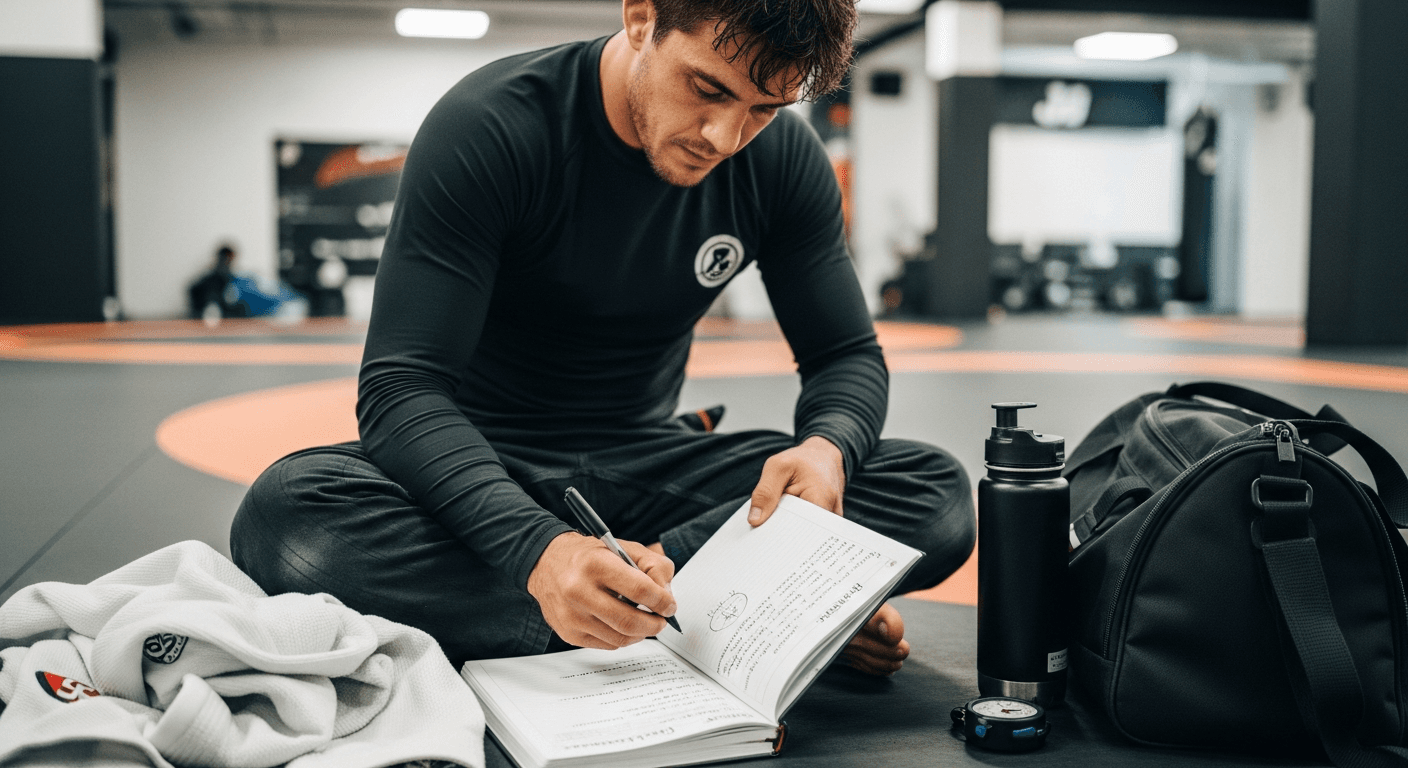
How Often Should You Train BJJ? A Practical Guide
Finding the right training frequency balances progress with recovery. Whether you're training twice a week or six days straight, here's how to dial in your schedule for sustainable growth.
The Physical and Mental Health Benefits of Brazilian Jiu-Jitsu
BJJ is more than a martial art — it's a full-body workout, a stress reliever, and a mental health practice wrapped in a community. Here's what the research and real-world experience reveal.
Comments (0)
Loading comments...