
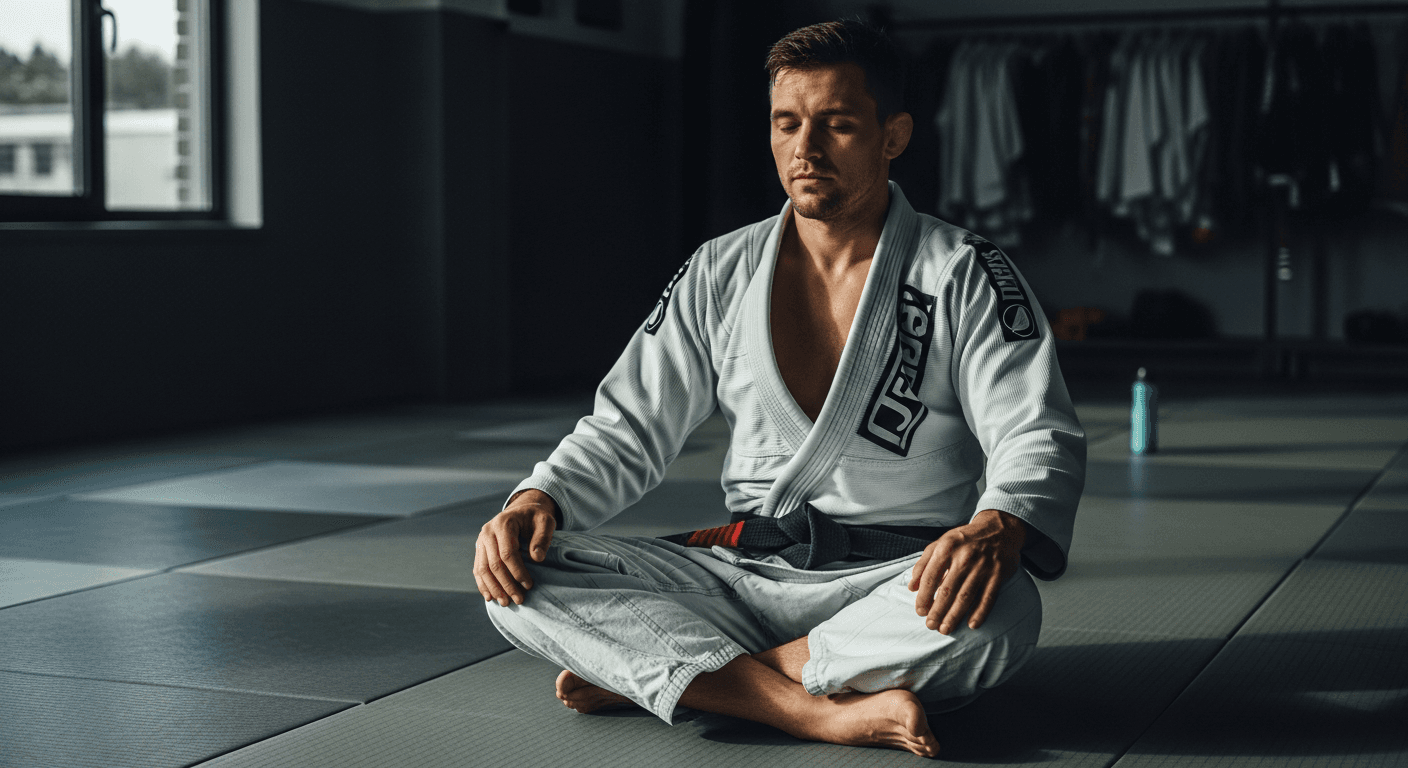
The Physical and Mental Health Benefits of Brazilian Jiu-Jitsu
The conversation started like it always does at a BJJ gym — on the bench between sparring rounds, two people catching their breath. A brown belt in his forties told me he'd started training because his therapist suggested finding a physical outlet for anxiety. Three years later, he'd dropped forty pounds, stopped taking sleep medication, and had a circle of friends he described as closer than family.
I've heard some version of this story at every gym I've visited. People come to BJJ for the technique or the self-defense angle, and they stay because of what it does to the rest of their lives. The health benefits — both physical and mental — are substantial, and they're supported by both research and a growing body of anecdotal evidence that's hard to ignore.
Physical Health Benefits
Cardiovascular Fitness
A typical BJJ session involves 60 to 90 minutes of sustained physical activity. The warm-up raises your heart rate through calisthenics and movement drills. Drilling keeps it elevated through moderate exertion. Rolling — live sparring — spikes it into high-intensity intervals.
Studies on combat sport athletes consistently show improved VO2 max, resting heart rate, and cardiovascular endurance compared to sedentary populations. BJJ's combination of aerobic baseline and anaerobic bursts creates a training stimulus similar to HIIT, but with a skill component that keeps you engaged.
Functional Strength
BJJ builds strength differently than weightlifting. Instead of isolating muscle groups, you develop whole-body functional strength through constant pushing, pulling, gripping, and stabilizing against a resisting opponent. Your core, back, hips, and grip become disproportionately strong relative to your overall musculature.
This functional strength translates directly to everyday activities. Picking up heavy objects, maintaining balance on uneven surfaces, getting up from the floor efficiently — all become easier as your grappling strength develops.
Flexibility and Mobility
Guard work — playing bottom positions with your legs active — develops hip flexibility that most adults lose by their thirties. Shrimping, technical stand-ups, and granby rolls build mobility patterns that keep your joints healthy and your movement efficient.
Practitioners who train consistently for two or more years typically show measurably improved hip and shoulder mobility compared to when they started.
Weight Management
BJJ burns approximately 500 to 700 calories per hour depending on body weight and training intensity. The combination of high energy expenditure and the motivation to perform well on the mats naturally leads many practitioners to improve their nutrition.
Unlike traditional gym workouts, BJJ doesn't feel like exercise — it feels like problem-solving with your body. This makes it easier to maintain consistency, which is the most important factor in long-term weight management.
Injury Resilience
Counter-intuitively, consistent BJJ training improves your body's ability to handle physical stress. Breakfalling — learning to land safely from throws and sweeps — translates directly to reducing injury risk from everyday falls, especially as you age. The joint conditioning from regular grappling also builds connective tissue resilience.
Mental Health Benefits
Stress Reduction
The most commonly cited mental health benefit among practitioners. BJJ forces absolute present-moment focus. You cannot think about work deadlines, relationship problems, or financial stress while someone is trying to choke you. Your brain enters a state of forced mindfulness.
This forced present-moment awareness has measurable effects. Cortisol levels drop. Post-training mood elevates. Many practitioners describe the hour after training as the calmest they feel all day.
Anxiety and Depression Management
A 2019 study published in the Journal of Science and Medicine in Sport found that martial arts practitioners reported lower levels of anxiety and depression compared to non-exercising controls. BJJ specifically is gaining attention from mental health professionals as a complementary intervention — not a replacement for therapy, but a powerful supplement.
The mechanism is multi-layered: physical exertion releases endorphins, consistent achievement builds self-efficacy, and the social connection combats isolation.
Confidence and Self-Efficacy
Surviving your first roll against a purple belt. Escaping mount for the first time. Successfully sweeping someone who's been tapping you for months. These small victories accumulate. They rewire how you see your own capability.
BJJ confidence isn't arrogance — it's the quiet assurance that comes from solving hard problems under pressure, repeatedly. This translates off the mats into professional settings, personal relationships, and general resilience.
Cognitive Function
BJJ is often described as physical chess. Every roll requires constant decision-making: read your opponent's movements, choose a response, execute under pressure, adjust when it fails. This cognitive load builds neural pathways that support problem-solving, pattern recognition, and adaptive thinking.
Several practitioners in cognitive research have noted improvements in focus, working memory, and decision-making speed that they attribute at least partly to their training.
Community and Social Connection
Loneliness is a growing public health concern. BJJ gyms provide something increasingly rare: a community of people who show up to the same place, work hard together, and build trust through shared physical challenge.
Your training partners become your support network. They know when you're having a bad day — they can feel it in your rolling. The bonds formed through mutual struggle are deep and lasting.
The Sleep Connection
One benefit that surprises many new practitioners is the dramatic improvement in sleep quality. BJJ training provides the kind of physical exhaustion that sleeping pills try to replicate — deep, whole-body fatigue that leads to rapid sleep onset and longer periods of deep sleep.
Multiple studies on exercise and sleep show that moderate-to-vigorous physical activity improves sleep duration, sleep quality, and reduces the time it takes to fall asleep. BJJ, with its combination of sustained exertion and intense bursts, fits this profile perfectly.
Beyond the physical exhaustion, the mental processing that BJJ requires seems to contribute to better sleep. Your brain has been problem-solving for an hour, processing new motor patterns, and managing the stress of sparring. By bedtime, both your body and mind are ready for genuine rest. Many practitioners report that training days produce their best sleep, and rest days feel comparatively restless.
BJJ for Specific Populations
BJJ for Older Adults
Practitioners who start in their 40s, 50s, and beyond often report the most dramatic quality-of-life improvements. Improved balance reduces fall risk. Maintained mobility keeps joints functional. The social component combats the isolation that often accompanies aging.
BJJ for Trauma Survivors
A growing number of trauma-informed BJJ programs teach grappling in environments designed for survivors of violence or abuse. The controlled physical contact, the empowerment of learning self-defense, and the emphasis on consent (you can always tap and stop) make BJJ uniquely therapeutic for this population.
BJJ for Veterans
Multiple veteran-focused BJJ programs have emerged, recognizing the art's potential for PTSD management, physical rehabilitation, and community reintegration. The structured environment, the camaraderie, and the physical demands provide a healthy outlet for veterans transitioning to civilian life.
Getting Started
The health benefits of BJJ compound over time, but they start from day one. Your first class will challenge your cardiovascular system, test your flexibility, and force you to focus completely on the present moment. By your tenth class, you'll notice changes in your energy, your mood, and your sleep.
Find an academy near you through our gym finder and take the first step. If you're interested in trying different training environments, our open mat listings can help you find welcoming sessions.
Track your health improvements alongside your training progress using the BJJ passport — having data on your consistency helps you see the connection between training frequency and the benefits you experience.
Injury Prevention and Joint Health
A common concern about BJJ is injury risk. While injuries can happen, regular BJJ training actually builds protective strength around vulnerable joints. Consistent grappling strengthens the muscles surrounding knees, shoulders, and hips in ways that mirror functional movement patterns — making you more resilient in daily life, not just on the mats.
The emphasis on controlled movement, proper falling technique (breakfalls), and partner awareness reduces injury risk compared to many contact sports. Experienced practitioners develop an intuitive sense of when a joint is approaching its limit, learning to tap early and protect themselves. This body awareness — knowing exactly where your limits are — extends to all physical activities and helps prevent injuries in everyday situations.
Joint mobility work embedded in most BJJ warm-ups — hip circles, shoulder rotations, neck mobility drills — maintains range of motion that many sedentary adults gradually lose. Over years of training, this consistent mobility work preserves the joint health that most people allow to deteriorate through inactivity.
The Cumulative Effect
What makes BJJ's health benefits so powerful is their cumulative nature. Each individual session provides a small dose of cardiovascular work, strength training, flexibility practice, mental engagement, and social connection. No single session is transformative. But stacked consistently over months and years, the compound effect is remarkable.
Practitioners who train three or more times per week for two or more years consistently report that BJJ has been the single most impactful health decision they've made. Not because the individual sessions are extraordinary, but because the practice is sustainable. People stick with BJJ in ways they don't stick with gym memberships, running programs, or diet plans.
The retention rate in BJJ — while still subject to significant white belt attrition — is notably higher than most fitness activities among people who make it past the six-month mark. The reason is simple: BJJ provides something that no treadmill can — intellectual challenge, social belonging, measurable skill development, and a community that holds you accountable to showing up. The health benefits are almost a side effect of a practice that people genuinely enjoy.
Understanding this cumulative dynamic can help you make decisions about your training. Consistency matters more than intensity. Three moderate sessions per week, sustained over years, will produce better health outcomes than six intense sessions per week that burn you out within months. Play the long game — your body, brain, and social life will thank you for decades.
Log your journey and watch your progress unfold with the BJJ training passport.
Frequently Asked Questions
Is BJJ safe for people with pre-existing health conditions?
Most people with manageable health conditions can train BJJ with modifications. Communicate any conditions to your coach and consult your doctor before starting. Many gyms accommodate practitioners with joint issues, heart conditions, and other concerns through modified training intensity.
How quickly do the mental health benefits appear?
Most practitioners report immediate mood improvements after their first few sessions. Sustained benefits like reduced anxiety and improved sleep quality typically become noticeable within four to six weeks of consistent training, attending two or more sessions per week.
Can BJJ replace therapy or medication?
No. BJJ is a powerful complement to professional mental health treatment, not a replacement. If you're managing anxiety, depression, or PTSD, continue working with your mental health provider. Many therapists actively encourage physical activities like BJJ as part of a comprehensive treatment plan.

Elena Torres
brown Belt
Brown belt and former sports journalist covering the BJJ competition circuit and gym culture.
Related Posts

Evening BJJ and bedtime: make room for both
Late BJJ class does not have to consume the whole night. Plan the commute, food, laundry, and screen time around the sleep window you actually have.

Two quiet minutes before BJJ, without the meditation hype
Try a modest attention practice before BJJ class. Two quiet minutes, natural breathing, and no promise of perfect calm or better competition results.

How Often Should You Train BJJ? A Practical Guide
Finding the right training frequency balances progress with recovery. Whether you're training twice a week or six days straight, here's how to dial in your schedule for sustainable growth.
Comments (0)
Loading comments...