
Cornering a BJJ match: say what the athlete can use
Quick answer: Useful BJJ cornering gives the athlete information they can act on in the position they occupy. Agree on cues before the match, confirm the event's coaching rules, and distinguish a verified score from your interpretation of the action. The corner should support decisions without trying to narrate every movement.
A coach can see an opening from the edge of the mat that the athlete cannot use from underneath an opponent. The missing grip, blocked hip, or trapped arm matters. Calling the name of a finish does not supply the position needed to reach it.
Cornering therefore begins with a limit: the person outside the match has useful information, but only part of the physical picture. The job is to make that information available at the right moment. More instructions do not automatically create more usable options.
Agree on the job before the athlete is called
Ask what the athlete wants to hear during the match. Some want time and score updates with occasional technical cues. Others want more active direction from the coach who knows their game. Establish that preference while there is time to discuss it, rather than guessing from their reaction under pressure.
Choose a small vocabulary that already exists in training. A cue should refer to something the athlete recognizes, not a new name introduced beside the competition mat. If a phrase has several possible meanings, replace it with a more precise one or practice it beforehand.
Clarify who will be the main voice if several teammates attend. Friends can support the athlete without all supplying instructions simultaneously. They should also know whether the athlete wants space before the match and who is handling practical details such as a bag or water bottle.
This conversation can be brief. Its purpose is to prevent avoidable confusion, not to construct a script for every position the match might reach. The athlete still has to respond to an opponent who did not attend the planning meeting.
Confirm where you are allowed to coach
Read the event's access policy before assuming that a coach can stand next to the mat. On its 2026 Japanese National event page, IBJJF explains that a designated coaching area, when available, requires valid black-belt membership. Without such an area, coaching takes place outside the barricaded competition area. Check the corresponding page for your own event.
Treat access, accreditation, and conduct as separate questions. Permission to enter a coaching area does not mean permission to walk onto the competition surface or challenge an official whenever you disagree. Find the organizer's procedure for questions and follow staff directions.
For children's events, read the age-specific coach and guardian provisions. Do not transfer an adult policy to a younger division. IBJJF also publishes a coach and parent conduct code that restricts inappropriate language and gestures and addresses interaction with officials.
If you will be coaching from farther away, plan for that constraint. A short recognizable cue may travel better than a detailed explanation. Do not promise the athlete that you can supply constant information from a place where you may not have a clear view.
Describe the available action, not the desired ending
A useful technical cue identifies a step the athlete can attempt now. In a hypothetical passing exchange, asking for a specific grip change may be more actionable than repeatedly demanding the pass. Whether that grip change is correct depends on the position and the athlete's system; it is not a universal instruction.
Before calling it, check what is actually visible. Is the relevant arm free? Has the opponent already changed the angle? Can the athlete move in the direction you mean? If you cannot see the necessary detail, avoid treating your assumption as certainty.
Do not layer several corrections together. The athlete cannot necessarily change a grip, reposition the head, move the hips, and hear a new scoring update at the same instant. Choose the information that matters first, then watch what happens before adding more.
This is also a reason to know the athlete's normal game. A technically possible route may be a poor instruction if they have never practiced it. Competition is a difficult place to introduce an unfamiliar sequence and expect immediate fluency.
Keep score information factual
Read the scoreboard carefully enough to know which side belongs to your athlete. Verify points, advantages, penalties, and the clock according to the event's system. If your view is obstructed, say that you cannot confirm the number rather than converting a guess into an instruction.
Separate what the board displays from what you think should have been awarded. Those are different statements. An athlete deciding how much risk to take needs the current official situation, even when the corner believes a previous exchange deserved a different score.
Use the organizer's appropriate channel for a scoring concern. Shouting a dispute throughout the next exchange may leave the athlete without useful information while the match continues. It can also create conduct problems under the event's rules.
Practice score communication during training rounds if the athlete wants it. A concise update should give enough context to be useful: the current deficit or lead and the time remaining. The broader scoreboard guide explains why a close match requires attention to more than the largest numbers on the display.
Use the pauses instead of filling every second
Silence can be appropriate when the athlete is already carrying out the agreed plan and no useful correction is available. The corner does not need to prove involvement through a continuous stream of words. Watch closely enough to recognize when the situation changes.
During a referee-directed pause, avoid assuming there is permission for a long conversation or physical contact. Follow the official's instructions. If a brief cue is allowed and useful, deliver it clearly without delaying the restart.
A practical corner plan might include:
The athlete's preferred name or attention cue.
A small set of familiar technical reminders.
The agreed frequency of time and score updates.
Who handles questions about the event's procedures.
That list is preparation, not a demand to speak at every interval. The position may require concentration rather than another reminder. Watch for evidence that the athlete has heard and used the information before repeating it.
If a cue consistently fails to produce a clear response, review it afterward. It may be too vague, badly timed, or simply difficult to hear. Increasing the volume is only one possible adjustment, and often not the most useful one.
Avoid coaching against the athlete's own judgment
The athlete has information you lack, including how a grip feels and whether a movement is available without forcing it. A command from the corner should not pressure someone to ignore a tap, continue through a concerning injury, or make a decision beyond their agreed limits.
If something appears wrong, use the event's established process to alert the official. Do not improvise medical advice from outside the mat. An appropriate medical professional should assess medical concerns, and the referee controls the match under the applicable rules.
Within ordinary technical exchanges, leave room for the athlete to choose another route. If they take a different opening and it is working, support the current action instead of insisting on the previous instruction because it was yours.
The relationship matters here. An athlete should be able to say afterward that a cue was confusing or unhelpful without defending their loyalty to the coach. That feedback is information about the communication system. Use it to make the next match easier to coordinate.
Debrief the communication as well as the result
Give the athlete a moment after the match before launching into corrections. Follow their preference for immediate feedback, especially if another match is approaching. A long technical review may be less useful than confirming the next call time and one adjustment they can remember.
Later, ask which instructions they heard. Then ask which ones made sense from inside the position. Those are separate questions: a clearly audible cue can still be impossible to act on. If video is available, compare the moment you spoke with the actual position.
Avoid judging a cue only by the final result. A sound instruction may not succeed against a good opponent. A poor instruction can be followed by a favorable scramble. Look at the decision it encouraged and the information available at that time.
Write down one communication change for the next event. That might be a clearer name for a grip, fewer repeated instructions, or more dependable clock updates. Review the match itself separately so the corner's performance does not disappear into a general conversation about winning or losing.
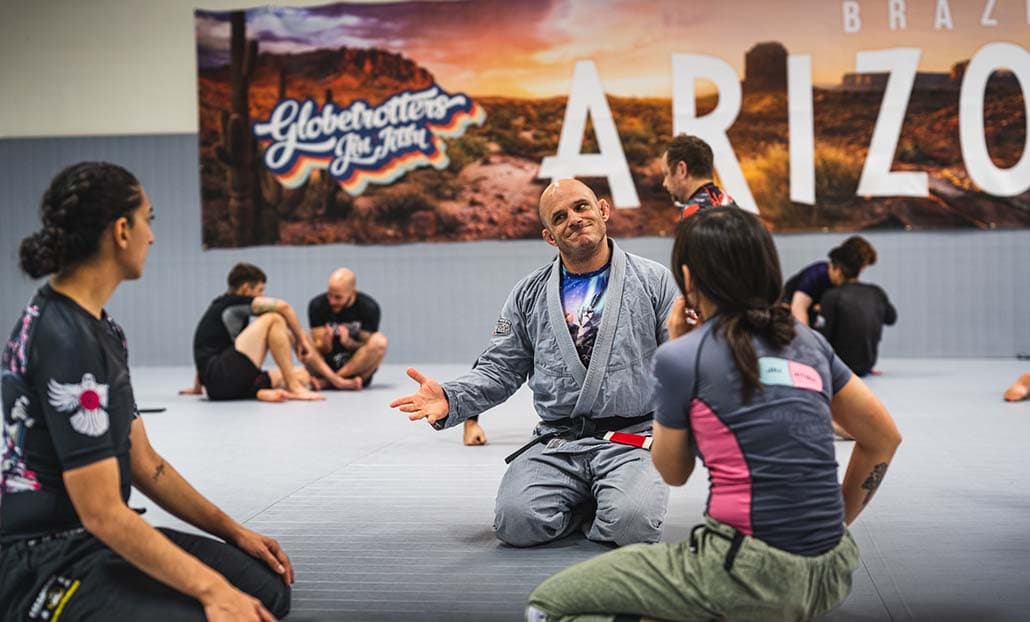
Main photo: BJJ Globetrotters; training instruction photograph, not a tournament corner.
The takeaway
Good cornering depends on preparation and restraint. Know the athlete's vocabulary, verify the event's access rules, and give information that belongs to the position in front of you. Accurate time and score updates can be more useful than an ambitious technical instruction delivered too late.
Afterward, check whether the athlete could hear and use what you said. Improve the cue where necessary. The corner's contribution should be measured by the clarity it provides, not by how much of the match it manages to fill with sound.
Prepare for the event together
Find upcoming BJJ tournaments, then read the organizer's coaching and access policies before making the team's match-day plan.
FAQ
Can anyone corner a BJJ match? The answer depends on the event's access and coaching rules. Check accreditation requirements and where coaching is permitted before assuming a teammate can enter the competition area.
Should the corner call every technique? Agree on the athlete's preferences beforehand. Frequent instructions are useful only when they are clear, relevant, and possible to act on.
What if the scoreboard looks wrong? Distinguish the displayed score from your interpretation and use the organizer's procedure for raising a concern. Keep the athlete informed about the current official situation.
How do you improve as a corner? Ask the athlete which cues they heard and understood, then review their timing against the match footage where available. Change one specific part of the communication for the next event.

Nina Okada
Nina Okada explains positions the way a good training partner does: one problem at a time, with the limits of the explanation said out loud. She is careful about the difference between what footage shows and what it only suggests.
Related Posts
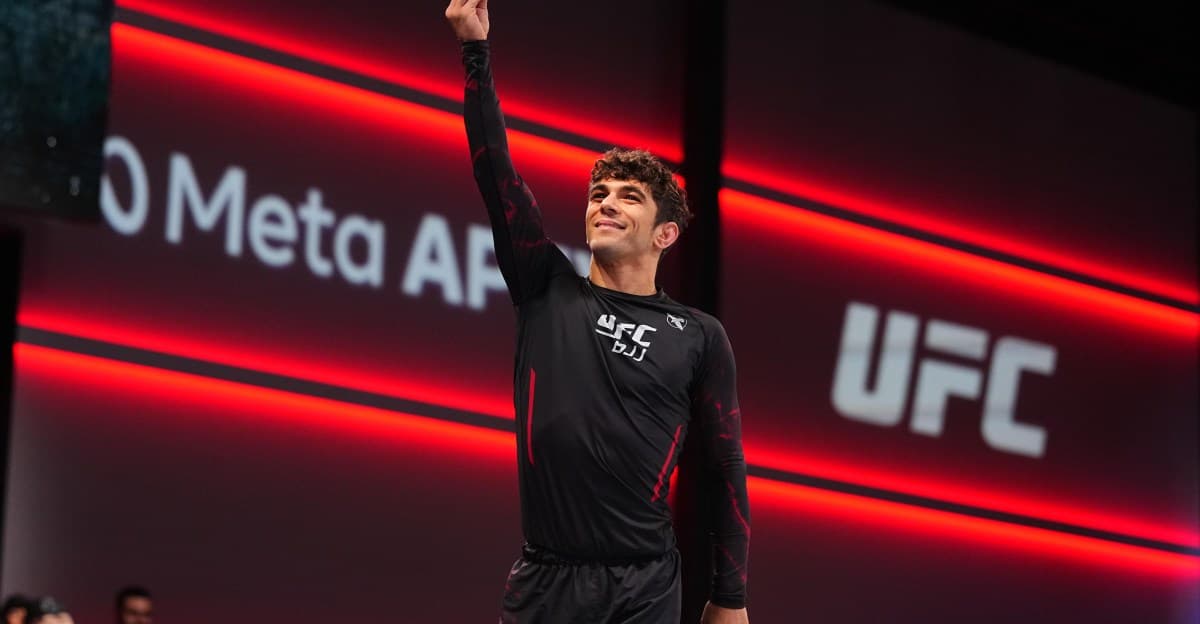
Mikey Musumeci gives up the belt to make room for MMA
Musumeci is vacating his UFC BJJ title to focus on MMA training. What he is leaving, what continues, and why the transition matters.
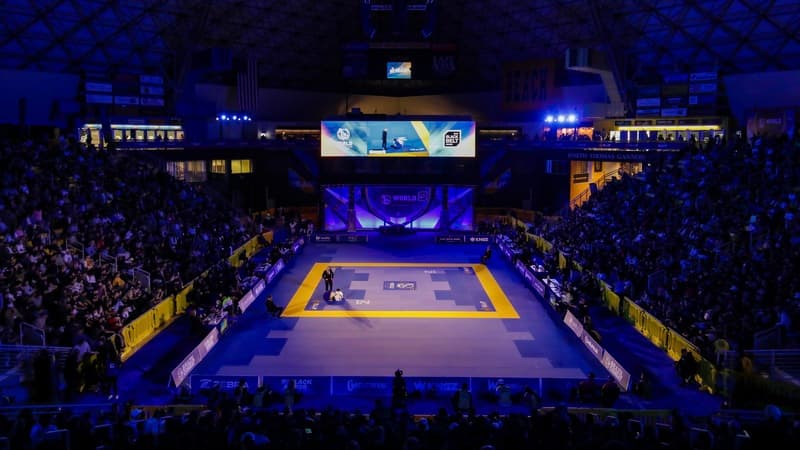
IBJJF membership: finish the paperwork before the deadline
IBJJF membership and tournament entry are separate steps. Plan documents, professor approval, renewals, and junior accounts before registration closes.
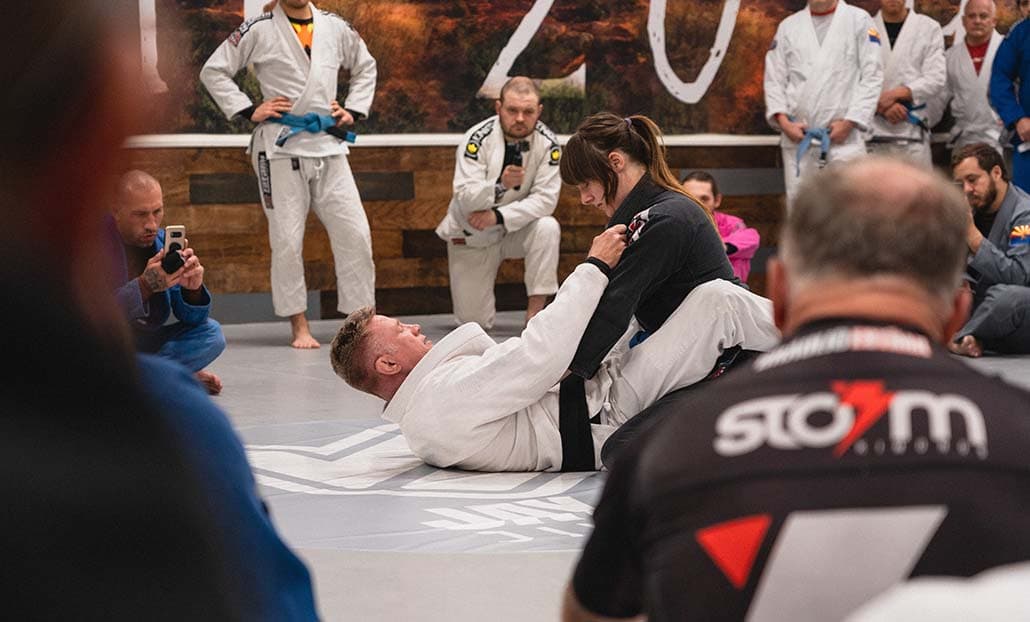
Choosing a BJJ seminar worth your time and travel
Choose a BJJ seminar by the subject, teaching format, access, and total cost. Know what to ask the host before buying a ticket.
Comments (0)
Loading comments...