
A tournament coach pass is a job description
Quick answer: A BJJ tournament coach pass may affect admission, access, or both, depending on the organizer. Check the event's requirements before travel and agree on who will cover each athlete. A credential gets you through a process; useful coaching still requires preparation, clear communication, and attention to the match.
A coach can reach the venue on time and still be in the wrong place when a student's match starts. The missing detail might be an admission requirement, a restricted competition area, or another teammate competing across the room.
Those are preventable problems when the team treats coaching as a job to organize. The pass is one part of that job. It is not a substitute for deciding who is responsible for whom.
Organizer examples below were checked on October 10, 2026, as an update to this article's March publication date. Use them to identify questions for your event, then confirm the current event-specific policy.
Separate admission from matside access
Being allowed into the building and being allowed beside the competition mat are different permissions. A spectator ticket may cover only the first. A coach credential may have conditions that do not apply to an ordinary spectator.
NAGA's official FAQ illustrates the distinction. It describes a coaches' chair for each competitor and separate criteria for complimentary coach admission. It also says a parent may coach from the chair while still needing spectator admission unless they meet the stated coach criteria.
Do not carry that arrangement to another organizer. Check the event you are attending. Ask what must be requested in advance, where credentials are collected, and whether the person needs identification, an account, or an academy connection.
Save the relevant reply or event instructions. That gives you something precise to consult if the process is unclear at the door. It does not authorize arguing past staff or entering a restricted area while the question is unresolved. Resolve access before the athlete needs you beside the mat.
Read the event notice, not just the general rules
An organization's broad rules may not contain every venue procedure. Entry points, collection desks, and identification checks can be described in a separate event notice. Read both before assigning somebody to coach.
For the 2026 Jiu-Jitsu Con, an IBJJF access notice directed competitors and coaches to a dedicated entrance and told them to have membership identification ready. That was guidance for that event. It should not be rewritten as a promise that every IBJJF tournament uses the same entrance arrangement.
The general lesson is to locate the operational information as well as the competition rules. A coach who knows the scoring system but cannot find the correct entry process still has an avoidable problem.
Check the notice again close to the event, particularly if the organizer has announced changes. Share the exact page with the other coaches instead of passing along a shortened version from memory. A team message saying the passes are sorted should identify who has them and what everyone else still needs to do.
Assign athletes before assigning chairs
A team can have enough credentials and still have too few available coaches. Two students may be called at the same time. One coach may be warming up to compete. Another may be responsible for a child who needs attention away from the mat.
Make a coverage plan before those conflicts appear. List the athletes, expected divisions, and the person responsible for watching each schedule. Identify a backup where possible. Do not assume the head instructor can see every mat simply because everyone trains under the same academy name.
Ask the athlete what they expect from the corner. Some want short positional cues. Others mainly need help tracking time and score. Agree on useful language in advance, especially if the coach is not someone they regularly train with.
If coverage is limited, say so honestly. A student can plan around knowing that a teammate may cover their first match. They cannot plan around a promise that quietly depends on the schedule never overlapping. The aim is a workable arrangement rather than a reassuring message with no person attached.
Follow the schedule as it changes
A printed estimate is a starting point, not a reason to stop checking. Assign one person to monitor the event's live scheduling system if the organizer uses one. Make sure athletes know how they will receive updates and where to meet the coach.
NAGA publishes a Smoothcomp guide for finding students' matches. It explains searching the brackets and schedule by club or individual athlete to see mat assignments and approximate times. That is a practical tool for locating the information, not a guarantee that an estimated time will remain fixed.
Keep a small set of details available:
Athlete name and the exact registered team name.
Current division, mat assignment, and estimated start.
The coach responsible and a backup contact.
The athlete's agreed meeting point before being called.
Charge the device you rely on and keep the relevant page accessible. A second person can help monitor updates, but avoid having several people issue conflicting instructions. The athlete should know which message to act on when plans change.
Matside access comes with a boundary
The space around a competition mat is controlled by the organizer. A pass does not make it an extension of the academy's bench. Follow the instructions about where to stand or sit, how many coaches are permitted, and when to leave.
Grappling Industries' published rules limit access within the barricaded area to the specified competitors and one coach per competitor, and require departure after a match unless the competitor is scheduled for the next one. Check the applicable version and event instructions before attending.
For a team, the practical consequence is straightforward: choose who will occupy the authorized coaching position. Other supporters can encourage from the permitted area without trying to create a second corner beside the first.
Do not make an athlete manage a dispute between their supporters and event staff. If an access issue arises, let the designated adult or coach address it through the proper channel. The competitor should be able to prepare for the match without wondering whether someone they brought is about to be removed from the area.
Give information the athlete can use
A coaching position is useful when the athlete can understand what comes from it. Agree on a few short cues before the event. Avoid introducing a new technical vocabulary while the athlete is already trying to solve a live exchange.
Distinguish observation from instruction. Reporting the remaining time is different from telling someone to attempt a particular movement. If you cannot see a detail clearly, do not fill the gap with confidence. A loud guess can be harder to ignore than a quiet one.
Keep the athlete's experience in view. A beginner may not be able to apply a complicated sequence just because the coach can describe it quickly. Choose information that connects to preparation already done in training.
After the match, let the athlete settle before delivering a complete analysis. Confirm immediate practical needs and the next match arrangement first. There will be time to discuss the technical decisions when both people can pay attention. A corner is there to help the competitor, not to demonstrate how much the person in the chair knows.
Close the loop after the result
A match ending does not necessarily end the coach's responsibility for the day. Check whether the athlete has another match, needs to report somewhere, or has a result question that belongs with event staff. Follow the organizer's process rather than relying on a teammate's interpretation.
If the registered division or record was wrong before the event, that should have been raised early. The tournament registration corrections guide explains why profile changes and event-entry corrections can be separate matters. Matside is a poor place to discover that nobody checked the entry.
For the team, note any coverage failure without turning it into a personal accusation. Was the schedule not monitored? Did two coaches assume the other had the athlete? Did a credential take longer to collect than expected? Those are specific problems that can be corrected next time.
Then acknowledge the work people did. A coach may spend a long day moving between matches without competing themselves. Clear arrangements about time, costs, and responsibilities make that contribution easier to repeat than an assumption that anyone wearing the academy shirt is always available.
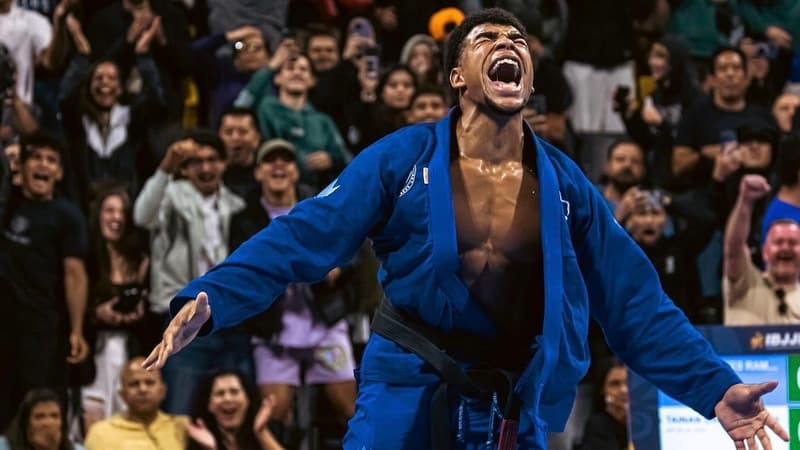
Main photo: IBJJF; illustrative archive photograph.
The takeaway
Sort out both access and coverage before the tournament. Confirm the event's admission and matside rules, identify the person responsible for each athlete, and keep the live schedule in view. A pass that belongs to nobody's clear plan is only a credential waiting for a problem.
Once beside the mat, provide useful information and respect the organizer's boundaries. The athlete should know who is there for them and what that person can realistically do. That clarity matters more than the number of supporters trying to squeeze into the same space.
Check the event before planning the corner
Find upcoming tournaments, then read the organizer's current event page for coach access, registration, and schedule instructions.
FAQ
Does a BJJ coach pass always mean free admission? No. The meaning and eligibility conditions depend on the organizer and event. Confirm whether a credential covers admission, matside access, or both, and what must be completed before arrival.
Can a parent coach a child at a tournament? Check the organizer's policy. NAGA's published FAQ permits parents in the coaching chair while distinguishing that role from eligibility for complimentary coach admission. Other events may use different requirements.
How many coaches can stand beside a BJJ mat? Follow the event's limit and staff instructions. Do not assume a whole team can enter a restricted area because one person has a pass. Assign the authorized corner position before the match starts.
What if two students compete at once? Use a prearranged backup or tell the athletes honestly about the coverage limitation. Monitor schedule changes and decide who goes where before both matches are called. A credential alone does not solve simultaneous commitments.

Tess Hanley
Tess Hanley reads the rulebooks, the entry fees and the fine print. When a federation or a gym changes something, her first question is who ends up paying for it.
Related Posts

Mikey Musumeci gives up the belt to make room for MMA
Musumeci is vacating his UFC BJJ title to focus on MMA training. What he is leaving, what continues, and why the transition matters.
IBJJF membership: finish the paperwork before the deadline
IBJJF membership and tournament entry are separate steps. Plan documents, professor approval, renewals, and junior accounts before registration closes.
Choosing a BJJ seminar worth your time and travel
Choose a BJJ seminar by the subject, teaching format, access, and total cost. Know what to ask the host before buying a ticket.
Comments (0)
Loading comments...