
Entered the wrong BJJ division? Fix the record early.
Quick answer: Correct a BJJ tournament registration as soon as you spot the mistake, using the event's approved process. Check the exact correction deadline, save confirmation, and verify the athlete list afterward. A later checkday may exist to verify earlier changes rather than accept a new one.
The wrong division can survive several perfectly successful steps. Payment goes through. The confirmation email arrives. Your name appears on the athlete list. None of those facts establishes that the selected weight, age, belt, or format is the one you intended.
Fixing the error starts with identifying who can change it and by when. A teammate's experience at another tournament may be reassuring, but it cannot extend the deadline for yours.
This guide separates the administrative jobs so you can act without turning a small mistake into a week of uncertainty. The linked platform and federation guidance was checked on October 10, 2026, as an update to this article's April publication date. Your specific event page remains the place to confirm its current terms.
Find the exact mismatch before sending a request
Open the registration record and compare it with what you intended to enter. Do this on a screen large enough to read the entire division label. A truncated mobile display can hide the part that matters.
Write down the current selection and the requested correction in full. For example, a hypothetical request might say that the record shows a gi entry when the intended purchase was no-gi. That is clearer than telling the organizer that the registration looks wrong.
Check the following fields together:
The event name, location, and competition date.
The athlete's identity and the account that holds the entry.
Format, experience or belt category, age group, and weight division.
Academy, affiliation, and payment status where those fields apply.
Do not change several entries by guesswork while trying to solve one problem. If you are unsure which division you are eligible for, ask the organizer and your coach. Correct information matters more than reaching the category that happens to have the most familiar names.
A registration mistake can also be an account mistake. Parents managing several children should confirm which child's entry is open before editing. The same care applies when an athlete has entered more than one format at the event.
Read the correction clock separately from the tournament date
The date on the poster tells you when competition happens. It does not tell you how long registration changes remain possible. Look for the event's correction, withdrawal, and verification dates rather than treating the final week as one continuous administrative window.
Save the relevant times with their stated time zone. A deadline expressed in the event's local time should not quietly become midnight where you live. Set a reminder early enough that a login issue or unanswered question still has room to be resolved.
The IBJJF championship help desk distinguishes the Athlete Correction Deadline, Professor Correction Period, and Registration Checkday. These have different purposes. Its guidance says the event page's relevant dates section identifies the applicable deadlines.
That distinction suggests a useful planning habit for any organizer: create a separate reminder for making a change and another for checking the result. Those are your own administrative safeguards, not a claim that every tournament provides the same windows.
If the published wording is ambiguous, ask before the earliest plausible deadline. Keep the answer. A screenshot of a generic frequently asked questions page is less useful than the terms attached to your particular event and a response addressing your entry.
A platform button does not set the organizer's policy
Smoothcomp's weight-class editing instructions describe logging in, opening the registration's edit option, selecting the desired class, and saving. The same guidance warns that the change must happen before the organizer closes that option.
This is a platform capability with an event-controlled limit. It should not be read as permission to change every field at every tournament until match day.
If the expected button is absent, first confirm that you are signed into the account that owns the entry and that you have selected the correct event. Then read the organizer's instructions. Repeatedly creating new registrations is not a good substitute for finding out what happened to the first one.
Avoid buying a second entry just to repair the first unless the organizer specifically directs that process and explains the payment consequences. Otherwise, you could create another problem involving duplicate records or fees.
After saving an allowed edit, reopen the registration. Check the value that is now stored rather than trusting the click itself. A screen that looked right before submission is not evidence of what the system accepted afterward.
IBJJF checkday is not a general second chance
The IBJJF first-championship guide explains that athletes can edit through their accounts by the Athlete Correction Deadline. After that, the Professor Correction Period provides a route through the professor's account. Its checkday instructions focus on verifying earlier corrections and dealing with specified single-bracket circumstances.
The guide does not present Registration Checkday as a fresh opportunity for ordinary new correction requests. Read the event's single-bracket options separately if that situation applies to you; they are not a general extension for everyone.
For a competitor, the practical consequence is straightforward: do not wait for the day whose name sounds most like registration review. Review your information when you enter, while the ordinary correction route is still available.
Our IBJJF membership guide covers a related but different administrative task. Membership information and an individual championship entry both deserve attention. Solving one should not lead you to assume that the other has updated in exactly the way you intended.
If a coach is needed for the correction, give them the full event details and the actual deadline. A message saying that you need help sometime this week leaves them without the information required to prioritize it.
Send a request someone can act on
Use the contact route published by the organizer. If it requires the registered email address, follow that instruction rather than asking a friend to send the request from an unrelated account. Do not post identity documents or private account details in public comments.
Keep the message compact. The recipient needs to locate the record, understand the mismatch, and know what you are requesting. A long explanation of your training camp can wait.
Include:
Your name and the event name, with a registration reference if available.
The current entry and the exact correction requested.
The relevant deadline and a screenshot if the organizer asks for one.
A request to confirm whether the change has been completed.
Describe an uncertainty as an uncertainty. If you are asking which category is permitted, do not phrase the message as if approval has already been given. Similarly, a request for a refund is separate from a request to change divisions unless the organizer's process explicitly combines them.
Keep replies in the same thread when possible. That lets the next person handling the issue see what has already been agreed. If you must use another channel, reference the earlier ticket instead of starting a contradictory request.
Verify the saved entry and the public list
A confirmation should end the guessing, not the checking. Return to the athlete record and the event's published list when the organizer says updates should appear. Look for the exact requested result.
Suppose an organizer confirms an academy correction, but the weight category remains wrong. That is a hypothetical example of why a broad message saying everything was fixed is not enough. Review all the fields you originally flagged, rather than stopping when one visible detail changes.
Take a fresh screenshot after the correction appears. Store it with the response and registration receipt somewhere you can access at the venue. This is a record of the transaction, not a guarantee that staff can override event rules if another problem emerges later.
Tell your coach when the final entry is confirmed. A division change may affect which bracket they monitor or when they expect to be available. Anyone helping you should be working from the current record rather than a screenshot taken the day you paid.
If the change is still absent after the stated processing window, follow up through the approved channel while a remedy remains available. Do not assume that an unread message has the same effect as a completed correction.
If the deadline has passed, ask what remains possible
A missed deadline changes the question. Instead of asking where the edit button went, ask the organizer whether any permitted option remains for your exact situation. Give accurate information, accept that the answer may be no, and involve your coach where the published procedure requires it.
Do not treat an anecdote about another athlete receiving an exception as a policy. The other case may have involved a staff error, a different event, or circumstances you do not know. An exception someone describes online cannot make your entry valid.
Keep administrative corrections separate from attempts to force yourself into an unsuitable weight category. This article is about records and deadlines, not weight cutting. Discuss health or weight-management questions with a qualified professional rather than treating a closed edit window as a reason to take risks.
If you decide not to compete, read the withdrawal and refund terms independently. Removal from a bracket, a credit, and a refund are different outcomes. Ask which one is being offered before assuming that leaving the event resolves the payment question.
Finally, record what failed in the process. A reminder immediately after registration may prevent the same problem more reliably than a complicated tournament checklist that nobody opens.
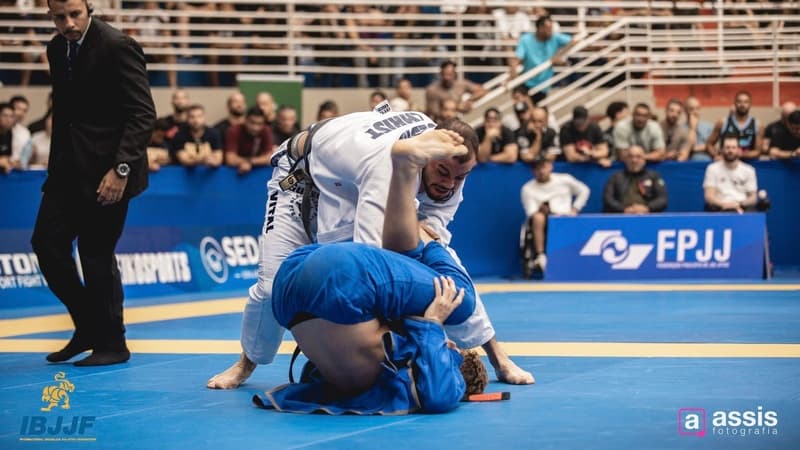
Main photo: A. Assis Fotografia / IBJJF; archive competition photograph.
The takeaway
The useful moment to check a BJJ tournament entry is immediately after registration, while there is still time to fix it. Identify the exact mistake, use the organizer's process, and confirm the stored result. Payment and a familiar name on a list are not substitutes for that review.
Treat each administrative date as a separate job. Make the correction before its deadline, then verify it when the organizer tells you to. If the window has closed, ask what is permitted without assuming the venue staff will be able to rebuild your entry on competition morning.
Check the event before you enter
Browse upcoming tournaments on Let's Roll, then read the organizer's registration and correction terms before completing your entry.
FAQ
Can I change my BJJ weight class after registering? Often there is a correction process, but its availability depends on the organizer and deadline. Read the specific event instructions and verify the result after making an allowed edit.
Does Smoothcomp decide my tournament's change deadline? Its guidance says the organizer controls when weight-class editing closes. The platform's edit instructions do not replace the event's policies.
Is IBJJF Registration Checkday the normal correction deadline? No. IBJJF distinguishes the athlete and professor correction periods from checkday. Checkday includes verification of earlier changes and specified single-bracket procedures; it is not a general new-correction window.
What should I do if my requested correction does not appear? Check the organizer's stated processing time, then follow up through its approved channel with the original request and confirmation. Do so before any remaining verification deadline expires.

Tess Hanley
Tess Hanley reads the rulebooks, the entry fees and the fine print. When a federation or a gym changes something, her first question is who ends up paying for it.
Related Posts

Mikey Musumeci gives up the belt to make room for MMA
Musumeci is vacating his UFC BJJ title to focus on MMA training. What he is leaving, what continues, and why the transition matters.
IBJJF membership: finish the paperwork before the deadline
IBJJF membership and tournament entry are separate steps. Plan documents, professor approval, renewals, and junior accounts before registration closes.

Choosing a BJJ seminar worth your time and travel
Choose a BJJ seminar by the subject, teaching format, access, and total cost. Know what to ask the host before buying a ticket.
Comments (0)
Loading comments...