
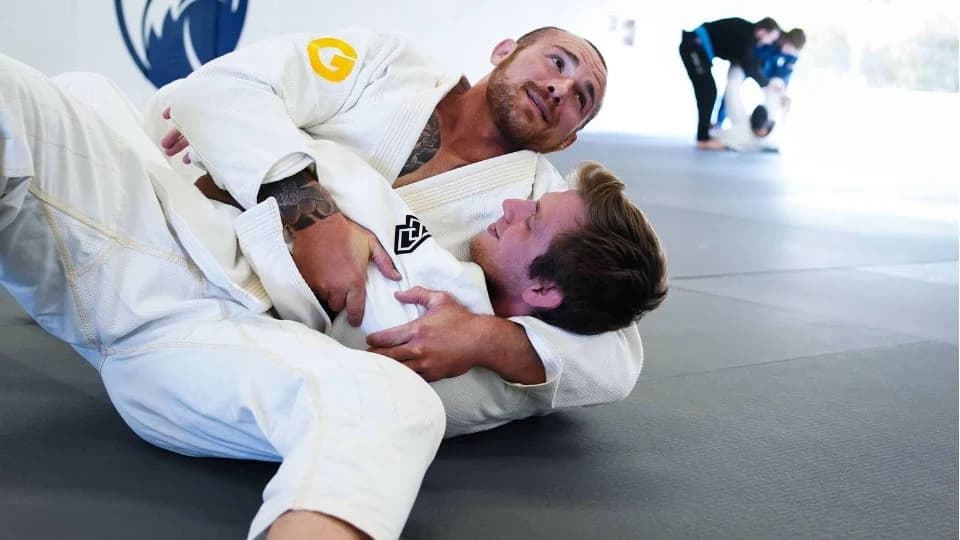
A Beginner's Guide to Brazilian Jiu-Jitsu
The first time you walk into a BJJ academy, your senses get hit all at once. The tatami mats feel firm but forgiving under bare feet. Someone is drilling armbars in the corner. A group of blue belts are laughing about something that happened during last night's sparring. The coach nods at you from across the room. You have no idea what you're doing, and that's exactly where everyone starts.
I've been coaching BJJ for over eighteen years, and I still remember my first day — white gi two sizes too big, standing near the wall, watching upper belts move in ways that seemed like a foreign language. If you're reading this, you're probably at that same stage. Good. This guide is for you.
What Is Brazilian Jiu-Jitsu, Really?
Brazilian Jiu-Jitsu is a grappling martial art that emphasizes ground fighting. The core idea is simple: use leverage and technique to control a larger, stronger opponent, and finish the fight with a submission — a joint lock or a choke. No punching. No kicking. Just problem-solving with your body.
BJJ grew out of judo and Japanese jiu-jitsu, adapted by the Gracie family in Brazil during the early 20th century. Hélio Gracie, smaller than most of his opponents, refined techniques that let a smaller person survive and win against bigger attackers. That philosophy still drives the art today. The Gracies proved their system in challenge matches and early mixed martial arts events, demonstrating that a skilled grappler could defeat much larger strikers on the ground.
Unlike striking arts, BJJ lets you train at full intensity without significant injury risk. When you're caught in a submission, you tap — a quick double-pat on your partner's body or the mat — and reset. This is why BJJ has one of the highest retention rates of any martial art. You can go hard every session and still show up to work the next day.
The depth of BJJ is what hooks most people. It's often called human chess because the combinations of positions, transitions, and submissions create nearly infinite problem-solving scenarios. After eighteen years, I still encounter positions I've never seen before. The learning never ends, and that's precisely what makes the art so compelling for people who need intellectual engagement alongside their physical activity.
What to Expect in Your First Class
A typical BJJ class follows a reliable structure. Understanding it takes away some of the first-day nerves.
Warm-Up (10–15 Minutes)
Most classes start with movement drills: shrimping (hip escapes), forward and backward rolls, bear crawls, and technical stand-ups. These aren't just warmups — they're foundational movements you'll use in every roll. Don't worry if they feel awkward at first. Everyone stumbles through their first shrimp.
Technique (20–30 Minutes)
The coach demonstrates a technique or a short sequence. You'll pair up with a partner and drill it. This is where learning happens. Pay attention to details — hand placement, hip angle, weight distribution. Ask questions. Good training partners want you to learn, not just go through the motions.
Positional Sparring or Live Rolling (20–30 Minutes)
Sparring is where BJJ comes alive. In positional sparring, you start from a specific position (guard, mount, side control) and work to advance or escape. Live rolling is free sparring — start from standing or kneeling, and go for five or six minutes.
As a brand-new student, your coach might have you sit out the first few sparring rounds and watch. That's normal. When you do start rolling, you'll feel overwhelmed. Experienced partners will work with you, not against you. Trust the process.
What to Wear and Bring
Gi class: A BJJ gi (kimono). Most academies sell or lend loaners for your first day. Wear a rash guard or t-shirt underneath.
No-gi class: Board shorts or athletic shorts (no pockets, no zippers) and a fitted rash guard or compression shirt.
Hygiene essentials: Short fingernails and toenails. No jewelry. Shower before class if possible. Bring a towel and flip-flops for walking off the mats.
Water: Bring a water bottle. You'll need it.
Leave your ego at the door — literally. The mats are an equalizer. Your job title, your bench press, your background — none of it matters when someone half your size slides into an armbar.
BJJ Etiquette: The Unwritten Rules
Every gym has its own culture, but some things are universal.
Tap early and often. There's no shame in tapping. It's how we train safely. If something hurts or you can't breathe, tap.
Shake hands before and after every roll. A fist bump or a slap-and-bump is the standard greeting on the mats.
Keep your nails trimmed. Long nails scratch training partners and cause skin infections.
Don't coach unless asked. If someone is drilling, let them work through mistakes unless they specifically ask for help.
Wash your gear after every session. Nothing clears a mat faster than a stinky gi.
Respect the tap. When someone taps, you let go immediately. No exceptions.
Understanding the Belt System
BJJ uses a colored belt system to mark progression: white, blue, purple, brown, and black. Most people spend 1.5 to 3 years at each belt level. Getting a black belt typically takes 8 to 15 years of consistent training. There are no shortcuts.
Don't chase belts. They'll come when you're ready. Focus on the work — the drilling, the sparring, the small improvements that compound over months and years. The belt just acknowledges what you've already earned on the mats. You can learn more about the entire progression in our detailed belt system breakdown.
How to Find the Right Gym
Not every gym fits every person. Here's what matters:
Instructor credentials: Is the head instructor a legitimate black belt with a clear lineage? Ask.
Class schedule: Does the schedule work with your life? Consistency matters more than intensity.
Culture: Visit and watch a class. Are students friendly? Does the coach give individual attention? Is the atmosphere competitive, casual, or somewhere in between?
Cleanliness: Check the mats, the bathrooms, the changing areas. A clean gym is a safe gym.
Trial classes: Most gyms offer a free trial. Take advantage of it before committing.
If you're looking for academies near you, check out our gym finder tool to browse over 4,000 BJJ schools across the country.
Common Beginner Concerns
"I'm Out of Shape"
Good news: you don't get in shape to start BJJ. You start BJJ to get in shape. Every black belt in the room was once a sweaty, exhausted white belt who thought about quitting after the warm-up. Show up. The fitness follows.
"I Don't Want to Get Hurt"
Injury rates in BJJ are lower than in most contact sports. Tap early when you're caught, communicate with your partners, and avoid rolling with reckless beginners when possible. The biggest injury risk for new students is ego — trying to muscle through positions instead of moving technically.
"Everyone Will Be Better Than Me"
Yes. And that's the point. You learn by being challenged by people who know more than you. Every upper belt was once in your exact position. Most of them remember what it feels like, and they'll help you along.
Your First Month: What to Focus On
Don't try to learn everything at once. In your first month, focus on three things:
Survival: Learn to defend from bottom positions. The closed guard and the shrimping escape from mount will be your best friends.
Framing: Use your arms and legs to create distance and prevent your partner from pinning you. Frames are the foundation of defense.
Breathing: It sounds obvious, but new students hold their breath constantly during rolls. Breathe. Relax. You'll last longer and think more clearly.
After a month, you'll notice something shift. Positions that felt impossible will start to make sense. You'll recognize techniques before they're fully applied. This is the hook that keeps people training for decades.
The Mental Side of Starting BJJ
Nobody talks enough about the mental challenge of being a brand-new white belt. You're going to feel incompetent — repeatedly, intensely, and in front of other people. This is uncomfortable, and it's supposed to be.
The students who succeed aren't the most athletic or the most coordinated. They're the ones who can sit with discomfort and keep showing up. There's a quiet toughness required to walk back into a room where you got tapped fifteen times last session. Developing that toughness is one of the most valuable things BJJ offers, and it translates directly into how you handle challenges outside the gym.
Give yourself permission to be bad at something. In a culture that celebrates instant mastery and natural talent, BJJ teaches you that meaningful skill takes years of deliberate, often frustrating practice. That lesson alone is worth the monthly dues.
The BJJ Community
What keeps most people in BJJ isn't the techniques — it's the people. Your training partners become some of your closest friends. You'll share sweat, frustration, breakthroughs, and the quiet camaraderie that comes from doing something hard together, day after day.
If you're visiting a new city, bring your gi. Drop-in sessions and open mats are a great way to meet local grapplers and experience different coaching styles. BJJ people are some of the most welcoming athletes you'll ever meet.
Getting Started Today
Stop researching and start training. Find a gym, sign up for a trial, and walk through the door. Your first class will be awkward. Your second will be slightly less awkward. By your tenth class, you'll wonder why you waited so long.
BJJ is one of the few activities where the hardest part is showing up. Everything after that — the techniques, the conditioning, the friendships, the personal growth — builds itself. The mats are waiting.
Ready to find a gym? Use our BJJ gym directory to search over 4,000 academies and start your journey today.
Frequently Asked Questions
How long does it take to get a blue belt in BJJ?
Most students earn their blue belt after 1 to 2 years of consistent training, typically attending 3 to 4 classes per week. Promotion timelines vary by gym and individual progress, but focusing on defense and basic sweeps will accelerate your development.
Is BJJ safe for older adults?
Absolutely. Many practitioners start in their 30s, 40s, and even 50s. The key is choosing training partners carefully, tapping early, and communicating any physical limitations to your coach. BJJ is one of the most adaptable martial arts for different body types and fitness levels.
Do I need to be flexible to start BJJ?
No. Flexibility helps but isn't a prerequisite. Many positions require hip mobility, which develops naturally through training. Basic stretching after class will improve your range of motion over time. Don't let stiffness keep you off the mats.
What's the difference between gi and no-gi BJJ?
Gi BJJ uses a traditional kimono (gi) that allows grip-based techniques on the collar, sleeves, and pants. No-gi uses rashguards and shorts, emphasizing body locks and underhooks. Most beginners benefit from starting with gi training since it teaches precision and patience.

Marcus Delgado
black Belt
Black belt with 18 years on the mats. Head instructor and lifelong student of the gentle art.
Related Posts
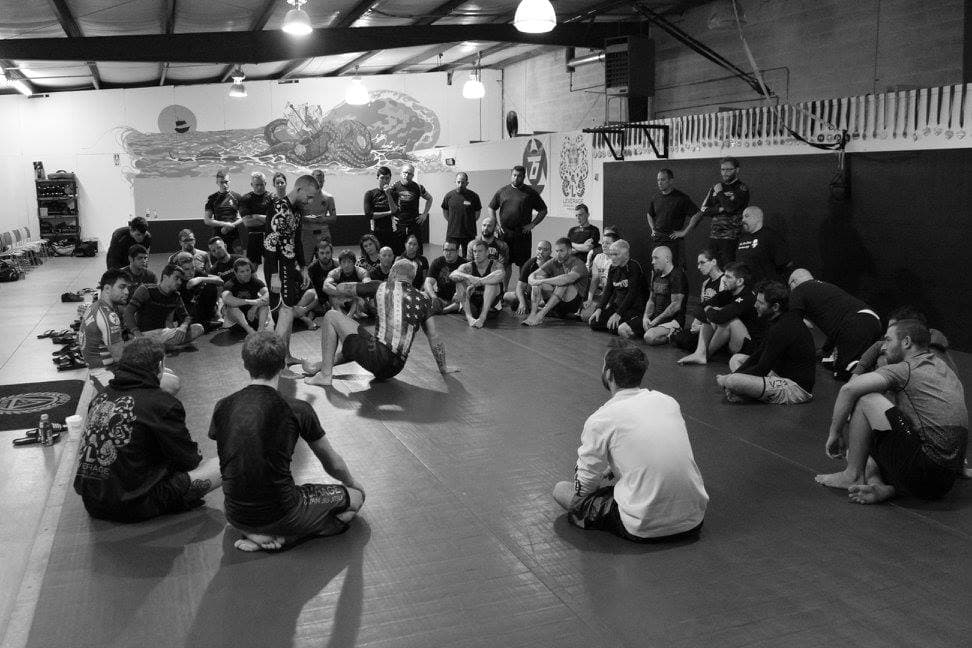
Covering Your First BJJ Class Without Overteaching
Cover an adult BJJ class with a plan agreed by the head coach. Keep the lesson focused, supervise partners, and leave clear handover notes afterward.

What to Do After a BJJ Seminar: A One-Week Follow-Up
Turn a BJJ seminar into a useful week of practice. Organize your notes, mark missing details, choose one task, and follow the host's recording rules.
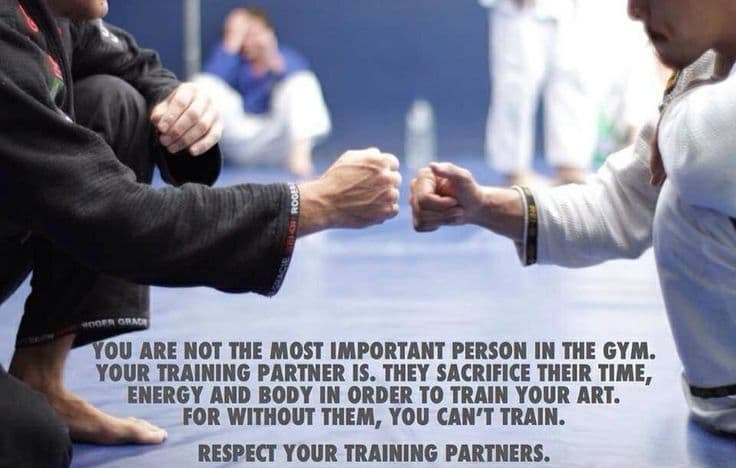
Better BJJ Rounds When Your Partner Is a Different Size
A weight gap changes a BJJ round. Use clear starting positions, agreed tasks, and controlled resets so training partners of different sizes get useful work.
Comments (0)
Loading comments...