
Back Control in BJJ: Taking It, Keeping It, Escaping It
Quick answer: Back control is the strongest position in jiu-jitsu — you can attack your opponent's neck while they can't see you, reach you, or hit you back. It's held with a seatbelt grip (one arm over the shoulder, one under the armpit) plus hooks or a body triangle, and it scores maximum points everywhere. Escaping is a hand-fighting problem before it's a movement problem: protect your neck first, then clear the top-side arm and work your shoulders to the mat. Escape early — the deeper the control gets, the worse your odds.
Every position in jiu-jitsu is an argument about angles and limbs. Back control ends the argument.
Here's why it's the king position, how it works, and — since you'll spend plenty of time on the wrong side — how to get out with your neck intact.
Why the back is the king position
From behind, you can attack — chokes above all — while your opponent can't see your grips or bring their strongest tools to bear. Mount is dominant, but a mounted opponent can at least see the attacks coming. From the back, they're defending by feel, half-blind.
The numbers agree. Back control scores the maximum 4 points under IBJJF rules, and the rear naked choke is consistently among the sport's highest-percentage finishes — in gi, no-gi, MMA, and self-defense alike. In our positions guide it sits at the top for a reason.
If you think, you are late. If you are late, you use strength. If you use strength, you tire. And if you tire, you die. — Saulo Ribeiro
Nowhere is that truer than back defense, where hesitation converts directly into chokes.
The anatomy of control
Back control is really two systems working together:
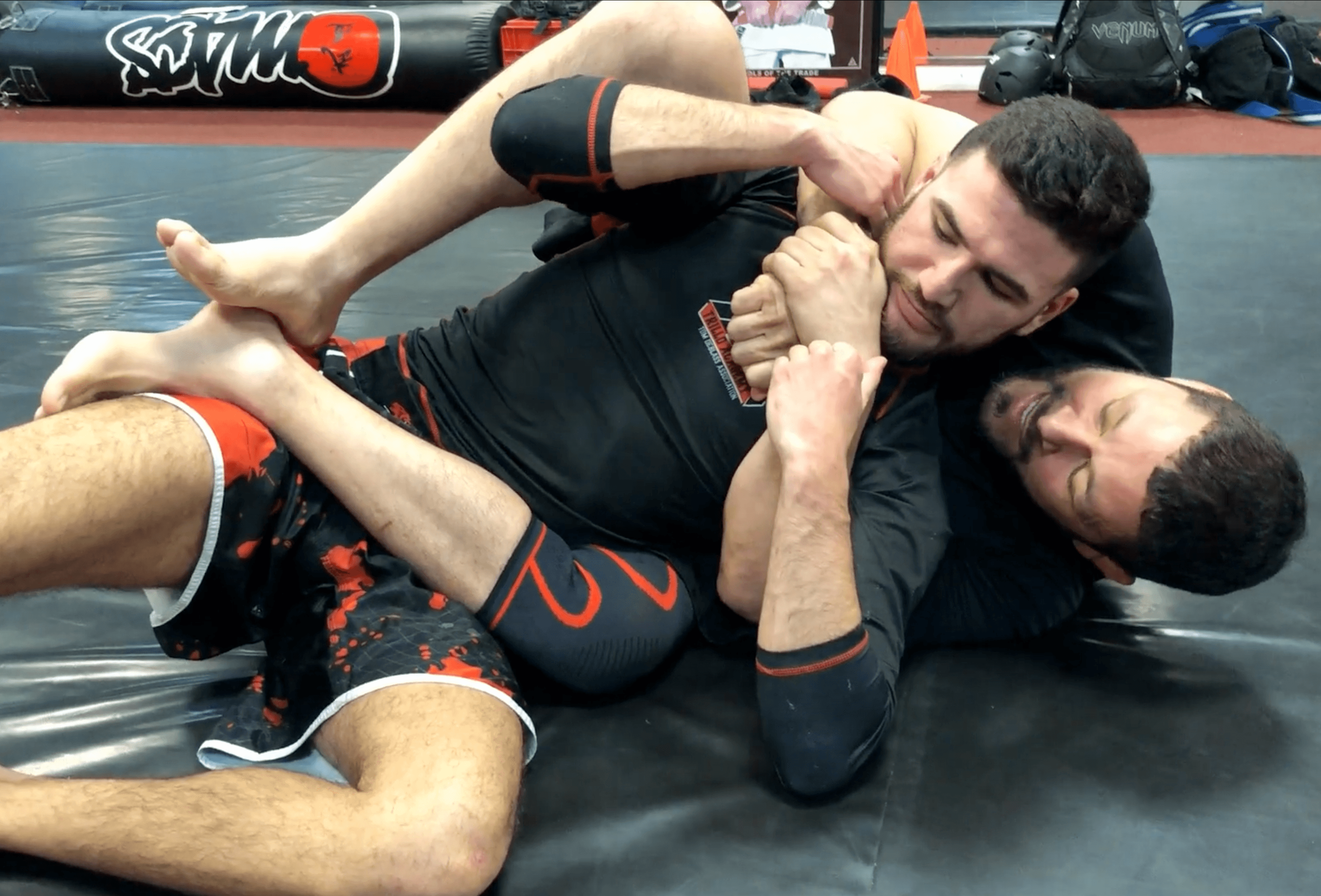
The seatbelt controls the torso. One arm over the shoulder, one under the armpit, hands clasped at the chest; the over-the-shoulder arm is the choking arm. A good seatbelt keeps your chest glued to their back through every scramble.
Hooks control the hips. Both feet inside the thighs stop your opponent from turning to face you. The critical safety rule: never cross your ankles in front of their waist — it's a foot lock waiting to happen.
The body triangle is the upgrade. One leg across the waist, ankle locked behind your own knee. It trades mobility for crushing, exhausting control.
Conceptually: chest first, hips second, finishing grips last. People lose the back by chasing the choke before the control is settled.
Taking the back
Most back takes come through a few doors: an opponent turning away under mount or side control pressure — the most common route at every level; scrambles where you win the race to the hips; arm-drag and gift-wrap setups; and, at higher levels, leg-entanglement exchanges.
The pattern worth noticing: the back is usually given, not taken — someone turns away from a bad position to relieve pressure. That's the first lesson of defense: turning away is how you arrive there.
Keeping it
Beginners lose the back in seconds; good players keep it for whole rounds. The difference is priorities: chest connection through every movement, following with the hips rather than clinging with the arms, and patience about the finish. A settled seatbelt and a slow hand fight produce the choke eventually; rushing it is how the position gets lost.
If your opponent starts winning the escape, don't ride it into nothing — convert to mount and keep top position.
Escaping: hand fight first, always
Beginners get this exactly backward. The instinct is to move — buck, spin, run — but movement with an unprotected neck just feeds the choke. Back escapes are a hand-fighting problem before they're a movement problem:
Protect the neck first. Hands up, chin down, fight the choking arm with both hands if needed. You can survive back control for a long time; you can't survive a locked-in choke.
Win the top-side arm. Strip or pin the hand of the arm coming over your shoulder — that's the choking arm. Control it and the position's teeth are pulled.
Get your shoulders to the mat. Work toward the open side (away from their underhook) until their top hook loses its bite.
Clear the leg and turn. Kick free of the bottom hook, clear their knee line, and turn in to their guard — or better, come up on top.
Boring order of operations, but it's the difference between escaping and tapping mid-escape.
Early beats late
The most important defensive idea isn't a technique — it's timing. The moment someone gets chest-to-back contact with one hook, your escape odds are decent. Once both hooks and a settled seatbelt arrive, they drop. Against a body triangle and a matured hand fight, you're playing the lottery.
So spend your energy at the boundary: fight the seatbelt before it locks and the first hook before the second arrives. Late defense against good back control mostly means choosing which choke you tap to.
The takeaway
The back is the king position because it offers everything — points, finishes, safety — and concedes nothing. Hold it with chest connection and patient hooks, take it when opponents turn away from pressure, and defend it in the right order: neck, hands, shoulders, legs.
And accept the apprenticeship: you'll be choked many times on the way to being hard to choke. Everyone was.
Positions are learned under pressure
You can't learn the hand fight from an article — you need a training partner honestly trying to strangle you. Find a BJJ gym near you on Let's Roll → and get your reps on both sides of the king position.
FAQ
Why is back control considered the best position in BJJ? Because you can attack the neck while your opponent can't see, reach, or effectively counter you, and it scores maximum points in competition. The rear naked choke from there is one of the highest-percentage finishes in grappling, from white belt to ADCC.
What is the seatbelt grip? One arm over your opponent's shoulder and one under the opposite armpit, hands clasped at their chest. It's the core upper-body control of the back position — it keeps your chest connected to their back through scrambles, and the over-the-shoulder arm becomes the choking arm.
Should I cross my ankles when I have someone's back? No — crossing your ankles in front of their waist lets your opponent trap your feet and apply a painful ankle lock. Use proper hooks inside the thighs or graduate to a body triangle.
What's the first step to escaping back control? Protect your neck and win the hand fight — specifically, control the arm coming over your shoulder before you attempt any movement. Only then work your shoulders to the mat on the open side, clear the hooks, and turn in.
Related Posts

Mikey Musumeci gives up the belt to make room for MMA
Musumeci is vacating his UFC BJJ title to focus on MMA training. What he is leaving, what continues, and why the transition matters.
IBJJF membership: finish the paperwork before the deadline
IBJJF membership and tournament entry are separate steps. Plan documents, professor approval, renewals, and junior accounts before registration closes.
Choosing a BJJ seminar worth your time and travel
Choose a BJJ seminar by the subject, teaching format, access, and total cost. Know what to ask the host before buying a ticket.
Comments (0)
Loading comments...