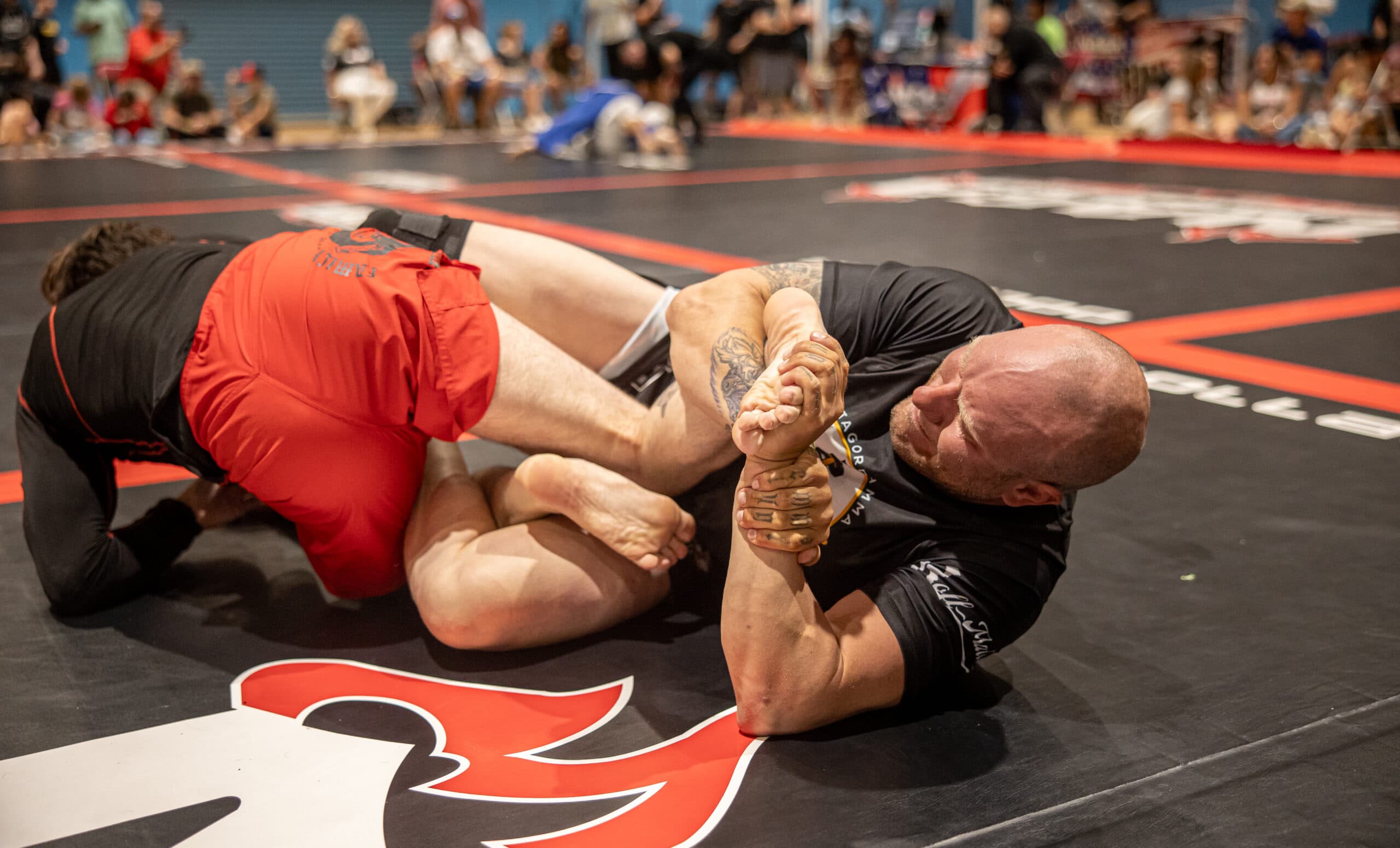
Organized by NAGA
October 3, 2026 brings NAGA's Grappling Championship to San Jose, with gi and no-gi divisions across every belt level and absolute brackets for top competitors. The event is a regular stop on NAGA's Northern California tournament calendar.
NAGA brings its grappling circuit to San Jose, running divisions the way it has for nearly three decades: skill-level brackets -- Beginner, Intermediate, Advanced, and Expert -- rather than a strict belt system, open to competitors from any grappling background, not just BJJ. Gi divisions follow standard BJJ rules, while no-gi runs under NAGA's own, more permissive ruleset that allows techniques like leg locks not always seen in traditional BJJ competition. The San Jose Grappling Championship is set for Saturday, October 3, 2026, with gi, no-gi, and Absolute divisions for ages 3 through 63 and up. Entry fees are tiered, cheaper for early registration and pricier closer to the event, and adult division winners take home a NAGA championship belt. Register through naga.smoothcomp.com.
NAGA (North American Grappling Association) is a submission grappling and BJJ tournament promotion founded in 1995 by Kipp Kollar. One of the oldest and highest-volume tournament circuits in the sport, it runs gi and no-gi events across the US nearly every weekend, with divisions from age 4 through adult, using its own Beginner/Intermediate/Advanced/Expert skill-level system for no-gi divisions.
NAGA (North American Grappling Association) runs one of the largest grappling tournament circuits in the world, with gi and no-gi divisions for kids, teens, adults, and masters at every event. Divisions are grouped by age, weight, and experience level rather than strictly by belt in no-gi, and novice kids divisions do not allow submissions — the legal-technique list expands as competitors age up and move to more advanced divisions.
The no-gi divisions use NAGA's own ruleset, which differs from IBJJF scoring in a few important ways: takedowns and sweeps score 2 points (with extra points when a sweep finishes in a dominant position), and submission attempts themselves can score 1–2 points depending on how close they come to finishing. There are no advantages — if a match is tied, the referee decides it on aggression and initiation, rewarding whoever pushed the action hardest.
Gi divisions run under a more traditional points structure closely based on standard IBJJF-style scoring, so gi competitors will find the positional point values familiar. Because the gi and no-gi rules genuinely differ, competitors entering both should read both sections of the NAGA rulebook.
Always confirm the official rulebook before you compete — organizations update rules between seasons. See the official event page for current rules.
No results logged yet. Results show up here once competitors log them after the event.
Looking for a place to train before or after the tournament?
Add this tournament to your passport so you can log your result after the event. (You still need to register with the organizer separately.)
Is this your tournament? Update your listing.
© 2025 BlueHouse Capital LLC. All rights reserved.