
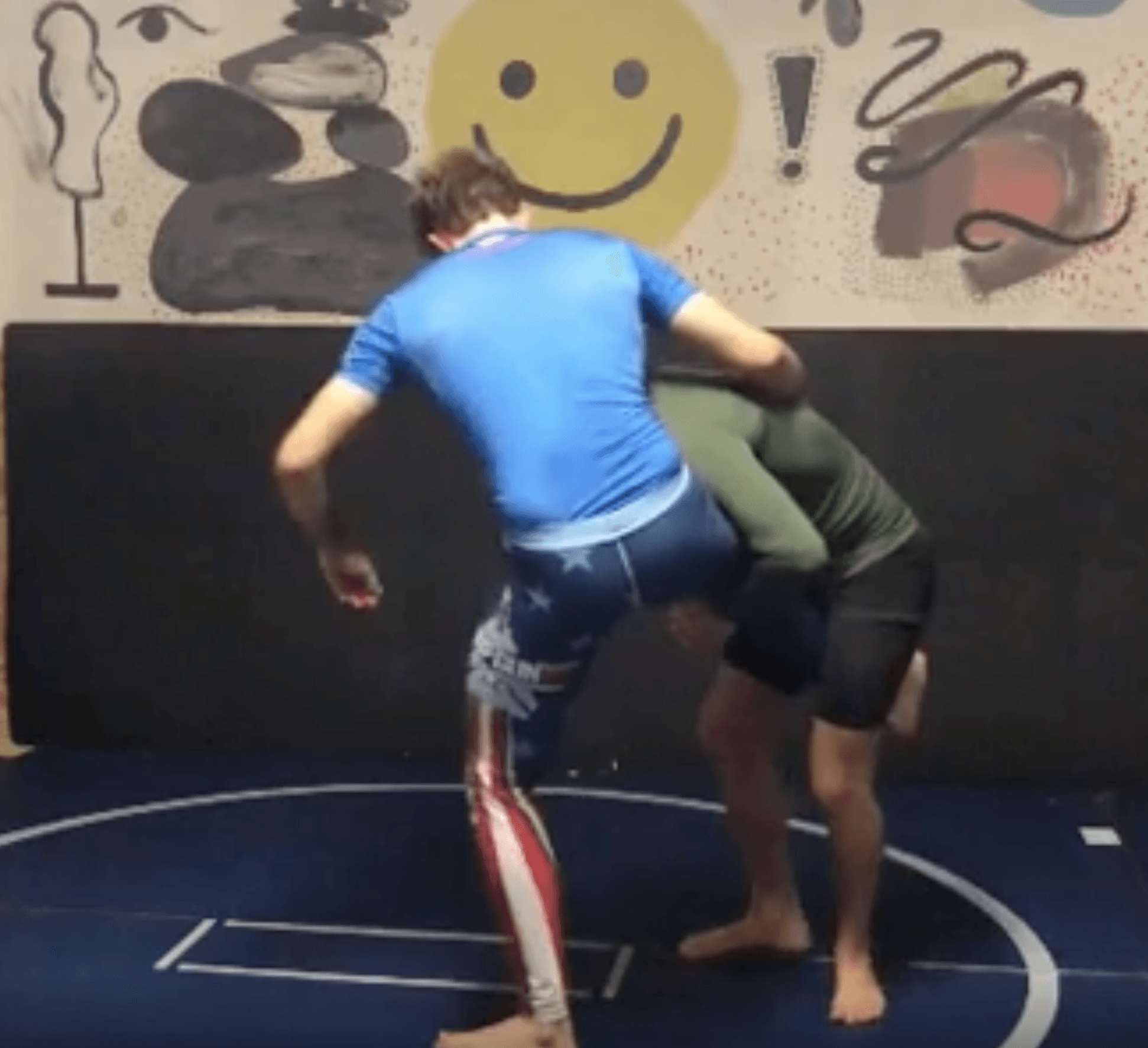
Takedowns for BJJ: Where to Start When You Hate Standup
Quick answer: Most BJJ gyms undertrain standup, so most grapplers are far weaker on the feet than on the ground. You don't need a wrestler's arsenal to fix that — a competent double leg or single leg, one or two foot sweeps, and honest breakfall skills cover the vast majority of what jiu-jitsu asks of you. And yes, pulling guard is a legitimate choice, as long as it's a choice and not a hiding place.
If the words "we're starting from standing today" make your heart sink, you're in good company. Standup is the most commonly avoided part of jiu-jitsu, and the avoidance is mutual — students dodge it and plenty of gyms quietly enable them. Here's why that happens, and the shortest honest path to fixing it.
Why BJJ is weirdly bad at standup
It's not an accident. The incentives all point down.
Matches are mostly won on the ground, so that's where teaching hours go. Takedown sparring carries more injury risk than ground rolling — falls, collisions, tired shots with bad posture — and hobbyists with day jobs reasonably protect themselves. Crowded mats make live standup genuinely unsafe in many rooms, so classes start from the knees. And a coach whose own game was built on guard has little to hand you on the feet.
Multiply that across years and you get the standard BJJ profile: purple belts with beautiful guards who feel like white belts for the first sixty seconds of a match.
Wrestling or judo?
The two donor arts solve standup differently, and which one fits depends mostly on what you wear. We've compared the arts fully in BJJ vs wrestling vs judo, but the short version for takedown purposes:
Wrestling attacks the legs from open space — level changes, shots, and relentless chain offense. It transfers beautifully to no-gi, where there's no cloth to hold, and its positions flow straight into modern guard passing.
Judo attacks through grips and balance — you connect to the jacket, break posture, and throw. In the gi it's devastating, because the uniform is a handle factory. Its risk for BJJ players is landing position: some throws trade the top position away if they're sloppy.
The honest answer for most people is a small blend: wrestling's leg attacks as the engine, a couple of judo grip concepts and trips for the gi. You need a handful of techniques trained deeply, not a second martial art.
If you think, you are late. If you are late, you use strength. If you use strength, you tire. And if you tire, you die. — Saulo Ribeiro
Three options that cover most of it
The double leg is the highest-value single investment. Change levels, connect to both legs, and drive. Every athletic movement in it recurs elsewhere in grappling, and even a mediocre double forces opponents to respect your standup.
The single leg is the forgiving one. You only need one leg, entries appear constantly off collar ties and snap downs, and there are a dozen finishes from the same catch. For stiff, cautious hobbyists, it's often the more realistic first weapon.
Foot sweeps are the old-timer cheat code. Minimal effort, minimal fall risk for both people, and they work off timing rather than explosiveness. A basic outside trip or ankle sweep as someone steps will score on surprisingly good grapplers — and it's the safest standup to practice at any age.
Drill the entries far more than the finishes. Getting to the legs or breaking balance is ninety percent of the technique; the rest is falling with style.
The honest case for guard pulling
Guard pulling gets mocked, and some of the mockery is earned. But let's be honest about it.
If you're a competitor whose game lives in guard, pulling is a rational strategy — you're choosing your best position and skipping a coin-flip exchange. Plenty of world champions have done exactly that. If you're older, injured, or protecting your knees on a crowded mat, pulling in the gym is simple self-preservation. Nothing to apologize for either way.
The problem isn't pulling guard. It's pulling guard because the alternative terrifies you. One is a strategy; the other is a hole in your grappling wearing a strategy's clothes — and it stays a hole for self-defense, for MMA curiosity, and for the day a ruleset or opponent won't let you sit down. Earn the choice, then choose freely.
Training standup without getting wrecked
The injury fear is legitimate, so train around it. Learn breakfalls properly before anyone throws anyone. Do positional standup rounds at controlled pace — grip fight to a takedown attempt, reset, no fighting the fall to the death. Pick partners you trust for live standup, keep the mat spacing honest, and treat foot sweep games as your daily vegetable: you can play light sweep-tag for five minutes a session at essentially zero risk, and it compounds.
Ten minutes of standup per session, most sessions, will put you ahead of the majority of your division within a year.
The takeaway
BJJ's standup gap is real, structural, and fixable. You don't need to become a wrestler — you need one leg attack, one or two sweeps, safe falls, and the humility to spend regular minutes on the part of the sport you like least. Guard pulling is a fine tool once it's a decision rather than a refuge. The people who dread standup least are just the ones who stopped avoiding it.
Standup matters most when the bracket is real
Nothing motivates takedown practice like a match that starts on the feet. See what's coming up near you. Find a BJJ tournament near you on Let's Roll →
FAQ
Do I really need takedowns for BJJ? For hobby rolling, you can survive without them — plenty do. But competitions start standing, self-defense starts standing, and a grappler with zero standup is trusting every fight to reach their strong suit. A small, reliable toolkit closes the gap.
Should I learn wrestling or judo for BJJ? For no-gi, wrestling transfers most directly; for gi, judo's grips and trips shine. Most BJJ players do best with a blend — wrestling-style leg attacks plus a couple of judo foot sweeps — trained inside their BJJ classes rather than as a separate art.
Is pulling guard bad? No — it's a legitimate strategy used at the highest levels of sport jiu-jitsu. It only becomes a problem when it's covering for a total inability to fight standing, because that inability eventually gets exposed. Build basic takedowns, then pull guard because you want to.
What's the safest takedown to practice? Foot sweeps and trips carry the least injury risk for both partners — low amplitude, timing-based, and easy to practice lightly. Pair them with proper breakfall practice before drilling bigger throws or shots at full speed.
Related Posts

Mikey Musumeci gives up the belt to make room for MMA
Musumeci is vacating his UFC BJJ title to focus on MMA training. What he is leaving, what continues, and why the transition matters.
IBJJF membership: finish the paperwork before the deadline
IBJJF membership and tournament entry are separate steps. Plan documents, professor approval, renewals, and junior accounts before registration closes.
Choosing a BJJ seminar worth your time and travel
Choose a BJJ seminar by the subject, teaching format, access, and total cost. Know what to ask the host before buying a ticket.
Comments (0)
Loading comments...