
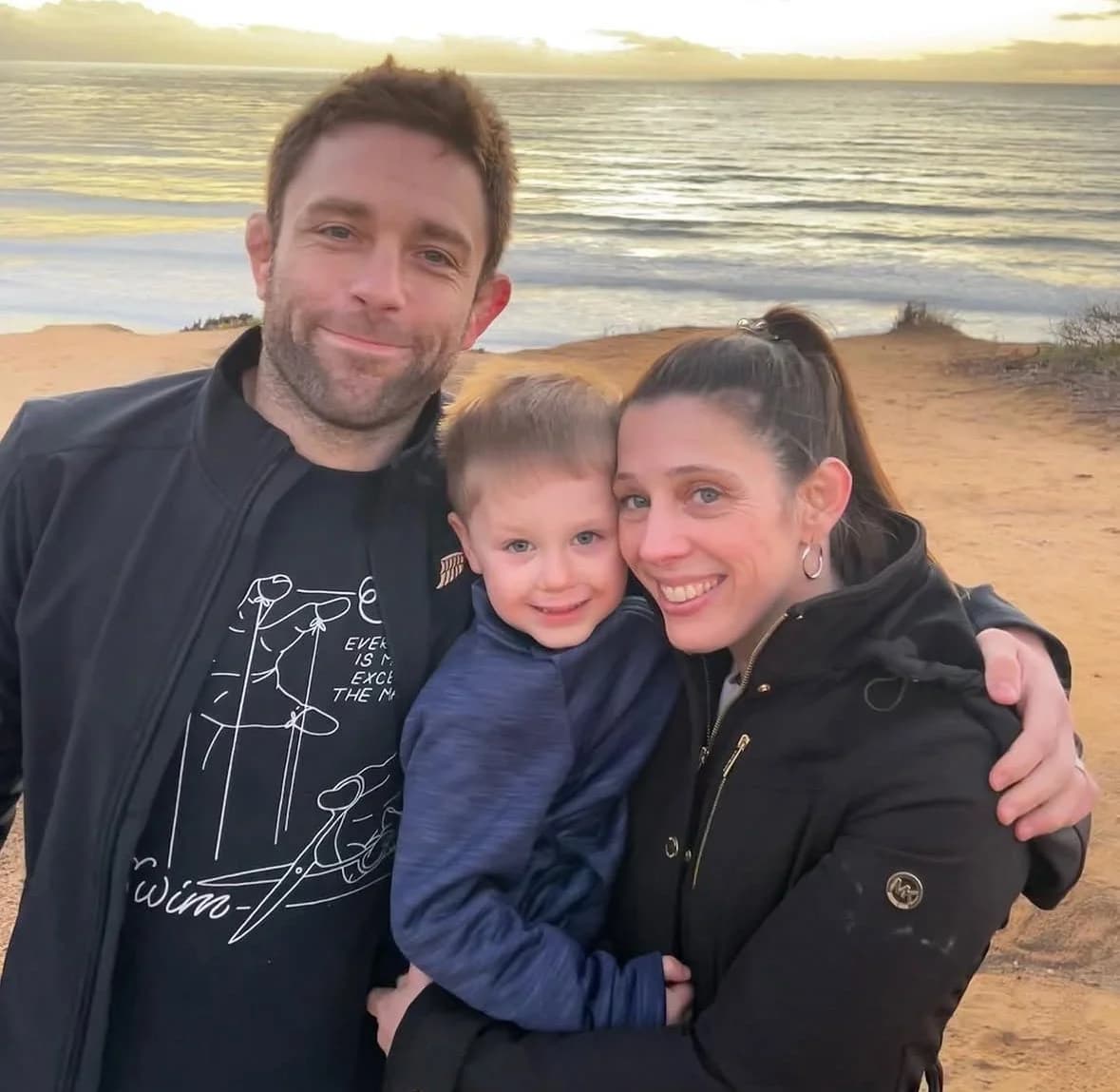
Ryan Hall: a specialist who kept changing the problem
Quick answer: Ryan Hall's career connects an ADCC podium, an Ultimate Fighter title, and a memorable UFC submission of BJ Penn. The useful thread is how a specialist's strongest skill changes when opponents, rules, and available space change around it.
At UFC 232, the official time was 2:46 of the first round. Hall had submitted BJ Penn with a heel hook. A complicated career was suddenly represented by a very short piece of footage.
The finish deserved attention. It also risked making the rest of Hall's work look simpler than it was: enter the legs, get the submission, repeat. His earlier results and public comments tell a less tidy story about reaching the position in the first place.
Hall is an interesting athlete to study because the signature attack and the wider problem never quite separate. The submission can be exceptional. The opponent still has a say in whether the exchange reaches it.
The ADCC medal came before the UFC introduction
The official 2009 ADCC results place Hall third at under-66kg. Rafael Mendes took gold, Rubens Charles took silver, and Jeff Glover finished fourth. It is a specific podium in a specific division, rather than a generic label of grappling champion.
For viewers who first encountered Hall through MMA, that result establishes an earlier competitive chapter. His grappling reputation was not created by a single UFC highlight. He had already earned a place on the podium of a major submission-grappling event.
The distinction matters when examining a crossover athlete. A record in one sport explains why the transition attracts attention. It does not predetermine the outcome in the next sport, where different actions are available to the opponent.
Keep both ideas in view. Hall arrived with a developed skill set, and MMA still presented a new task. Describing him as an established grappler does not mean pretending he had already solved striking, the cage, and every route between them.
A useful viewing sequence begins with an older grappling match, then moves to the later MMA footage. Compare what the opponent is allowed to do before comparing the final position.
The academy was part of the early work
Fifty/50's official history dates the academy's beginning to 2008, describing Hall and Seph Smith teaching in a borrowed training space in Arlington. It records a later move to Falls Church in 2013 and credits Jen Hall's role in building the school and its youth program.
That timeline puts teaching alongside the competitive career rather than treating it only as something an athlete does afterward. An academy gives technical ideas a second test: other people have to understand them well enough to use them.
This is an interpretation of the work, not a claim about a particular class we attended. A successful athlete may solve a position through adjustments that are difficult to describe. A student needs the explanation to identify where their own attempt has diverged.
For someone interested in Hall's approach, the instructional question can be more valuable than copying an unusual movement from a clip. What does the explanation say about distance, connection, and the opponent's choices? Does it describe the circumstances under which an attack is available?
Those questions apply to any specialist's teaching. A technique becomes easier to study when it comes with boundaries instead of an implied promise that the same answer fits every exchange.
The Ultimate Fighter route was not a straight line
Hall won season 22 of The Ultimate Fighter, but the route to the final included a loss. In a December 2015 UFC interview, the promotion described his two submission wins on the show, a majority-decision loss to Saul Rogers, and his later return to the final when Rogers was unavailable because of visa issues.
The same interview is useful for Hall's own assessment. He discussed wanting experience beyond securing heel hooks and the need to become capable in exchanges where an opponent could not be taken down or where he chose to remain standing.
That is a more informative account of specialization than the idea that an athlete simply refuses to learn anything else. A strong option can organize a game while leaving other parts of the game in development.
It also puts the eventual title in its proper sequence. The comeback to the final was an opportunity created by circumstances, and the final still had to be won. The earlier loss did not disappear. Nor did it invalidate what followed.
For a reader, the lesson is mostly about attention: follow the whole competitive path before deciding that the final result was inevitable.
The finale was won without the signature finish
At the TUF 22 finale, Hall defeated Artem Lobov by unanimous decision. The UFC's official results report records scores of 30–26, 30–26, and 30–27 and identifies Hall as the season's winner.
That result is a useful companion to the Penn finish. One ended through the submission most closely associated with Hall's MMA reputation. The other required the fight to reach the judges. Both belong in the assessment of his competitive work.
A viewer who searches only for finishes may miss what allows a specialist to continue when the preferred ending does not arrive. Position, threats, and the opponent's responses remain part of the contest even when there is no tap to organize the clip around.
That does not make every decision equally revealing, or every unsuccessful submission attempt valuable. It means the fight deserves to be watched as a sequence of choices rather than reduced to whether the signature move appeared on the results line.
For a recreational grappler studying specialists, this is a useful habit. Watch what happens after the first plan is resisted. The next choice may teach you more than another clean example of the finish against a compliant demonstration partner.
The Penn finish made the entry visible
The UFC 232 results record Hall's heel-hook submission of Penn in the first round. The promotion's report describes Penn initially resisting the move to the ground before Hall found the opening that led to the finish.
The result became memorable because it compressed the danger of a specialist into a brief exchange. An opponent could recognize the general threat and still be caught when the necessary connection appeared.
The technical point for a viewer is not to copy the entry at speed. It is to notice that the entry and the finish are different questions. Knowing how a submission works after control is established does not explain how to obtain that control against resistance.
When reviewing the footage, separate:
The distance before the attack begins.
The moment the opponent can no longer simply remain outside the exchange.
The transition from contact to the finishing position.
This is a viewing framework, not a technical prescription. Leg-lock training belongs under appropriate coaching, agreed rules, and controlled partner practice. A professional finish is a poor instruction manual for surprising someone at open mat.
The highlight can create interest. The earlier seconds supply the question worth bringing to a coach.
A specialist still has to live with the opponent's answer
Hall's UFC athlete record includes decision wins over Gray Maynard and Darren Elkins, along with a first-round knockout loss to Ilia Topuria at UFC 264 in 2021. Those historical outcomes should remain part of a profile that also includes the most replayed success.
They do not support an instant universal conclusion about leg locks in MMA. A fight contains particular athletes, preparation, and decisions. One result cannot establish that an entire technical category always works or never works.
What the range of outcomes does show is the inadequacy of a one-clip biography. A specialist's career is made of encounters with people trying to keep the contest somewhere else. Sometimes the preferred exchange becomes available. Sometimes the athlete has to operate without it, and sometimes the opponent's solution succeeds.
This is not a reason to become vague about the record. Keep the wins and loss explicit, then be restrained about the larger claims built on them. Hall's career can be interesting without making him the answer to every argument about which grappling style transfers best.
The same restraint makes technical study more useful. Ask what happened in the exchange you can see. Leave claims about an athlete's private confidence or preparation to evidence that actually supports them.
Study the connection, then choose an appropriate task
For a BJJ student, the practical value of Hall's career may be an improved question rather than a new favorite move. You can ask how a position becomes available, what prevents the entry, and what a player does when the opponent will not cooperate.
Bring one of those questions to a coach. Explain the starting position you want to understand and the rules under which you train. A useful drill for your class may look much smaller and less dramatic than the professional exchange that prompted it.
Keep the practice focused on:
Recognizing a position before trying to force the finish.
Understanding the partner's legitimate defensive choices.
Knowing when the attempted entry has failed and should be abandoned.
Our guide to BJJ training games offers a way to think about narrowing a practice problem with a coach. It does not require reproducing an MMA exchange in a BJJ class.
You can admire the uncommon part of Hall's game while doing ordinary, careful work on the connection that makes an attack possible. The unusual movement will still be there when you understand why you are trying it.
Main photo: Fifty/50 Martial Arts Academy; official archive photograph.
The takeaway
Hall's career is larger than the heel hook against Penn. The ADCC bronze, the uneven route through The Ultimate Fighter, and the decision that won its final show different demands on the same athlete. The later UFC results add further context rather than leaving the highlight alone to explain everything.
For technical study, follow the route into the position and the choices after resistance. A specialist is most interesting where the preferred answer meets an opponent determined to ask a different question.
Put a technical question in front of a coach
Find jiu-jitsu academies on Let's Roll and ask which class can help you study entries and positional control at an appropriate level.
FAQ
Did Ryan Hall win ADCC? He won bronze in the under-66kg division at the 2009 ADCC World Championship. The official results list Rafael Mendes first and Rubens Charles second in that division.
How did Ryan Hall beat BJ Penn? The UFC's official result records a heel-hook submission at 2:46 of the first round at UFC 232 in December 2018.
Did Ryan Hall win The Ultimate Fighter? Yes. He won season 22 by defeating Artem Lobov via unanimous decision in the final. His route through the show also included an earlier loss to Saul Rogers.
Should a beginner copy Hall's leg-lock entries from highlights? Use the footage to form a question for a qualified coach. A highlight does not explain partner safety, legal techniques for your rules, or the earlier skills needed to practice the position responsibly.

Miles Serrano
Miles Serrano writes about competitors and the decisions that shaped their careers. He is more interested in the adjustment someone made in the third minute than in the medal count afterward.
Related Posts
Mikey Musumeci gives up the belt to make room for MMA
Musumeci is vacating his UFC BJJ title to focus on MMA training. What he is leaving, what continues, and why the transition matters.
IBJJF membership: finish the paperwork before the deadline
IBJJF membership and tournament entry are separate steps. Plan documents, professor approval, renewals, and junior accounts before registration closes.
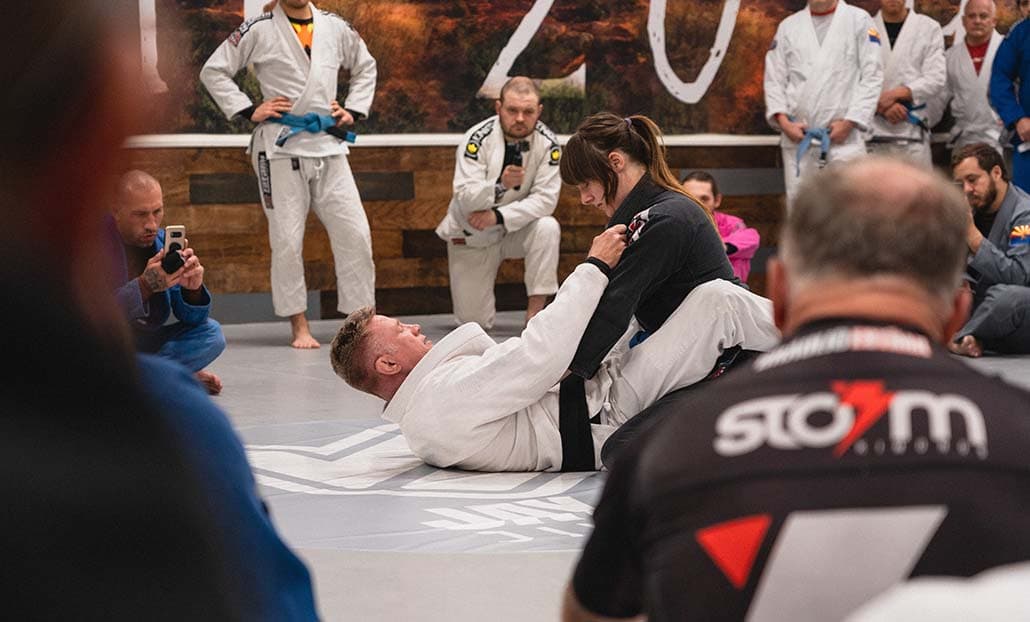
Choosing a BJJ seminar worth your time and travel
Choose a BJJ seminar by the subject, teaching format, access, and total cost. Know what to ask the host before buying a ticket.
Comments (0)
Loading comments...