
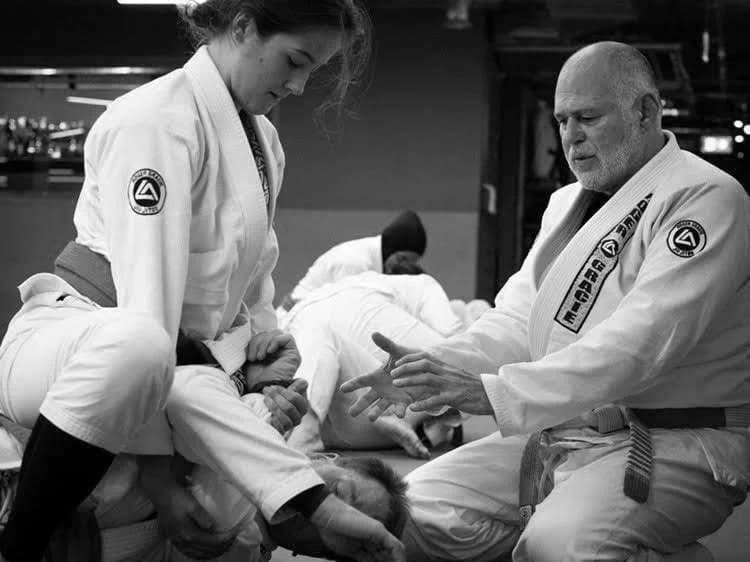
A London training stop at Roger Gracie Academy
Quick answer: Roger Gracie Academy HQ in Hammersmith offers visitor passes for people dropping in while in London. Book an appropriate class in advance, confirm the arrangements with reception, and plan your route to Glenthorne Road with time to check in. A pass and a place in a particular class are two details to settle together.
A padlock is an unexpectedly useful item to pack for a jiu-jitsu trip to London. The famous name on the academy door may be the reason you want to go, but a few small preparations determine whether you spend the first minutes ready for class or reorganising your bag at reception.
Roger Gracie Academy's Hammersmith visitor information is unusually specific about those preparations. It gives a traveller enough to turn a vague ambition to train in London into a workable stop. The rest is a matter of fitting that stop to the city, the class, and the experience you already have.
Put Hammersmith in the plan
The academy's contact page gives its address as Ground Floor, Glen House, 22–24 Glenthorne Road, Hammersmith, London W6 0NG. Save the postcode with the booking. A search for a well-known academy name can return associated schools as well as the headquarters you intended to visit.
The word London is too broad to do much planning on its own. Work out where you will be immediately before training and where you need to be afterward. A class near your accommodation may be easy to fit in; the same class after an afternoon across the city needs a different allowance.
Use the address rather than a remembered neighbourhood name when checking the route. If accessibility or luggage changes what travel is comfortable, factor that in from the start. Arriving with a suitcase also raises a practical question for the academy: where, if anywhere, can it be kept? Ask before assuming a changing-room locker will take the bag you brought for a week away.
A confirmed location turns the idea of visiting Roger Gracie Academy into a specific journey. It also makes the next decisions much simpler.
Match the visit to an actual session
The visitor page offers day, week, and month passes. It says class access depends on belt level, requires booking before arrival, and opens class bookings 48 hours ahead. Start with reception if your trip is farther away: settle eligibility and the booking process now, then reserve the session when the window opens.
A pass is useful only if there is an appropriate class you can attend. Write down the time available in your trip before comparing options. If the only free morning also has a train to catch, include changing and onward travel in that calculation. The class itself is one part of the appointment.
For a multi-day visit, ask how the dates are counted and what happens if a planned session is full. Keep any answer with the purchase confirmation. This gives you a clear basis for making the rest of the itinerary rather than relying on what another traveller remembers from a previous year.
Check the current price at the official checkout. Travel costs are easier to compare when the pass, any rental equipment, and transport are all visible before purchase. There is no need to guess the total from a social-media comment.
The timetable is wider than the name suggests
Roger Gracie's competitive history may be the first association a visitor brings to the academy. The published class offering includes gi jiu-jitsu, no-gi, children's classes, and kickboxing. That makes it worth reading the class description instead of assuming every session has the same format.
A gi-only visitor and a no-gi-only visitor can have different useful windows in the same day. So can a parent arranging training for a child. Give the academy enough information to distinguish those needs. State your experience in the format you want to attend, particularly if your belt or years of practice do not tell the whole story.
The best recommendation may be a class you would have overlooked. Someone returning after a long break might benefit from a more introductory session. An experienced visitor may want to ask about the requirements for competition training. Those decisions belong with the staff who know the class, rather than with a guess based on the title.
If one particular instructor is the reason for travelling, ask about their availability before making the booking. A school carries its founder's name every day; a class still has a specific instructor. Confirmed plans prevent an unnecessary mismatch between a visitor's expectations and what was actually offered.
New to BJJ and new to the academy are different things
The academy's FAQ describes an induction route for people starting BJJ and a group-class route for those with experience. Tell reception which applies. A student visiting from another academy is new to the building without necessarily being new to grappling.
There is also an eligibility detail for international visitors. The official booking page says free trials are for UK residents and directs people visiting from abroad to visitor passes. Read that condition alongside the general invitation to try a class, so you use the appropriate route.
If a travelling companion wants their first taste of BJJ while you train, describe the two requests separately. They may require different introductions or start times. Planning that beforehand is more considerate than bringing an unexpected beginner to the session you chose for yourself.
The same applies to children. A parent's experience does not determine a child's placement, and siblings may need different groups. Ask about the ages, supervision arrangements, and session options before promising that everybody will train together. The academy can answer those questions far better with a little time than at the edge of a starting class.
Pack for the walk from the changing room
The visitor instructions specify a t-shirt or rashguard under the gi, footwear for moving off the mat, and a padlock for a locker. They also say visitors need not wear an RGA-branded gi and list gi rental as an option. Confirm the rental size and cost if you plan to use it.
Keep the small items in a reachable pocket. A pair of flip-flops underneath three days of clothing is technically packed, but not especially helpful when the rest of the bag has to come out to find them. Put the clothes for after training somewhere separate from the kit you have just used.
For the last check before leaving your accommodation:
Have the class confirmation and address available without needing to search your inbox.
Bring the agreed uniform, under-gi top, belt where required, and off-mat footwear.
Check that you have the locker padlock and something to hold used clothing.
Leave room in the bag for everything to come home in a different, less neatly folded state.
If a forgotten item would stop you attending, contact reception rather than assuming a replacement is available. The purpose of packing is to make training possible, not to win an argument with the luggage allowance.
Let the transport plan include a margin
Transport for London's journey planner allows a destination and an arrival time, with options for accessibility and route preferences. Plan for reaching the academy before the check-in you agreed, rather than reaching a nearby station at the instant class starts.
Look at the route again on the day. Service conditions can change, and an itinerary saved before the trip may no longer be the best option. Keep the academy's contact details handy in case you are delayed, then follow its advice about whether joining late is appropriate. A message is more useful than an anxious sprint followed by an unannounced entrance.
Do the return journey too. Evening plans have a way of ignoring the period between the last round and being presentable at dinner. Allow time to change, collect belongings, and reach the next destination. If somebody is meeting you, give them the realistic time rather than the earliest mathematically possible one.
For a weekend visit, a single training appointment can sit comfortably within a larger London trip. It becomes less comfortable when every plan depends on transport taking exactly the estimated time. A modest margin is usually easier to arrange before the day fills up.
Attend the class that is happening
A visitor arrives with an image of the place. It might come from a competition replay, a recommendation, or a photograph saved months ago. Once class starts, put that image aside long enough to follow the instruction in front of you.
Listen to how the drill is organised. Ask where to line up and how partners are chosen if the routine is unfamiliar. A school visit gives you a chance to notice teaching details as well as techniques: the way an instructor frames a problem, how a drill is narrowed, or how a position is revisited after resistance is added.
Treat training partners as people doing their ordinary session. They do not owe a visitor a championship audition or a guided tour of every position. Introduce yourself, communicate the pace, and respect a declined round. Our guide to visiting another academy has more on making a drop-in easy for both sides.
Afterward, write down the correction or question that stayed with you. Ask before taking photographs or filming anyone. A visit can be memorable without becoming a production, and a useful training note takes up much less space on the way home than another gi.
Main photo: Roger Gracie Academy; academy photograph, photographer not identified on source page.
The takeaway
Roger Gracie Academy makes room for visitors through a published pass and booking process. Use that process to settle the actual class, then organise the journey and equipment around it. The important details are specific enough to check: Hammersmith address, session eligibility, arrival arrangements, and the gear reception expects you to bring.
That leaves the visit free to be a class rather than an exercise in improvisation. Train with the people in front of you, learn what the session offers, and give yourself enough time afterward to remember it before London asks you to be somewhere else.
Make training part of the trip
Explore the gym directory for your destination, and confirm each visit directly with the academy before adding it to the itinerary.
FAQ
Where is Roger Gracie Academy HQ in London? Its published address is Ground Floor, Glen House, 22–24 Glenthorne Road, Hammersmith, London W6 0NG. Use the full address when checking your booking and route.
Can someone visiting from overseas book a free trial? The academy's booking page restricts free trials to UK residents and directs overseas visitors to pass options. Contact reception for the appropriate arrangement.
Does a visitor need an RGA-branded gi? The published visitor instructions say the academy's branded uniform is not compulsory for visitors. Check the clothing requirements for the class you select.
Will Roger Gracie teach the class I book? Confirm the instructor directly if that is central to your plans. The academy name and general instructor information do not guarantee a particular person's attendance on your chosen day.

Maya Corbett
Maya Corbett answers the questions you have before walking into an unfamiliar academy — what to book, what to bring, who to ask. Every detail in her guides traces back to something the gym published itself.
Related Posts

Mikey Musumeci gives up the belt to make room for MMA
Musumeci is vacating his UFC BJJ title to focus on MMA training. What he is leaving, what continues, and why the transition matters.
IBJJF membership: finish the paperwork before the deadline
IBJJF membership and tournament entry are separate steps. Plan documents, professor approval, renewals, and junior accounts before registration closes.
Choosing a BJJ seminar worth your time and travel
Choose a BJJ seminar by the subject, teaching format, access, and total cost. Know what to ask the host before buying a ticket.
Comments (0)
Loading comments...