
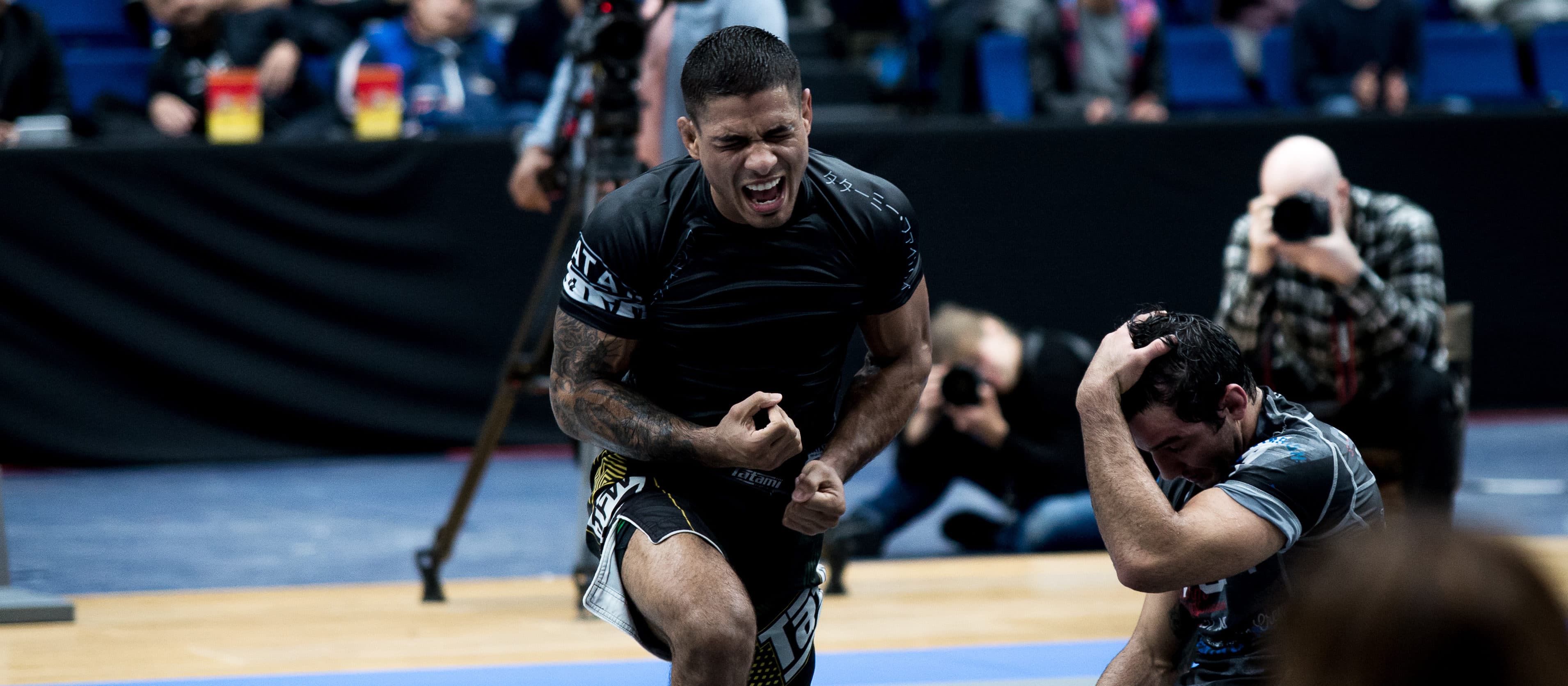
JT Torres opened a gym. Then he won ADCC twice.
Quick answer: JT Torres won the ADCC under-77kg division in 2017 and 2019 while running Essential Jiu-Jitsu in New York. His account of that period gives teaching a role in his development as a competitor, alongside the demands of managing a new academy.
The academy was open before the first gold medal arrived. That order matters. JT Torres did not win ADCC and then use the title to begin a quieter second career behind a front desk. He took on students, established a school, and continued chasing the biggest result of his competitive life.
In September 2017, he won it. Two years later, he did it again. Between those two results sits a story about the relationship between being good at jiu-jitsu and being responsible for helping somebody else understand it.
New York came before Finland
Essential's contemporary report on the 2017 win places Torres back in his home state after several years at André Galvão's academy in San Diego. He had opened his own school in Westchester County. Later that year, the ADCC championship in Espoo, Finland, ended with him at the top of the under-77kg podium.
A gym opening and a title run can look perfectly compatible when written in one sentence. They make competing claims on a day. An athlete can finish a session and leave; an instructor has to consider the people arriving for the next one. The work changes when a class needs to be planned, a newcomer needs an explanation, and a roomful of students expects the schedule to hold.
That does not make coaching a burden in opposition to real training. It makes it work with its own requirements. Torres's results are interesting partly because the new responsibility was already present. He was building a place to train at the same time that he was trying to win from it.
The medal eventually returned to a room that had something invested in it.
Bronze and an absence belong in the timeline
The academy's account identifies three earlier stages: qualifying for ADCC in 2011, earning bronze in 2013, and missing the 2015 edition with a knee injury. Gold in 2017 arrived after experience at the event and an interrupted opportunity to return.
A list of championship years can flatten that progression. It removes the qualification, the previous bracket, and the edition an athlete never gets to enter. Those missing weekends are part of a sporting career even when they do not produce a result to display.
For a reader looking through an athlete's record, chronology is useful precisely because it slows the verdict. A bronze medal is a result in its own right, not merely a rough draft of a gold. An absence is not automatically a loss of commitment. The record needs enough context to distinguish what happened from what a bare column of dates might suggest.
There is no need to attach an inspirational speech to the gap. The useful fact is that his first title did not come on his first appearance. By the time Torres reached the final in Finland, ADCC was familiar territory with unfinished business.
Thirty minutes against Lucas Lepri
In a 2018 interview with Jiu Jitsu Legacy, Torres described his final against Lucas Lepri as one of his hardest matches. He recalled roughly half an hour against an opponent who offered very few mistakes. The official 2017 championship record confirms Torres as the division's winner.
That description gives the victory a scale that the podium photograph cannot. Half an hour against somebody difficult to move is a long time to keep making decisions. It also changes what a spectator should look for. The defining action may depend on exchanges that seemed inconclusive when they first happened.
A hand fight can establish which grip an opponent is willing to concede. A failed entry can reveal the direction of a defence. An attack that does not score can still affect what happens when the athletes meet again a few seconds later. Those are reasons to watch a full match patiently, without pretending every period of contact contains a hidden masterstroke.
The distinction is between watching for an event and watching a contest develop. Torres's recollection invites the second approach. The difficulty of the opponent stays in the frame alongside the result.
Teaching made familiar techniques less automatic
Torres told FloGrappling in March 2018 that teaching students at different stages had improved his understanding of technique. He also credited Galvão's example of running an academy while competing, and described becoming more deliberate about his own training after the move.
Teaching exposes gaps that successful performance can sometimes hide. An experienced grappler may make an adjustment without consciously naming it. A beginner cannot copy an adjustment they have not noticed, so the explanation has to become more precise. Where does the weight go? What stops the other person turning? What needs to happen before the next movement is possible?
Those are ordinary teaching questions, but answering them can send an expert back into a familiar position with a different task. The standard is no longer simply whether they can make the move work. It is whether another person can understand the conditions that make it work.
There is a useful distinction here for experienced students who help their teammates. Explaining something is not an invitation to turn every round into an unsolicited seminar. Ask first, keep the explanation small, and leave room for the instructor. Clarity is helpful; an audience held captive under side control is less so.
The second title required another whole bracket
The official 2019 ADCC results put Torres first again, this time in Anaheim, with Vagner Rocha second and Garry Tonon third. A returning champion still had to negotiate the event one opponent at a time.
FloGrappling's event coverage records his route through Ross Nicholls, DJ Jackson, Tonon, and Rocha. It describes an opening match that included a dangerous heel-hook attempt from Nicholls, followed by a 3–0 quarterfinal and a 2–0 semifinal. The title defence was not a sequence of quick finishes.
That is worth retaining when looking back at consecutive gold medals. The word consecutive makes the two weekends sound adjacent. There were two years between them, a new field to face, and no exemption from the first round. The first title established a claim. The next event tested it again.
This is also why a result should not erase the quality of the people on the other side of it. A champion's reputation becomes more meaningful when the route is visible. Nicholls's resistance remains part of Torres's winning weekend, rather than an inconvenience to be removed from the retelling.
A school needs a plan beyond its founder's next match
In his 2020 account for FloGrappling, Torres described three ambitions from early in his BJJ life: a black belt, a world title, and an academy. He also recalled the long days of teaching and training when the school first opened. The academy had been a goal alongside competing, not a consolation prize after it.
That helps explain why a gym can belong at the centre of an athlete profile. A school gives the sport a local address. People who will never enter an elite bracket still need a place to learn, with classes that make sense for them and someone paying attention to their progress.
A visiting student can appreciate a famous instructor's record while asking practical questions about that school:
Which class is appropriate for the visitor's experience and training goals?
How are new students introduced to the room and paired for practice?
What does the timetable allow them to attend consistently?
Those questions do not diminish the medals. They recognise that choosing somewhere to train is a different decision from choosing somebody to watch. Our drop-in etiquette guide covers the arrangements to settle before walking into an unfamiliar academy.
The influence continues after the podium photograph
A championship is easy to recognise. The other effects of an athlete's work can take longer to appear. A student learns to explain a position. A training partner starts asking better questions. A coach finds a way to make an advanced idea understandable to a beginner without stripping away what makes it useful.
These are possible forms of influence, not an invented account of what every student at Essential has experienced. They are also good reasons to pay attention to athlete-teachers as teachers. Competition records tell one part of the story; the ability to make knowledge usable belongs to another part.
Torres's own account connects those parts. The academy asked him to explain his jiu-jitsu more carefully, while competition continued to place that jiu-jitsu under pressure. Neither role has to be treated as a distraction from the other for the demands of both to be taken seriously.
For fans, it leaves two ways to follow a career. Watch what happens in the bracket. Then look at what the athlete is trying to build when the bracket is over. In this case, the school was already there, waiting for the first title to come home.
Main photo: Essential Jiu-Jitsu; 2017 ADCC archive photograph, photographer not identified on source page.
The takeaway
Torres won ADCC in 2017 and defended his division in 2019 after opening Essential Jiu-Jitsu. The sequence challenges a narrow picture of the elite competitor whose environment must revolve exclusively around their own sessions. His published interviews describe teaching as part of learning, even while acknowledging the work involved.
That does not turn academy ownership into a formula for winning. It gives this particular career its shape: a competitor who wanted a school, a teacher who continued to compete, and two major titles achieved while doing both jobs.
Find a room that fits your training
Use the gym directory to explore academies, then confirm the class schedule and visitor arrangements directly with the school.
FAQ
Which ADCC titles did JT Torres win? He won the men's under-77kg division in 2017 and 2019. The first event was in Espoo, Finland, and the second was in Anaheim, California.
Was Essential Jiu-Jitsu open before his first ADCC win? Yes. The academy's September 2017 report describes his return to New York and the school's opening before his championship that year.
Who did he face in those finals? Lucas Lepri was his opponent in the 2017 final. Vagner Rocha was the other finalist in the 2019 under-77kg division.
What has Torres said about teaching and competing? In published interviews, he described teaching students of different levels as a way to deepen his own understanding, while also explaining that balancing instruction with competition required deliberate adjustments.

Miles Serrano
Miles Serrano writes about competitors and the decisions that shaped their careers. He is more interested in the adjustment someone made in the third minute than in the medal count afterward.
Related Posts
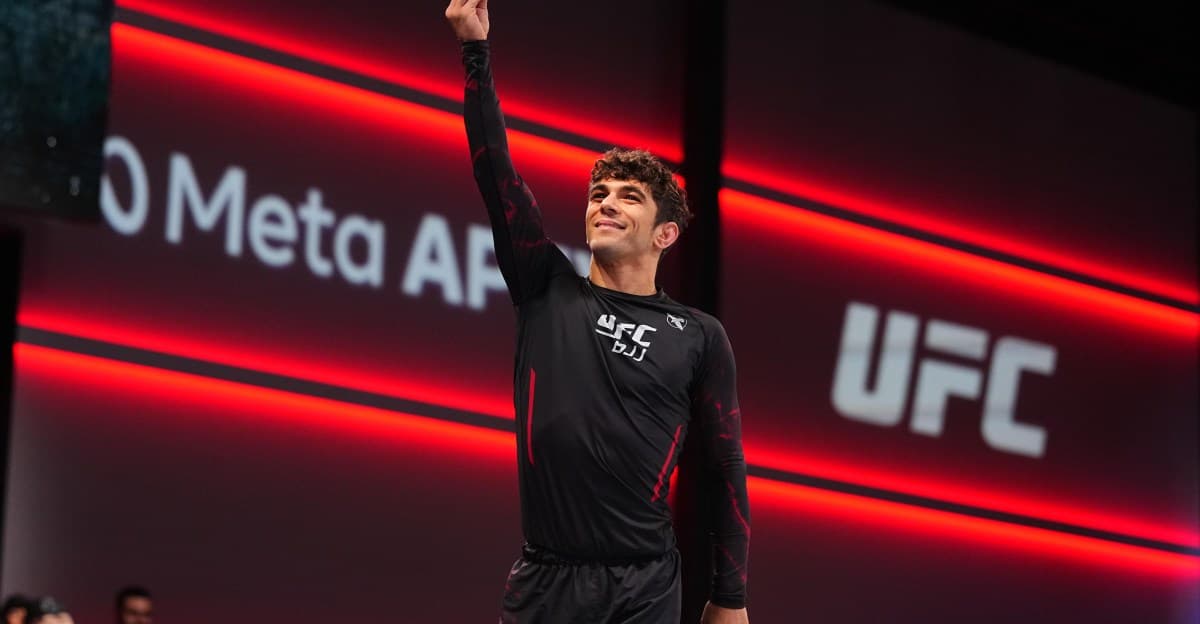
Mikey Musumeci gives up the belt to make room for MMA
Musumeci is vacating his UFC BJJ title to focus on MMA training. What he is leaving, what continues, and why the transition matters.
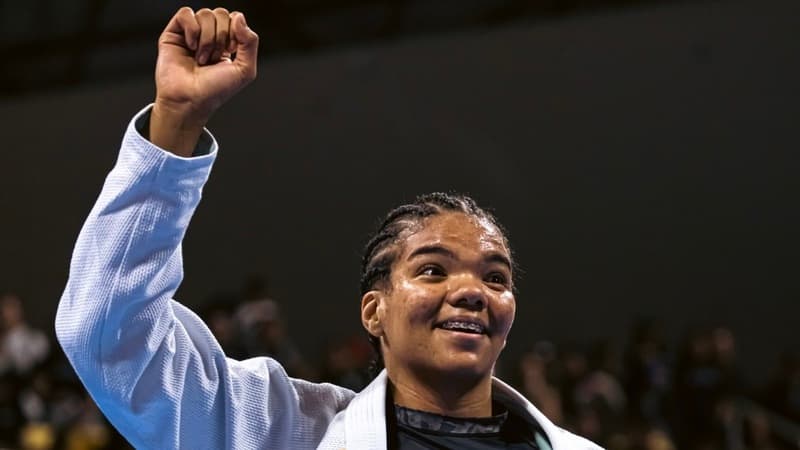
IBJJF membership: finish the paperwork before the deadline
IBJJF membership and tournament entry are separate steps. Plan documents, professor approval, renewals, and junior accounts before registration closes.
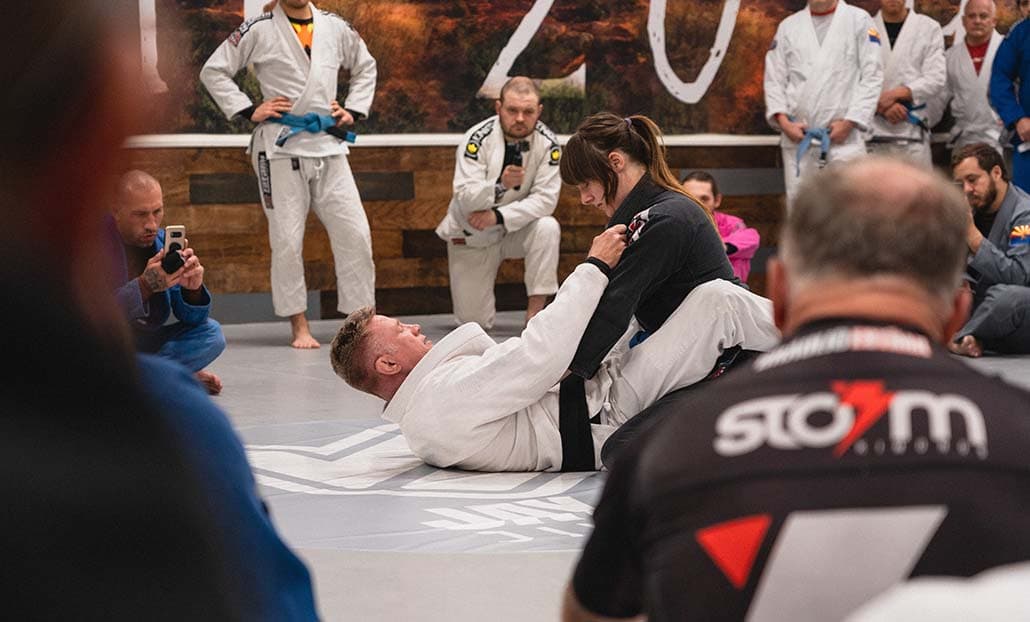
Choosing a BJJ seminar worth your time and travel
Choose a BJJ seminar by the subject, teaching format, access, and total cost. Know what to ask the host before buying a ticket.
Comments (0)
Loading comments...