

Jiu-jitsu in Washington, DC: the neighborhood decides the week
Quick answer: A useful Washington, DC, jiu-jitsu search should distinguish the District from the wider Maryland and Virginia area, then test the complete trip to the classes you want. Confirm the exact academy location, timetable, and visitor arrangements before treating a regional recommendation as a workable weekly plan.
A recommendation for a great DC-area academy can be entirely accurate and still send a visitor well beyond the neighborhood they had in mind. The regional shorthand is convenient in conversation. It is less helpful when a meeting ends late and class begins on the other side of the map.
Start by deciding what Washington means for your search. A resident in the District, a commuter from Virginia, and a visitor staying near a work venue can all need different answers. The right academy is the one whose actual location and classes make sense for that person's week.
Separate the District from the wider region
The phrase DC area covers more ground than Washington itself. A school in Northern Virginia or suburban Maryland may be a strong option, but it should be evaluated as a regional trip rather than assumed to be a short journey within the District.
Write down the address where you will begin the trip. For a resident, that might be home on one day and work on another. For a visitor, it may be a hotel or conference venue. Then identify whether you can travel directly to training or need to collect equipment first.
This is especially useful when friends recommend schools based on where they live. Their easy trip may begin from a completely different part of the region. Ask what route they actually use instead of adopting their travel estimate as your own.
There is no need to exclude a school because it is outside the District. The point is to make the distance visible. A regional academy can be worth a deliberate visit while a closer option serves ordinary weekday training. Those are different choices, and both can be reasonable.
Put named academies in their actual locations
BETA Academy is a starting point for researching BJJ within Washington. Its Florida Avenue NW location gives a concrete address to investigate rather than a general label. Confirm the branch associated with any timetable or booking you receive.
50/50 Martial Arts is in Falls Church, Virginia. That distinction belongs near the name, not hidden after a reader has planned a visit. It can be part of a DC-area search while remaining a separate trip from a school inside the District.
These are examples to help organize research, not an ordered ranking or a claim of firsthand visits. Use the official sites to identify programs and contact the schools about the sessions appropriate to your level. Do not infer guest access from an academy's reputation or from a video showing visitors on another occasion.
A broader shortlist should follow the same rule: academy, exact branch, actual address, suitable class. Once those four details are clear, compare the experience you can realistically access rather than collecting more names without a plan to visit them.
Test the route in both directions
The trip to class is only half the commitment. Check how you will return after the session, including the time required to change and leave the building. A route that works well before class may be less convenient later in the evening.
Metro's guidance for new riders points travelers toward its trip planner for rail and bus options. Use the official planning tools and service information for the day of travel rather than relying on a generic estimate saved weeks earlier.
Include the walk at either end and any transfer. If you are driving, ask the academy about practical parking arrangements without assuming a nearby space will be available. The gym can describe its access; it cannot promise the conditions of every street or public facility around it.
For a membership decision, repeat the route at the time you expect to use it if possible. An introductory visit can test transport and instruction together. You may discover that a slightly longer direct trip works better than a shorter route with several uncertain connections. The useful measure is the whole routine, not just distance.
Match the class to the way you train
A school offering several martial arts may have a timetable that looks larger than its BJJ schedule. Read the individual session labels. Wrestling, striking, gi jiu-jitsu, and no-gi grappling can all be valuable, but they are not interchangeable bookings.
Ask which session is appropriate for your experience. A beginner should not have to guess whether a general class includes an introduction or assumes familiarity with the room's routines. An experienced visitor should still confirm any rank or attendance requirements attached to advanced training.
If your goal is regular practice, identify two or three sessions you could actually attend. A timetable full of classes during your workday does not provide useful flexibility for an evening-only schedule. Conversely, a lunch class may be practical if changing facilities and the return to work fit the available time.
Also ask how the class is divided between instruction, drilling, positional work, and open rounds. The answer helps set expectations without requiring one format to be declared better than all others. Choose the experience that supports your goals and that you are prepared to participate in respectfully.
A short visit needs a clear booking
Visitors can make the first contact much easier by stating their dates and circumstances. Include experience, usual training format, and whether you need equipment. Ask for a specific recommended session rather than sending a general request to train sometime during a trip.
Before setting out, get answers to a small set of practical questions:
Which location and class should you attend on the chosen date?
Is advance booking or a waiver required?
What fee applies to this visit, and how should it be paid?
Are there uniform, equipment, or experience requirements?
How early should you arrive, and where should you check in?
A trial intended for prospective local members may differ from a drop-in arrangement for an experienced traveler. Ask which applies instead of assuming an advertised offer covers every situation.
Our guide to training BJJ while traveling covers the wider etiquette of visiting another room. In DC, a useful addition is making the travel window explicit. If work leaves you only one evening, let the academy recommend a realistic option rather than arriving at an unsuitable session because it was the only one visible on a screenshot.
Compare the recurring costs and obligations
For residents, the financial question extends beyond the monthly fee. Ask about enrollment, required uniforms, membership length, freezes, cancellation, and any distinction between programs. Obtain the actual terms before deciding that two advertised prices represent the same offer.
Add the cost of getting there. Transit, parking, and occasional alternative transport can affect the amount you spend to use a membership. A school with a higher headline price may still fit a particular routine better; a cheaper membership can also be excellent value if it is the one you will attend.
Do not make the comparison solely on the number of available classes. Count the sessions you can realistically use and consider the quality of the instruction you receive in them. An unlimited plan is still limited by your calendar.
Ask about changes in work location or travel if those are normal parts of your life. Clear policies help you understand what happens when the original routine stops working. The purpose is to enter a membership with shared expectations, not to search for a problem in an otherwise suitable academy.
Use the first month to check the fit
An introductory class gives an initial impression. A few weeks of regular attendance show whether the routine holds together. Notice how often you arrive without rushing, whether the classes match your level, and whether questions receive useful answers.
Keep the evaluation concrete. If you struggle to attend, identify whether the obstacle is transport, timing, cost, recovery, or the class itself. Those problems require different responses. Switching academies will not automatically solve an overloaded work calendar, while a better class time may solve a logistical issue immediately.
For visitors, the evaluation is shorter but follows the same principle. Did the confirmed arrangements match the visit? Could you participate appropriately? Would the route make sense on a future trip? A single session can answer those questions without supporting a sweeping verdict about the academy as a whole.
The DC region offers several ways to organize training. Keep the geography honest and the practical details visible. Then the academy's strengths can be assessed in the context that matters: the class you will actually attend, on the day you can actually get there.
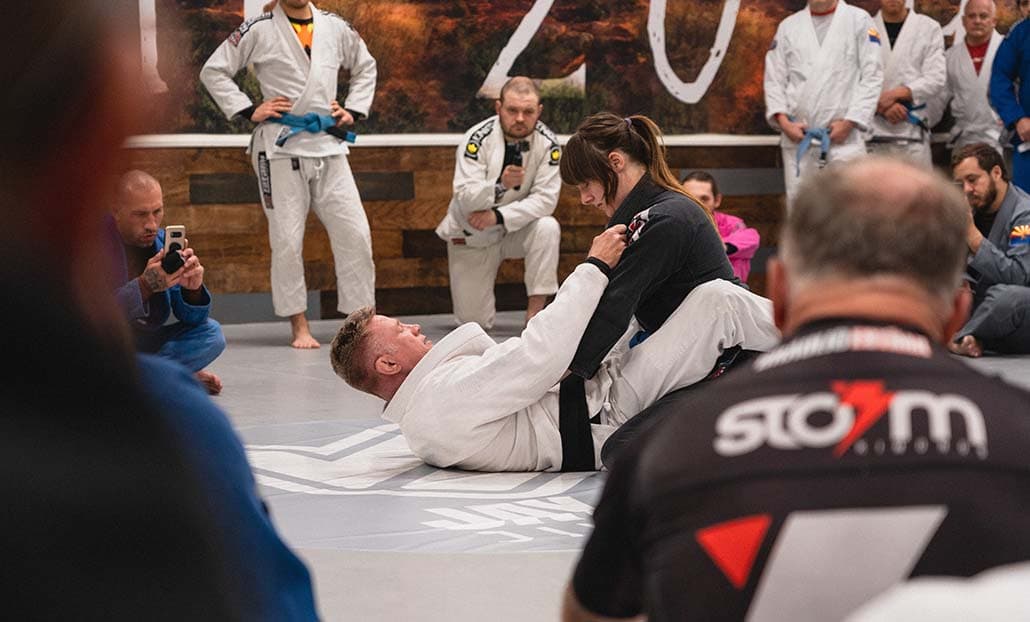
Main photo: BETA Academy; academy group photograph.
The takeaway
Washington and the wider DC area are useful search terms, but they are not the same travel plan. Identify each school's actual location, confirm the relevant class, and test the complete route before treating a recommendation as a weekly commitment.
For a visitor, a clear booking can make one session straightforward. For a resident, the stronger choice is an academy whose instruction, timetable, costs, and commute fit together often enough to support regular training.
Explore gyms around Washington
Use Let's Roll's gym finder to compare Washington, Maryland, and Virginia options, then contact the specific location you intend to visit for current class and access details.
FAQ
Are all DC-area BJJ gyms inside Washington? No. Regional recommendations often include schools in Maryland and Virginia. Check the exact address and plan the actual trip before assuming the academy is close to your hotel or workplace.
Can I train during a short work visit? Contact the academy with your dates, experience, and available window. Confirm the class, fee, equipment requirements, and booking procedure before leaving for the gym.
Should I rely on Metro for getting to class? Check the official trip planner and service information for the specific route and time. Include walking and transfers, and verify the return trip after the full session.
What matters most when choosing a regular academy? Compare the instruction and classes you can use with the commute, costs, and membership terms. A recommendation is a starting point; a workable routine determines whether the choice fits your life.

Maya Corbett
Maya Corbett answers the questions you have before walking into an unfamiliar academy — what to book, what to bring, who to ask. Every detail in her guides traces back to something the gym published itself.
Related Posts

Mikey Musumeci gives up the belt to make room for MMA
Musumeci is vacating his UFC BJJ title to focus on MMA training. What he is leaving, what continues, and why the transition matters.

IBJJF membership: finish the paperwork before the deadline
IBJJF membership and tournament entry are separate steps. Plan documents, professor approval, renewals, and junior accounts before registration closes.
Choosing a BJJ seminar worth your time and travel
Choose a BJJ seminar by the subject, teaching format, access, and total cost. Know what to ask the host before buying a ticket.
Comments (0)
Loading comments...