
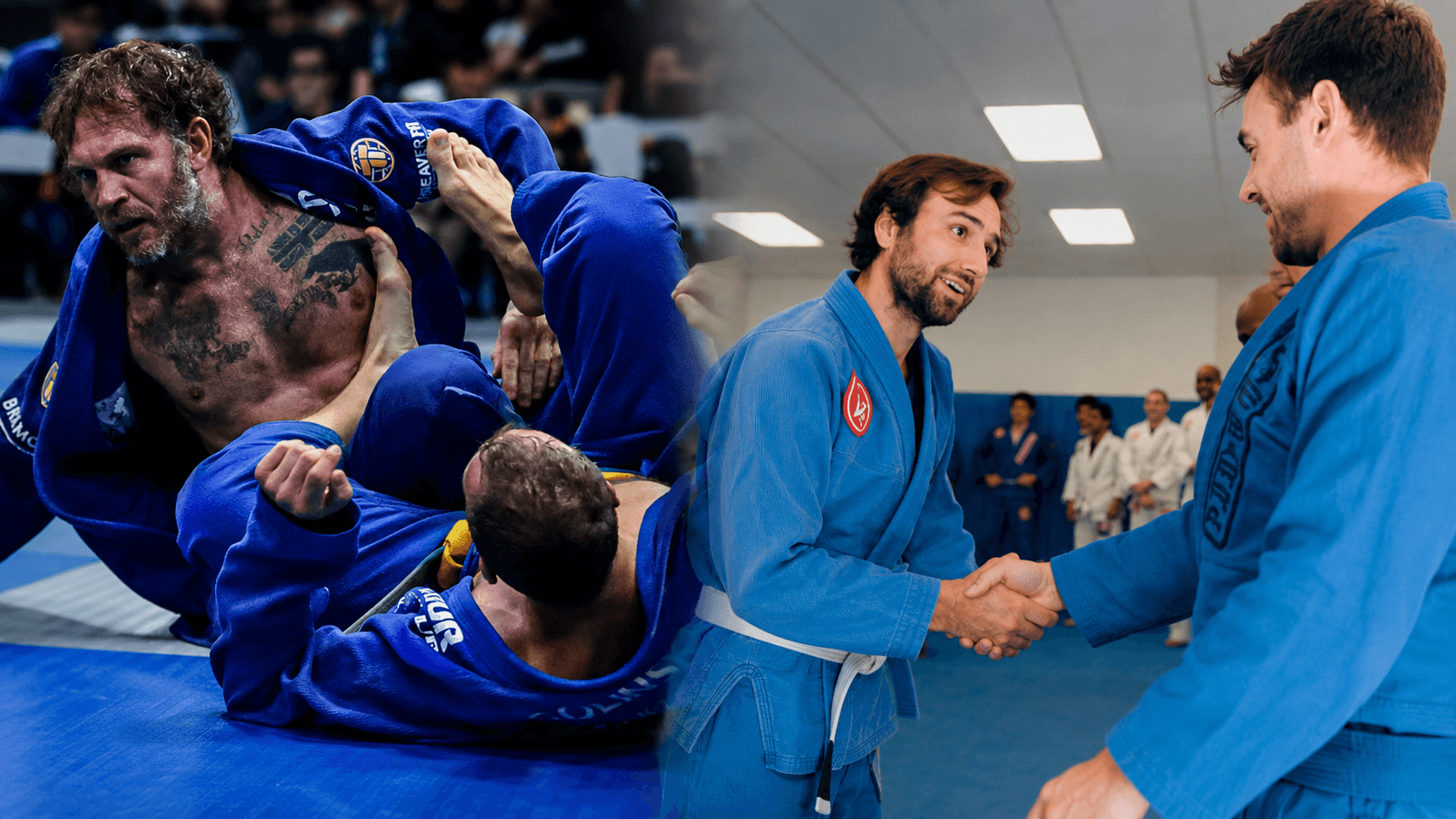
You can take jiu-jitsu seriously without entering a tournament
Quick answer: You can value jiu-jitsu and work carefully at it without choosing to compete. A tournament adds a particular goal and commitment; it does not settle what your training must mean for the rest of your life. Decide what you want from the next period of practice, discuss that with your coach, and leave room for the answer to change.
You can want to improve your guard and still want your Saturday back. Those wishes do not require a compromise about how much you care. They require a decision about where training fits.
The labels hobbyist and competitor are convenient until they start answering questions you have not asked. Someone preparing for one local event is competing. That does not tell you whether they want another event, a harder weekly schedule, or a life organized around the next result.
Decide what you want before choosing the label
Start with the part of training you want more of. You might enjoy working through a position with a patient partner, testing yourself in unfamiliar rounds, or having an evening that is reliably separate from work. Those are different interests, and none automatically supplies your tournament plans.
Try describing the next few months without using either label. Name the classes you want to attend and the problem you want to study. If an event belongs in that description, put it there. If it does not, there is no missing line that you must fill to make the plan respectable.
This also makes the conversation with your coach easier. Saying that you want to understand an escape gives them something specific to respond to. Saying that you are only a hobbyist can accidentally make a modest schedule sound like an apology.
You can have limited time and high standards for how you use it. You can also train often because you enjoy training. The amount of time available does not explain the whole intention.
A tournament is a commitment you can describe
If you are considering an event, look at what entering would ask of you. Read the organizer's current rules and terms, identify the division that applies, and discuss preparation with your coach. Work out the travel and the time away from other commitments before deciding that the entry fee is the entire purchase.
Write down the questions you need answered:
What do you want to learn or experience at this event?
Which preparation sessions can you actually attend?
What will the full day or weekend require from you and others?
Would you still want to enter if the result were disappointing?
The last question is not a test of courage. It helps separate wanting the experience from wanting a particular photograph afterward. You may decide that the event is worthwhile even if it ends quickly. You may also decide that the expense makes more sense later.
Our competition pros-and-cons guide can help organize that decision. Use it to clarify your reasons, not to assemble a case you must win against someone else's enthusiasm.
An ordinary training week can have its own purpose
Without a tournament date, you can still give practice a useful focus. Choose a position you want to understand and ask your coach what a manageable next step would look like. Keep the task narrow enough that you can recognize whether you worked on it.
A hypothetical example is spending a few sessions noticing where an escape stalls. The immediate goal is to describe the problem accurately and get feedback. You do not need to prove that this will produce a belt, a submission count, or a particular rate of improvement.
You can also choose a period in which attendance itself is the main practical problem. A new work schedule may leave you with one suitable class rather than the three you expected. Decide whether that class is worth keeping before judging it against a schedule you cannot currently attend.
Training does not have to justify itself through a future achievement every week. Enjoying the class is a reason to attend. If you want more structure, add it because it serves your interest, not because a quieter reason sounds insufficient when spoken aloud.
Do not invent a life for the person beside you
A partner declining a tournament invitation may be managing money, work, family responsibilities, discomfort with competing, or something they prefer not to explain. You do not know which unless they tell you. Their decision is observable; the motive is not yours to provide.
The reverse deserves the same care. Someone preparing carefully for a bracket is not necessarily neglecting everything outside the gym. They may have made arrangements that you cannot see. Enthusiasm for competition does not establish what the rest of their life is like.
Ask about the training they want today. If they feel like discussing their plans, listen to the answer without turning it into an argument for your own approach. A teammate can make a different choice without issuing a judgment about yours.
This is especially useful when your own plans are unsettled. You do not need to prove that everyone who competes is sacrificing too much to explain why you are sitting this one out. Your circumstances are enough to consider on their own.
Share the round through a clear agreement
The difference that matters most during practice is often the task each partner thinks they have accepted. One wants a demanding round from standing. The other wants controlled work from a position they have been studying. Neither intention becomes obvious through a fist bump.
Say what you want before starting. Ask what your partner wants too. If those plans do not fit together, choose an arrangement you both accept or find another partner with the instructor's help. A mismatch does not need to become a verdict on somebody's character.
Keep the agreement open while you train. If the round becomes different from what you discussed, pause. Someone preparing for a tournament does not need to treat every partner as a tournament opponent, and someone training recreationally still needs to communicate their expectations.
There is room for different kinds of practice in a week, but no article can prescribe the right balance for every person or academy. The useful next step is a conversation about this round. Avoid asking a broad label to do that work for you.
Keep belt questions separate from tournament pressure
If you are concerned about promotion, ask your instructor how your academy evaluates it. Do not rely on a universal timeline or a claim that a certain number of weekly classes guarantees a belt. Your coach can explain the standards they actually use and where they think your work should go next.
Ask directly how competition fits those standards. An unclear expectation is harder to make a decision around than an answer you may not like. If the academy's priorities do not fit yours, that is a practical issue to discuss rather than a reason to quietly resent every tournament announcement.
You can want a promotion and decline an event. You can want an event and be uninterested in when the next stripe arrives. These concerns sometimes overlap, but treating them as the same question can obscure what you are trying to resolve.
For now, get one useful answer from the coach. What do they need to see in your training, and how can you work on it within your actual availability? That is more actionable than comparing your calendar with somebody else's belt.
A change of plans does not erase the earlier plan
You may enjoy competing for a period and later want weekends without travel or weigh-ins. The earlier effort still happened. You do not have to describe it as a mistake to explain why another period of your life needs something different.
Leaving competition can also produce mixed feelings. You might welcome the free time and miss the sense of a fixed target. Neither feeling cancels the other. Consider whether a smaller training project provides enough direction, without immediately filling the calendar with another event.
Someone moving the other way may want to try a first tournament after years of ordinary classes. It is reasonable to discuss that with a coach and prepare for the particular event. It does not require a public announcement that you have become a different kind of person.
Give a revised plan time to show whether it fits. You can reconsider later with more information. There is no need to attach a permanent story to a decision about the next few months.
Choose what the next month will contain
Make the decision concrete enough to put on a calendar. Select the classes that fit, identify any event you have actually decided to enter, and leave the remaining possibilities undecided. An open question does not have to occupy every available weekend.
Discuss the plan with the people it affects. If training changes childcare, shared travel or time at home, include those arrangements in the decision. The class may last an hour while the commitment around it lasts considerably longer.
Then choose a point to review how the plan is working. Ask whether you are attending the intended sessions, whether the practical arrangements are manageable, and whether you still want the same things from training. You are reviewing a plan, not administering a test of loyalty to the sport.
If the answer changes, use it. A useful next month might contain a tournament, fewer sessions, or the same quiet routine. The value of describing the commitment is that you can alter something specific instead of deciding that your entire relationship with jiu-jitsu has failed.
The takeaway
Competition gives training a particular direction. You can choose that direction without making it permanent, and you can decline it without treating improvement as somebody else's concern. Start with what you want to do and what the commitment would require, then ask your coach the questions that remain.
Leave other people's reasons to them. Clear agreements with training partners and the people sharing your calendar are more useful than defending a label. The next plan only needs to fit the life in which you will actually carry it out.
Find a session that fits
Browse open mats on Let’s Roll and confirm the host's visitor policy and session format before you go.
FAQ
Can I care about getting better without competing? Yes. You can set a training question, seek feedback and practice deliberately without entering an event. This is a choice about your goals, not a promise of a particular promotion timeline.
Will my coach require competition for promotion? Ask your own coach. This guide does not claim one promotion policy applies to every academy. Get a clear explanation of the expectations before planning around them.
Can I enter one tournament and stop afterward? You can assess that event on its own and decide afterward whether you want another. Entering once does not require you to adopt a continuing competition schedule.
What if my training partner wants a harder round? Explain the round you want and look for an agreement that suits both of you. If the plans do not fit, ask the instructor about another pairing rather than silently accepting a different task.

Rafael Moura
Rafael Moura profiles competitors as people with lives outside the bracket. Some of those stories are comebacks. Most are not, and he does not force them.
Related Posts

Mikey Musumeci gives up the belt to make room for MMA
Musumeci is vacating his UFC BJJ title to focus on MMA training. What he is leaving, what continues, and why the transition matters.
IBJJF membership: finish the paperwork before the deadline
IBJJF membership and tournament entry are separate steps. Plan documents, professor approval, renewals, and junior accounts before registration closes.
Choosing a BJJ seminar worth your time and travel
Choose a BJJ seminar by the subject, teaching format, access, and total cost. Know what to ask the host before buying a ticket.
Comments (0)
Loading comments...