

Grappling Industries rules: the group changes your day
Quick answer: Grappling Industries uses different bracket arrangements according to division size, with single elimination for absolutes. Read the actual event options and the organizer’s rules together before counting your matches. Your plan should cover the group, the legal-technique chart, and what happens after the first result.
Four names in a bracket can mean six separate pairings. Add a fifth athlete and the schedule changes again. The phrase round robin sounds pleasantly straightforward until you try to put a departure time beside it.
Grappling Industries makes its format a selling point, and the format deserves a proper reading. I think the useful question is what your particular entry buys you, including the matches that remain after a loss. That is a better starting point than borrowing a teammate’s experience from a different-sized division.
Count the field before counting your matches
The organizer’s published rules distinguish small round robins, larger groups with later rounds, and absolute brackets. A four-athlete group has each competitor meet the other three. Absolutes use single elimination. Those are different competitive products even if you enter them at the same event.
Take the four-person version as a worked example. Label the athletes A, B, C, and D. A must face B, C, and D. B still needs C and D, and C still needs D. That produces six unique matches, with three appearances per athlete. A spectator watching the whole group sees twice the number of matches one entrant competes in.
That arithmetic describes a complete hypothetical field. It does not promise the day survives withdrawals unchanged. Check the published bracket once the organizer finishes grouping people, and ask staff when something no longer matches the arrangement you entered.
The tournament-formats article explains why the words round robin cannot tell you everything. At registration, write down the division and field size beside the format. A useful expectation has all three attached.
A group loss leaves another job to do
An elimination bracket encourages a particular emotional shorthand. Lose, pack up, perhaps stay for teammates. A group can leave you with another opponent and a reason to keep following the schedule. The first result becomes part of the standings rather than automatically becoming the end of the entry.
My preference is to prepare a between-match routine that works after either result. Check the next call, speak briefly with the coach, and settle the practical question of where to wait. A victory does not make those tasks unnecessary. A defeat does not cancel them.
In an explicitly hypothetical group, suppose A loses to B and later faces C. The useful coaching conversation before C is about that match. Reconstructing every frustrating exchange with B can wait. Ask which single adjustment carries forward, particularly if the next call is close.
There is also a sporting obligation here. Other athletes’ schedules depend on the matches remaining in the group. If you need to withdraw, tell the organizer promptly instead of disappearing because your medal chances look worse. Only event staff can tell you how that withdrawal changes the bracket and results.
The division selector is part of the rules
The Grappling Industries division page separates gi belts from no-gi experience categories and warns that available choices can vary by event. Read the actual registration options rather than copying a screenshot from another city.
A no-gi label is easy to misread if your usual reference is a belt color. The relevant question is which published category includes your rank and background. Prior grappling experience can matter even when a person has little time in a jiu-jitsu gi. Put that history to the organizer honestly if the correct choice is unclear.
For a parent, the same process deserves extra time. Age, weight, and skill are separate fields. An appealing match count cannot settle whether a proposed grouping is appropriate for the child. Ask about the specific matchups and any proposed change before accepting it.
I would save a small entry note with the following information:
The event name and the exact division selected.
The rulebook or chart used to check legal techniques.
Any written answer explaining an unusual experience background.
The deadline for correcting the registration.
That note is more useful than a general declaration that you have read BJJ rules.
Read the score that this organizer uses
A familiar points display can make two tournaments look more alike than they are. Before practicing a last-minute scenario, check the organizer’s scoring explanations, its treatment of tied scores, and its allowable techniques. Knowing that a guard pass exists is different from knowing exactly when officials award it.
Use one example in training with the instructor’s agreement. Start from an ordinary position, state a hypothetical score, and ask which observable action would change it under the chosen rules. Reset when the question has been answered. This is a rules-reading exercise rather than an instruction to force a particular technique.
Keep an unfamiliar call as a question until you can identify its conditions. A clip can hide the start of an action, a grip, or the referee’s signal. Watching the final few seconds of an exchange does not always establish what should have happened earlier.
For your coach, name the actual organizer when asking for help. Saying that you are preparing for Grappling Industries invites a more useful answer than saying that you are preparing for a points tournament. Your regular class can still serve a broad curriculum. The competition-specific details need their own small space.
A larger entry needs a realistic calendar
A group format can be attractive because one fee may produce several opportunities to compete. The practical cost is time at the venue, attention to changing calls, and the possibility that gi and no-gi commitments do not sit neatly beside one another.
Treat your first plan as a working calendar. Put travel, check-in, the organizer’s reporting instructions, and the trip home on it. Leave the match sequence attached to the official system. An estimated time is useful information without becoming a promise that your friend can collect you from the entrance at precisely that minute.
If you enter two formats, tell the coach which divisions they may need to follow. Agree on what happens if their other student is called elsewhere. A shared team can provide plenty of support while still having fewer available corners than active athletes.
The same applies to spectators. Give a family member a simple task, such as following the bracket page or keeping your bag in an agreed place. Do not assume they can work out the group from the announcement system alone. Preparing that small explanation also tests whether you understand your own entry.
Read the results as a group story
A podium photograph compresses the day into four faces and a few medals. A round-robin result can contain much more information. Read the individual pairings before deciding how close the group was or which match changed the order.
For a personal review, separate results from observations. You might record that you won one match, lost another, and were late recognizing a grip in both. The result is an official fact. The repeated grip problem is a training question. Neither requires turning the whole day into a verdict on your progress.
If standings look puzzling, use the organizer’s published tiebreak procedure. Do not import a head-to-head rule simply because another event uses it first. The order of criteria matters. A score or submission count may have a job beyond deciding the individual match.
Keep the event’s final record with your notes. If you later discuss the competition with a coach, that record gives the conversation a stable reference. It also prevents the memory of one dramatic exchange from silently replacing what happened across the group. Several matches can teach several different things, provided you leave them separate long enough to examine them.
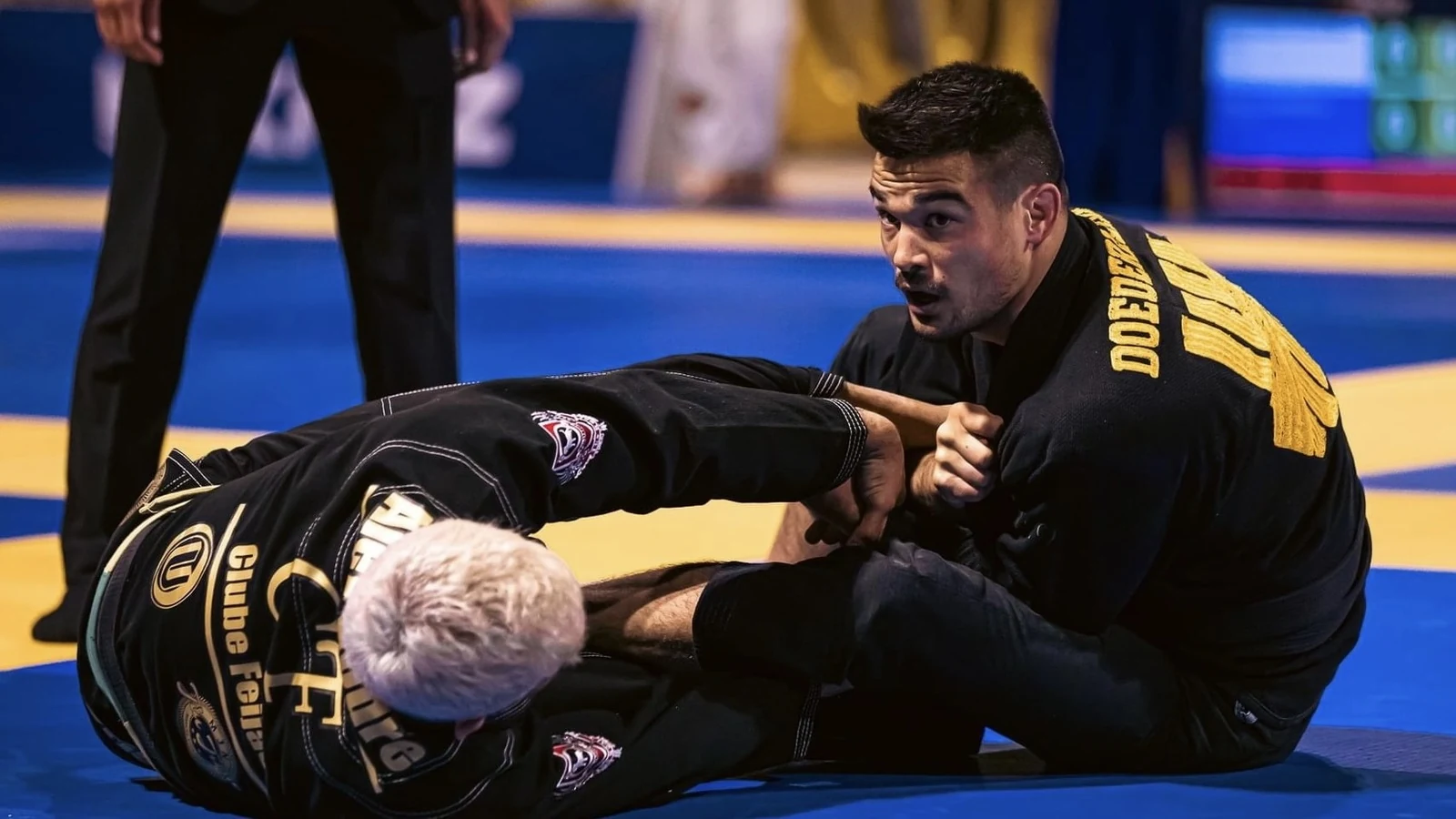
Main photo: grapplingindustries.com (source publisher; photographer not identified). No-gi action in a photograph published by Grappling Industries on its About page.
The takeaway
Grappling Industries is worth reading as a particular organizer with particular entry options. Start with your division, then identify the field and the route through it. Round robin describes a relationship between opponents. It does not remove the need to read the event page.
Prepare to continue after either a win or a loss, and keep the coach’s practical instructions close. The best use of several matches is several chances to compete with your attention in the right place. You can analyze the entire afternoon after the last call.
Find an event to read properly
Compare published events in the Let’s Roll tournament directory, then confirm the final rules and entry options with the organizer.
FAQ
Does Grappling Industries always give the same number of matches? No. The organizer describes different arrangements by division size, and absolute divisions follow a different route. Read your actual bracket and the event’s current terms, including how withdrawals or missing opponents are handled.
Can I choose a no-gi category by belt color alone? Check the published category mapping and experience requirements. If you have another grappling background or an unusual training history, describe it accurately to the organizer before paying for the wrong division.
Does losing the first match end a round-robin entry? A complete round robin normally leaves other scheduled opponents. Follow the official bracket, and tell staff if you need to withdraw rather than assuming the first loss finishes your day.
Should I use another tournament’s rules when preparing? Use Grappling Industries’ rules for a Grappling Industries entry. Similar points values or familiar division labels do not establish identical scoring, legal techniques, or tiebreaks. Ask your instructor about the specific published conditions.

Tess Hanley
Tess Hanley reads the rulebooks, the entry fees and the fine print. When a federation or a gym changes something, her first question is who ends up paying for it.
Related Posts

IBJJF Crown 2026 results: all six winners and finals
Get the six 2026 IBJJF Crown results, how Mica Galvão edged Andy Murasaki, and what to watch in each final replay.

Brianna Ste-Marie went from ADCC Trials to a UFC BJJ belt
Brianna Ste-Marie earned ADCC silver, won two IBJJF No-Gi Worlds titles, and submitted Rebeca Lima for the UFC BJJ featherweight belt.
Isaac Doederlein won Worlds in a rematch with Diego Sodré
Isaac Doederlein lost to Diego Sodré at the 2022 Europeans and won their Worlds rematch. Follow the four matches and two Brasileiro titles around it.
Comments (0)
Loading comments...