
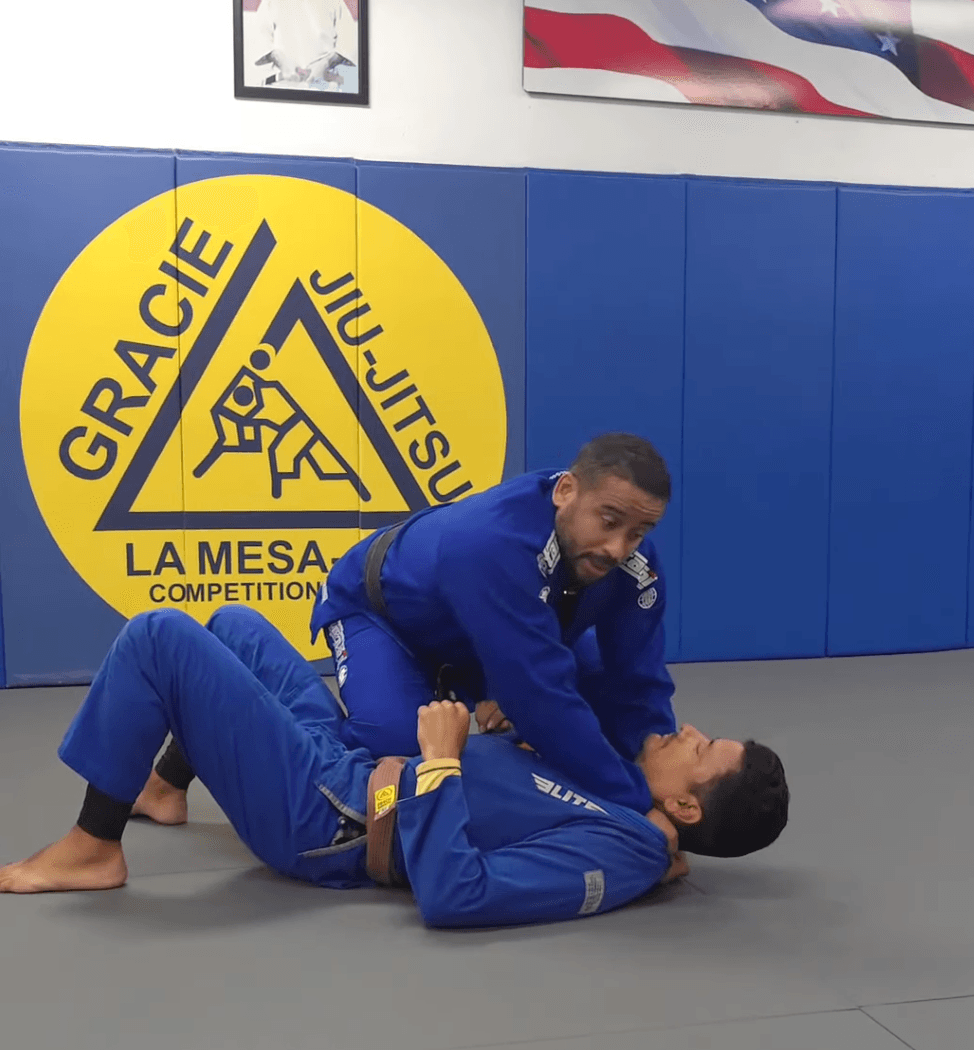
Gracie Humaitá in La Mesa: what the old lineage still teaches
Quick answer: Gracie Humaitá La Mesa is a Brazilian jiu-jitsu academy on Fletcher Parkway in La Mesa, east of San Diego, carrying the Humaitá name from the Rio de Janeiro academy founded by Hélio Gracie and run today by his sons Royler and Rolker. Humaitá schools are the traditional wing of the art: a fundamentals course built around self-defense, gi-first training, and a belt culture that moves slowly. The La Mesa academy runs adults, juniors and kids across two nearby mats and offers a free week.
There is a 5am jiu-jitsu class on Fletcher Parkway. Monday through Friday.
That detail tells you more about a gym than any promotional video. Nobody drives to a strip mall in La Mesa before sunrise for the vibes. They go because a class exists at a time that fits around a shift, and because somebody has decided to open the doors and teach it.
Gracie Humaitá La Mesa sits in East County, out past the 8 where San Diego stops being a beach city. It carries one of the oldest names in the art, and the name is doing real work.
The academy the name points to
Humaitá is a neighborhood in Rio de Janeiro, and the Gracie family's arrival there was the end of a long slide.
Carlos Gracie opened the first Academia Gracie in 1925, on Rua Marques de Abrantes in Flamengo. By the 1960s the school had grown into two floors of building 151 on Avenida Rio Branco, right in the city centre. Then the 1980s went badly. In 1981 the academy left Rio Branco for space at the Vasco da Gama club in Lagoa, and four years after that it moved again, into the Colégio Padre Antônio Vieira, a private Catholic school in Humaitá, with Hélio Gracie and a young Rickson at the head of the team.
That is the mother academy. Not a purpose-built facility with a pro shop. A mat inside a Catholic school, which the family has now taught out of for four decades. Rickson led the competition team in the early Humaitá years before his own path took him elsewhere, and the school passed to Hélio's sons Royler and Rolker, who run it today.
The competition team that came out of that room is not a small footnote either. The Ribeiro brothers came through Humaitá. So did Leticia Ribeiro, Renato Barreto, Marcus Norat, Megaton and Rafael Lovato Jr.
Royler Gracie lives in this county
Here is the part San Diego grapplers sometimes miss. Royler Gracie, the man who ran the mother academy under his father's direction, lives and teaches in San Diego. He has been a US citizen since 2015.
His résumé is from another era of the sport: four World Championships at featherweight black belt, ADCC titles from the tournament's early years, an 8th-degree red-and-black coral belt, and induction into both the IBJJF and ADCC halls of fame.
That does not mean he is teaching in La Mesa. He isn't, as far as anything published shows. It does mean the lineage on the wall is not a distant abstraction here. The man two steps up the chain is in the same county.
What "traditional" means once you are on the mat
Affiliation names get thrown around like brand logos, and most of the time they tell you very little. Humaitá is one of the cases where the name still predicts something about the classes. We wrote a longer piece on how BJJ affiliations work and where the label stops meaning anything.
Three things tend to hold at a Humaitá school.
Self-defense stays in the syllabus. Not as a once-a-quarter seminar. As part of the standing fundamentals curriculum, alongside the sport material.
The gi is the default. No-gi exists and often gets several slots a week, but the base curriculum is taught in the jacket.
Belts move slowly. This is reputation more than documented policy, and it varies by professor, so treat it as a tendency rather than a rule. Humaitá schools are generally not where you go to be a blue belt by Christmas.
La Mesa's published programs match that shape closely. The Gracie Fundamentals program is described as a continuous sixteen-week course built around the overall self-defense strategy of the art: breakfalls, takedowns, and how to set up and finish a submission, drilled to the point of reflex before you are turned loose. Students move into the Intermediate program at the third stripe on white belt, where the resistance goes up, and can keep attending Fundamentals at the same time.
They also run a separate Gracie Self Defense course, pitched explicitly at people who do not want the sport track or the belt system at all and just want to be able to protect themselves. That is an unusual thing to offer in 2026, and it is a tell. A pure competition gym has no reason to build a program for the student who will never enter a tournament.
Depth in one direction, gaps in the other
Now the costs, because the "traditional academy" pitch has them.
If you want to be a high-level competitor, a traditional fundamentals-first school is a slower road. The modern competition gyms have specialized for a reason: hard rounds against people your size and skill, coaches watching your footage, a team that travels to the same tournaments. If your goal is an IBJJF podium in three years, a school that spends part of every week on standing self-defense is spending time you would rather spend on guard retention.
The counter-argument is just as real. Most people who walk into a jiu-jitsu gym never compete, and the sport-first model quietly assumes they will. Fundamentals-first schools tend to keep older students, injured students, and people who came in scared, because the room is not organized around the fastest twenty-year-olds in it.
Neither model is the correct one. They are answers to different questions, and the mistake is picking one without knowing which question you are asking. On the self-defense side specifically, the picture is more complicated than either the traditionalists or the sceptics usually admit, and we went through the evidence in is BJJ good for self-defense.
What's on the mat in La Mesa
The academy's published schedule runs as many as ten classes on a Monday, spread across two nearby facilities: the main mat at 9138 Fletcher Parkway and a second at 215 Denny Way. Worth knowing before you drive, because a class listed for one address is not always at the other.
The shape of the week, per the gym's own posted schedule: a 5am all-levels class most weekdays, a noon no-gi slot, then the afternoon block with kids at 4:15 and 4:45 and juniors at 5:00 and 5:30. Evenings run all-levels, no-gi and fundamentals through to 7:30 on Mondays and Wednesdays. Saturdays are short.
Age groups break at four to seven for kids, eight to fourteen for juniors, and fifteen and up for adults. There is a free week of training advertised on the site, which is a genuinely generous trial by industry standards.
One caution. Parts of the academy's website have not been touched in years, and schedules drift. Call before you show up to a specific class. That is good advice for any gym and non-negotiable for one whose site still has a page about a summer camp from a while back.
On naming the instructors
We are not going to tell you who runs the mat, because we could not verify it to a standard we would want applied to our own gym.
The academy's own instructors page is currently empty. Elsewhere on the site, two black belts are named as available for private lessons, and one of them now appears to run his own separate academy several freeway exits away in San Diego proper. Rosters change constantly in this sport. Professors move, open their own rooms, hand off classes to their own black belts, and websites are usually the last thing to get updated.
So: ask at the desk, and ask who is teaching the class you plan to attend, not just who is on the letterhead. What the lineage tells you is where the material comes from. It does not tell you who is standing in front of the room on a Tuesday night, and that person matters more to your training than any name in Rio.
The takeaway
The Humaitá line is one of the few in jiu-jitsu where the name still carries a curriculum rather than just a patch. It goes back to a mat inside a Catholic school in Rio, and to a family that kept teaching self-defense long after the tournament scene decided that was a quaint hobby. That is worth something, and a school in East County choosing to carry that name is telling you what it prioritizes before you ever walk in.
Whether that is the right room for you depends on what you want. If you are chasing medals, look at what the competition-focused academies in the county are running and be honest with yourself about the hours involved. If you want to learn the art properly, on a schedule that includes a 5am option, from a lineage with a curriculum older than the sport, this is the kind of place people stay at for a decade.
Go take the free week. A week of classes tells you more than any article, including this one.
See the gym for yourself
Location, programs and contact details are all on Let's Roll, so you can check the basics before you call. Gracie Humaitá La Mesa Brazilian Jiu Jitsu on Let's Roll
FAQ
What is the Gracie Humaitá lineage? Humaitá refers to the Rio de Janeiro neighborhood where the original Academia Gracie ended up in the mid-1980s, inside the Colégio Padre Antônio Vieira, with Hélio Gracie and Rickson leading the team. The academy is run today by Hélio's sons Royler and Rolker Gracie, and schools worldwide that affiliate under the name trace their instruction back through it. Notable products include the Ribeiro brothers and Rafael Lovato Jr.
How is a Humaitá school different from a modern competition gym? Broadly, three ways: self-defense stays in the standing fundamentals curriculum rather than being an occasional add-on, the gi is the default teaching uniform, and promotions tend to come slower. A competition-focused academy optimizes for the tournament calendar; a traditional one optimizes for a complete, transferable base. Both are legitimate, and neither is automatically better for you.
Does Royler Gracie teach in San Diego? Royler Gracie lives and teaches in San Diego and has been a US citizen since 2015, but there is no published indication he teaches at the La Mesa academy. If someone tells you a Gracie is on the schedule at any gym, ask which class and which day before you sign anything.
Is Gracie Humaitá La Mesa good for beginners and kids? The program structure is built for beginners. The Gracie Fundamentals course is a sixteen-week continuous curriculum, and students move up to the Intermediate program at the third stripe on white belt, so there is a defined on-ramp rather than a sink-or-swim first class. Kids run from age four, juniors eight to fourteen, adults fifteen and up. If you want to compare against everything else in East County first, start with the Let's Roll gym directory.
Related Posts

Mikey Musumeci gives up the belt to make room for MMA
Musumeci is vacating his UFC BJJ title to focus on MMA training. What he is leaving, what continues, and why the transition matters.
IBJJF membership: finish the paperwork before the deadline
IBJJF membership and tournament entry are separate steps. Plan documents, professor approval, renewals, and junior accounts before registration closes.
Choosing a BJJ seminar worth your time and travel
Choose a BJJ seminar by the subject, teaching format, access, and total cost. Know what to ask the host before buying a ticket.
Comments (0)
Loading comments...