
The Culture of Brazilian Jiu-Jitsu: Traditions, Values, and Community
I arrived at a gym in Rio de Janeiro on a Tuesday afternoon, a visitor with a notebook and a borrowed gi. The professor — a coral belt in his seventies — greeted me like I was a returning student. Within ten minutes, I was on the mat drilling with a teenager who barely spoke English but communicated perfectly through technique. After class, someone handed me an açaí bowl and asked where I was from.
That's BJJ culture in its purest form: warmth wrapped in discipline, tradition maintained through practice, and a community that treats visitors like family until proven otherwise. Understanding this culture is essential to understanding the art.
The Gracie Family Legacy
BJJ's cultural DNA traces back to one family. Carlos Gracie learned judo and Japanese jiu-jitsu from Mitsuyo Maeda in the 1910s and adapted it with his brothers — most notably Hélio Gracie — into a distinct grappling system optimized for the smaller, weaker fighter.
The Gracies didn't just create techniques — they created a lifestyle philosophy around BJJ. Clean eating, disciplined training, and the belief that the gentle art could empower anyone regardless of size. Hélio famously fought much larger opponents in vale tudo (no-rules fights) to prove that technique could overcome strength, establishing a competitive ethos that persists today.
This legacy isn't ancient history — it's actively maintained. Gracie family members still teach, compete, and shape the direction of BJJ worldwide. Their influence is visible in the curriculum of most gyms, the belt system, and the fundamental values the art transmits.
The Bow, the Slap, and the Bump
BJJ has a ritual vocabulary that every practitioner absorbs:
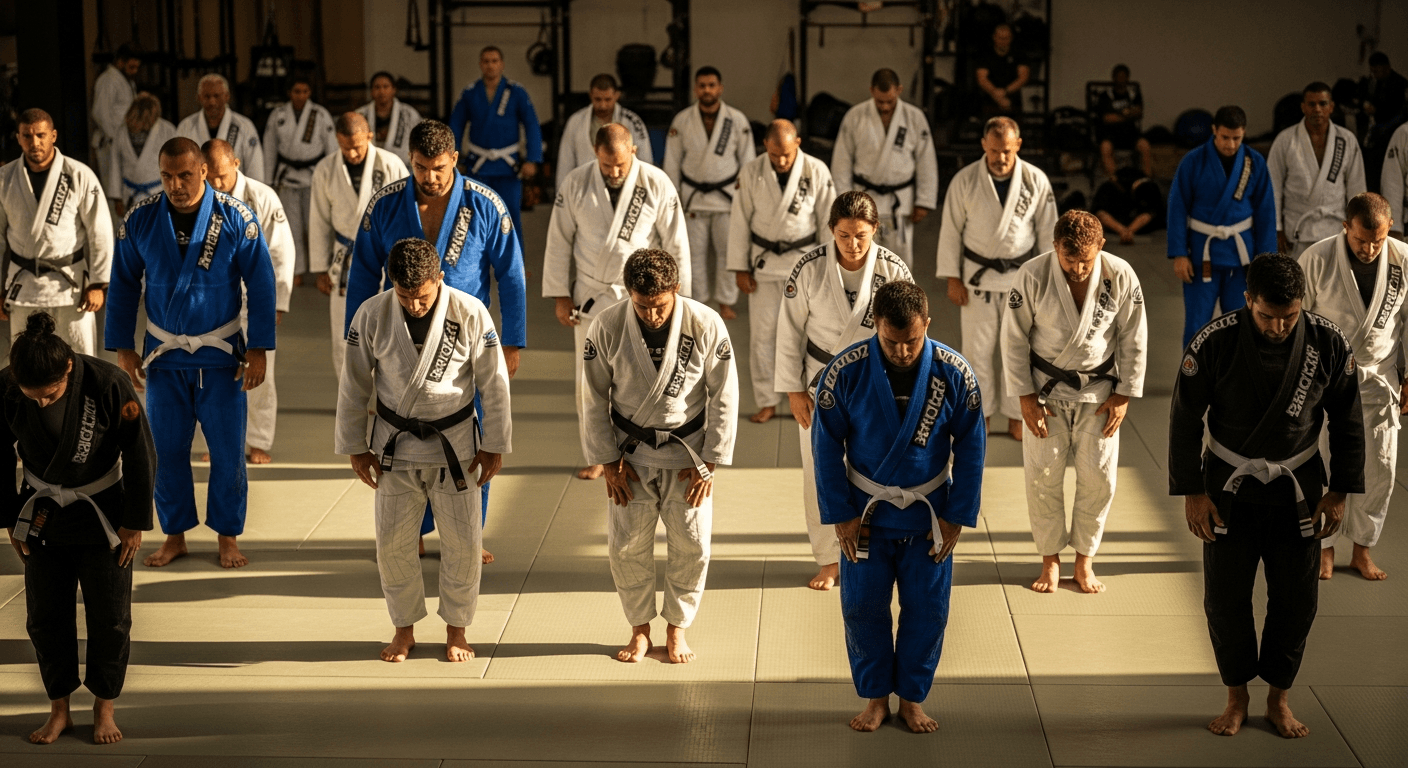
Bowing on and off the mat: Many gyms maintain the Japanese tradition of bowing when you step onto the training area. It's a mark of respect for the space and the art.
The slap-and-bump: Before a sparring round, partners slap hands and bump fists. It's a mutual agreement: we're about to go hard, but we respect each other. The ritual resets after every round.
Shaking hands after rolling: Regardless of how the round went — whether you dominated or got submitted five times — you shake hands or fist bump when the timer beeps. This gesture acknowledges the partnership, not the outcome.
Lining up by belt rank: Most classes end with students lining up from highest to lowest belt. This isn't hierarchy for its own sake — it's a visual reminder of the journey each person is on and the work ahead.
Respect and Humility
These two values are spoken about so often in BJJ that they risk becoming clichés. But on the mats, they're actively enforced.
Respect means tapping when you're caught, washing your gi, being on time, and treating every training partner — regardless of belt level — as someone who can teach you something. The white belt who's only been training for two weeks might ask a question that makes you rethink a technique you've done for years.
Humility is harder. BJJ systematically dismantles ego. You walk in thinking you're tough because you've been in a couple of street fights or you bench press 300 pounds, and a 130-pound purple belt puts you to sleep with a lapel choke. This experience — being humbled by someone who shouldn't be able to beat you — is where BJJ's character-building begins.
The best practitioners carry this humility everywhere. They don't brag about their rank. They don't dismiss other martial arts. They credit their training partners, their coaches, and the art itself.
The Lineage System
In most martial arts, your instructor's credentials are their own. In BJJ, lineage matters deeply. Your coach's coach — and their coach's coach — connects you to a chain of knowledge that traces back to the founders of the art.
Lineage isn't just credentialism. It shapes the style you learn, the values you absorb, and the community you belong to. Training under a Gracie Barra lineage feels different from training under an Alliance lineage or a Carlson Gracie lineage. Each branch of the BJJ family tree emphasizes different techniques, training philosophies, and competitive approaches.
When you visit a new gym, asking about the head instructor's lineage is both respectful and informative. It tells you what kind of BJJ the gym teaches and what tradition it represents.
The Role of Competition
Competition occupies a complex place in BJJ culture. Some gyms are competition-focused — their entire training structure points toward tournament performance. Others are explicitly hobbyist-oriented, emphasizing the art's self-defense roots and personal growth aspects.
Neither approach is wrong. The tension between competition and traditional BJJ has existed since the Gracies started challenging other martial artists. What matters is finding a gym whose competitive philosophy matches your own — some students thrive under tournament pressure, while others find their best training in a non-competitive environment.
Training as a Social Fabric
In an era of increasing social isolation, BJJ gyms function as modern-day community centers. The training schedule creates structure. The shared physical challenge creates bonds. The belt system creates mentorship opportunities.
At most gyms, post-training culture is as important as the training itself. Students grab food together, discuss technique over coffee, celebrate promotions, and support each other through personal challenges. This isn't incidental — it's baked into the culture of the art.
When you're looking for a gym that embodies this community spirit, our academy directory helps you find schools that prioritize culture alongside technique.
BJJ Culture Around the World
BJJ has evolved differently in every country that adopted it. Japanese BJJ emphasizes precision and discipline. Brazilian BJJ retains its roots in street-applicability and flamboyant technique. American BJJ has absorbed elements of wrestling and created the leg lock revolution. Scandinavian BJJ has produced a wave of technical innovators.
Traveling and training at gyms in different countries reveals these cultural layers. The art is the same — the culture wrapping it is wonderfully diverse.
If travel training interests you, explore open mat sessions in cities worldwide and log your cross-cultural experiences in your training passport.
The Ritual of Promotion
Belt promotions are BJJ's most emotionally charged rituals. The format varies — some gyms surprise students mid-class, others hold formal ceremonies with lineage demonstrations. Some run gauntlet lines where the newly promoted student walks between two rows of teammates, each delivering a celebratory slap with their belt. Others keep it simple: coach ties the new belt, the room applauds, and training resumes.
Regardless of format, promotions carry weight because everyone in the room knows what they represent. Not just technique — years of showing up, sweating through plateaus, tapping to frustration, and coming back. The belt isn't awarded for attendance or payment. It's awarded for transformation.
If you want to experience this tradition firsthand, explore academies through our gym finder tool and ask about their promotion culture during your trial visit.
The Future of BJJ Culture
BJJ is growing faster than any other martial art globally. With growth comes change — professional leagues, mainstream media attention, and a new generation of practitioners who discovered the art through YouTube and Instagram rather than through a local gym.
The challenge for the BJJ community is preserving the values that make the art special — humility, respect, community, continuous learning — while welcoming millions of new practitioners. The gyms that navigate this balance successfully will define what BJJ culture looks like for the next generation.
The Language of BJJ Culture
BJJ has its own vocabulary that serves as cultural shorthand. Terms like 'rolling' (sparring), 'tapping' (submitting), 'flow rolling' (light, technical sparring), and 'smashing' (heavy pressure passing) communicate not just technique but intent. Learning this language is part of joining the culture — and it happens naturally through immersion.
Mentorship and the Coach-Student Relationship
The coach-student relationship in BJJ carries more weight than in most sports. Your instructor doesn't just teach techniques — they guide you through the emotional landscape of a challenging journey. They decide when you're ready for promotion, shape your competitive philosophy, and model the values the gym operates by.
The best BJJ coaches balance authority with approachability. They command respect through skill and dedication, not intimidation. They create environments where students feel comfortable asking questions, admitting confusion, and sharing frustrations without judgment. If your coach makes you feel small when you ask a question, that's a cultural red flag — not a sign that you should stop asking.
Over the course of a long training relationship, your coach becomes someone who knows you in a uniquely intimate way. They've watched you struggle, fail, adapt, and succeed — often before you recognize those patterns yourself. This deep familiarity creates a mentorship dynamic that extends beyond technique into personal development, conflict resolution, and life philosophy.
Generational Shifts in Culture
BJJ culture is experiencing a generational transition. The first wave of practitioners — people who started in the 1990s and early 2000s — were heavily influenced by the Gracies' challenge-match mentality and the early UFC. Their BJJ culture valued toughness, street-readiness, and proving the art against other styles.
The current wave of practitioners often discovered BJJ through social media, gym culture trends, or the sport's growing mainstream visibility. They bring different expectations: cleaner facilities, more structured curricula, explicit safety protocols, and a more inclusive training environment. Neither generation's values are wrong — they're different expressions of the same art at different stages of its global evolution.
The healthiest gyms integrate both perspectives. They maintain the respect for tradition and the technical rigor that old-school practitioners value, while embracing the accessibility, inclusivity, and professionalism that newer students expect. Understanding this cultural tension — and recognizing that you might encounter gyms weighted toward either end — helps you evaluate which culture fits you best.
Wherever you are in this spectrum, the common ground is profound: everyone on the mat shares a commitment to learning, improving, and supporting their training partners. That shared purpose transcends generational differences and will continue to be the foundation of BJJ culture no matter how the art evolves.
Frequently Asked Questions
Is BJJ culture welcoming to women?
The BJJ community has made significant strides in inclusivity, though gaps remain. Many gyms now offer women's-only classes, and the number of female black belts is growing steadily. When evaluating a gym, observe how women are treated during mixed-gender classes — respect should be universal, not conditional.
Do I need to learn Portuguese to understand BJJ culture?
No, but knowing a few terms enhances your experience. Words like 'oss' (a greeting and acknowledgment), 'rolar' (to roll/spar), and 'faixa' (belt) appear frequently. Most technique names are in Portuguese or Japanese, and you'll pick them up naturally through training.
What makes BJJ culture different from other martial arts?
The emphasis on live sparring, the deep lineage tradition, and the strength of the social community distinguish BJJ. Unlike arts that rely heavily on forms or choreographed sequences, BJJ's culture is forged through genuine resistance and mutual vulnerability — you learn by being submitted and by submitting, in a cycle that builds trust and character.

Elena Torres
brown Belt
Brown belt and former sports journalist covering the BJJ competition circuit and gym culture.
Related Posts

Craig Jones's Mexico gym: the Zamaya plan in Tulum
Craig Jones's Mexico gym announcement places B-Team at Zamaya in Tulum. Read the July 2026 plans and the details visiting grapplers should confirm.
Cobrinha's 2017: five major titles at 37
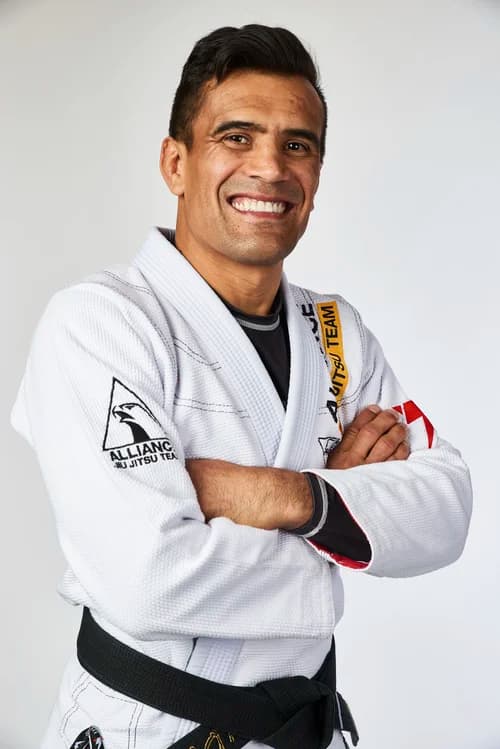
Cobrinha's 2017 season brought five major titles at age 37. Follow his gi and ADCC results, the Mendes rivalry, and the wrestling work behind that run.

Rafael Mendes: six Worlds titles and a life after competing
Rafael Mendes won six featherweight Worlds titles and retired at 27. Explore his ADCC rivalry with Cobrinha and the academy he helped build.
Comments (0)
Loading comments...